HOT NEWS !
Stay informed on the old and most recent significant or spectacular
nautical news and shipwreck discoveries

-
Underwater museum of Alonissos opens soon
- On 18/05/2021
- In Museum News

From Keep Talking Greece
The underwater archaeological site off the island of Alonissos, the Peristera Shipwreck, will open to visitors on June 1, 2021, the Greek Culture Ministry said in a statement.
The first underwater museum in Greece was inaugurated off the coast of the island of Alonisos, Sporades, last summer. The Shipwreck Peristera is now the oldest marine archaeological site that can be visited.
The site with more than 5,000 intact antique amphorae.
The water museum of Alonisos with the famous amphorae shipwreck of 5th century BC opens its water gates for amateur divers and free diving divers in the summer months. The underwater museum is located on the site of the ancient shipwreck off the islet of Peristera, off its rocky shore on the West and at a depth of 28 meters.
The shipwreck was discovered by a fisherman in 1985.
The large merchant ship, probably an Athenian one, sank around 425 BC. It was loaded with wine amphorae from Mendi, an ancient city in Halkidiki, and Peparithos, today’s Skopelos. Both regions were famous in the antiquity for their wines.
-
The Titanic: Unforgotten stories of the 4 Greek passengers
- On 11/05/2021
- In Famous Wrecks
By Paulina Karavasili - Greek City Times
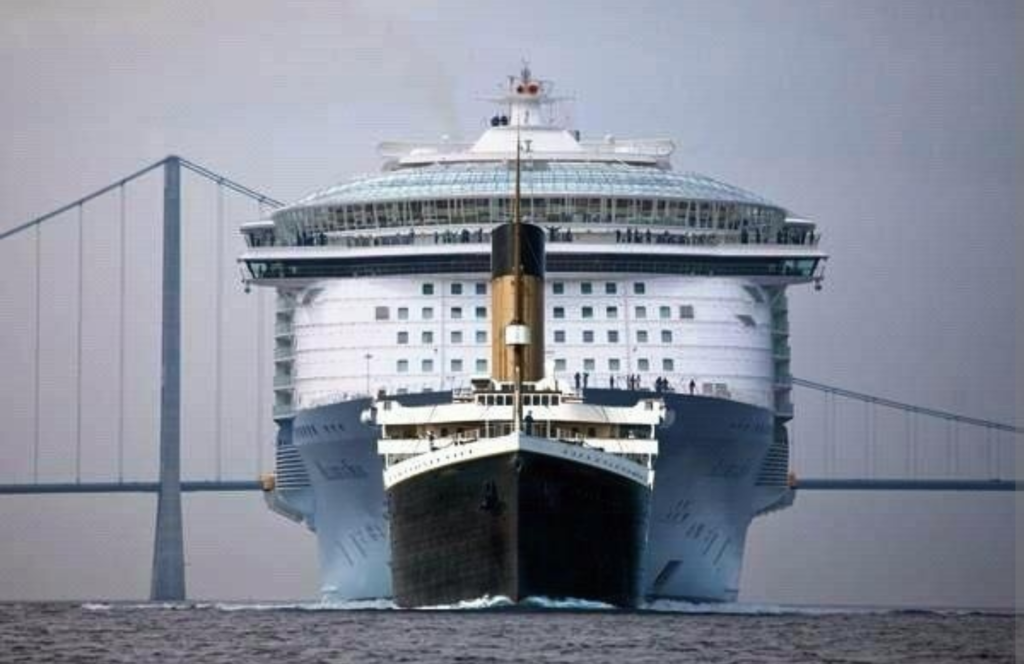
109 years ago, one of the darkest pages of the world history was written. The transatlantic Titanic, one of the largest ships to ever be built, and the largest ship of its time, sank in the North Atlantic Ocean on April 15, 1912, carrying 2,224 passengers and crew.After colliding with an iceberg during its maiden voyage from Southampton, England, to New York, US, the gigantic ship was wrecked in two, killing more than 1,500 people. Even to this day, the tragedy of the Titanic, is considered to be one of the deadliest maritime accidents in modern history.
What many do not know is that among the casualties, there were four Greek passengers, who left Europe, looking for a better life and new opportunities in America. Panagiotis Lymperopoulos, Vassilios Katavelos and brothers Apostolos Chronopoulos and Dimitrios Chronopoulos, came from the same village, Agios Sostis, in the region of Messinia in the Peloponnese.
They were all under the age of 30 and once they heard the news about the Titanic and the cruise to the US, they travelled to Marseilles in France, to board the ship at the port of Cherbourg.
Tragically, their dreams, like those of many others who were lost that night, never came true, as all four of them died in the most famous shipwreck in naval history, and although the bodies of Lymperopoulos and Katavelos were believed to have been recovered, those of the two Chronopoulos brothers were never found.
-
Shipwreck hunter scammed investor out of $100K: lawsuit
- On 09/05/2021
- In Scams, Thefts

By Kathianne Boniello - The New York Post
A Bronx man who has long hunted for a famed shipwreck in Hell Gate — and the fortune it’s rumored to contain — allegedly scammed an investor out of $100,000 by claiming to have gold coins from the long-lost vessel, according to a lawsuit.But instead of precious metal from the legendary British frigate HMS Hussar, which sank in 1780 in the treacherous waters of Hell Gate — where the tide-driven currents of the East and Harlem Rivers and Long Island Sound converge — Joseph Governali’s purported find was “junk purchased on e-bay,” claims James Kays in a Manhattan Supreme Court filing.
Governali, Astoria lawyer Alex Antzoulatos and Antzoulatos’ brother, Spiro, knew the coins were fake when they got Kays to invest, he charges in court papers.
Kays also accuses the three men of lying to a Manhattan Federal Court judge overseeing a two decade-long proceeding regarding Governali’s lengthy pursuit of the Hussar.
Governali, a one-time actor who also goes by the name Joey Treasures, says in previously filed federal court papers that he heads a group called HMS Hussar Inc.
He swore he’d “never give up” in his bid to find the ship.
-
US navy ship sunk nearly 80 years ago
- On 05/04/2021
- In World War Wrecks
From The Guardian
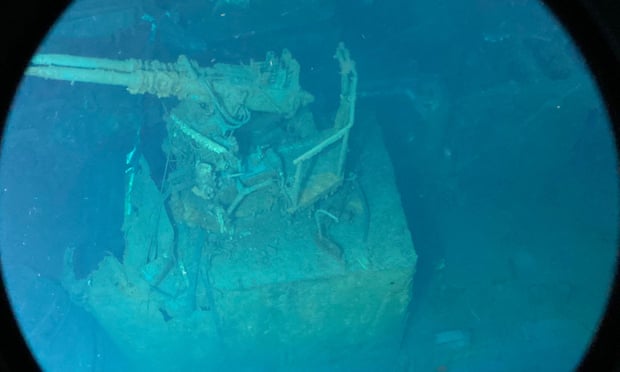
A US navy destroyer sunk during the second world war and lying nearly 6,500 metres below sea level off the Philippines has been reached in the world’s deepest shipwreck dive, a US exploration team said.A crewed submersible filmed, photographed and surveyed the wreckage of the USS Johnston off Samar Island during two eight-hour dives completed late last month, Texas-based undersea technology company Caladan Oceanic said.
The 115-metre-long ship was sunk on 25 October 1944 during the Battle of Leyte Gulf as US forces fought to liberate the Philippines – then a US colony – from Japanese occupation.
Its location in the Philippine Sea was discovered in 2019 by another expedition group but most of the wreckage was beyond the reach of their remotely operated vehicle.
-
France's new state-of-the-art ship for marine archaeology
- On 25/03/2021
- In Underwater Archeology

By Dale Berning Sawa - The Art Newspaper
In January, the French department for marine archaeological research—known as Drassm from its French name—launched the Alfred Merlin, the newest member of its highly specialised fleet.Built in a shipyard in La Ciotat on the Côte d’Azur, the ship is a 46m-long gleaming white beauty with red and blue stripes running at a slant down its side. Ahead of testing this month and delivery in May, the vessel has been equipped with, among other things, a stern gantry that is tall enough to load a small submarine and a bridge bristling with the latest technologies called “une passerelle du futur”—a bridge of the future.
The Alfred Merlin is named after the French archaeologist who in 1907 led the world’s first underwater excavation, off the coast of Tunisia. France became the first nation to have a dedicated underwater heritage department when André Malraux, the then culture minister, created the Drassm in 1966.
Its global leadership in the field has remained unchallenged, not leastbecause it has a lot on its plate. France’s underwater territory is the world’s second largest, with European waters accounting for a mere 5% of that: the nation’s colonial past writ large.
The Alfred Merlin’s 2021 schedule is already full, with surveys in the Mediterranean and an ongoing search off the coast of Brest for the 16th-century wrecks of the Cordelière and Henry VIII’s Regent.
The Alfred Merlin will also contribute to the ongoing search for the Leusden slave ship in Suriname and French Guiana waters. Locating the site of this catastrophic 1738 sinking, in which 664 African captives drowned after the Dutch crew imprisoned them in the hold before jumping ship, is crucial as it is both a mass burial ground and a historical crime scene.
-
Underwater archaeology pioneer George Bass dies at 88
- On 18/03/2021
- In People or Company of Interest
By Kristin Romey - National Geographic
Pioneering archaeologist George Bass, who played a critical role in the creation and evolution of underwater archaeology as a scientific discipline, died on March 2, 2021, in College Station, Texas.He was 88. At the time of his death Bass still served as an advisor to the Institute of Nautical Archaeology (INA), the world’s leading research institute for the study of shipwrecks that he established in 1972. The institute is currently headquartered at Texas A&M University, where Bass, a distinguished professor emeritus, developed one of the first academic underwater archaeology programs.
“The world has lost a giant in the field, and I have lost a great friend,” said underwater explorer Robert Ballard, a past INA board member, in a statement provided by the National Geographic Society.
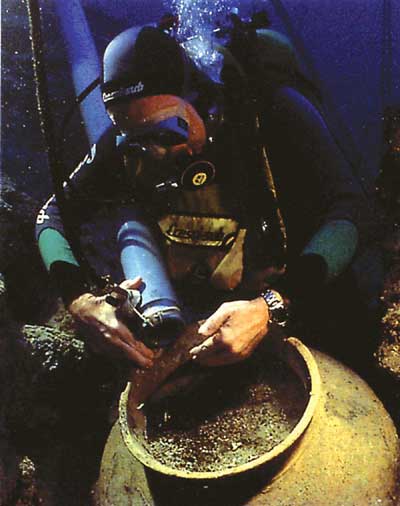
Bass was a graduate student studying archaeology at the University of Pennsylvania in 1960 when he was asked to investigate an ancient shipwreck discovered by Turkish sponge divers off Cape Gelidonya in southern Turkey. The 3,200-year-old Cape Gelidonya wreck, carrying a primary cargo of copper ingots, became the first shipwreck mapped and scientifically excavated in its entirety on the seafloor. At the time, it was the oldest known shipwreck in the world.
That title was superseded by the discovery and excavation of the Uluburun shipwreck in southern Turkey in the early 1980s. With the support of the National Geographic Society, Bass’s team documented and excavated an extraordinary trove of artifacts dating to the 14th century B.C., including precious objects from across the Near East and Europe that illuminated the complexity of trade in the ancient world.
-
How do you salvage a trove of World War II-era ?
- On 03/03/2021
- In Treasure Hunting / Recoveries
By Tobias Carroll - Inside Hook
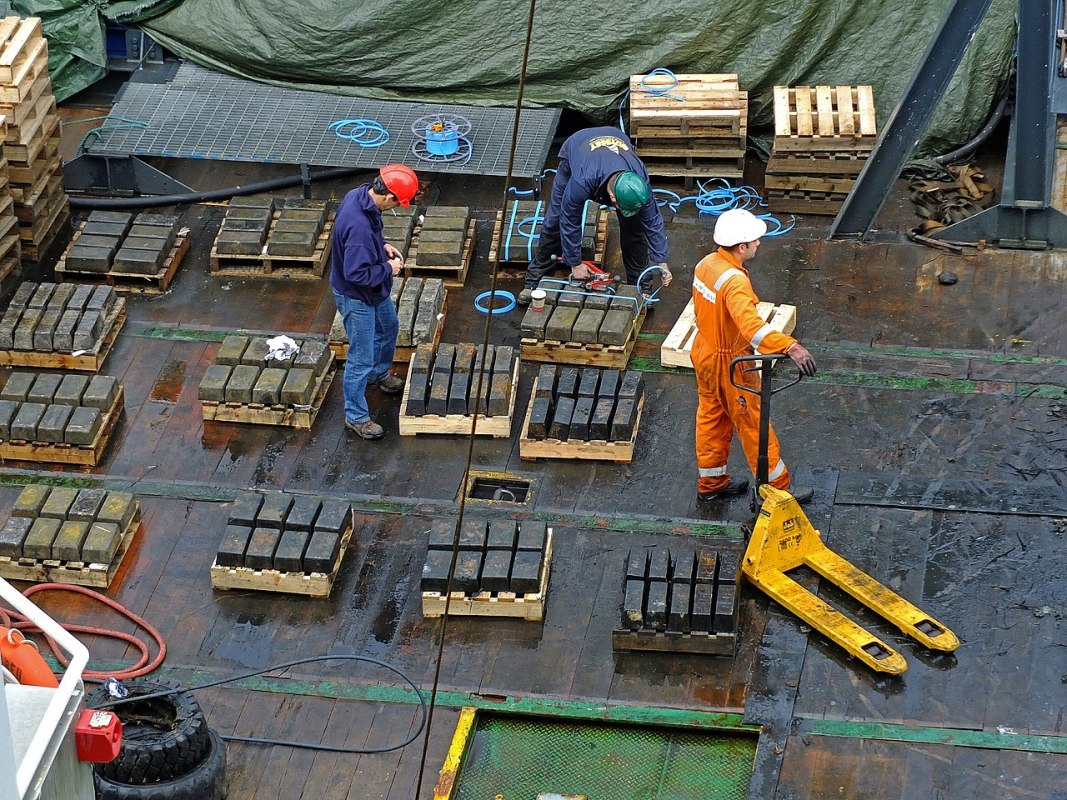
In 1941, the SS Gairsoppa, a British cargo ship, was sunk by a German submarine. Only one member of the crew survived, with dozens perishing in the attack.What was left of the vessel remained below the waters of the Atlantic off the coast of Ireland for decades. In 2013, Odyssey Marine discovered the remains of the ship — including a massive haul of silver that was on board when the Germans attacked.
That trove of silver wasn’t the only valuable thing found in the shipwreck, however. A new report from Allyson Waller at The New York Times focuses on another significant discovery made in the wreckage: a number of letters — more than 700 in total — that offer an intimate and personal glimpse into life during wartime.
As you might guess, letters that have been in an underwater space for 70-odd years aren’t in the best condition. The Times article focuses on the work conservators are doing to reconstruct the letters, so that we can learn more about who wrote and received them and properly honor those whose lives were lost.
-
Divers retrieve century-old beer bottles
- On 03/03/2021
- In Treasure Hunting / Recoveries
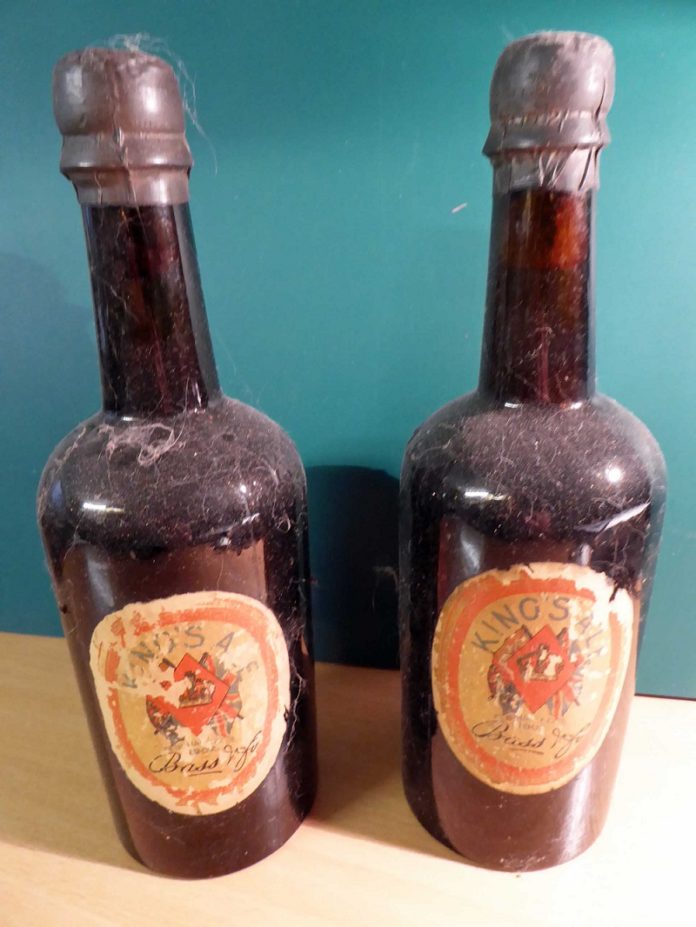
By Sara Janiszewska - Sunderland Magazine
One-hundred-and-twenty-year-old bottles of beer have helped provide insights into the make-up of ancient ales.Research from Brewlab and the University of Sunderland has retrieved live brewing yeasts from century-old bottles of beer to provide detailed information on the microbiology of lost Victorian and Edwardian stock ales.
Three bottles were retrieved by divers of Global Underwater Explorers from the shipwrecked vessel Wallachia which sank after a collision in the Clyde estuary in 1895. The ship carried a mixed cargo including whisky and beer from the McEwan’s brewery in Glasgow.
Two additional bottles were from the Bass brewery in Burton upon Trent and contained a 1902 10% ABV barley wine brewed for a visit by King Edward VII. Both beers represent examples of the stock ales commonly reputed as the best of British brewing due to their complex yeast character, high alcohol levels, and long maturation.
The study, published in the Journal of the Institute of Brewing, analysed microbial DNA in the bottles by next-generation sequencing, identifying the yeasts and bacteria initially present.