HOT NEWS !
Stay informed on the old and most recent significant or spectacular
nautical news and shipwreck discoveries

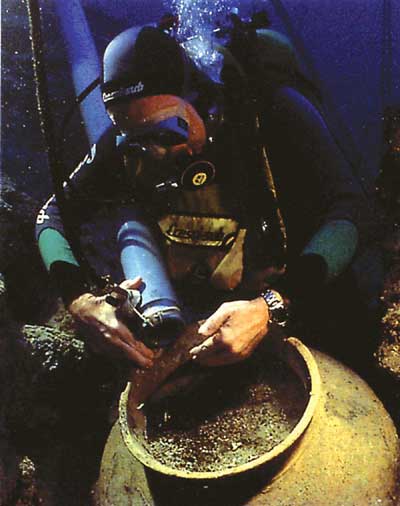
Underwater archaeology pioneer George Bass dies at 88
By Kristin Romey - National Geographic
Pioneering archaeologist George Bass, who played a critical role in the creation and evolution of underwater archaeology as a scientific discipline, died on March 2, 2021, in College Station, Texas.
He was 88. At the time of his death Bass still served as an advisor to the Institute of Nautical Archaeology (INA), the world’s leading research institute for the study of shipwrecks that he established in 1972. The institute is currently headquartered at Texas A&M University, where Bass, a distinguished professor emeritus, developed one of the first academic underwater archaeology programs.
“The world has lost a giant in the field, and I have lost a great friend,” said underwater explorer Robert Ballard, a past INA board member, in a statement provided by the National Geographic Society.
Bass was a graduate student studying archaeology at the University of Pennsylvania in 1960 when he was asked to investigate an ancient shipwreck discovered by Turkish sponge divers off Cape Gelidonya in southern Turkey. The 3,200-year-old Cape Gelidonya wreck, carrying a primary cargo of copper ingots, became the first shipwreck mapped and scientifically excavated in its entirety on the seafloor. At the time, it was the oldest known shipwreck in the world.
That title was superseded by the discovery and excavation of the Uluburun shipwreck in southern Turkey in the early 1980s. With the support of the National Geographic Society, Bass’s team documented and excavated an extraordinary trove of artifacts dating to the 14th century B.C., including precious objects from across the Near East and Europe that illuminated the complexity of trade in the ancient world.
How do you salvage a trove of World War II-era ?
By Tobias Carroll - Inside Hook
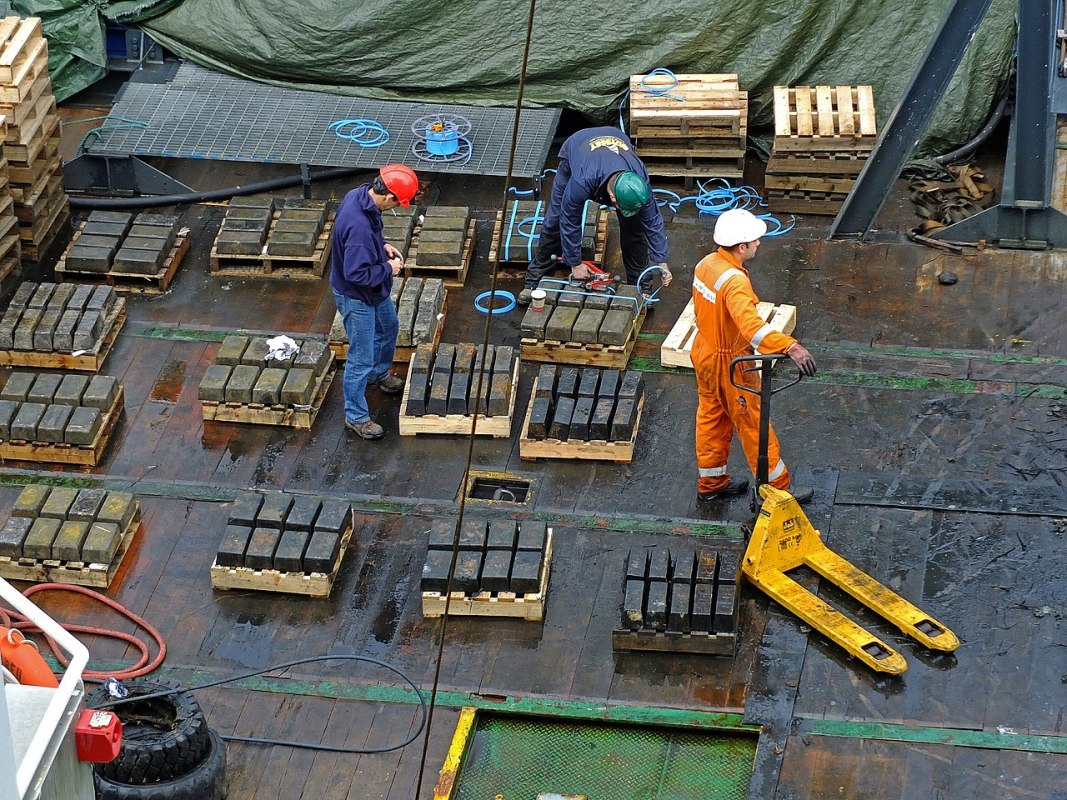
In 1941, the SS Gairsoppa, a British cargo ship, was sunk by a German submarine. Only one member of the crew survived, with dozens perishing in the attack.
What was left of the vessel remained below the waters of the Atlantic off the coast of Ireland for decades. In 2013, Odyssey Marine discovered the remains of the ship — including a massive haul of silver that was on board when the Germans attacked.
That trove of silver wasn’t the only valuable thing found in the shipwreck, however. A new report from Allyson Waller at The New York Times focuses on another significant discovery made in the wreckage: a number of letters — more than 700 in total — that offer an intimate and personal glimpse into life during wartime.
As you might guess, letters that have been in an underwater space for 70-odd years aren’t in the best condition. The Times article focuses on the work conservators are doing to reconstruct the letters, so that we can learn more about who wrote and received them and properly honor those whose lives were lost.
Divers retrieve century-old beer bottles
By Sara Janiszewska - Sunderland Magazine
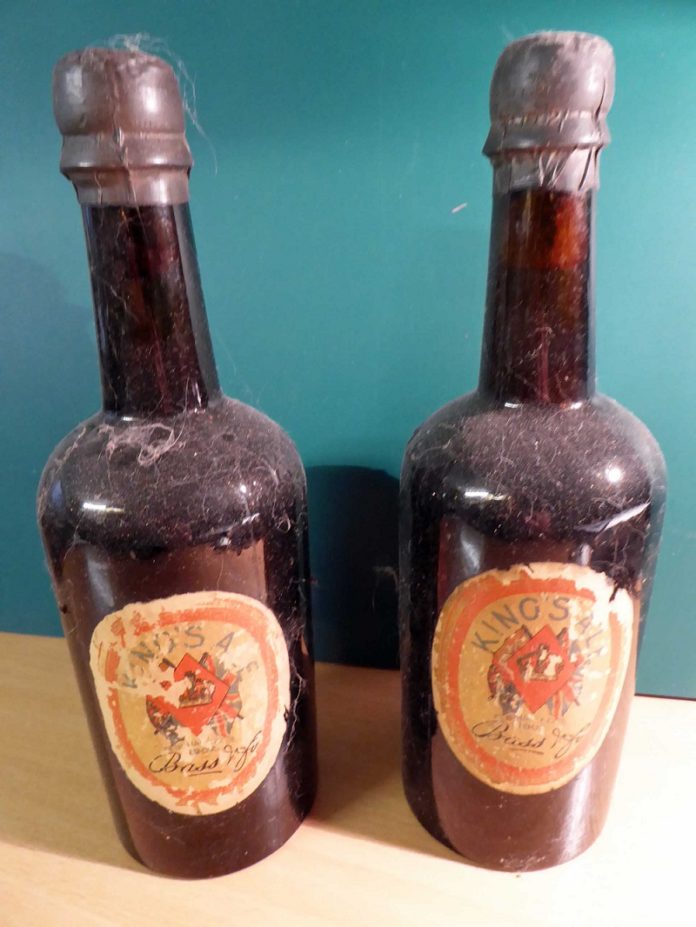
One-hundred-and-twenty-year-old bottles of beer have helped provide insights into the make-up of ancient ales.
Research from Brewlab and the University of Sunderland has retrieved live brewing yeasts from century-old bottles of beer to provide detailed information on the microbiology of lost Victorian and Edwardian stock ales.
Three bottles were retrieved by divers of Global Underwater Explorers from the shipwrecked vessel Wallachia which sank after a collision in the Clyde estuary in 1895. The ship carried a mixed cargo including whisky and beer from the McEwan’s brewery in Glasgow.
Two additional bottles were from the Bass brewery in Burton upon Trent and contained a 1902 10% ABV barley wine brewed for a visit by King Edward VII. Both beers represent examples of the stock ales commonly reputed as the best of British brewing due to their complex yeast character, high alcohol levels, and long maturation.
The study, published in the Journal of the Institute of Brewing, analysed microbial DNA in the bottles by next-generation sequencing, identifying the yeasts and bacteria initially present.
Treasure hunter marks five years in jail
From The Guardian
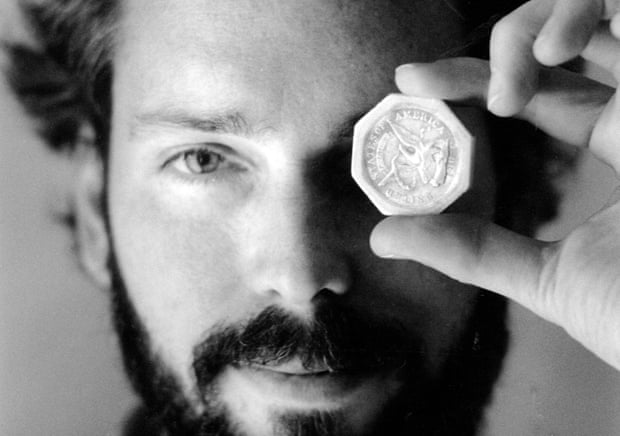
A former deep-sea treasure hunter is about to mark his fifth year in jail for refusing to disclose the whereabouts of 500 missing coins made from gold found in a historic shipwreck.
Tommy Thompson, a research scientist, isn’t incarcerated for breaking the law. Instead, he’s being held in contempt of court for an unusually long stretch – well past the normal maximum limit of an 18-month internment in cases of witnesses refusing to cooperate.
But nothing is usual about Thompson’s case, which dates to his discovery of the SS Central America, known as the Ship of Gold, in 1988. The gold rush-era ship sank in a hurricane off South Carolina in 1857 with thousands of pounds of gold aboard, contributing to an economic panic.
Despite an investors lawsuit and a federal court order, Thompson still won’t cooperate with authorities trying to find those coins, according to court records, federal prosecutors and the judge who found Thompson in contempt.
“He creates a patent for a submarine, but he can’t remember where he put the loot,” federal judge Algenon Marbley said during a 2017 hearing. Thompson’s legal troubles stem from the 161 investors who paid him $12.7m to find the ship, never saw any proceeds and finally sued.
Back in 2012, a different federal judge ordered Thompson to appear in court to disclose the coins’ whereabouts. Instead, Thompson fled to Florida where he lived with his longtime female companion at a hotel near Boca Raton. US marshals tracked him down and arrested him in early 2015. Thompson pleaded guilty for his failure to appeal and was sentenced to two years in prison and a $250,000 fine.
Thompson’s criminal sentence has been delayed until the issue of the gold coins is resolved. That April 2015 plea deal required Thompson to answer questions in closed-door sessions about the whereabouts of the coins, which the government says are worth $2m to $4m.
Importantly, he must also “assist” interested parties in finding the coins under that deal.
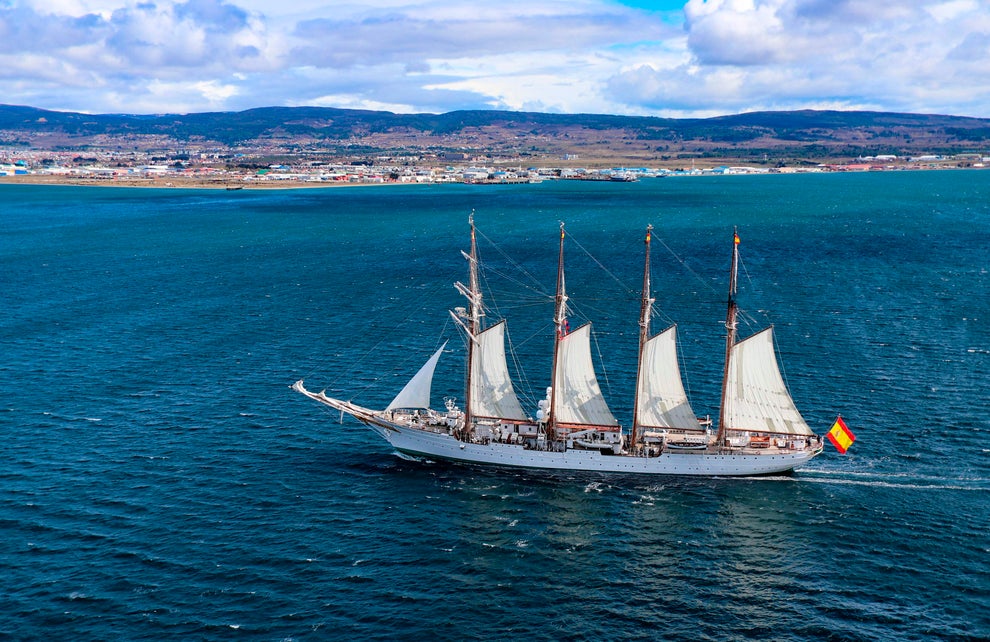
Spain to buy ship to track down sunken treasure
By Graham Keeley - Independent.co.uk
For centuries, sunken Spanish galleons laden with gold, silver and emeralds have guarded their priceless treasures at the bottom of the oceans. Now Spain’s modern day armada is to launch a new vessel that will help in efforts to find the lost loot which Madrid claims as part of its cultural heritage.
Researchers have traced 710 shipwrecks off Cuba, Panama, the Dominican Republic, Haiti, Bermuda, the Bahamas and the US Atlantic coast.
About half of these were travelling from the empire in Latin America to Spain when they sank, laden with treasures, because of bad weather, running aground on reefs, or pirate attacks.
The Spanish defence ministry is to purchase a €192m (£173m) Underwater Intervention Maritime Action Vessel (BAM-IS), which should be operational by 2022.
The vessel will be equipped with remotely operated underwater robots and specialised sonar equipment that can help marine archaeologists to locate wrecks. The ship will also help rescue stricken submarines and the bodies of fallen crews for humanitarian reasons.
“This ship could help us in finding and, if necessary, recover wrecks. The last time the Spanish navy helped us in this way was when we located ships lost in the Battle of Trafalgar, but their current ship is very old and outdated,” said Carlos Leon, a marine archaeologist who works with the Spanish government.
Jean-Pierre Joncheray nous a quittés...
De Var Matin
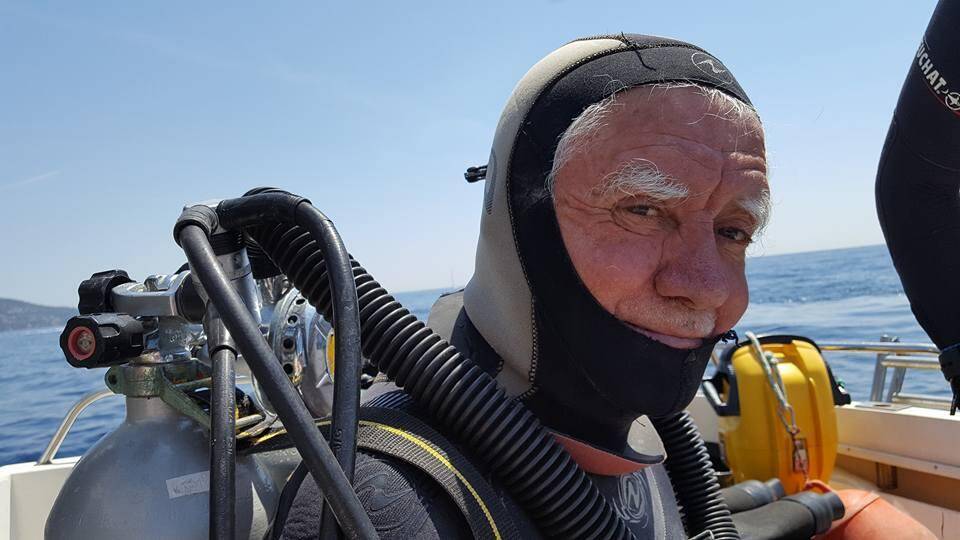
Jean-Pierre Joncheray est décédé à l’âge de 79 ans ce jeudi à Saint-Raphaël.
C’est avec une grande tristesse que nous avons appris le décès de l'archéologue sous-marin Jean-Pierre Joncheray, survenu à l’âge de 79 ans, jeudi à Saint-Raphaël.
Né en Algérie, l’étudiant en pharmacie à Marseille se passionne tôt pour la plongée et la recherche sous-marine. Biologiste et auteur de nombreux ouvrages, « Jean-Pierre, mon pygmalion, adorait fouiller, comprendre et transmettre », dit de lui Anne Joncheray, la directrice du musée archéologique de Saint-Raphaël.
Ensemble, passionnés par la recherche et l’exploration d’épaves, ils ont notamment effectué des fouilles approfondies sur la Chrétienne, le sous-marin l’Alose ou le Alain en baie d’Agay.
Le couple s’est même rendu en Islande pour étudier le Pourquoi pas ? du commandant Charcot.

By Peter Suciu - The National Interest
It was dubbed the “Eighth Wonder of the World,” a golden-hued, jewel-encrusted chamber that was made of several tons of gemstones, gold and amber.
The opulent “Amber Room” disappeared during the Second World War and was considered a casualty of the conflict, but now divers off the coast of Poland believe they may have found the lost Tsarist-era treasure.
The room was part of the Catherine Palace near St, Petersburg (Leningrad during the war), and it was last seen in the Baltic port city of Königsberg (modern Kaliningrad) in East Prussia. After that point its location was lost to time, and it was long assumed the panels that once graced the walls of the palace were destroyed.
However, it has been suggested that instead the Amber Room may have been loaded onto a ship, and now divers believe it could be on the steamer Karlsruhe, which set sail from Königsberg in early 1945 laden with cargo and subsequently sunk after being attacked by Soviet airplanes.
Divers from Baltictech Group have found the wreck after more than a year of searching.
Diver arrested with almost 300 centuries-old jars
From The Independent
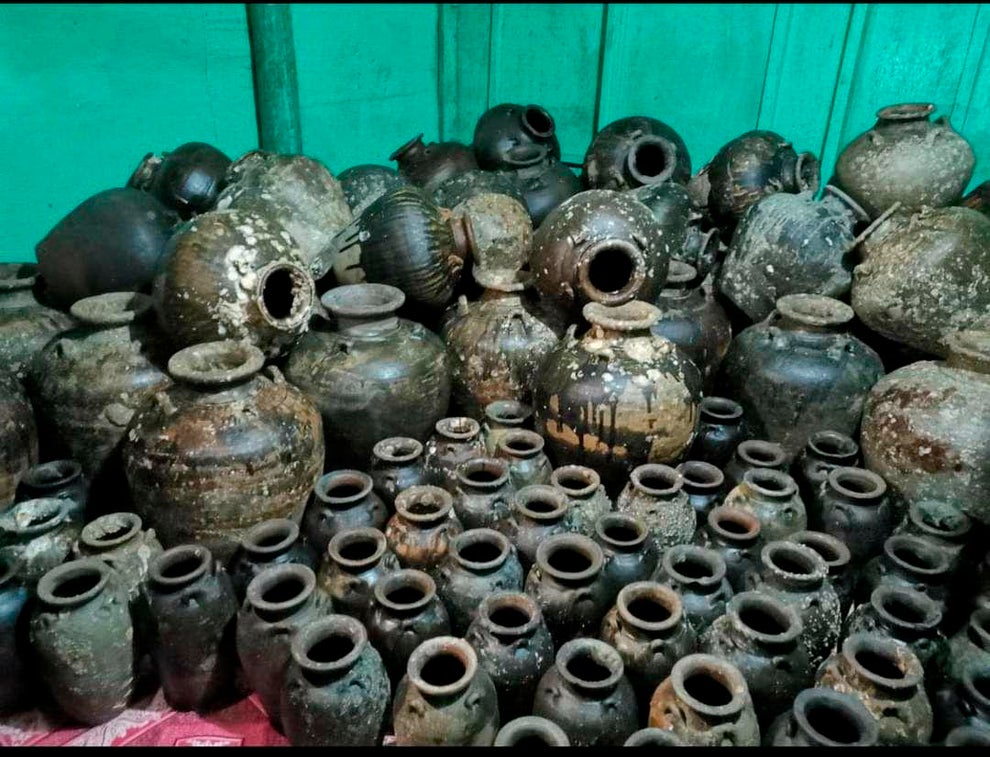
A man on Cambodia’s southern coast was arrested for possessing almost 300 centuries-old earthenware jars that he is believed to have salvaged from a shipwreck an official said Tuesday.
Khieng Phearum, a spokesman for Preah Sihanouk province, said the 42-year-old man was arrested late Sunday after authorities determined that he was illegally keeping 281 small and big jars presumed to be legally protected antiquities at his home.
The man, who was still being interrogated on Tuesday, is an expert diver and had been spotted in the area of an underwater shipwreck in the Gulf of Thailand off the coastal city of Sihanoukville from which the pottery is believed to have been retrieved, Khieng Phearum said.
He said he did not know how the man retrieved the jars or how long they have been in his possession, but the authorities had become aware of his collection, and after observation, arrested the man at his home.