HOT NEWS !
Stay informed on the old and most recent significant or spectacular
nautical news and shipwreck discoveries

-
Learning from underwater shipwrecks
- On 09/06/2011
- In Underwater Archeology
From Historic City News
Sarah Miller and Amber Grafft-Weiss keep Historic City News readers up-to-date on what’s happening with the Florida Public Archaeology Network Northeast Region; located in St. Augustine and hosted by Flagler College.
In their latest adventure, Sarah and Amber suited up for submerged resources training as part of a Heritage Awareness Diving Seminar aimed at providing dive instructors with all the information, tools, and resources needed to teach heritage awareness as a specialty course.
Accompanying the students was Chuck Meide, a local underwater and maritime archaeologist who currently serves as director of the Lighthouse Archaeological Maritime Program; the research arm of the St. Augustine Lighthouse & Museum.
The Public Archaeology Network is dedicated to the protection of cultural resources, both on land and underwater, and to involving the public in the study of their past. Our local center, located on Markland Place, serve as a clearinghouse for information, institutions for learning and training, and as headquarters for public participation in archaeology.
Miller reported that their class time focused on sea faring culture and explained how underwater shipwrecks observed by archaeologists translate into how people lived and met their basic needs in the past.
Participants were taught an appreciation for wrecks as non-renewable cultural resources by dive captains whose policy is “Don’t take anything from the wreck, or don’t get back on my boat.”
The course continued along currents of preservation law, conservation, and heritage tourism themes. The day ended with a briefing of the practicum component of the course — diving on shipwrecks.
The next day the 23 class participants visited two submerged archaeological sites; the nineteenth-century Brick Wreck and seventeenth-century Mystery Wreck located within NOAA’s Florida Keys National Marine Sanctuary. -
Famous shipwreck found off N.C.
- On 08/06/2011
- In Wreck Diving
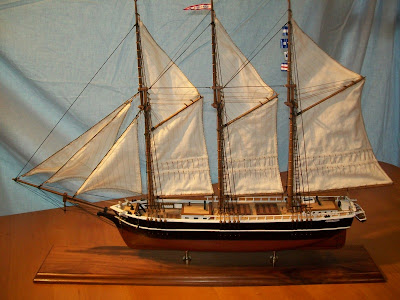
By Jay Price - News Observer
A nonprofit marine archaeology company thinks it has found one of the most legendary shipwrecks on a stretch of North Carolina coast famous for them.
The three-masted schooner Crissie Wright went aground and partially sank in shallow water just off Shackleford Banks on Jan. 11, 1886, near the now-vanished community of Diamond City. Shackleford Banks is the barrier island just across Beaufort Inlet from Fort Macon State Park.
The wreck was visible for months after it occurred, said Rob Smith, president of the Beaufort-based Surface Interval Dive Co., which had looked for the wreck for 15 years with no luck.Historical accounts of its location put it due south of the DiamondCity Graveyard, which Smith said his team had not been able to find.
But Smith's company got a break when it recently received information about the location of the graveyard. Using equipment such as a magnetometer, which can detect metal objects such as the fasteners that hold a wooden ship together, searchers almost immediately found a large wreck where expected, just outside the surf line, buried under the sand.
"I don't normally jump to conclusions, but because of the location and the new information we received about the graveyard location, I'd say the chances are 85 percent that this is it," Smith said.
The ship was close enough to shore that the seven-man crew, which had survived the sinking, could be seen by a crowd that gathered on the beach.
But seas were too rough for local fishermen to reach them, and then the temperature plummeted, with some reports saying it went as low as 8 degrees overnight. Bonfires were built ashore to be ready to warm the crew members when they were finally rescued, but it was a day and a half before anyone could reach the ship.
The Crissie Wright crew, soaked and freezing, apparently climbed into the rigging to stay out of the seas sweeping the deck. At least three crew members either fell or were swept into the sea, and the others began freezing to death, one by one.
When rescuers finally climbed aboard, they found just one survivor, barely alive, under the rigid bodies of three of his shipmates, all of them wrapped in a sail. Those three were buried in a common grave in Beaufort, and the story of the Crissie Wright's end became a local legend, told by generation after generation. -
Map Arctic explorer Willem Barentsz foresaw northern passage in 1596
- On 08/06/2011
- In Ancien Maritime History

By Geert Groot Koerkamp - RNW
The dream of a 16th century Dutch explorer could become reality in 2020. In 1596, Willem Barentsz set off to sail a route across the Arctic Ocean to Asia. He died in the attempt. But as a result of global warming, it looks like he would have had more luck had he tried four centuries later.
Dutch school children all know the story of Willem Barentsz, who got stuck in the ice in the autumn of 1596, on his quest for a northern route to the Indies.
The sailors survived the bitter arctic winter in a house they built themselves on the now Russian island of Nova Zembla.Barentsz ship’s logs recounting the story of that punishing winter have recently been translated into Russian.
But that’s not the only reason the Dutch explorer is currently topical in Russia. The voyage he dreamt of along the north coast of Russia to Asia will soon become possible. At least, that’s the belief of Professor Louwrens Hacquebord, director of the Arctic Centre in the northern Dutch city of Groningen. He made his prediction at the launch of the translation in Moscow.
“On the basis of 30 years of satellite photos that the sea ice is retreating considerably,” says Professor Hacquebord. “If it goes on like this, you can expect the sea to be free of ice by 2020.”
This offers possibilities for shipping, although certainly at first ships will have to be prepared for a lot of drifting ice. “It will still be a dangerous ocean, even if there is sometimes ice and them sometimes not. It won’t make the sea any safer,” the professor says. Ships will need ice reinforcement and good search and rescue facilities.Willem Barentsz has inspired many arctic explorers. One of them, Vladimir Vize, even learnt Dutch to be able to read the story of Barentsz voyages in the original language, says arctic specialist Pjotr Bojarski.
A first censored translation of Barentsz’ log edited by Vize was first published in 1936. All references to God were conscientiously removed by Stalin’s censors.
-
Odyssey to commence Gairsoppa silver project
- On 08/06/2011
- In Treasure Hunting / Recoveries
From Market Watch
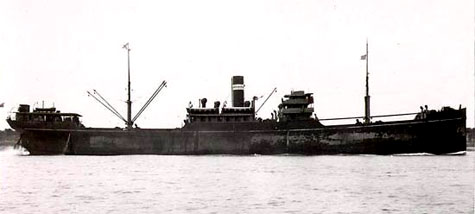
Odyssey Marine Exploration, Inc. has executed a charter agreement to utilize the Russian Research Vessel Yuzhmorgeologiya to conduct search operations for the SS Gairsoppa.
The Gairsoppa was torpedoed by a German U-Boat in February 1941 while enlisted in the service of the United Kingdom Ministry of War Transport. Contemporary research and official documents indicate that the ship was carrying as much as 7,000,000 ounces of silver.
In 2010, the United Kingdom (UK) Government Department for Transport awarded Odyssey, through a competitive bid, the exclusive salvage contract for the cargo of the SS Gairsoppa. Under the salvage contract, Odyssey will retain 80% of the bullion value of the cargo after expenses.
Odyssey expects to commence operations on the SS Gairsoppa project in July 2011 using the Yuzhmorgeologiya, a vessel owned by the Russian government and managed by CGGE International. The timing of the recovery operation will depend on the physical disposition of the shipwreck and weather.The UK Dept for Transport has extended Odyssey's salvage agreement for an additional year to take into account a salvage operation that is expected to extend into 2012.
"We look forward to beginning work with the R/V Yuzhmorgeologiya, an impressive ship that can withstand the extreme weather conditions in the search area," said Greg Stemm, CEO of Odyssey Marine Exploration, Inc.
"With work on advanced-stage projects keeping the Odyssey Explorer busy for the foreseeable future, it made sense to charter an additional vessel for the prime weather window for Gairsoppa operations.
We're confident in our team, the technology and research that we have lined up for the project and we're looking forward to locating and recovering the cargo of the Gairsoppa.
The search area for this ship is clearly delineated based on specific locational reports from the U-Boat captain that sank the ship, as well as the navigational data from the other ships that had been in the same fleet in the Atlantic and the account of the ship's second officer who survived the shipwreck."
-
Treasure hunter Capt Carl Fismer brings new discoveries
- On 07/06/2011
- In Treasure Hunting / Recoveries
From Cannon Beach Gazette
Ever wondered what it's like to hold genuine "pieces of eight" that were just recovered from a long lost Spanish galleon in Florida ? Curious Cannon Beachers can do just that at the Cannon Beach Treasure Company June 16 to 20, and they'll also get a chance to visit with veteran treasure hunter Capt. Carl "Fizz" Fismer, the man who discovered them.
Fismer is the president of Spanish Main Treasure Company, and he has been a
professional treasure hunter for 43 years. Proprietors Robert and April Knecht promise visitors plenty of treasure talk and the unveiling of a few new discoveries fresh from the famous 1715 Fleet shipwreck, located off the coast of Vero Beach, Fla.
"I started diving with Fizz over 20 years ago documenting his discoveries and treasure hunting with him," said Knecht, who lived and dived in the Florida Keys for almost two decades. "I've made over 900 dives, and many of them have been with Carl."
Fismer is an expert in shipwreck and artifact identification and he has explored, salvaged and consulted on nearly 300 shipwrecks in the Bahamas, Mexico, Costa Rica, Honduras, Dominican Republic, Sri Lanka, and the Southeast United States.
In that time, he has made thousands of dives in six countries and has recovered more than $10 million in sunken treasure. He has served as curator of several maritime museums, and he's been featured on the covers of numerous treasure magazines. He's also the star of the Australian TV series "Treasure Divers" and has appeared as a shipwreck artifact expert on the TV show "Pawn Stars."
The Knechts invite one and all to hear the Captain spin treasure-hunting tales and perhaps grab an autograph. The Cannon Beach Treasure Company will host a "Coffee with the Captain" event each morning around 10 a.m. Rumor has it the Captain will also be out on the town enjoying adult beverages at the Lumberyard and Bill's Tavern after hours, and he'll be looking for some good company.
-
Small submarine used to investigate Admiralty Inlet shipwreck
- On 06/06/2011
- In High Tech. Research/Salvage
By Philip L. Watness - Peninsula Daily News
Advanced three-dimensional sonar imaging will soon reconstruct the broken remains of a passenger liner lying far below the surface of Admiralty Inlet.
The SS Governor sank rapidly after being rammed by the freighter West Hartland just after midnight April 1, 1921.
It carried 172 passengers with a crew of 124, according to a New York Times story published the day after the wreck.
Ten people were missing, The Times said. Later reports said eight people perished as the 417-foot steamship sank.
Experienced divers have visited the wreck, resting in silt 240 feet deep, over the decades and marveled at the girth of the vessel while perusing the many artifacts laying around its broken hull.
Now a manned submarine will dive for the most comprehensive look in 90 years.
Antipodes, a 7-ton, 15-foot-long manned submersible operated by OceanGate of Everett, will make numerous dives to the hulk June 23-28, said Joel Perry, vice president of expeditions.
Perry said the company selected the vessel’s final resting place to prepare for a similar expedition to a tanker lying off California’s coast.
The submarine, which will carry up to five crew members, will produce three- and two-dimensional sonar images of the Governor.
“It’s a nice target locally for us to refine our operations,” Perry said.
“It’s a cool local story, as well, and this should be a nice benefit to all.”
The Governor was steaming toward Seattle during that fateful witching hour on the last leg of a voyage from San Pedro, Calif., as recounted in City of Dreams: A Guide to Port Townsend (1986).
Some passengers had disembarked at its last port of call in Victoria, and as the Pacific Mall Steamship Co. vessel rounded Point Wilson, its pilot noted the glow of the Marrowstone Island lighthouse and some lights of a freighter departing from Port Townsend, the book said.
The West Hartland was heading out to sea, but the Governor’s pilot steamed forward, oblivious to the collision course the two vessels were on.
Moments later, five staccato blasts from the freighter alerted the Governor of impending doom, then its bow cut into the liner’s side, nearly cutting it in half.
The Hartland’s captain intentionally kept the bow wedged into the Governor, allowing time for most of the liner’s passengers to abandon ship.
But eight poor souls went to the bottom with the ship, including a mother and her two young daughters who were trapped in their berths by the collision and two older women whose modesty didn’t allow them to appear on deck in their nightgowns, according to the book.
The New York Times story April 2, 1921, said that, after an investigatory meeting closed to the public, some passengers asserted that the pilot had admitted that he had mistaken the mast lights of the West Hartland for shore lights.
The Governor now lies on its starboard side, its bow ripped open as if a large can opener had peeled back the metal, according to divers’ accounts. -
Divers go deep for unexplored UAE wrecks
- On 06/06/2011
- In Wreck Diving

Photo Antonie Robertson
By Colin Simpson - The National
They have to go deep, these divers, sometimes 100 metres or more below the surface.Conditions can be bad down there, so dark they sometimes do not know they have found what they are looking for until the darkness opens suddenly revealing the prize: an unmistakable V-shape of a shipwreck.
"It's just an absolute blast when you see one of the wrecks," said Nick van der Walt, a diver from New Zealand.
"You go down and you go through these layers of water and then you get a dark layer of plankton, and you go through that and then it's like a theatre curtain opening as you look down on the wreck with the divers' torch beams flashing across it."
Dr van der Walt is part of an informal group of a dozen divers in Dubai - a group that includes two women, a teacher and an airline pilot - working on a project that would see them find and dive every deep shipwreck in the Gulf of Oman, off the coast of Fujairah up to the tip of Musandam.The project, launched back in November 2009 through team leader, Bill Leeman, requires them to dive deeper than conventional equipment can take them, more than double the typical 40 metres below the surface.
These wrecks lie at 100 metres or more, requiring technical diving that involves adept skills, a special mix of gases and complicated equipment.
"Currently there are five brand new wrecks that had never been dived before, which we've dived, and there are three or four left that we haven't found yet," said Mr Leeman."When you're the first one to see one of these wrecks, and to physically touch it, it's fantastic. You've achieved something, you've found it, you've dived it, and then everybody can go after you."
They are able to go so deep because they breathe mixtures of helium, oxygen and nitrogen, known as trimix.
The wreck-finders are amateurs with day jobs, "to pay for the diving", said Mr Leeman.
A five-day boat trip, the usual length of their wreck excursions, costs about Dh4,000 per person. They have all undergone a considerable amount of special training, led by Mr Leeman, who was trained in the UAE as a technical diving instructor. -
Underwater coring technique allows archaeologists to go deeper than ever before
- On 06/06/2011
- In Marine Sciences
By Randy Boswell - Vancouver Sun
A team of Canadian scientists has used geology-style drill cores from an Ontario lake bottom to gather evidence of tool-making and perhaps even duck-hunting by ancient aboriginals about 10,000 years ago — the first discovery of its kind in North America, and one that could point the way to further breakthroughs in underwater archeology around the world.
Led by researcher Lisa Sonnenburg of McMaster University in Hamilton, Ont., the team took sediment samples from a shallow section of Rice Lake — a popular summer vacation spot northeast of Toronto — where prehistoric First Nations were known to have camped soon after the glaciers retreated at the end of the last ice age.
The scientists found more than 150 tiny flakes of quartz in the lake’s murky depths — strong evidence that an ancient shoreline, submerged long ago, was used by some of Canada’s earliest inhabitants as a site for manufacturing spear points, scrapers and other tools for fishing and hunting.
The discovery not only sheds new light on the activities of those prehistoric people, but also pioneers a novel method of detecting the presence of ancient aboriginals in what are now drowned landscapes — a technique with huge research potential in Canada’s Great Lakes region and many other places around the world where suspected settlement sites have became inundated over time.
The team’s analysis of telltale markings of human activity on the quartz fragments — known as “microdebitage” among archeologists — shows that the technique “offers a reliable quantitative method for narrowing search areas and for identifying new areas of underwater archeological potential,” the researchers conclude in a study published in the July issue of the journal Geology.
Sonnenburg told Postmedia News that the team targeted “what we thought was an old shoreline” and that the drill cores proved that’s “exactly what it was.”
She recalled “staring down the barrel of a microscope” for a long time before beginning to see quartz chips at a consistent layer of sediment, about two metres deep, that suggested the ancient occupation of the site.