HOT NEWS !
Stay informed on the old and most recent significant or spectacular
nautical news and shipwreck discoveries

-
International team of 40 ready to remove Rena's bow
- On 31/07/2012
- In Dangerous Places for Shipping
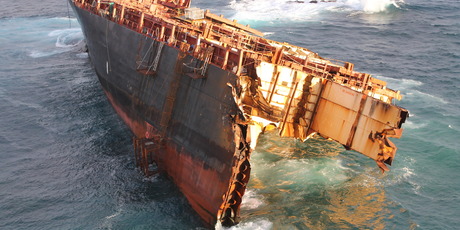
By Kiri Gillespie - NZ HeraldUp to 40 wreckage removal experts from around the world will converge on Tauranga in the next week for the second phase of the Rena recovery.
Salvage authorities announced plans to remove the bow section of the stricken cargo ship this week but said yesterday they were yet to figure out how to remove the rest of the Rena from Astrolabe Reef.
The ship ran aground on the reef as it headed towards Tauranga early on October 5, spewing oil and debris across the coast.
Clean-ups have helped clear remaining rubbish but the wreck remains on a 22-degree list on the reef in rough water described as like a washing machine.
The operation to remove the bow will begin on August 3 when a salvage team boards the ship and cuts the section into pieces.
Divers will cut around the bow up to 1m below the surface, using a combination of magnesium steel with oxygen and electricity to cut the metal.
-
Carpathia gold Titanic medal up 13.8% on estimate
- On 30/07/2012
- In Auction News

From Paul Fraser Collectibles
A gold medal awarded to an officer from the Carpathia, the first ship to reach survivors of the Titanic disaster, has beaten its estimate at a UK auction.The gold medal awarded to Second Officer James Bisset sold for £41,000, 13.8% up on the £36,000 high estimate.
The "unsinkable" Molly Brown, who would later be portrayed on the big screen for her efforts to rescue passengers, was among a group of first class passengers from the Titanic who decided on awarding Carpathia crewmembers medals.
"Carpathia gold medals are some of the rarest pieces of Titanic memorabilia to exist today; this is only the second gold Carpathia medal to be offered in the last 25 years and is thought to be the most senior officer's medal to ever to go under the auctioneer's hammer," the auction house said, helping explain its strong performance at the sale.
A bronze medal awarded to a lower ranking Carpathia crew membermade $2,000 last year.
-
Oak Island obsession destroyed family
- On 30/07/2012
- In Miscellaneous

By Elizabeth Patterson - The Chronicle HeraldIf you’ve lived in Nova Scotia for any length of time, you’ve heard about Oak Island.
It’s a place shrouded in mystery and wonder, thanks to its association with pirate treasure and the resulting folly that seemingly strikes anyone brave or foolish enough to hunt for it.
Oak Island Family: The Restall Hunt for Buried Treasure is the story of one family’s tragic search for riches.
Lee Lamb’s parents were circus performers who toured with their motorcycle act, the Globe of Death, across North America in the 1950s.
For a change of pace, they decide to move to Nova Scotia in 1959 with their two sons to search for pirate treasure on Oak Island.
Lamb, who was married with her own family at the time, admits the Restalls weren’t exactly your average family, a fact that didn’t make the book any easier to write.
“Oak Island Family was meant for readers new to the Oak Island story.
It would provide a scaled-down version of the original treasure hunts and just the bare bones of the Restall experience on Oak Island,” said Lamb in an email interview, adding that she thought the job would “be easy and fun.”
“I was wrong. Stripping the stories to essentials was hard work, and the emotional impact of revisiting my family’s experience completely blindsided me.
While I wrote, this memory reminded me of that, and that led to another recollection, long forgotten. By the end of the book, I was completely wrung out.
I was left with a strange pervasive sadness and deepened awareness of the sacrifices my mother and brothers had made for what, at the very end, had become only my Dad’s obsession.”
The plan was to stay there for less than a year, but delays and problems kept them there until 1965, when a tragic accident killed her father, brother and two men working on the site.
While, in hindsight, it’s hard to imagine searching for something that could kill you, Lamb successfully explains the journey to that fatal day and how a family’s hard work, dedication to an idea, and hope led to the deaths of four people.
The Restalls simply tried too hard to find an island’s deep, dark secrets, which have yet to be uncovered.
Oak Island is still a magical place for Lamb, but she fears for its future as long as the treasure remains unclaimed.
-
Researchers move from Minnetonka to other lakes to scan for wrecks
- On 29/07/2012
- In Miscellaneous
By Tom Meersman - The Star Tribune
Two researchers who scrutinized the bottom of Lake Minnetonka for possible shipwrecks are turning their underwater sights on Lake Waconia in Carver County and White Bear Lake in Ramsey County.
Ann Merriman and her husband, Chris Olson, are archaeologists who together founded the nonprofit Maritime Heritage Minnesota in 2005.
Their quest is history, not treasure, since the steamboats, barges, sailboats and other objects they've identified were usually stripped of anything valuable and intentionally sunk when they became outdated.
The couple use inexpensive but high-quality sonar equipment to scan the bottom of lakes and rivers methodically, searching for possible archaeological sites.
Merriman said she received an acceptance letter last week for a $7,000 grant from the Arts and Cultural Heritage Fund -- part of the Clean Water, Land and Legacy Amendment -- to survey Lake Waconia and White Bear Lake, two of the metro area's largest lakes behind Minnetonka. She said the work could be done in late summer or early fall, and will take about a week.
Waconia and White Bear have much in common with Lake Minnetonka, Merriman said.
"These three lakes had the same kinds of vessels on them," she said, and sometimes a boat built on one lake was sold and shipped to another.
Both White Bear Lake and Lake Minnetonka had yacht clubs, Merriman said.
Minnetonka and White Bear Lake were also connected by the streetcar system, she said, and each had an amusement park.
Like Lake Minnetonka and its Big Island, Lake Waconia also developed a resort area with hotels and steamboats that took visitors to amusements on Coney Island.
-
German U-boat at bottom of Churchill River in Labrador
- On 28/07/2012
- In World War Wrecks
By Richard J. Brennan - The Spec
Brian Corbin says it might sound far-fetched but he’s 100 per cent sure there is a German U-boat lying on the bottom of Labrador’s Churchill River more than 200 kilometres from the coast.
Rumours of a World War II German submarine at the bottom of the river have been around for years, but a grainy sonar image seems to show the outline of the type of sub that terrorized the North Atlantic during World War II.
Corbin, 50, a diver from Happy Valley Goose Bay in Labrador, was among several people using side scan sonar technology searching the river bottom for three men lost over Muskrat Falls in 2010 but it was only three weeks ago they made what they believe to be an historic discovery.
“Our focus was finding bodies . . . but low and behold we found something that sort of resembles a submarine,” Corbin told the Star Thursday.
It was after Corbin heard that other people were searching for “the so-called submarine” that he decided to pore over the sonar images since his group had spent three weeks combing the area near the falls.
“I’m 100 per cent (convinced) . . . it does resemble a conning tower, snorkel vents for the generators for charging the batteries and the cables are there that go to the conning tower . . . it’s a very good sonar image,” he said.
Corbin said he has registered with Transport Canada’s Receiver of Wreck, who acts as the custodian of found and recovered wrecks, and he’s eager to get back to the site, about one kilometre from Muskrat Falls.
-
First Dynasty funerary boat discovered at Egypt's Abu Rawash
- On 28/07/2012
- In Underwater Archeology
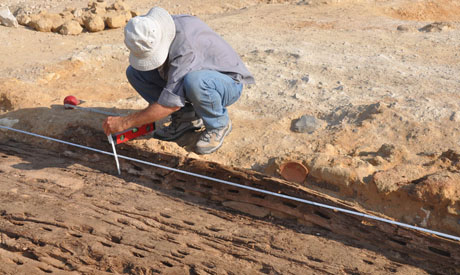
French archaeological mission discovers 3000BC funeral boat of King Den northeast of Giza Plateau, indicating earlier presence at the Archaic period cemetery.During routine excavation works at the Archaic period cemetery located at Abu Rawash area northeast of the Giza Plateau, a French archaeological mission from the French Institute of Oriental Archaeology in Cairo (IFAO) stumbled on what is believed to be a funerary boat of the First Dynasty King Den (dating from around 3000BC).
The funerary boat was buried with royalty, as ancient Egyptians believed it would transfer the king's soul to the afterlife for eternity.
Unearthed in the northern area of Mastaba number six (a flat-roofed burial structure) at the archaeological site, boat consists of 11 large wooden planks reaching six metres high and 150 metres wide, Minister of State for Antiquities Mohamed Ibrahim said in a press release sent to Ahram Online on Wednesday.
The wooden sheets were transported to the planned National Museum of Egyptian Civilisation for restoration and are expected to be put on display at the Nile hall when the museum is finished and opens its doors to the public next year.
The IFAO started its excavation works at Abu Rawash in the early 1900s where several archaeological complexes were found.
At the complex of King Djedefre, son of the Great Pyramid King Khufu, Emile Chassinat discovered the remains of a funerary settlement, a boat pit and numerous statuary fragments that bore the name of Fourth Dynasty King Djedefre.
Under the direction of Pierre Lacau, the IFAO continued its excavation work and found new structures to the east of the Djedefre pyramid.
However objects bearing the names of First Dynasty Kings Aha and Den found near the pyramid indicate an earlier presence at Abu Rawash.
-
Australian sub sinks U.S. navy ship (but don’t worry, it was for practice)
- On 28/07/2012
- In Maritime News
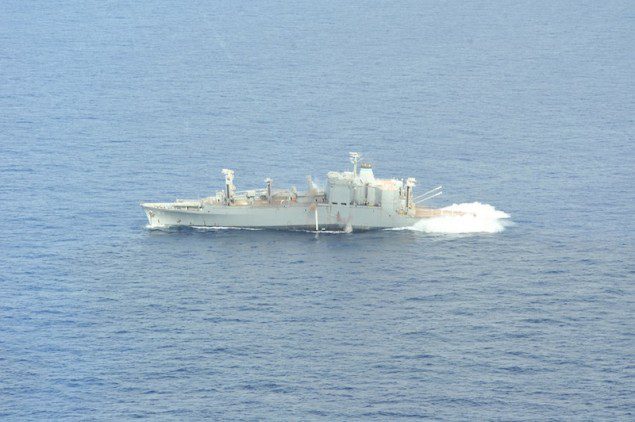
By Mike Schuler - gCaptainThe ex-USS Kilauea, a former ammunition ship and a later staple of the Military Sealift Command for almost 30 years, was sunk earlier this week at the hands of a Australian submarine near Hawaii.
Not to worry, however. The ship, along with the USNS Niagara Falls, were sunk as part of a SINKEX (sink exercise) during the 2012 Rim of The Pacific, or RIMPAC, exercise.
This years RIMPAC saw representatives from twenty two of the world’s Navies spending their July near the Hawaiian Islands in what is being called the largest international maritime exercise in the world.
More than 40 ships and submarines, 200 aircraft and 25,000 personnel are in attendance
To help crews gain proficiency in live firing, the U.S. offered up the ex-USS Kilauea as a target vessel in one of two SINKEX’s to be conducted during this years exercise.
And on June 22 at approximately 9:32 a.m., the vessel was fired upon and sunk at the hands of the Australian Navy’s HMAS Farncomb submarine in waters 15,480 feet deep.
“HMAS Farncomb’s success reminds us yet again of the invaluable role submarines play in modern warfare,” said Australian Commodore Stuart Mayer, Combined Forces Maritime Component commander for RIMPAC.
While some are praising the exercise for its as-real-as-it-gets experience it gains, others are saying the only thing sunk was millions of taxpayer dollars.
Let’s hope the Australian Navy hits their next target…
-
Diver fathoms out Hastings wreck riddle as name of vessel rings bell
- On 28/07/2012
- In Wreck Diving

From the Hastings ObserverA diver has fathomed the mystery of a century old shipwreck after making a fascinating discovery.
A century old mystery of the identity of a shipwreck off the coast of Hastings may have finally been solved after a diver made a fascinating discovery.
Pete Hodkin was diving what has been known for many years in diving circles as ‘Wreck 355’ when he discovered the ships bell bearing its real name – The SS Ladoga.
The 52-year-old had gone out about five miles as part of a diving party from Mid Herts Divers on board a boat run by Dive 125 based in Eastbourne.
He had dived to the wreck around 25 metres and was inspecting the ship’s anchor chain around 4.30pm last Saturday when he came across what he thought was an old plate buried in the sand.
“I was swimming along when I suddenly saw something round in the sand,” said Pete. “It was in a jumbled up mess of steelwork.
“At first I thought it was a plate. As I got a bit closer I thought it could be a bucket but as I picked it up I realised it was a bell. And I thought ‘Wow what a find!’
“It was shiny, about 5kg in weight and in good condition and had the inscription SS Ladoga 1892 London.
“I was really excited - it was the most exciting thing I had ever found.
“Locating a bell is one of the most valuable things a diver can ever find. It is usually the only positive means of identification of a boat.”
Records show that the SS Ladoga disappeared after a collision off the coast of Hastings on March 15, 1903. Three men lost their lives.
It was a steam cargo ship that was built by William Doxford and Sons Ltd in Sunderland in 1892.