HOT NEWS !
Stay informed on the old and most recent significant or spectacular
nautical news and shipwreck discoveries

-
Captain Morgan's treasure discovered near Panama
- On 04/08/2012
- In Underwater Archeology
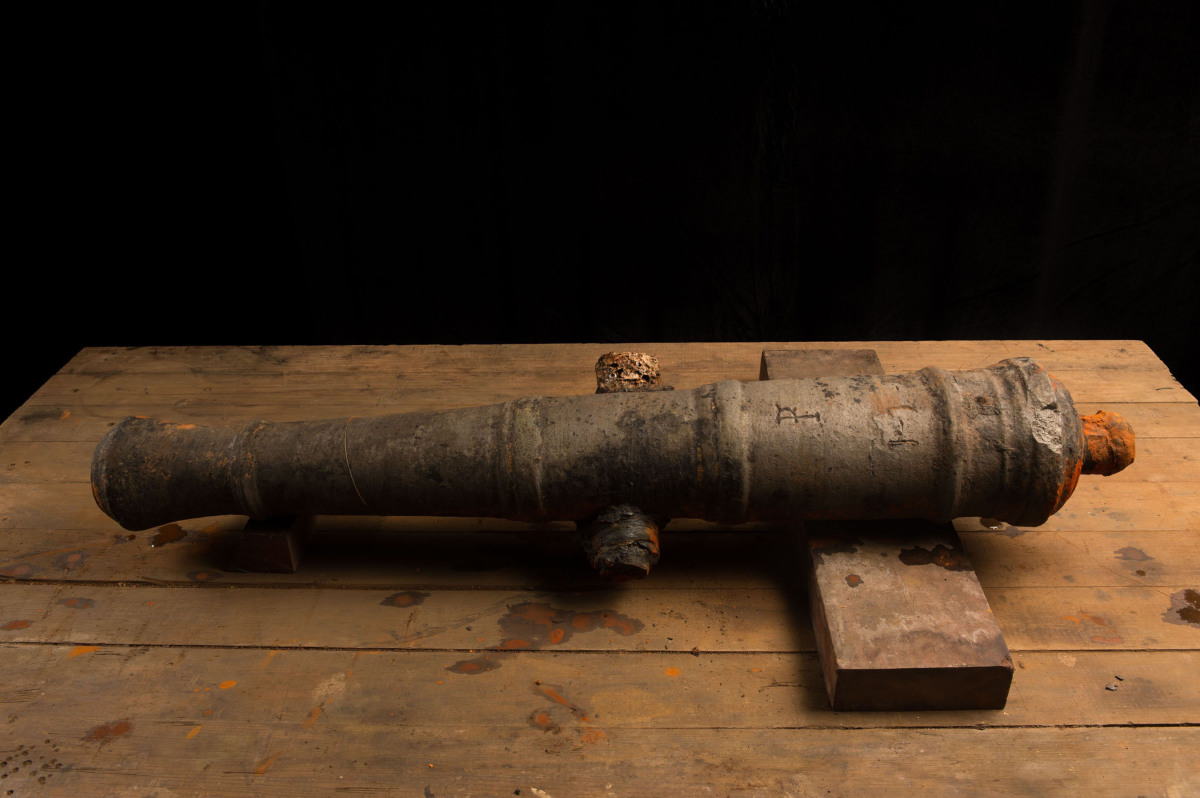
From Huffington PostArrrr... they be plunderin' Captain Morgan's treasures.
They, of course, being a team of U.S. archaeologists; plundering, as in conducting an underwater search; and Captain Morgan's treasures being the lost fleet of a 17th century Welshman, Captain Henry Morgan.
Yes, the very Captain Morgan who makes appearances at countless happy hours in the form of a spiced rum bearing his name -- which, conveniently, funded the ocean expedition.
CNN reports a team led by underwater archaeologist Fritz Hanselmann of the River Systems Institute and the Center for Archaeological Studies at Texas State University has discovered swords, barrels and chests belonging to the real Captain Morgan off the coast of Panama.
Hanselmann explained why the rum-fueled exploits matter.
“We’re interested in telling the true story of Henry Morgan,” Hanselmann told Fox News. "Morgan was a legendary figure, even in his time.
He pretty much ran amuck in the Spanish main, culminating in the sack of Panama City. He sacked a city no one thought could be sacked."
Keep in mind, multinational alcohol purveyor Diageo, which produces Captain Morgan, sponsored the search for seafarer's booty. It also produced this video with correspondingly epic music.
-
Diving into Gibraltar’s past
- On 04/08/2012
- In Wreck Diving
By James Bryce - The Olive ExpressA pair of unblinking eyes stare at me down a long snout that looks like it is permanently puckering up for a kiss.
While elsewhere, a snail-like creature no bigger than my thumb displays fearsome-looking horns and a striking colour scheme, giving it the appearance of a drag queen.
But despite their unusual appearance, pipe fish and nudibranchs are just two examples of the bizarre residents inhabiting the underwater world surrounding Gibraltar.
Octopuses, seahorses and moray eels are regularly spotted, along with huge shoals of fish including mackerel, bream and mullet.
Much rarer visitors to these shores include eagle rays and turtles.
But the marine life is far from the only attraction.
The waters around the Rock are littered with ship wrecks of all shapes and sizes, offering a fascinating insight into the area’s sea-faring history.
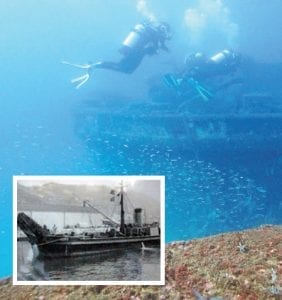
Among those accessible to divers are Batty’s Barge and the 482, an ex-admiralty cable-laying barge that was deliberately sunk in 1990 as part of a conservation project to help attract sea life to the area.
Sarah Hunt from Dive Charters Gibraltar is explaining the wreck’s history to me in between helping me get into my gear and providing safety briefings. -
The story of the discovery of the bronze age boat
- On 03/08/2012
- In Festivals, Conferences, Lectures
From This Is Kent
The second of four talks at Dover Museum marking the 20th anniversary of the discovery of the Dover Bronze Age Boat will feature Professor Mark Jones, head of collections at the Mary Rose Trust.
Professor Jones was responsible for much of the conservation of the 3,500-year-old artifact – the world's oldest known sea vessel – which was unearthed in September 1992 by archaeologists from the Canterbury Archaeological Trust working alongside contractors on the widening of Townwall Street.
Professor Jones worked with conservators from English Heritage to preserve the boat using techniques including impregnation with wax and freeze-drying.
During the process the entire boat had to be transported in a refrigerated lorry to and from the Mary Rose labs in Portsmouth.
Using research and experience gained in the conservation of the Mary Rose Tudor warship, recovered from the seabed off Portsmouth in 1982, Professor Jones and his team successfully stabilised and dried the delicate wet ancient wood of the Bronze Age Boat in about 12 months.
-
New home sought for bell of 90-year-old shipwreck
- On 03/08/2012
- In Underwater Archeology
By Leah Leach - Peninsula Daily NewsThe bell of the SS Governor remains 240 feet below the surface of Admiralty Inlet where it sank 90 years ago, while discussions are held on the artifact's future home.
Divers with the Marine Documentation Society visited the historic shipwreck last month but left the bell where it was off Point Wilson because they lacked an expert to authenticate the bell and document that it in fact came from the Governor's wreckage.
“We didn't get the people in place to authenticate it, so our best course of action is to leave it in place,” said Rob Wilson of Marysville, who — along with Benjamin Nussbaum of Lynnwood — discovered the bell buried in silt last July.
Authentication is essential because, without it, “as soon as it comes out of the water, it is just scrap,” Wilson has said.
The bell will stay with the shipwreck probably “for another year or so or until we get a decent tide,” said Wilson, spokesman for the Marine Documentation Society, which finances historical dives with the purpose of recovering important artifacts.
The shipwreck is in a tricky spot, and divers rarely can safely access it, he said.
“You only get three or four shots at it a year,” Wilson said.
The delay may give those who manage the salvage rights of the 1921 shipwreck the opportunity to find the relic a home.
“There hasn't been a final determination” about what to do with the foot-tall bell — estimated to weigh 15 to 20 pounds and to be 18 inches across at the base — once it is lifted to the surface, said Bob Mester, director of Underwater Admiralty Sciences of Kirkland.
His company manages the salvage rights for a limited-liability company that owns them and that does not want to be identified, Mester said.
He said there have been a lot of suggestions about what should be done with the bell.
“One was to make castings and offer them to people who would like to buy a replica,” he said.
The final home of the bell ideally would be in a local museum, he said, or at least one on the Governor's West Coast route from San Pedro, Calif., to Victoria, B.C., and Vancouver and Seattle.
-
A lake of tragedy and mystery
- On 01/08/2012
- In Museum News

From the Chronicle JournalThe waters of Lake Superior are known for being deceptive.
Great Lakes mariners have watched walls of water appear out of nowhere and swallow ships whole.
Diane Robnik, community resource officer at the Thunder Bay Museum, wants to put you in the mariner’s shoes to experience the cold wind and the icy waves, and the sheer terror the power of the lake evokes.
Robnik is collecting first-hand accounts of shipwrecks on the lake that will become part of a travelling exhibit next year.
She said that when she was looking into creating a travelling exhibit about the lake, she noticed much interest in the shipwreck stories.
“There have been some spectacular tragedies just on our side of the lake,” Robnik said. “So I think that those are important to highlight at this point.”
The exhibit will focus on shipwrecks that have taken place in Canadian waters and around Isle Royale. The exhibit is to open next summer in Thunder Bay and travel throughout the North Shore and Ontario.
Robnik said she hopes to collect artifacts and historical photos of ships and shipwrecks, but the exhibit will focus on first-hand accounts from survivors and family members.
“I think it creates more of a personal tie to people and more of an emotional bond when someone reads a first-hand account,” she said.
“It gives you an idea of what it’s like to be there rather than just a static reading of the event.” -
U.S. recovers bodies of WW2 airmen from Quebec waters
- On 01/08/2012
- In World War Wrecks

Photo Paul Chiasson
By Jonathan Montpetit - The StarThe wind was fierce and the waves were surging on Josephine Vibert’s wedding day, 70 years ago in Longue-Pointe-de-Mingan, a small fishing village on Quebec’s north shore.
In 1942, the village became the site of an emergency airstrip on the U.S. military’s so-called “Crimson Route,” a strategic air corridor to Europe through Maine and Newfoundland.
Late in the afternoon on Nov. 2, 1942, not long before the wedding reception, Vibert and most of the village stopped to watch a U.S. army seaplane taxi from the harbour.
But the plane — a PBY Catalina — struggled to clear the water. Vibert recalls the towering waves of the Gulf lashing at the cockpit during its second takeoff attempt.
“I counted five waves, but there may have been more,” she says from her home, still in Longue-Pointe-de-Mingan. “After the last one, water started entering their plane.”
The town’s fishermen braved the frothing waters to find four crew members clinging to the fuselage.
Just moments after the survivors were hauled aboard the local fishing boats, the plane, along with the five remaining crew members, slipped beneath waves, never to be seen again.
That is until 2009, when underground divers from Parks Canada found the barnacled, upside-down fuselage of the Catalina some 40 meters below the surface.
“We worked from shore until we hit the plane,” said Marc-Andre Bernier, the chief underwater archaeologist for Parks Canada.
“When we actually saw that the fuselage was in one piece, we immediately stopped operations and contacted the American authorities.”
-
SS Central America ingot to make $140,000 at Bonhams' coin auction ?
- On 01/08/2012
- In Auction News
From Paul Fraser Collectibles
A gold ingot salvaged from the wreckage of the SS Central America is to star at Bonhams' Coins & Medals auction in California on September 2.Also known as the Ship of Gold, the SS Central America was a 280-foot sidewheel steamer that was sunk by a hurricane off the east coast of the US in 1857.
At the time of sinking, the ship was weighed down with 10 tons of gold prospected during the California gold rush.
The worth of the gold carried aboard the Central America was valued at approximately $2m, which shook public confidence in the economy and contributed to the panic of 1857.
The ship was eventually located in 1987, when a group of divers was sent to recover the gold, coins and various artefacts that had sank with it.
After an intense legal battle, 92% of the gold was awarded to the discovery team in 1996.
A gold ingot weighing 80 pounds was sold in 2001 for $8m and was recognised as the most valuable piece of currency in the world at the time.
The ingot at auction weighs considerably less - 40.56 ounces - and is stamped: "No.648 Kellogg & Humbert Asssayers 40.56 oz 8.87 Fine".
Accompanied by a certificate of authenticity from the group that discovered the wreckage and a custom made presentation box, it is expected to bring $120,000-140,000.
-
Christmas Island shipwreck cleared
- On 31/07/2012
- In Maritime News

Photo Michael Wilson
By Angela Pownall - The West AustralianChristmas Island’s beautiful Flying Fish Cove, which is the scene of one of nature’s most spectacular sights with the red crab migration, has finally been cleared of the rusting, oil-leaking shipwreck that has blocked the port for almost seven months.
Salvage experts today finished an $8.2 million taxpayer-funded operation to remove the MV Tycoon, which smashed against the cove’s jagged cliffs on January 9.
The 85m container ship broke up in big swell, leaking oil and phosphate into Flying Fish Cove’s pristine waters, and triggering fears of an environmental disaster on the island.
More than 1600 tonnes of twisted and rusted scrap metal were removed from the ocean and put onto barges to go to Indonesia to be recycled.
Toby Stone, from the Australian Maritime Safety Authority, said a team of 20 people used equipment to cut large pieces of metal, electromagnets to pick up smaller pieces up off the sea bed and divers who picked metal out of the cliffs.
“We have been criticised for delaying the operation. That was our intent because it was unsafe to start it during the cyclone season and we wanted to wait for good weather. It’s been proved it was the right decision,” he said.
Australian taxpayers footed the bill because the container ship’s owners would not co-operate with AMSA over its removal.
Mr Stone said AMSA would seek to recover costs from the MV Tycoon’s owners Tycoon Navigation in Singapore and their insurers, Navigators Protection and Indemnity in London.
Divers have found minimal damage to the marine environment in the cove, but it was not expected to be long-term damage, Mr Stone said.