HOT NEWS !
Stay informed on the old and most recent significant or spectacular
nautical news and shipwreck discoveries

-
2,500-year-old statue of Greek god discovered
- On 12/05/2017
- In Underwater Archeology
From Tornos News
Greek god during underwater construction operation off the Crimean Peninsula, according to recent media reports in Russia.
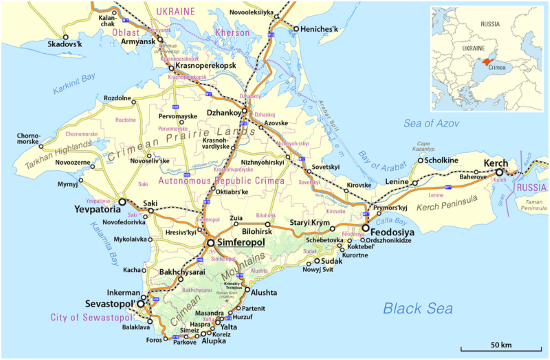
Chief of the underwater archaeology unit of the Russian Academy of Sciences, Sergei Olkhovskiy has announced that the discovery of the terracotta is a unique artifact of the Northern Black Sea Region, and stressed archaeologists have never come across anything like this before, according to the note published by David Ruiz Marull in the Spanish journal El País.The finding was located on Kerch Bay, along the strait that occupies the east coast of the Crimean peninsula, where the Black Sea meets the Sea of Azov and a bridge that will eventually link the two coasts is being built.
The archaeological study of the recently discovered “pottery field” commenced about two years ago, when the bridge was being designed. Since then, underwater excavations have collected more than 60,000 pieces (most of them fragments of ceramic vessels made in the Mediterranean and Asia Minor between the 5th and 3rd centuries BC).
-
Wreck of Nazi ship once owned by Britain
- On 06/05/2017
- In Treasure Hunting / Recoveries

By Neal Baker - The Sun
A nazi ship has been discovered in the depths of the Black Sea — and it could be stashing priceless plunder. The Boy Federsen, believed to be used to transport stolen art, was found close to Crimea in south-western Russia.It had once been briefly owned by the British after being handed over by Germany in 1919 as part of post-war reparations. But it was then sold to a Spanish company that re-named the ship from its original moniker, Anhalt, to Aya-Mendi.
In 1931 the ship was then passed on to the Soviet Union and named the Kharkov. The Kharkov was almost destroyed in a huge storm travelling from Britain carrying grain. And Soviet soldiers damaged the ship in 1943 when the port of the city of Mykolaiv in southern Ukraine was occupied during World War II.
But Nazi engineers managed to repair the ship and renamed it one more time, this time calling it the Boy Federsen.
-
Crusader shipwreck tells a golden knights’ tale
- On 23/03/2017
- In Underwater Archeology

By Sarah Pruitt - History.com
In the 13th century A.D., the city of Acre on Israel’s northern coast was a key stronghold for embattled European Crusaders defending Christianity in the Holy Land. But in 1291, a vast Egyptian army of some 100,000 soldiers led by the new Mamluk sultan overran the Crusader garrison there and razed the city.Now, marine archaeologists have discovered a long-lost ship that met its watery end in the crescent-shaped bay off the city’s harbor. Carbon dating of the ship, and the cache of gold coins found inside, suggests the wreck dates to the siege of Acre, as Christians made a desperate attempt to flee the city and their knights made their doomed last stand.
The ship that marine archaeologists recently discovered in the Bay of Haifa appears to have been damaged by the dredging that occurred when Acre’s modern harbor was constructed.
All that’s left now are fragments of the wooden hull, the keel and some wooden planks covered with ballast. Carbon-14 testing of the ship’s remains dated the wreck to between 1062 and 1250 A.D., the era when Acre was the last remaining Crusader stronghold in the region.
But what the archaeologists found alongside the ship was even more amazing: A mother lode of some 30 gold coins, which a coin expert identified as Florentine “florins,” minted in the Italian republic of Florence beginning in 1252.
The coins pinpoint the shipwreck to the last half of the 13th century-which means the ship and its cargo may have well gone down during the dramatic fall of Acre in 1291, when Egyptian forces toppled the city.
-
Le trésor de la Jeanne-Elisabeth livre ses secrets
- On 23/03/2017
- In Conservation / Preservation

De Nicolas Montard - Ouest France
C’est un trésor exceptionnel. Le Département des Monnaies, médailles et antiques de la Bibliothèque Nationale de France à Paris restaure 4 000 piastres d’argent, retrouvées dans la Jeanne-Elisabeth.Ce navire avait sombré en Méditerranée au XVIIIe siècle.
« Nous ne sommes pas nombreux à pouvoir les tenir entre nos mains. » Jérôme Jambu a beau avoir déjà manipulé des centaines de ces piastres, le plaisir est toujours le même au moment de se saisir de l’une des pièces de huit, le petit nom des pièces de 8 réaux espagnols.
« Un tel trésor, c’est exceptionnel, décrypte le conservateur, chargé des collections de monnaies étrangères au Département des Monnaies, médailles et antiques à la Bibliothèque Nationale de France.
C’est le premier trésor maritime de l’époque moderne de cette importance que l’on ait retrouvé dans nos eaux territoriales. »
Retour 260 ans en arrière, en novembre 1755. À l’époque, l’Atlantique est un véritable océan… d’argent. Les Espagnols transportent de précieuses cargaisons de l’Amérique jusqu’à leur port de Cadix, au sud de la péninsule ibérique.
Là, des marchands dispatchent le métal précieux - déjà frappé en monnaie, le real -, mais aussi d’autres produits du Nouveau Monde vers les ports européens.
La maison Verduc, marchands malouins installés en bord de Méditerranée, se serait chargée de la cargaison de la Jeanne-Elisabeth.
Ce bateau suédois doit rallier Marseille avec blé, tabac, vin, cochenille… et 24 000 piastres d’argent. Une petite fortune : 24 000 piastres représentent près de 700 ans de salaire moyen d’un journalier de l’époque !
Sauf que prise dans une tempête, la Jeanne-Elisabeth coule au large de Villeneuve-les-Maguelone (Hérault) le 14 novembre.
Dix-neuf occupants sur vingt-et-un réussissent à rejoindre le rivage, deux périssent. Quant aux fameuses pièces, rangées dans des sacs dissimulés dans le blé, elles sont perdues à jamais…
-
10 rare and revealing things salvaged from ancient ships
- On 21/03/2017
- In Famous Wrecks

By Jana Louise Smit - Listverse
When ancient ships are discovered, largely all that remains are remnants of wood.Eons beneath the waves will dismantle organic matter, and within decades, cargoes and passengers are erased. Once in a while, the icy depths become an untouched tomb, preserving moments from hundreds, even thousands of years ago.
From what the royals wore, snacks preferred by sailors, to finding evidence that finally put notorious rumors to rest. Lost stories of tragedy and trade resurface, as well as the unknown and rare.
A case of sticky fingers is still being disputed between Greece and Britain.
In 1801, Lord Elgin filled 16 crates with marble art he removed from the Parthenon. The next year, the British ship Mentor sailed for London, carrying the loot (or rightful property, depending on one’s view) and Lord Elgin.
Near the island of Kythera, it was scuttled by a storm. Shortly afterward, the crates were salvaged and their contents displayed in London’s British Museum. The 17 sculptures and 56 panels that once decorated the Parthenon remain at the heart of an ownership squabble between the two countries.
More recently, archaeologists visited the 200-year-old shipwreck to see if it contained more artifacts. They were on the lookout for additional Parthenon marbles that might have been left behind, but the trip was also an attempt to confirm a rumor that Lord Elgin had taken other antiquities from Greece.
The two-week survey proved that he did. Divers found a stone vessel and the handles of ancient Rhodian amphoras, some stamped, dating back to the third century B.C.
-
Secret of the Deep: The City of Benares
- On 21/03/2017
- In Treasure Hunting / Recoveries

By Patrick Knox - The Sun
A team of shipwreck explorers believe they’ve found the real reason behind why Nazi U-boats sunk a ship carrying children – one of World War 2’s worst maritime atrocities.For the City of Benares may have been targeted because Germany believed there was a secret cargo of gold bullion aboard.
Some 262 passengers and crew perished on the middle of night in September 1940 when the 11,000-ton City of Benares was torpedoed while carrying evacuees to Canada.
Now divers have been exploring the wreck in a bid to find £4.5 billion worth of bullion.
Speaking to MailOnline, Will Carrier, operations director of Britannia’s Gold which carrying out the gold hunt, said “We will not touch the City of Benares. “We will treat all these wrecks with respect but Benares is designated as a war grave and should be treated as such. “It’s still a very sensitive subject.”
-
Emeralds unearthed in shipwreck
- On 18/03/2017
- In Auction News
By Khristian Ibarrola - Lifestyle Inquirer
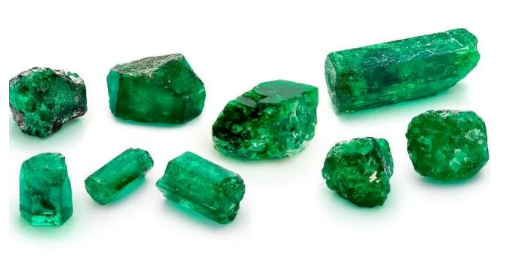
Shipwrecks are usually home to lost treasures including an extremely rare 887-carat gem.A collection of exquisite emeralds discovered from a 400-year-old shipwreck will be up for auction on April 25, The Telegraph reported.
The impressive glittering set of gems, which consists of more than 20 loose emeralds, is far more expensive than diamonds and will be sold to the highest bidder by Guernsey’s Auction House in New York, USA.
But the collection’s main attraction is the 887-carat “La Gloria,” which is deemed as ”one of the largest museum-quality emeralds in the world.”
The gem is estimated to fetch between $4 million and $5 million.
-
Rich people can tour the Titanic now
- On 18/03/2017
- In Famous Wrecks

By Christian Gollayan - New York Post
If James Cameron’s 1997 movie wasn’t enough to satisfy your Titanic appetite, you’re in luck.Blue Marble Private, a London-based luxury tour operator, will begin diving excursions of the shipwreck in May 2018.
“Far fewer people have visited the wreck of the Titanic than the number who have been to space or summited Mount Everest,” Elizabeth Ellis, Blue Marvel Private founder, wrote in a press release.
A first-class ticket to the original Titanic was $4,350, and eager tourists will now have to pay the same price, albeit adjusted for inflation, of around $105,000 to experience the famous shipwreck in the North Atlantic Ocean.
The hefty price tag includes a helicopter ride from Newfoundland, Canada to a private yacht, and a submarine ride to the Titanic. So far, nine clients are confirmed for the pricey journey.