HOT NEWS !
Stay informed on the old and most recent significant or spectacular
nautical news and shipwreck discoveries

-
Underwater archeology
- On 16/06/2011
- In Festivals, Conferences, Lectures
From The Evening News
C. Patrick Labadie, Historian for the NOAA Thunder Bay National Marine Sanctuary in Alpena, will speak at the Great Lakes Shipwreck Museum on June 18, at 7 p.m.
The presentation will explore the evolution and importance of underwater archeology, while focusing on the numerous shipwrecks in the vicinity of Whitefish Point.Labadie served as the Principle Investigator for the 2008 Shipwreck Society Ghosts of the Shipwreck Coast underwater documentation project.
Labadie’s role during the project involved a balancing act of precision site mapping, organization of images, video, and the maintenance of archaeological records.
A native of Michigan, Labadie has served as Director of the museum ship SS Keewatin in Saugatuck, and also was Director of Duluth’s Canal Park Marine Museum for over 30 years. During his museum work, Labadie amassed over 60,000 paper documents in one of the largest collections of Great Lakes maritime history ephemera in the country.
Bruce Lynn, Operations Manager for the Shipwreck Society explained, “This is the second in our series of maritime history educational programs, and we are honored to have Pat Labadie on the schedule. Pat is renowned as an expert on 19th century Great Lakes’ sailing vessels, and was instrumental in the mapping of many of the more interesting shipwrecks near Whitefish Point.
This program will be a great opportunity to learn more about the wrecks, while getting an excellent introduction to the field of nautical archeology.”
The program will be in the Shipwreck Museum gallery; there is a fee to attend. -
Call for the public to help preserve restricted shipwreck zone
- On 15/06/2011
- In Parks & Protected Sites

From The Royal Gazette Online
A concerned resident who claims he saw two men fishing near the Vixen shipwreck is calling on the public to preserve the protected area.
The man, who asked not to be named, said he was on a tour boat around 7pm when he saw locals catching fish in the restricted zone.
He told The Royal Gazette the tour boat’s captain urged the men to stop, but he said the pair ignored the captain and continued fishing.
“The captain tried to call Harbour Radio. In the meantime I called my friend who is an Inspector.”
The man was informed that Marine Police were off-duty and advised to contact them the following day with pictures.
“I am not trying to get the guys [fishing] prosecuted, I just want to stop the guys from fishing. There was a lot of fish there, but if people continue to fish there will not be anything for the tourists to see.”
The man said he was concerned that there seemed to be no police on duty to monitor the Island’s waters that night.
He was also concerned there was no visible sign at the site reminding the public of the laws for protected areas.
A Police spokesman said the Department of Environmental Protection had primary jurisdiction for such an offence.
“The Bermuda Police Service has no record of a phone call on that day regarding an incident in the waters near the HMS Vixen,” he said.
“We would advise anyone reporting an incident, marine or otherwise, to contact the main police number 295-001, or in an emergency, 911 so that an official report can be logged and an appropriate response dispatched if necessary.”
He added that the Police Marine Unit does work on the weekends and that they would be supported by personnel from the Bermuda Regiment in the summer. -
Hunley submarine will be rotated next week
- On 15/06/2011
- In Conservation / Preservation

By Brian Hicks - The Post and Courier
It sounds pretty simple: raise the H.L. Hunley a few feet off the ground, tilt it upright and set it down.
But it’s a little more complicated than that.
This week scientists at the Warren Lasch Conservation Center will begin work on a Hunley rotation plan that is more than a year in the making – a complex engineering procedure designed to move the fragile iron sub without damaging it.
Start to finish, it should take a little more than a week.
When the work is done, archaeologists will be able to examine areas of the sub’s hull hidden for more than a decade by its original lifting straps.And that could reveal clues as to why the Hunley sank in 1864 just after it became the first submarine to sink an enemy ship in battle.
“We will see what no one has seen since the crew did on the night it disappeared,” said Sen. Glenn McConnell, chairman of the state Hunley Commission. “You’ll be able to see the Hunley unobstructed.It’ll be a sight to behold.”
When the Hunley was raised from the Atlantic in August 2000, it was brought up at a 45-degree angle – which is how it was found lying 5 feet beneath the ocean floor.
Scientists wanted to keep it at that attitude to keep from shifting the placement of artifacts inside the sub, and because no one knew how weak the iron hull was after more than a century in saltwater.
Since then, the sub has been excavated and had several hull plates, keel blocks and other pieces removed. It has changed the structural integrity of the sub, and made this job more complex.
“There is no recipe for rotating Civil War submarines,” said Paul Mardikian, senior conservator on the project. “This is just as complicated, or maybe even more complicated than raising it from the ocean floor.”
Of course, there is a recipe now – one that Hunley scientists and Clemson University professors have worked on for years. Scientists developed a 3-D model of the sub, studied weight distribution and stress factors.They looked at several ways to do it, and computer modeling showed that not all of them worked.
-
Chance find of '34 Strait shipwreck
- On 15/06/2011
- In Wreck Diving

From Mornington Peninsula Leader
It was a calm, overcast day with little wind when a team of divers plunged into Bass Strait before descending 62m and shining the beams of their torches upon a ship lost almost 80 years ago.
Those conditions were a far cry from the extreme, wild weather that caused the 160ft turbine steamer the TSS Coramba to go down in November 1934, taking with it the lives of the 17 men on board.
Mt Martha diver Mark Ryan said he and other Southern Ocean Exploration divers had been searching for another wreck south of Phillip Island when they happened upon the much larger bounty, with a dive on May 29 confirming it as the Coramba.
“We identified it by the fact it had twin propellers (as) there was nothing else out there that had two propellers,” he said.
“That was our Eureka moment.”
Mr Ryan said the ship - which sank 10km southeast of Flinders - was in relatively good condition, but with a badly damaged front end after possibly being smashed by a freak wave.
He said Des Williams - who had searched for the wreck for 30 years and written a book about it - was on board that day and said they all felt emotional and relieved at finally locating the ship. -
Shipwreck identification could facilitate ownership
- On 15/06/2011
- In Wreck Diving
By David Ferrara - Blog
While Fathom Exploration holds the salvage rights to four sites in Alabama waters, Chief U.S. District Judge William H. Steele scolded the company for failing to inform the court before the identity of the British ship Amstel was publicly unveiled at a news conference earlier this month.
"If Fathom has conclusively identified the wreck, then there would appear to be no need whatsoever to maintain a five-and-a-half-year stay to facilitate such identification," Steele wrote after a June 2 Press-Register story about the shipwreck.
But the announcement could expedite a ruling on who has the rights to the wreckage.
The case has been on hold for almost six years while Fathom Exploration attempts to identify the wreckage at four sites in Alabama waters.
Ultimately, the judge is expected to decided who can claim ownership to the artifacts — the state, the exploration company or a Mobile man who believes one of the sites is that of the 19th century clipper ship Robert H. Dixey. He is an heir of the ship’s captain.
Michael E. Mark, the lawyer for Fathom, said that he now plans to file a motion to lift the stay on the first site, where the Amstel was located, and have the court move forward with identifying the owner of the ship.
"Given that there are three additional sites which remain unidentified, the identification and announcement of ‘Site 1’ necessarily made this matter more complicated vis-a-vis the stay over the entire litigation," Mark wrote in response to the judge’s order.
Mark said operations planned for last summer "would have made Fathom’s identification of the site irrefutable," but the work was scrubbed because of the BP oil spill. -
Tudor day at shipwreck museum wows crowds
- On 13/06/2011
- In Museum News
From Hastings Observer
Visitors to the Shipwreck Museum were transported back in time several centuries as the attraction held a Tudor Discovery Day.
Her Royal Highness Queen Elizabeth I and her two ladies in waiting, from Tudor re-enactment group Free Company, went on a royal walk about around the museum and held two “Audiences withs” during the day where she discussed her life, her father Henry VIII and the history of the Tudor era.
Young and old visitors alike received a lesson in royal etiquette from the formidable Tudor monarch.
The re-enactment group Free Company were able to set up their Tudor tents in the museum’s garden area behind the Primrose Barge.
Throughout the day they gave demonstrations of Tudor cooking, craft and Tudor surgery as well as talking about daily life.
In the afternoon they hosted an extravagant Tudor feast for Elizabeth I and her ladies in waiting.
The spread included whole roast salmon, roast pork in spiced wine, bread, cheese, meats, welsh cakes and Lombard cake (“lethe lumbarde”) with syrup.
Claire Eden, audience development manager at the Shipwreck Museum, said: “It was lots of fun and provided a hands-on learning experience that the visitors will hopefully never forget.
“It was also a brilliant event for our year-long 25th anniversary celebrations.”
-
Insurance battle sparkles with emeralds from a sunken spanish vessel
- On 13/06/2011
- In Miscellaneous
By Matthew Sturdevant - Hartford Courant
Faye Keith Jolly of Deerfield Beach, Fla., applied for a $10 million life insurance policy with a division of The Phoenix Cos. Inc. in the winter of 2007.
He was 73 at the time, though Jolly claimed to be of healthy, athletic stock. He wrote a letter to the Hartford insurer saying his father had been a Chicago White Sox catcher and his mother an Olympic swimmer.
But by far the most impressive detail of his application was his purported net worth, $1.2 billion -- and the nature of his assets.
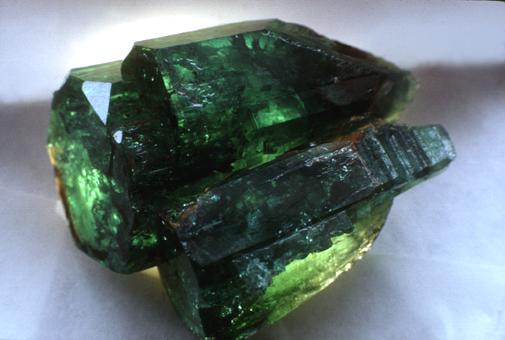
Jolly claimed he had 10,920 pounds of uncut emeralds that he recovered 15 years earlier from a sunken Spanish vessel in the Gulf of Mexico -- worth a cool $800 million. The other $400 million was in a trust, he explained in his application to PHL Variable Insurance Co.
Phoenix approved Jolly's policy in March 2007 after the company received reassurance from an independent agent and from the trustee of his trust that Jolly's claims were legitimate.
Then, just as time was running out for the insurer to contest Jolly's application, Phoenix sued Jolly in October 2008 in an Atlanta federal court.In the same action, Phoenix also sued the trust that would have received the money when Jolly died, and the trustee.
Phoenix alleged negligent misrepresentation, fraud and conspiracy. The company asked for payment for damages as well as attorneys' fees. In the end, the insurer did not have to pay out the $10 million Jolly's policy was worth when Jolly died on Feb. 6 of this year.
But the fight continues over premium money Jolly paid, as well as damages and other costs. And the far-fetched story of Jolly's emeralds is bringing a colorful sparkle to an otherwise drab corner of law and insurance.
The court battle involves allegedly forged appraisals, a history of plundered mines in Colombia's Andes Mountains that dates to the 16th century, underwater Spanish galleons chock full of riches, a trail of claims by Jolly that quickly grow cold, a mystery about where premium payments were coming from and an Atlanta attorney who said he once saw Jolly show off buckets of green stones.
No one involved is talking publicly. But at the heart of the story, as pieced together through court records, is the question of how Phoenix could have approved the policy in the first place. Jolly's application contained wild discrepancies and claims, many easily debunked.
Jolly first sought Phoenix life insurance in 2006, court records show, but the company didn't act on it. Martin R. Wetzler, an independent insurance agent in Boca Raton, Fla., filed a new application for Jolly in February 2007, trumpeting the emeralds found in a sunken Spanish galleon. -
Blackbeard's terror tactics revealed in recovered ammo
- On 12/06/2011
- In Underwater Archeology
By Rossella Lorenzi - Discovery News
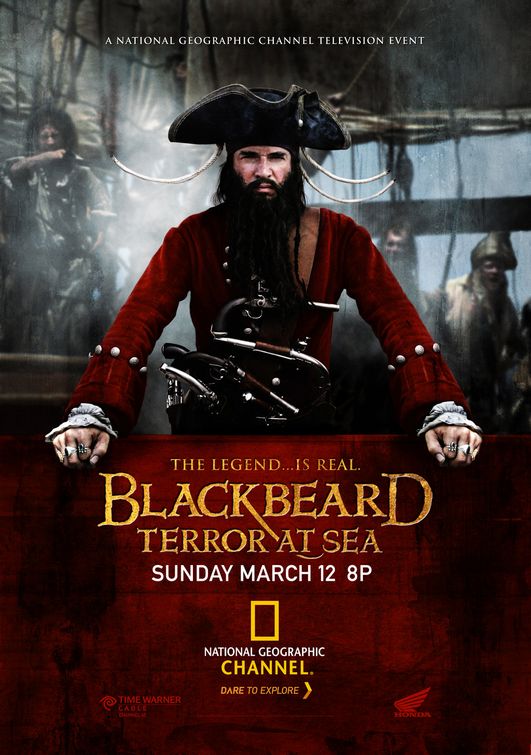
The notorious pirate Blackbeard used improvised weapons and missiles to terrorize the seas from Virginia to the Caribbean in the early 18th century, an exploration of the ocean floor off the North Carolina coast has revealed.
Aimed at recovering a 1.4-ton (3,000-lb) anchor, the two-week expedition on what is believed to be the wreck of Blackbeard's flagship Queen Anne's Revenge, also produced new evidence about the pirate's terror tactics.
As they explored the site, archaeologists from North Carolina's Department of Cultural Resources noticed three metallic clusters which covered a 5-by 3-foot-square area on the sea bed."The three conglomerates consist mostly of lead shot, nails, and glass which we suspect were put in canvas bags and fired from the cannons," Mark Wilde-Ramsing, deputy state archaeologist and leader of the expedition, told Discovery News. "In the end, we were not able to recover these items during the expedition. They likely will be recovered this coming fall when we return to the site."
The metallic conglomerates will likely confirm what has already emerged from past expeditions. The Queen Anne's Revenge has already yielded more than 250,000 artifacts since its discovery in 1996. The recovery of ammunition stuffed into several cannons provided a glimpse into the pirate's creative use of weapons."There are 24 cannons within the wreckage and five have been cleaned. Four cannons were loaded and one had three 9-inch bolts, in front of the cannon ball, which would have been very terrorizing when shot," Wilde-Ramsing said.
The archaeologists also found the remains of another frightening contraption -- two identical cannon balls linked by an iron bar or chain. Producing a spinning effect when fired from cannon, these contrivances were used at close range to slash through the rigging of an enemy ship.
"As with all pirates, Blackbeard did not want to sink merchant ships but scare them into giving up. Shooting bolts and scrap lead, iron and glass would have been very effective," Wilde-Ramsing said.