HOT NEWS !
Stay informed on the old and most recent significant or spectacular
nautical news and shipwreck discoveries

-
Indonesia's shipwrecks mean riches and headaches
- On 01/04/2012
- In Treasure Hunting / Recoveries
By Robin McDowel - Seattlepi
Mamat Evendi straps on his primitive breathing device — a garden hose attached to a compressor on the back of his wooden fishing boat. Pulling down his goggles, he splashes flippers-first into the crystal blue water.
A few minutes later he's flashing a "thumbs up," pointing first to a massive, coral-encrusted anchor, then a bronze cannon and finally, peeking up from the sand, the buried deck of a 17th century European ship.
Nearby are pieces of blue-and-white ceramics. A tiny perfume bottle. A sword handle. Broken wine flasks, one still sealed with a wooden cork.
The wreck is just 6 meters (20 feet) underwater, one of four pushed into view after a tsunami slammed into the Mentawai Islands of Indonesia just over a year ago.
They are among possibly 10,000 vessels littering the ocean floor of what for more than a millennium has been a crossroads for world trade.
For historians, the wrecks are time capsules, a chance to peer directly into a single day, from the habits of the crew and the early arrival of religion to contemporary tastes in ceramics. But for Evendi and other fishermen involved in the new discoveries, it's not the past they see.
It's the future. A chance, maybe, to strike it rich.
"They keep telling me, 'Let's just break them open, get the stuff out,'" said Hardimansyah, a local maritime official who has taken it upon himself to protect the wrecks as the government wrangles over a new policy on underwater heritage.
"To be honest, I'm getting frustrated, too," he says, noting he's already given the best artifacts pulled from the coral and sand to military and political officials who stop by his office from time to time to see what's been found. "Gifts," he calls them, or "offerings."
"It's hard to say no if they ask."
-
Titanic: from the deep to the auction house
- On 01/04/2012
- In Famous Wrecks

By Kelly Crow - Online WSJThe world's most famous shipwreck, the RMS Titanic, is up for sale.
A century after the tragic 1912 sinking of the luxury ocean liner off the Canadian coast of Nova Scotia, the New York auction house Guernsey's is offering up salvage rights to the shipwreck along with all 5,500 artifacts recovered since the site was discovered nearly two decades ago.
In an unusual move, a Virginia court overseeing the sale has asked that the objects be sold as a group, not piece by piece. The entire lot, Guernsey's said, has been appraised at around $190 million.
Iron-eating microbes are steadily breaking down the actual sunken ship, but the pieces already culled from the wreck's 13-mile debris field are "spectacular," said John Joslyn, the owner of a pair of Titanic theme museums in Missouri and Tennessee who helped to fund the first salvaging expedition in 1987.
Some pieces serve as sturdy reminders of the 882-foot-long liner's "unsinkable" billing, such as a 17-ton piece of the hull that still contains thick rivets and porthole views into what would have been a pair of third-class cabins. Other pieces are poignant in their fragility, including a hand-cut crystal dish and a brown bowler hat.
One of the most valuable pieces is a 15-carat rose-gold bracelet with the name "Amy" spelled out in 26 small diamonds. Guernsey's President Arlan Ettinger said there were at least two passengers bearing that name among the 1,514 fatalities.
Other pieces include white ceramic dishes stamped with the ship's red "White Star Line" logo and leather handbags that some of the ship's pursers stuffed with money from safe-deposit boxes.
-
How fishermen are bringing lost secrets of UK waters to land
- On 01/04/2012
- In Miscellaneous
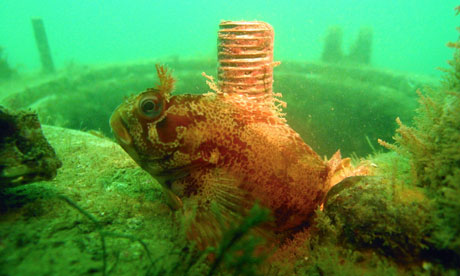
By Robin Mckie - The GuardianTrawlerman Dennis Hunt was crossing Colwyn Bay in his boat in 1995 when its nets snagged on the seabed.
Unable to free them, Hunt contacted diver Keith Hurley, who swam 60ft down to the sea floor – and found that the nets were caught on a rusting submarine's conning tower.
Hunt and Hurley had found the Resurgam, one of Britain's first submarines, which sank in 1880. It was a key historical discovery but certainly not a first for fishermen.
Every day hundreds of items, ranging from Spitfire engines to ancient stone tools, are dragged up by fishing vessels while wreck sites are revealed after nets become snagged on sunken craft.
As fishing intensifies, more discoveries are being made this way, a process that threatens to run out of control. As a result, English Heritage will launch a pilot scheme this month that aims to keep in order the avalanche of historical finds now produced by our fishermen.
"There are about 46,000 recorded shipwrecks, crashed aircraft and sites of archaeological finds in English waters that we know of," said archaeologist Simon Davidson. "However, these recorded sites only make up about 10% of the total down there, we estimate."
In addition, it is reckoned that, in the second world war alone, 13,000 aircraft were lost in UK waters, including the plane that carried the American swing band leader Glenn Miller on a flight that disappeared, presumed lost in action, on 15 December 1944.
"This collection of lost ships and aircraft represents an enormous historical resource," said Davidson. "Certainly, given its size, it is not surprising so many items get dredged up by fishermen."
The pilot scheme will be in Sussex. About 400 fishing boats sail from its nine ports and every day about half of these craft dredge up a historical item.
Leaflets about the scheme, which will be administered with the help of Sussex Inshore Fisheries and Conservation Authority, will provide fishermen with the details of those to contact after a find is made and provide information about salvage rights. The scheme, if successful, will be spread throughout the country.
-
Litter fouls Titanic's resting place
- On 31/03/2012
- In Famous Wrecks

From News 24
Litter bugs on the high seas are fouling the Titanic's watery grave with beer cans, plastic cups, even soap boxes, a century after the "unsinkable" luxury liner went down, experts said.
Contrary to popular belief, the wreck of history's greatest maritime disaster is not swiftly rusting away 3 780m under the North Atlantic. In fact, it looks likely to stay intact for many decades to come.
"The basic hull remains very strong and very solid," said James Delgado, director of the marine heritage program at the National Oceanic and Atmospheric Administration (NOAA), a US federal agency.
"You still have wood and fabric preserved inside," said Delgado, who personally saw the Titanic up close from inside a Russian Mir submersible vehicle during an August 2010 expedition to precisely map its vast debris field.
"There has been some speculation that it's basically been rusting away and won't exist in 20 or 30 years," agreed Jamie Shreeve, who has closely followed the Titanic saga as science editor of National Geographic magazine.
"But the most reliable people that I've talked to don't think that it's going away any time soon," he said on the eve of a National Geographic Society exhibition on the Titanic and its legacy. "It's just too slow a process." -
El caso Odyssey se enreda gravemente en Gibraltar
- On 30/03/2012
- In Illegal Recoveries
Jesus García Calero - ABC
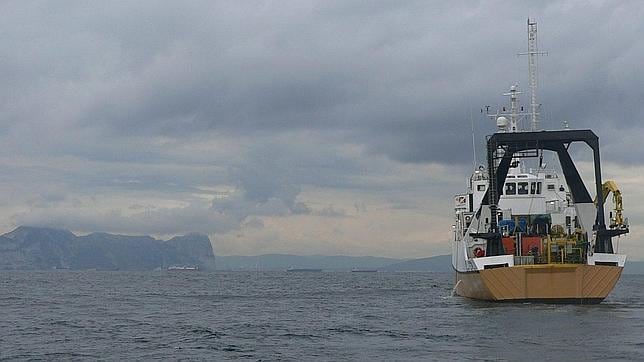
Los inventarios ocultan piezas españolas de otros pecios y la Roca reconoce que no cumplió ni sus propias leyes.El caso Odyssey ha entrado en una espiral preocupante en Gibraltar.
Después de que los cazatesoros hayan mareado la perdiz para no devolver las monedas y objetos que olvidaron en la Roca en 2007, ahora España se enfrenta a una nueva situación, puesto que el Tribunal Supremo gibraltareño acaba de proclamar el arresto de todo el material (inmovilización) bajo una extraña demanda presentada por supuestos herederos de quienes llevaban dinero en la fragata expoliada "Mercedes".
Lo grave de la situación está en el reconocimiento de que ni los cazatesoros ni las autoridades desde 2007 se han molestado en cumplir sus propias leyes (Merchant Shipping Act) que obligaban a Odyssey a informar de la carga a una autoridad portuaria, el "receiver of wreck", como ya denunció ABC. Además, en el reconocimiento de que hay objetos en Gibraltar que no proceden de la "Mercedes" sino que salieron de otros pecios, aunque en algún caso compartieron contenedor con las monedas que viajaron a EE.UU.
¿ De cuántos barcos extrajo Odyssey los restos que pudo durante su estancia en aguas españolas ?
Todo un lío que se agrava por momentos y que puede alargar notablemente el final del pleito en Tampa.
-
Coloma museum to recall Berrien shipwrecks
- On 30/03/2012
- In Museum News
By Andrew Lersten - Herald Palladium
Between 1835 and 1902 at least 41 ships sank or smashed onto shore in Southwest Michigan - claiming at least 95 lives.
An exhibit opening next month at the North Berrien Historical Museum in Coloma not only maps out the Lake Michigan shipwreck sites off Berrien County, but takes a close look at the era's shipping industry.
Cargo routes from St. Joseph and Benton Harbor to Chicago and Milwaukee were vital to the development of Berrien County in the mid-19th Century, said curator Alexander Gates.
The new exhibit, called "Shipwrecks of the Berrien County Coast," examines the trends in what kinds of goods were shipped from and to area ports. The shipwrecks highlighted in the exhibit are good examples of the ships plying the lake during the peak of the commercial shipping era.
One interesting artifact to be displayed is the ship's bell from the propeller steamer Montezuma.
The ship, built in 1848, sank at the mouth of the St. Joseph River in 1861. Coloma's first postmaster, H.M. Marvin, bought the bell from a salvage company and donated it to Coloma's first church, the Coloma First Congregational Church. The church used it as its church bell until it was replaced in 1916, but is still owned by the church, Gates said.
-
Shipwreck hunters
- On 30/03/2012
- In Parks & Protected Sites

From The IslanderResearchers investigating a 113-year-old maritime mystery are calling for help from Islanders.
Department of Environment and Natural Resources Maritime Archaeologist Amer Khan is leading a team to Flinders Chase National Park this week to look for graves from the wreck of the Loch Sloy.
The clipper ship was smashed onto rocks near Cape de Couedic in 1899, with the loss of 30 lives.
“The wreck has never been found,” Ms Khan said. “We’ll be looking for the ship itself, but an important part of this project is finding the graves of the people who were killed when the ship sank.
“We know that the bodies of 11 passengers and crew washed up on the beach and were buried by locals, and while we have a general location, we don’t know exactly where those graves are.
“We are also hoping that someone may have information on the wreck, the graves or anything relating to other ships wrecked on the west coast in the 19th century.
“Pieces of local history like this are often passed down through families, so we’re eager to find out whether accounts or even relics might have survived.”
Ms Khan said the coast around Maupertuis Bay had a fearsome reputation for wrecks in the 1800s, when four ships sank, drowning more than 80 people.
-
History of the Carolinas: Women Pirates
- On 30/03/2012
- In General Maritime History
From Cary Citizen
Tell Me a Pirate Story Daddy
When Gordon’s daughters were young, any long trip in the car meant; “Dad tell me a pirate story.”
Daughter Beth, who would become a reporter, editor and public relations officer, had high standards. Pirate stories must contain risk, danger, buried treasure and surprise endings to get the seal of approval.
Daughter Lisa, who later became a banker, wanted to review the logic of the plot development when the story ended. Beth liked ghosts but Lisa felt this confused the facts.
Pirate BooksWe found pirate books in great demand. One bookstore owner indicated that if a used book on pirates arrived, it would be sold in a matter of hours. One trend in pirate literature, he told us, is interest in women pirates.
We found documentation of over 41 women pirates. We also found a few myths about piracy.
Pirates & PrivateersThere were two kinds of sea marauders, legal privateers and pirates. Privateers had the authorization of a government and became heroes for looting and pillaging the government’s enemies. Pirates, without government sponsorship, would be hung for their sea crimes.
Pirate TreasureWhat about stories of treasure ? Pirates divided the treasure but usually sold stolen goods and spent all money after a few days in port.
Pirate ships were crowded and disease filled but the allure of instant plunder and adventure attracted many including women during the golden age of piracy from 1650-1726.
Anne Bonny, Mary Read and Calico Jack RackhamTwo famous women pirates were Anne Bonny and Mary Read whose pirate activities centered on the Atlantic Ocean and West Indies.