HOT NEWS !
Stay informed on the old and most recent significant or spectacular
nautical news and shipwreck discoveries

Shipwreck project nears $450K goal
By Cheryl Burke - Carolina Coast Online
Gov. Bev Perdue joined N.C. Department of Cultural Resources Secretary Linda Carlisle on Friday in celebrating the scientific research and tourism benefits that have derived from the study of the shipwreck of Blackbeard's flagship, Queen Anne's Revenge.
The press conference at the N.C. Maritime Museum was also held to announce that $417,500 of a $450,000 goal has been raised from private sources to continue research at the wreck site.
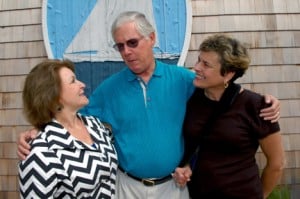
But immediately after the press conference, Eric and Rita Bigham of Chapel Hill who have a boat in Beaufort, agreed to give the remaining $32,500 to complete the matching grant program.
“We are incredibly grateful and I’m really overwhelmed,” said Ms. Carlisle, who announced the fundraising effort and thanked the couple after the press conference. “We did not expect this.”
Gov. Perdue, too, thanked the couple.
“This is an incredibly generous gesture to support the project,” she said.
Mr. Bigham, a retired chemist, said, “We’ve been supporting the museum and are involved with Friends of the Museum a long time. We decided this was our chance for us to step up and play a bigger part in this project.”
Mrs. Bigham, a retired schoolteacher, said she wanted to support the education outreach efforts of the project as well.
Archeologists uncover shipwreck remains in Portugal
A group of archeologists work to try and locate the remains of a shipwreck from the Roman period, among other potentials finds, in the Arade River in Portimão, as part of an underwater archeological operation that began on Wednesday.
The two-week fieldwork will comprise an initial phase of visual study and data recording. It will include photographs, drawings, and the excavation of artifacts that may be found on the surface.
It is said that one of the areas may have been the location of a shipwreck during Roman times, due to the finding of ceramic vases called amphora. This can only be confirmed with excavations that may take up to a year.
If confirmed, the area may become part of a tourist diving route.
This will appeal more visitors to Portimão. The archeologists at the site are directors of a archeological campaign supported by the Sea History Centre of the Faculty of Social Sciences from Lisbon’s Nova University.
Apart from the area, the archeologists will dive in other sections of the river where the remnants of five iron cannons and ammunition were found. Bronze weapon artifacts from the 17th and 18th centuries were also discovered.
Another area to be explored seems to have the somewhat buried remains of a large wooden ship from the same time period.
The crew of archaeologists, supported by technicians from Portimão museum and volunteers from a diving center, aim to carry out two dives per day.
Perfect red reveals its deep secret

From The Age
In 1916, 3000 bottles of Heidsieck Monopole 1907 were sent from France via Sweden across the Baltic Sea to Finland destined for St Petersburg and the officers of the Imperial Army of Tsar Nicholas II. They never arrived.
Later that year, off the coast of Finland, the ketch Jonkoping and its valuable cargo stumbled across a German U-boat and was sunk.
There the ketch and the champagne lay, 64 metres under water, for 82 years.
When finally recovered from the sea in 1998, much of the champagne was found surprisingly fully intact. Not only that, when bottles were opened at Crown's Number 8 restaurant in 2007 the wine was still very much alive: strong in bubble, a heady perfume of wild honey, nougat, blanched almonds and a magnificence of flavour.
Young Yarra Valley winemaker Ben Portet's eyes widen when I tell him I tasted the-then 100-year-old Heidsieck Monopole. Was it truly amazing, he asks ? ''Definitely.''
Not many wines have survived watery graves quite so well as the famous batch of 1907 Heidsieck Monopole, but there are enough tales of resurrection to raise legitimate questions about how wine ages under water, or so Portet believes.
He has persuaded scientists from the Australian Wine Research Institute to get on board his flight of fancy.
In 2011, Portet aged two barriques of Pyrenees shiraz under water in an old plastic apple bin, leaving it outside in the open air for about 14 months at his family's winery, Dominique Portet Wines at Coldstream.
The bin was filled with rainwater, not seawater, and Portet used aged barriques (225 litres), not new.
Divers mark end of Queen Anne's Revenge expedition

From Hampton Roads
A formal ceremony is marking the end of an eight-week expedition to recover artifacts from the ship believed to have belonged to Blackbeard.
The ceremony is scheduled for today in Beaufort.
The event highlights the conclusion of the expedition by archaeologists to recover artifacts from Queen Anne's Revenge.
Since 1997, several of the cannons and more than 250,000 artifacts have been retrieved including gold, platters, glass, beads, rope, the anchor and several ballast stones.
In 1717, Blackbeard captured a French slave ship and renamed it Queen Anne's Revenge. Blackbeard settled in Bath and received a governor's pardon.
Volunteers with the Royal Navy killed him in Ocracoke Inlet in November 1718, five months after the ship thought to be Queen Anne's Revenge sank.
Germany tries to halt Baltic shipwreck plundering

By David Crossland - Spiegel
Alarmed at the looting of historically valuable shipwrecks in the Baltic Sea, German archaeologists have started attaching underwater signs designating them as protected monuments.
Hobby divers and trophy hunters are damaging a precious maritime legacy stretching back thousands of years, they warn.
The two-man U-boat was discovered lying at a depth of 18 meters near Boltenhagen off Germany's Baltic Sea coast in 2000.
Its plexiglass turret hatch was intact and closed, which prompted authorities to designate it as a war grave because the crew of the vessel, of a type used by the German navy towards the end of World War II to evade Allied sonar detection and sink ships, was believed to still be inside.
Then someone dived down and removed the hatch in 2002. The local government responded by sealing the gap with a steel plate. But there have since been attempts to break it open.
"It's one of our big worries, over the years people keep trying to get into it and that is of course utterly disrespectful," says Detlef Jantzen, an archaeologist at the regional agency for monument protection in the northeastern German state of Mecklenburg-Western Pomerania.
The U-boat is one of some 1,500 marine monuments strewn across the seabed along the coast.
The area has a wealth of well-preserved shipwrecks, lost cargo, planes and even ancient settlements submerged through subsidence and rising water levels.
It amounts to a precious historical legacy and gives insight, for example, into boat-building techniques dating back to the Middle Ages and the events that led to the sinkings.
Underwater Cultural Heritage; need to ensure effective protection

By Kanthi Wijetunge - Sri Lanka Daily News
Over the last century, archaeological sites on land all over the world have received much attention as source of information on history of human civilizations.
However, the oceans, which cover the large part of our planet, still retain many of their secrets without getting exposed to the world.
Hence the richness of the world’s underwater cultural heritage is often underestimated. It is well known that there are cities which have been entirely swallowed by the sea and there are thousands of ships which have perished at sea.
These ruins lie on the sea bed safely without the notice of anybody. They provide testimony to the various periods and aspects of human civilization and history.
There is also undiscovered knowledge under water, proving travel routes, exchanges, prehistoric life and also heritage lies outside of the territorial waters of the country of origin.
During the recent past it has been revealed that there are threats to Underwater Cultural Heritage in many ways such as; pillage, commercial exploitation, industrial work, tourist promenades, oil drilling, metro and auto route crossing in channels or with bridges, recovery of soil or building of artificial islands, trawling and also due to climate change and pollution.
As per the UNESCO reports it is estimated that over three million undiscovered shipwrecks are spread across the ocean.
However, people are aware of the famous vessels which have perished in the ocean such as armada of Phillip II of Spain, the Titanic, the fleet of Kublai Khan etc through books and films.
Similarly, there are remains of countless ancient buildings submerged underwater.
All these are considered as underwater cultural heritage. They provide testimony to the various periods and aspects of our history.
Shipwrecks or remains of ancient buildings and cities submerged underwater retail many stories about the cruelty of the slave trade, the ferocity of wars, the impact of natural disasters or the peaceful exchange and inter-cultural dialogue between far away regions.
Hence recognizing underwater cultural heritage is very vital in the efforts of gathering historical information on human civilization.
I realised my dream to raise the Mary Rose

By Clare Heal - Express
For many people the raising of the Mary Rose on October 11, 1982, remains a defining moment.
The recovery of the Tudor ship after 437 years at the bottom of the Solent was not just a major event in marine archaeology but provided a tangible link with one of the most colourful eras in Britain’s past and proved profoundly moving for many.
As head of interpretation at the Mary Rose Trust Christopher Dobbs’s job is finding the best ways to tell the ship’s story to the public, but 30 years ago he was one of the many divers who helped bring her up from the mud, 50ft down, in which she had lain for so long.
“I was very lucky that I had left university, where I specialised in marine archaeology, in 1979, just at a time when the Trust was recruiting archaeologists who could also dive to help with the excavation of objects from the ship,” he says.
“I was part of a team of more than 500 divers and it was tremendously exciting because on almost every dive you might find something different.
You might find a chest of personal possessions, someone’s shoe that had been worn through, some peppercorns, a leather jacket or a wooden drinking bowl or a longbow.”
Built between 1509 and 1511, the Mary Rose was the flagship of Henry VIII’s navy and enjoyed 34 successful years before her sinking on July 19, 1545, while engaged in battle with the French.
Almost all of the 500 men aboard died. What exactly caused the sinking remains unclear but there have been many theories.
Shipwreck's jewellery reborn in exhibition

From Voxy
Amber jewellery salvaged from the sunken Russian cruise liner, Mikhail Lermontov, is reborn with a Kiwi twist in a unique exhibition at The Museum Hotel’s Billiard’s Room in Wellington from Monday October 29th.
Lermontov: Lost and Found features 24 works designed by The Village Goldsmith’s multi-award winning creative director, Ian Douglas. Each piece infuses the Baltic amber jewellery with paua and gemstones.
The Mikhail Lermontov ran aground on rocks near Port Gore, Marlborough Sounds 26 years ago.
Mr Douglas says his vision of the exhibition is to preserve the character of the jewellery’s past but make original new works with obvious links to NZ.
"The works are extreme statements; larger-than-life works intended to show jewellery as an art form. We want to create new life from these once lost gems."
The opportunity to showcase the work arose from Ian’s friendship with the Lermontov’s salvor, respected businessman, Bill Day. Bill dropped the bag of amber off to his mate during the salvage process but, being too busy with other work, Ian put the bag to one side.
It was some 25 years later, after a phone call from a Swiss client requesting a pendant that infused amber with paua, that Ian remembered his friend’s gift.
"It was a bit of a ‘eureka’ moment" explains Ian Douglas. "The objects and their history are a wonderful resource for the development of these new pieces. We want to showcase our versatility and creativity with this exhibition."
Bill Day - founder of company Seaworks and one of New Zealand’s most successful entrepreneurs - comments seeing the jewellery reborn in such an innovative way is fabulous.
"The amber is significantly ‘Mother Russia.’ I’ve salvaged dozens of boats over the years, but the Lermontov was technically the hardest and deepest dive.
It took considerable fortitude to do it, so to see this work so many years later brings back memories."