HOT NEWS !
Stay informed on the old and most recent significant or spectacular
nautical news and shipwreck discoveries

-
Underwater exploration seeks evidence of early Americans
- On 10/07/2009
- In Underwater Archeology
By Debbie Morton - Mercyhurst College
Where the first Americans came from, when they arrived and how they got here is as lively a debate as ever, only most of the research to date has focused on dry land excavations.But, last summer's pivotal underwater exploration in the Gulf of Mexico led by Mercyhurst College archaeologist Dr. James Adovasio yielded evidence of inundated terrestrial sites that may well have supported human occupation more than 12,000 years ago, and paved the way for another expedition this July.
As part of their 2008 findings, the researchers located and mapped buried stream and river channels and identified in-filled sinkholes that could potentially help document the late Pleistocene landscape and contain artifacts and associated animal remains from early human occupations.Continued exploration, Adovasio said, will be geared toward assessing a human presence on the now submerged beaches and intersecting river channels.
"There's no doubt that early North American occupations are underwater, but it's like looking for a needle in a haystack," he said. "We have found the haystack; now we've got to find the needles."
That happens July 23-Aug. 7 when Adovasio leads a team of scientists representing leading institutions from government and higher education to St. Petersburg, Fla., where they'll resume their search for evidence of early Americans in an area 100-to-200 miles off Florida's west coast, now about 300 feet under water.For the second year, Adovasio will be assisted by co-principal investigator Dr. C. Andrew Hemmings of Mercyhurst College and the Gault School of Archaeological Research in Austin, Texas.
This year as last, the primary funding source is the National Oceanic and Atmospheric Administration (NOAA).
-
USC archaeologists locate confederate cannons, naval yard
- On 09/07/2009
- In Underwater Archeology
From the Gaffney Ledger
Archaeologists from the University of South Carolina and East Carolina University have located two large cannon from a sunken Confederate gunboat in the Pee Dee River and have identified where the Mars Bluff Naval Yard once stood on the east side of the river in Marion County.State underwater archaeologist Christopher Amer and state archaeologist and research associate professor Dr. Jon Leader began work April 30.
The project called for locating and, eventually, raising three cannon, each weighing upwards of five tons, that were once aboard C.S.S. Pee Dee, as well as determining the location of the naval yard where the gunboat had been built.
Amer said the underwater research has been very successful, despite rising waters that have created a higher or more swift-moving current and lower visibility.
"Our underwater work hasn't been easy," Amer said. "In spite of high, nearflood water in the river, we have located two of the three cannon and have raised two 7-inch Brooke artillery shells and four 6.4-inch Brooke shells.Water operations also have located pilings from the dock where vessels were outfitted and evidence of post-war logging operations."
Leader, with the help of eight university students, conducted terrestrial operations using ground-penetrating radar and other remote-sensing technologies to identify where the buildings of the naval yard once stood.The data was used to create a 3-D map for excavation work.
-
U.S. firm gets more time for appeal in Spain treasure case
- On 07/07/2009
- In Illegal Recoveries
From Stockhouse
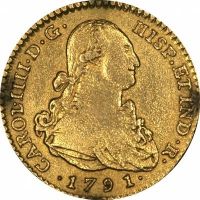
A U.S. federal judge has extended to July 21 the deadline for Odyssey Marine Exploration, Inc. to file an appeal to a magistrate's recommendation that the $500 million in gold and silver coins the company salvaged from a shipwreck at the bottom of the Atlantic be returned to Spain.
"We'll present our objections to the report and the recommendations of Judge (Mark) Pizzo before or on the 21st," a spokesman for Tampa-based Odyssey told Efe.
The Spanish government will then have until Aug. 31 to "present any response to our objections," Odyssey said in a statement.
Judge Steven Merryday will review Odyssey's allegations and the proposal prepared by Magistrate Pizzo, who recommended that the treasure be turned over to Spain.
Odyssey contends that Madrid cannot prove the treasure netted in the company's 2007 "Black Swan" salvage operation was removed from the Nuestra Señora de las Mercedes, a Spanish navy frigate destroyed in battle in 1804.
But in his June 3 ruling, Pizzo said Spain had demonstrated to his satisfaction that the ship was the Mercedes, making the wreck and its contents subject to the principle of sovereign immunity. -
España demandará a Inglaterra y EEUU por complicidad con Odyssey
- On 04/07/2009
- In Illegal Recoveries
From Gaceta
Exteriores aclara a LA GACETA que se esperará al regreso del tesoro de la fragata ‘Mercedes’ para exigir responsabilidades por su exportación ilegal.Hace dos años, el 2 de julio de 2007, la embajada del Reino Unido en Madrid entregaba al Ministerio de Exteriores las dos licencias de exportación que habían permitido a los cazatesoros norteamericanos de Odyssey Marine Exploration llevar a Tampa (Florida) el tesoro extraído de la fragata española Mercedes, hundida en 1804, y cuya devolución a España recomendó el pasado día 3 el juez de Tampa.
La recomendación es taxativa, ya que el juez establece sin lugar a dudas que el barco expoliado es la Mercedes, y que por tanto se trata de un caso de derecho internacional, por ser un barco de Estado y además tumba de guerra, violado sin permiso: competente será la Corte Suprema de EEUU si Odyssey no devuelve la carga por las buenas, pero el juez Pizzo hizo ver que el veredicto será implacable.
Tratándose, según la sentencia, de un asunto en el que estaban en juego “el interés común y el respeto mutuo entre las naciones”, sorprende a propios y extraños que España sólo haya reclamado la propiedad, sin apreciar delito en la forma como se extrajo el tesoro, a la que hace referencia Pizzo: violando normas internacionales, por no hablar de las de la arqueología (ya que se sacaron 15 toneladas en apenas una semana). -
Hunting for liquid assets
- On 04/07/2009
- In Treasure Hunting / Recoveries
By Keyonna Summers - Florida Today
For more than 17 years, Greg Bounds has made a pretty decent living scouring the ocean off the Brevard County shoreline for trinkets and treasures left by ships that sailed hundreds of years ago.
But with the recent economic downturn -- and fewer investors chipping in or not contributing as much as before -- Bounds said he is among a growing number of treasure hunters who will have to come up with creative ways to offset costs until they score their next big find.
For Bounds, that includes hiring out himself and his crew to curious divers for all-day treasure-seeking excursions off Sebastian Inlet - lunch and equipment included - for $300 per person.
Funding a treasure-hunting boat and equipment for surveying and mapping shipwrecks can add between $50,000 and $60,000 - a low budget compared with some large operations, which might have costs of up to $1 million, he said.
-
Divers find wreck of the Glenelg which vanished 109 years ago
- On 04/07/2009
- In Treasure Hunting / Recoveries
By David Edwards - Herald Sun
One of Victoria's worst maritime tragedies might finally be explained - even if it has come a tad late.
A team of divers found a century-old shipwreck in Bass Strait on Sunday which is believed to be the 135-foot iron steamer Glenelg.
The Glenelg vanished in 1900 during a routine run along the Victorian coast from Bairnsdale to Melbourne. Only three people survived the tragedy which left 31 people dead, but an inquiry never explained what caused the ship to sink.Now, 109 years later, the Glenelg mystery may finally be solved.
The Southern Ocean Exploration diving team spent four hours searching for the wreck on Sunday and were just about to pack when they struck gold.
The divers recovered a plate from the shipwreck to confirm the wreck's identity, and the location and dimensions of the ship suggest it is the Glenelg.Southern Ocean Exploration group leader Mark Ryan said the discovery could answer some century-old questions about one of Victoria's worst maritime tragedies.
-
Titanic: The Artifact Exhibition
- On 03/07/2009
- In Famous Wrecks

By Peter Genovese - The Star-Ledger
Of the 350 artifacts from the Titanic now on display at the new Discovery Times Square Exposition, the smallest items are the most touching and heartrending.
Powder jars and perfume bottles. Pocket watches and shaving brushes. Stick pins and tie clasps. Handwritten letters, glasses and a booklet advertising Captain Collings & Sons hernia treatment. The booklet cover shows a sailor at the wheel of a ship and these words: I'll Steer You Straight.
"A lot of the papers were preserved because of the quality of the leather in the bags and wallets," explains Alana Radman, leading a tour of "Titanic: The Artifact Exhibition."
The tanning process makes leather repellent to micro-organisms, which accounts for the treasure-trove of paper and other personal effects retrieved over the years from the RMS Titanic, which sank on April 15, 1912.More than 5,500 artifacts have been recovered from the wreckage to date; of the 350 pieces on display at the Discovery Times Square Exposition, 49 "have never been on display or seen by the public," according to exhibit spokeswoman Alison Sawyer.
Read more... -
Truro men find shipwreck at Ballston Beach
- On 03/07/2009
- In Miscellaneous
By Kevin Mullaney - Wicked Local Truro
The ocean is full of secrets and mysteries, but it doesn’t fork over all that many clues, and rarely ones as big as the piece of a shipwreck that washed ashore two Fridays ago in the midst of a long nor’easter.
Two local men who had the chance to see it believe it was a 17th-century vessel, a remarkably ancient relic that they were able to capture in photographs before it was swept away again by storm tides, disappearing like a ghost.
“I saw a couple of people near this big black shape,” said Truro writer Sebastian Junger of his first encounter with the mysterious artifact.It was just south of Ballston Beach, in an area where Junger swims and had found what he now knows are ribs from the wreck. The big black shape was about 20 by 40 feet long.
The tourists had no idea what they were looking at, he said.
“I was immediately struck by the shape of the hull,” said Junger.“It was completely different, a rounded re-curve.” That is a shape he connected with old ships such as Spanish galleons, maybe even “a tumblehome,” he speculated, referring to the old wooden warship shape.
“It had a bulge at the water line. It was almost the contour of the shape of a woman.”