HOT NEWS !
Stay informed on the old and most recent significant or spectacular
nautical news and shipwreck discoveries

-
Spain going after sunken treasure
- On 18/07/2009
- In Treasure Hunting / Recoveries
From Globe Newswire
Monday's blockbuster news concerning Spain's decision to search for sunken treasure in its territorial waters represents an enormously positive development for Legal Access Technologies, Inc., operating as UnderSea Recovery Corporation.News articles released on Monday reported that Spain, a country that has opposed historic treasure salvage for many years, has ordered its navy to look for huge gold and silver reserves that were lost at sea in the 16th century.
According to these reports, naval mine sweepers are set to commence radar and sonar surveys to attempt to locate shipwrecks on the seabed off the southern coast of Spain.
The value of the gold and silver treasure, which is believed to include Inca and Aztec artifacts, is estimated at $140 billion dollars.
The wrecks to be sought were heavily laden treasure ships that went down in bad weather as they were returning to Cadiz from South America. One of the news reports also estimated the total number of treasure-laden shipwrecks in the world's oceans to number 3,000.
The Company believes this news to be a truly momentous announcement, as it legitimizes and validates historic shipwreck recovery as a business and an industry, and affirms the immense value of the business opportunities now available.The Company plans to approach the Spanish Government as soon as its technology is completed and ocean-tested later this year, in order to explore a relationship with Spain to assist its navy in locating some of the treasure targeted in the news reports as well as other shipwrecks which lie in Spain's territorial waters.
-
On the trail of the Arctic's most enduring mystery
- On 16/07/2009
- In Expeditions

By Katherine O'Neill - The Globe and Mail
A marine archeologist from landlocked Alberta has set his sights on finding two of the world's most coveted shipwrecks: the long-lost Royal Navy vessels from the doomed 19th-century Franklin expedition.
Rob Rondeau and his small team plan to travel to the central Arctic archipelago later this summer to launch a privately funded underwater search.
The race to find the fabled shipwrecks has been continuing for more than 160 years, but Mr. Rondeau is confident his group's research and use of state-of-the-art sonar will solve the vexing mystery.
Parks Canada was supposed to dispatch its own marine archeologists to the Arctic later this summer as part of a high-profile, three-year search for the ships that began last year. It scrubbed this year's effort because no government vessel was available.
While most modern-day Franklin hunters, including Parks Canada, have focused their attention on areas southwest of King William Island, Mr. Rondeau is confident the shipwrecks are in fact located north of the island, in the waters of Larsen Sound. -
Cannon balls really could sink ships, study finds
- On 16/07/2009
- In General Maritime History
From Live Science
Long before the Navy used torpedoes, rockets and nuclear missiles to fire at the enemy, ship captains relied on more blunt weapons - cannonballs.
But how effective were cannonballs at sinking battleships ?New research shows that cannon fire could have brought down at least one battleship, a recently discovered 19th-century warship that sank off the coast of Acre, Israel.
The ship's oak hull was unusually thick, leading researchers to question the possibility of cannon ball penetration.Experimental firings of cannons at replicas of wooden warships have been carried out in other countries, but due to the cost and complexity of such experiments, they have been few and far between.
In general, they were only firing demonstrations, and scientific data has not always been obtained. So it was still hard to tell for sure whether the cannonballs found in the wreck off the coast of Acre would have been capable of sinking this particular ship.
University of Haifa's Yaacov Kahanov, who studies maritime civilizations and underwater archaeology, developed a unique model along with his colleagues that enabled firing experiments to be carried out on a reduced scale, thereby reducing costs, and enabling controlled, measured and documented experimentation.Five scale models of the ship's hull, based on the archaeological findings, were constructed and fired at using an experimental gun to shoot steel balls at 225-1,100 mph (100-500 meters per second), modeling the cannon fire of the 19th century.
-
High-tech hunt for famed wreck
- On 15/07/2009
- In Underwater Archeology

By Jared Lynch - The Standard
University students from Melbourne hope to find the fabled Mahogany Ship in dunes west of Warrnambool.
Last February Rob Simpson, who had searched for the legendary vessel for 20 years, used satellite technology to map what he believed was the ship's location.
The Melbourne man drilled three-and-a-half metres down south of Tower Hill and struck something solid.
RMIT geophysics professor James MacNae said a couple of million dollars had been spent in developing equipment his team would use, but finding the ship was still "a long shot".
"I'm not crossing my fingers yet . . . if we found something it would be exciting," he said.
"We transmit an electric current horizontally beneath the surface and it detects any abnormalities. -
A Jamestown shipwreck 400 years ago
- On 14/07/2009
- In Ancien Maritime History
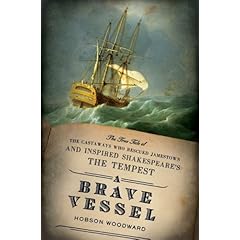
By Hobson Woodward - History News Network
News of shipwrecks reached London regularly during the lifetime of William Shakespeare.The frequency of travel by water and the fragility of wooden sailing vessels made disaster at sea a relatively common occurrence.
Thus it is all the more striking that the playwright chose one particular wreck—the loss of a Jamestown ship on uninhabited Bermuda four centuries ago this month—as an inspiration for his ethereal Tempest.
The Sea Venture was voyaging from London to the two-year-old colony on the Virginia coast in the summer of 1609 when it encountered an intense hurricane.After four days of punishing violence the ship came to rest on a Bermuda reef. All 153 people aboard survived to be remembered as the first to occupy the mid-Atlantic isle.
A year later when some of them returned home and told their story, Shakespeare ensured they would also make literary history as a source for his last solo play.
-
Black sea treasures
- On 13/07/2009
- In Underwater Archeology

From H.ua
Serhiy Voronov is head of the Department of Underwater Archeology of Ukraine; he not only works as administrator but organizes underwater archeological expeditions.
The southern shores of Ukraine are washed by two seas – the Sea of Azov and the Black Sea. To scientists and to archeologists the Black Sea is a remarkable feature because its lower levels are, to all intents and purposes, almost biologically dead - not because of modern pollution but because of continued weak ventilation of the deep layers.Oxygen is dissolved only in the upper water levels; below a depth of about a hundred meters (three hundred feet), there is no oxygen; in those reaches the sea is contaminated by hydrogen sulfide, which results in a saturated, gloomy, “dead” zone frequented only by adapted bacteria.
Such conditions at the bottom of the sea are ideal for preserving in an almost intact condition the ships that sank in the past millennia.Not only the examination of the wrecks is of a great interest to historians – their cargos are of even a more valuable importance for archeologists and historians.
Underwater archeology in the Black Sea is a rather recent development but it has already rendered many exciting finds.
-
Ancient boat reveals shipbuilding skills of Java's seafarers
- On 11/07/2009
- In Underwater Archeology

By Suherdjoko - The Jakarta Post
Historians have long wondered just how Indonesians in the 6th and 7th centuries built their boats. A recent archaeological discovery sheds some light on the mystery.
In July last year, an ancient boat, measuring 15.6 meters long and 4 meters wide was discovered in Punjulharjo village, Rembang district, in Rembang regency.
A team from the Yogyakarta Archaeology Center made a detailed study of the site, about 200 meters inland from the Java Sea coastline, from June 17 to 26 this year.The boat, approximately 1,200 years old, was found buried near the Central Java northern coastline, with its bow lying to the west and its stern in the east. Head of Punjulharjo village Nursalim said eight local residents had stumbled across the ancient relic while making a pond.
“The land was originally planted with coconuts, followed by secondary crops,” he told The Jakarta Post. “But as the soil was not fertile enough, they decided to make a pond. That’s when they noticed the buried boat, its main part still in its whole form, as they dug deeper.”
According to the chairman of the Yogyakarta archaeology team, Novida Abbas, the ancient boat is the most complete ever found in Indonesia. “So far we have only got wooden planks and other separate pieces. The discovery in Rembang is 50 percent intact,” Novida said. “We can see the actual shape of the boat and its construction technology.” -
Franklin Expedition search called off
- On 11/07/2009
- In Expeditions
From CBC News
A government-sponsored search for Sir John Franklin's missing ships in the High Arctic has been scrubbed this summer, but private entrepreneurs hope to score an archeological coup by conducting their own search in late August.
Ottawa announced last August it was mounting an effort to find Franklin's two ships, the Erebus and Terror, which went missing more than 160 years ago.
Some graves of the crew members have been discovered over the years and relics have been uncovered.
But the search for the missing ships has become a potential prize — made even bigger when then Federal Environment Minister John Baird announced Ottawa was backing a search and that experts would be relying on Inuit knowledge to aid the search.
On Thursday, Parks Canada's senior marine archeologist, Ryan Harris, confirmed the official search for the Franklin ships has been called off for this summer.
Harris said Parks Canada had asked the navy for ship time but there won't be a Canadian Forces ship in the vicinity and the search team was unable to get time aboard one of the Canadian Coast Guard's icebreakers.