HOT NEWS !
Stay informed on the old and most recent significant or spectacular
nautical news and shipwreck discoveries

USS Olympia seeks a new caretaker
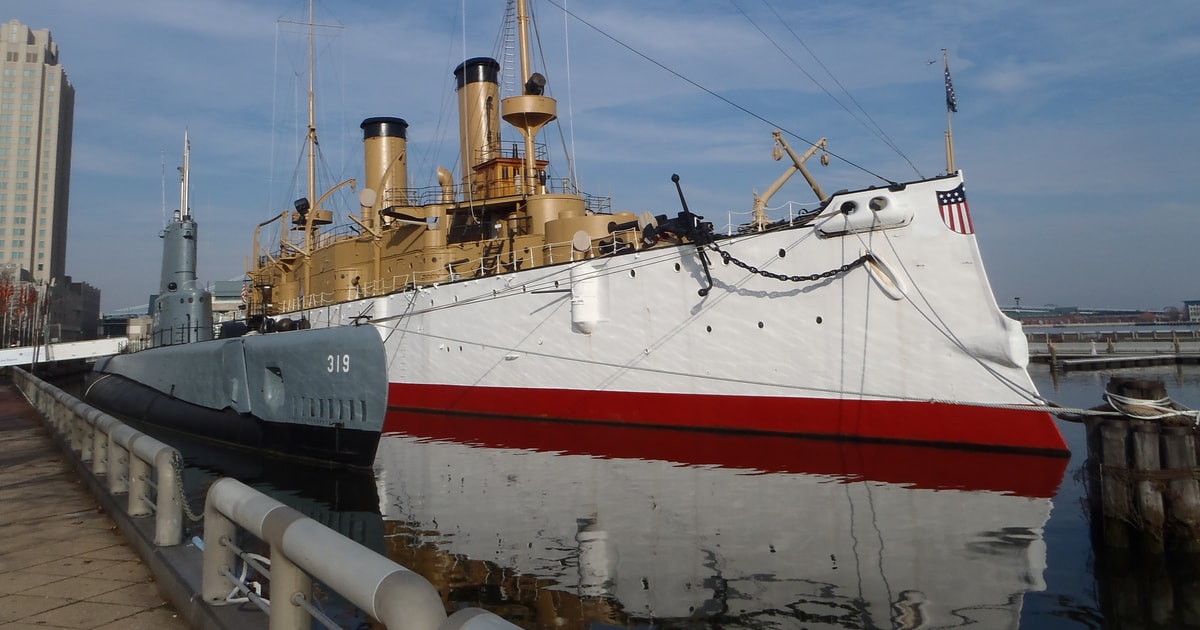
By Edward Colimore - Philly
During the Spanish-American War, Navy Commodore George Dewey stood on the bridge of the ship and uttered the words that became famous: "You may fire when you are ready, Gridley."
The vessel's mighty guns fired the first shots of the Battle of Manila Bay on May 1, 1898, announcing the United States as an international power.
The USS Olympia was the Navy's state-of-the-art flagship, a source of pride for a country flexing its muscles.
More than a century later, this last surviving vessel of the Spanish-American War fleet and longtime Penn's Landing attraction is looking for a new home and benefactor with deep pockets.
Its owner, the Independence Seaport Museum, can no longer afford the upkeep and it told the Navy it "will relinquish its stewardship of this national naval treasure and its valuable artifact collections," said Peter McCausland, chairman of the museum's Board of Port Wardens.
The museum seeks an owner who can pay up to $30 million to tow, restore, interpret, and endow the bedraggled-looking vessel.
Small portions of the Olympia's half-inch steel hull along the water line have corroded to the point that only an eighth of an inch of thickness is left.
The hull must be continually monitored and is often patched, even as water leaks through parts of the deck into the interior, causing further rust.
"We don't like to see the ship go, but you don't want to sink the entire museum because of the cost of maintaining" the Olympia, said the Independence Seaport's interim president, James McLane. "The museum is very financially sound, but if you put a drag on it, that puts it at risk over the next several years."
From The Star
Robin Hood Airport has handled its most historic cargo, which has lain at the bottom of the sea for two centuries.
Rare artefacts from a British sailing ship that was wrecked and sunk in the Baltic in the early 19th century have been brought to the surface and are now on their way to a maritime exhibition in Whitby, from where they originally started out.
The items of sailors' clothing were flown to Doncaster Sheffield Airport by Wizz Air from Poland, where they have been kept since they were recovered in 1995 by an archaeology unit at Gdansk maritime museum.
The rare hat, stockings, shoes and mittens from the wreck of the Whitby ship The General Carleton had been remarkably well preserved in the cold mud of the Baltic.
The articles have been loaned from the Polish museum because of their historic links to the region and will be on view for the first time in the UK as part of the Northward Ho ! exhibition at the Captain Cook Museum in Whitby, which opens on Monday.
Jodi Stow, marketing and communications manager at Robin Hood Airport, said: "We welcome a variety of flights with specialist cargo to and from the airport but this delivery was by far the oldest we've ever had.
"We hope all the historians and nautical followers in the region will enjoy seeing such precious artefacts."
Treasure Auction #7: April 7-9, 2010

By Daniel Frank Sedwick - CoinNews.net
Daniel Frank Sedwick, LLC is working around the clock to present another big auction with over 2150 lots and a pre-auction estimate of over $1 million. Lots will be online around the first week of March and available for viewing in person at the Baltimore Coin Show March 3-7.
Also lot viewing in person will be available by appointment at our private office in Winter Park, Florida, March 8-April 1 (weekdays only, 9 am to 5 pm).
In great deference to the Sedwick patriarch, for the first time ever we will see selections from the Frank Sedwick study collection of 1715-Fleet gold cobs, including plate coins from past editions of the Practical Book of Cobs and other pieces never seen or offered for sale, coins that the pioneering "Dr. Cobs" kept as the best examples among thousands that passed through his hands.
The unique opportunity to own a "Frank Sedwick" specimen will start in this auction with just two 1715-Fleet masterpieces: The finest-known Lima 4 escudos 1711 and one of the best Lima 8 escudos 1712 ever offered.
Also in the gold cob category there is a choice Cuzco cob 2 escudos 1698, plate coin in Diving to a Flash of Gold by the legendary Marty Meylach, who found the coin and certified it.
But perhaps most intriguing in the 1715-Fleet gold cobs this time is a Mexican 1 escudo that was flown aboard Apollo 14 in 1971, the only one of its kind.
Before this specially engraved coin came to us, we had no idea that the Apollo astronauts included genuine shipwreck treasure in their "flown" souvenirs on their trips to the moon, but apparently the link between NASA and the Real Eight Co. was more than just geographic.
We have come to understand that flown medallions made of 1715-Fleet silver are very hot with space collectors, who will no doubt go crazy for this genuine coin as well, but we hope the treasure collectors will win out in the end. And yes. of course we have a full date 1715, probably our favorite so far.
Spanish treasure galleon found

By Lamaur Stancil - TCPalm
It’s taken almost four centuries for someone to find the shipwrecked remains of a Spanish treasure galleon, and it’s just east of Indian River County.
Orlando-based treasure hunter Tom Gidus said he’s been examining the debris from the ship, which is more than 14 miles east of the barrier islands.
Indialantic shipwreck historian Robert Marx said he reviewed pieces Gidus found and concluded they are from the ship known as the Espiritu Santo el Mayor, a 480-ton galleon that sank in a storm in 1626.
“A bronze cannon was found a number of years back and that is what led us to the area,” Gidus said.
Retrieving the pieces of the wreckage has become a long-term project, Gidus said. He’s dived and removed just a handful of loose pieces from the wreckage for identification purposes.
Much of the rest is partially or fully submerged under the sand of the ocean basin, he said. His crew will use either an airlift or underwater handheld blowers to retrieve the ship’s belongings.
Marx said the ship took 1 million pesos worth of valuables and 250 crew members down with her in the storm. Other ships in the fleet were able to save 50 crew members, Marx wrote in a book called “New World Shipwrecks, 1492-1825: A Comprehensive Guide.” Gidus also said shoals in the vicinity of the site made ships susceptible to wrecking there.
As more pieces from the ship are recovered, Gidus said he eventually wants to have them displayed at museums. Gidus’ company, Gold Coast Explorations, found a pair of 19th century wrecks last year on Florida’s Gulf Coast.
Maritime museum rolls out campaign to triple membership

By Jonathan Mattise - TCPalm
The Maritime & Boating Museum at Indian RiverSide Park is kicking off a word-of-mouth campaign aimed to triple membership in less than two months, all in hopes of eventually expanding its facilities at the park.
Museum board members and volunteers are focusing on hitting 1,000 members by mid-April through several grassroots initiatives.
The museum, currently with about 240 members, dropped its membership prices to $15 for a single person, $20 for a couple and $35 for a family until April 15.
By that time, board members hope to add about 750 members through a Pay-It-Forward member referral challenge, membership parties, and by bringing along potential members to the museum and its special events.
“The museum needs to increase its volume, its quantity of members, its base of support, so that when we go to larger donors we can show that we have an extended group of people who have invested in our museum,” said Museum Executive Director Sheila Stewart-Leach.
Board members and volunteers at the museum currently in the Frances Langford Pavilion’s first floor hope the initiative will pave the way for plans to construct its own facilities at Indian RiverSide.
Adding the proposed three buildings at the north end of the park including space for exhibits, boat restoration, wooden boat galleries and a 180-seat auditorium would probably cost about $15 million, said Doug Smith, Martin County commissioner and museum board president.
“I’m really excited. I can see the museum in my head, in terms of what it’s going to look like,” Smith said. “How those pieces all fit together I can see the exhibits, the displays.
It gives us the chance to tie this marvelous piece of our cultural history with our local history.”
Searching for Paul's Shipwreck on Malta
By Chuck Holton - CBN
The tiny island of Malta in the middle of the Mediterranean Sea has a rich history as one of the oldest Christian communities in the world.
It all started with a shipwreck, as told in the book of Acts, about 60 AD while the apostle Paul was enroute to Rome.
Boarding an Alexandrian grain freighter on the isle of Crete, a fierce Nor'easter blew the ship off course. It looked like all was lost.
"On the fourteenth night, they were still being driven across the Adriatic sea when the sailors sensed land approaching," said Douglas Gresham, producer of Chronicles of Narnia and a resident of Malta.
"They took soundings and found that the land was 120 feet deep. A short time later they took soundings again and found that it was 90 feet deep. Fearing that we would be dashed against the rocks, the sailors dropped four anchors from the stern, and prayed for daylight."
"When daylight came, they did not recognize the land. But they saw a bay with a sandy beach, where they decided to run the ship aground if they could," he continued. "Cutting loose the anchors, they left them in the sea."
With the storm still raging, the ship struck a sandbar, and began to break apart. With the vessel and her cargo a total loss, the nearly 300 men on board swam for their lives. Miraculously, everyone survived.
"Once safely on shore, we found out that the island was called Malta," Gresham explained of the sailors experience.
And so began a Christian influence in Malta that has continued down through the centuries. Today, it is the most religious nation in Europe -- 98 percent of its citizens are members of the Catholic Church.
Saint Paul is memorialized throughout the island, no where more than in Saint Paul's bay, where tourists come to visit the Shipwreck Cathedral, and see the spot where most believe Paul's ship ran aground nearly 2,000 years ago.
Chinese experts to explore sunken ships from Cheng Ho's fleet in Africa
From People's Daily Online
The National Museum of China, Peking University's School of Archaeology and Museology, as well as the Kenya National Museum jointly signed an agreement February 23, under which, Chinese and Kenyan experts will investigate and excavate underwater and onshore cultural relics in Kenya's Lamu Archipelago, in a bid to further solve relevant historical mysteries relating to China-Africa cultural and economic exchange in ancient times.
In addition, some Chinese experts will visit Kenya to explore the sunken ships from Cheng Ho's fleet.
Zhao Hui, director of Peking University's School of Archaeology and Museology, said that this project has witnessed 5 years of investigations, argumentations and preparations and it involves investigating, exploring and excavating the underwater cultural relics in and around the Lamu Archipelago, unearthing ancient ruins in and around Malindi City, and researching Chinese cultural relics unearthed in Kenya's coastal areas.
Reporters learned that the Ministry of Commerce has allocated 20 million yuan to fund the important foreign-aid project scheduled to last 3 years. Every year, the Chinese side will dispatch experts to Kenya to work there for 2 to 3 months.
Due to special climate conditions in Kenya, cultural relic excavation can only be launched during 2 dry seasons, namely, from June to September and from December to February of the following year.
The curator of the Kenya National Museum disclosed that a Chinese expert group will arrive in Kenya in July 2010 and more Chinese experts are expected to arrive later.
According to Zhao Jiabin, director of the Underwater Archaeology Center at the National Museum of China, ship debris and ancient chinaware from China's Yuan, Ming and Qing dynasties have been discovered during the archaeological excavation and investigation in Kenya's 5 coastal regions such as Malindi.
Fonte de informações : Leituras da Historia
O naufrágio foi localizado nas proximidades das praias do Sonho, Naufragados e Papagaios, na parte sul da Ilha de Santa Catarina, local por onde entravam as embarcações que trafegavam na região na época das grandes navegações.
Oito metros de altura de sedimentos encobrem o que mergulhadores do Projeto Resgate Barra Sul acreditam ser uma nau do século 16.
O naufrágio foi localizado nas proximidades das praias do Sonho, Naufragados e Papagaios, na parte sul da Ilha de Santa Catarina, onde era a entrada de embarcações que trafegavam na região na época das grandes navegações. Caso a hipótese se confirme, será o naufrágio mais antigo até agora identificado no Brasil.
Na parte mais alta dos sedimentos foi localizado um pequeno canhão de sinalização e, ao redor de uma área de cerca de 30 metros, os aparelhos utilizados na busca indicaram a presença de metais, o que pode revelar a estrutura total do navio.
Além de cabos, cacos de cerâmica e pedras de lastro, uma âncora foi achada nas proximidades.
A âncora é o achado mais antigo. Foi ela que, encontrada por acaso pelo mergulhador Gabriel Corrêa, em 2005, deu início à criação da ONG Projeto Resgate Barra Sul.
"Pelo tamanho e formato da peça acreditamos que pertence a uma nau do século 16. Esse tipo era utilizado por embarcações dessa época", disse Corrêa, diretor do projeto.
As perguntas ainda não respondidas são se a âncora faz parte do mesmo naufrágio e se a nau era mesmo de Sebastião Caboto, uma das hipóteses mais viáveis.
Cabotto comandou, em 1526, uma expedição que saiu da Espanha tendo como destino o Oriente, mas ao saber das histórias de um rico povo no interior da América, que se adornava dos pés à cabeça com ouro, resolveu deixar seus planos iniciais para trás.
"A Ilha de Santa Catarina era um ponto estratégico de abastecimento para os navegadores que nos séculos 16 e 17 serviam aos reinos de diversos países europeus e seguiam rumo ao rio da Prata.
Quando adentravam a baía sul, eram surpreendidos pela geografia acidentada do leito marinho e muitas vezes pegavam um inesperado vento, vindo a naufragar", disse outro mergulhador e diretor da equipe, Nei Mund Filho.