HOT NEWS !
Stay informed on the old and most recent significant or spectacular
nautical news and shipwreck discoveries

Carrying a torch for underwater welding
By Rich Pietras - Bucks County Courier Times
Aqua welders can earn upwards of $100,000 a year, said the course instructor. Ashley Bechtold has always loved the water. She also likes to cook. Combine the two, and the 17-year-old student could have pursued a career as a chef on a ship.
But that idea really never took hold for the Hatboro-Horsham High School junior. Instead of heating up meals, she's intrigued by the idea of heating up metals ... with a torch ... underwater.
So she entered the welding program at the Eastern Center for Arts and Technology in Willow Grove in September.
"The idea of playing with fire underwater amused me," Bechtold said from her classroom/workshop. "After I learned how much money you could make doing it, I thought it would be a good choice."
Her decision to enter the male-dominated field of welding came almost as a fluke after visiting the tech school as part of Keith Valley Middle School's Move-Up Day in eighth grade.
"I thought about the culinary program, but I remember this one girl talking to us about welding," recalls Bechtold. "She said she really loved it and was making good money ... I knew nothing about it but, now, I couldn't be happier with my choice."
Upon entering the two-year, 900-hour basic welding course, Bechtold said she discovered two things right away.
Hints of man's earliest voyages
By Gina Macris - Projo
A team of archaeologists led by Thomas F. Strasser, an associate professor of art history at Providence College, has made discoveries in Crete that suggest man’s predecessors had the ability to navigate the seas much earlier than the first known voyage 60,000 years ago.
Strasser’s team, working under the auspices of the Greek Ministry of Culture, found Stone Age tools at least 130,000 years old on the southern coast of Crete two summers ago — discoveries that were made public only last month.
The presence of the tools on Crete — an island for 5 million years — implies that the predecessors of Homo sapiens had the ability to navigate the seas.
“This was a life-changing experience,” he said of the expedition to Plakias, a tourist spot on the southwest coast of Crete.
One day, at Preveli Gorge just outside the town, team member Curtis Runnels, a professor of archaeology at Boston University, was talking to a few PC students in the group about the materials and methods of Stone Age toolmaking.
Runnels’ wife picked up a piece of quartz and put it in her husband’s pocket so he would have raw material for a later tool-making demonstration he had planned.
Back at their lodgings, the rock lay on a balcony table as a paperweight for a day or so.
The SS Georgiana lost and found

From Nashua Telegraph
Today (March 19th) in 1863, the SS Georgiana, reportedly the most powerful cruiser built for the Confederate Navy, failed to make it past the Federal Blockading Squadron and into Charleston, SC.
The ship’s desperate crew was forced to beach the Georgiana and flee, after which the Union forces set the wreck on fire. As this was the ship’s maiden voyage, the Confederate forces were less than encouraged by this outcome.
By all accounts, the Georgiana was a beautiful ship, outfitted not only for war but for the raiding of enemy merchant vessels (a practice known as privateering).
She was 226 feet long, with space for up to 14 guns, and powered by a steam engine that turned a propeller 12 feet in diameter. Her cargo holds were extra roomy, able to accommodate more than four hundred tons of cargo.
For her maiden voyage today in 1863, the Georgiana was loaded up with merchandise, munitions, medicines, and (supposedly) 350 pounds of gold. None of the cargo made it to its intended destination, with everything but the gunpowder sinking to the bottom of the sea along with the Georgiana.
The gunpowder, as you may imagine, was consumed when the ship was set on fire by the Union forces. There was so much gunpowder on board that the Georgiana burned for three days (punctuated by intermittent explosions) before it finally sank.
Exactly 102 years later in 1965, 18-year-old E. Lee Spence discovered the sunken Georgiana while diving. He didn’t have to go very deep – the ship’s boiler is a mere five feet under the surface.
Read more...
Scots firm lands zinc treasure from Spanish shipwreck
From BBC News
Treasure recovered from a ship which sank off the coast of Spain more than 30 years ago is bound for Scotland.
Lanarkshire-based metal coating company, Highland Galvanisers, has bought 75 tonnes of zinc recently salvaged from the wreck.
The Francois Vieljeux vessel was carrying a cargo of precious metals from Tanzania to ports in northern Europe when the it sunk in 1979.
The firm will melt down the zinc to use at its coating plant in Cumbernauld.
The ship and its cargo had lain at the bottom of the Atlantic Ocean until 2006 when a company called Subsea Resources started the process of recovering it using a special vessel fitted with a remotely operated grab.
Expert analysts estimated the lost cargo, which also included 5,500 tonnes of copper, would have a value of about £21m in today's market - the equivalent of 800kg of gold, or almost 400,000 barrels of oil.
Read more...
By Chris Segal - News Herald
Amidst the morning rain, replicas of Christopher Columbus’ Niña and Pinta vessels sailed into the Panama City Marina on Wednesday to set up a temporary floating museum.
With the help of a dinghy, the two vessels floated into the marina and will stay until Monday.
The ships are touring as a sailing museum. They offer guided tours and displays for school groups and the public. Each ship has a crew of four people who will be on hand to answer questions and talk about the vessels.
The two Columbus replicas were most recently docked in Alabama and, after a weekend in Panama City, they will make their way south to St. Petersburg and then up the East Coast.
This Niña was launched in 1992 and has been called by Archaeology magazine the “most historically correct Columbus replica ever built.”
Of the Niña, Pinta and Santa Maria, the smaller, faster Niña was Columbus’ favorite ship, and he made most of his journeys on it.
The replica Niña has sailed a half-million miles, docked in 600 ports and traveled through the Panama Canal about a dozen times. This is the fourth time the Niña has docked in Panama City.
“Panama City has always been great,” said Niña Captain Morgan Sanger. “They really support the ship.”
Nazi wreck puts Berlin at odds with salvager
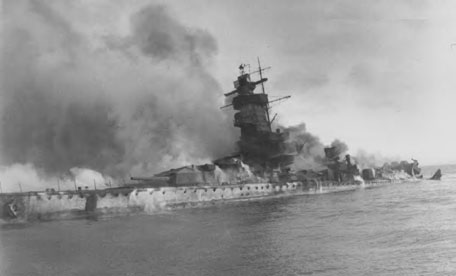
From The Local
The Admiral Graf Spee, the German "pocket battleship" scuttled to Uruguay in 1939, is caught in the middle of a struggle between the businessman salvaging it and the German government, which wants to prevent its commercialization.
"We always proposed a serious historical and cultural destiny" for the remains of the Graf Spee while "contemplating fair compensation" for the work and investment made to recover its remains, Alfredo Etchegaray, the businessman, told AFP.
During a visit to Montevideo this week, German Foreign Minister Guido Westerwelle said his desire was "to prevent the remains of the symbols of the Nazi regime from becoming commercialized."
"What we want really is to reach a constructive deal," he said, adding that Germany was prepared to support the presentation of the remains "in a historical context, like a museum."
In 2006, divers hired by Etchegaray recovered an imposing Nazi bronze eagle measuring 2.8 meters (nine feet) wide by two meters high and weighing 350 kilogrammes (770 pounds) from the stern of the Graf Spee.
Two years earlier, they had come up with a 27-tonne rangefinder used to direct the ship's cannons. And in 1998, a 155 millimeter (six-inch) gun from the ship's secondary armament was salvaged.
The underwater salvage group planned to bring up more cannons and other pieces of the Graf Spee, but were barred from doing so by a Uruguayan government decree.
After the recovery of the Nazi eagle, with its outspread wings and swastika, Germany sent a note to the Uruguayan foreign ministry claiming ownership of the Graf Spee and opposing continuation of the salvage work.
N.C. shipwreck may be oldest found
From UPI
Winter storms on the Outer Banks have uncovered the remains of what may be the oldest shipwreck on the North Carolina coast, experts say.
Investigators from the North Carolina Underwater Archaeology Branch came to Corolla, N.C., to document the estimated 400-year-old wreck before it disappears, The (Norfolk) Virginian-Pilot reported Wednesday.
The wreck has already drifted two miles since storms uncovered it in December.
"It wants to go south," Branch curator Nathan Henry said.
During its movement floorboards and the keel of the 70-foot ship have come loose and disappeared, and the wreck is in danger of completely falling apart, the Virginian-Pilot said. Some local residents, including the avid beachcomber who first discovered the wreck, want it raised from the sands and preserved.
"It's going to go to pieces," Ray Midgett said. "I would love to see them save it."
Experts estimate the wreck is even older than the famous remains of Blackbeard's ship the Queen Anne's Revenge, which sank in 1718 near Beaufort, S.C.
Ukrainians uncover Crimean British Navy vessel

From BBC news
Ukrainian archaeologists say they have identified the remains of HMS Prince, a British naval vessel that sank off Balaclava during the Crimean War.
The sinking, with all 150 men on board, caused outrage not only for the human toll, but because thousands of badly needed winter uniforms were also lost. T
he ship had not been found since it sank during a storm in November 1854. Other underwater expeditions have found parts of the ship, but it is the first positive identification.
According to Sergei Voronov, of the Ukrainian Academy of Sciences, and the leader of the expedition, explorers discovered a plate fragment from the captain's mess last summer.
After months of meticulous cleaning, the fragment revealed the name of the company which owned the Prince before it was hired by the Royal Navy: the General Screw Steam Shipping Company.