HOT NEWS !
Stay informed on the old and most recent significant or spectacular
nautical news and shipwreck discoveries

-
Plymouth divers are probing mystery of wreck site off the Mewstone
- On 29/11/2012
- In Parks & Protected Sites

From Plymouth HeraldPlymouth divers are investigating the mystery of a wreck site off the Mewstone dating back hundreds of years.
The Mewstone Cannon site, thought to date back to the 18th century, was discovered just off the coast of Wembury in 1968.
Now it has been adopted by Plymouth Diving Centre, based at Queen Anne's Battery, through the Nautical Archaeology Society's Adopt-A-Wreck scheme.
The wreck site covers a large area between five and 18 metres deep, with cannons nearly two metres long scattered across the sea bed alongside anchors and fragments of olive oil jars which originally stood over a metre tall.
The site was discovered by visiting divers and was surveyed and finds noted, but no further work was done until last year, when non-profit marine research organisation ProMare took up the investigation.
As part of its SHIPS – Shipwrecks and History In Plymouth Sound – programme, it carried out a geophysical survey with Plymouth University to map accurate locations for the cannons before handing its findings over to Plymouth Diving Centre.
-
URI, IAA archaeologists discover shipwrecks, ancient harbor on coast of Israel
- On 29/11/2012
- In Underwater Archeology
From e! Science News
Archaeologists from the University of Rhode Island, the Israel Antiquities Authority, and the University of Louisville have discovered the remains of a fleet of early-19th century ships and ancient harbor structures from the Hellenistic period (third to first century B.C.) at the city of Akko, one of the major ancient ports of the eastern Mediterranean.
The findings shed light on a period of history that is little known and point to how and where additional remains may be found.
The discoveries were presented on November 15 and 17 in Chicago at the annual meeting of the American Schools of Oriental Research by URI assistant professors Bridget Buxton and William Krieger on behalf of the Israel Coast Exploration project.
According to Buxton, three of the four well-preserved shipwrecks found off the coast south of Akko were first detected using a sub-bottom profiler in 2011. Later, storms stripped off several meters of inshore sediments and temporarily revealed the wrecks, as well as an additional large vessel. The wrecks are now reburied.
During the brief time the shipwrecks were exposed, the Israel Antiquities Authority investigated one of them: a 32 meter vessel which still preserved its brass gudgeon (rudder socket) and many small artifacts, such as plates, a candlestick, and even a cooking pot with bones in it.
Laboratory analyses completed this summer by the IAA revealed that the ship's wood came from Turkey. The team believes these ships may have belonged to the Egyptian navy under Admiral Osman Nurredin Bey, whose ships were severely damaged in his attempt to capture Akko in the Egyptian-Ottoman War of 1831.
The town eventually fell to Egyptian land forces under Ibrahim Pasha in 1832.
-
Two rare Titanic menus bring major world records at auction
- On 27/11/2012
- In Auction News

From Paul Fraser Collectibles
Two rare menus from the Titanic have sold at the head of an auction dedicated to the ill-fated ship's memorabilia, which took place in the UK on Saturday (November 24).
The first of the menus was for a first class lunch held on the Titanic's maiden voyage, and sold for £64,000 ($102,500).
The second, which came from a VIP meal held in Belfast to mark the launch of the liner, achieved £36,000 ($57,631).
Dated April 10, 1912, the menu for the first class lunch - which featured hodge podge, lobster and ox tongue - was taken as a memento by passengers Richard and Stanley May.
The fishmonger brothers travelled with first class tickets and used the Titanic to cross the Irish Sea, departing as the ship called at Queenstown in Ireland.
The price achieved was the highest ever seen for a menu of that date. In April, a first class menu from the last lunch ever eaten aboard the Titanic, on April 14, sold for £76,000 ($121,634), almost 100 years to the day since the Titanic sank off the coast of Newfoundland.
The second menu sold in the auction was for an exclusive VIP meal held on May 31, 1912, which was given as the ship launched in Belfast.
The illustrious guests, who would have watched as the Titanic first took to the water, were presented with a luxury selection of fois gras, turtle soup and champagne at the city's Grand Hotel.
-
Irish government publish photos of US army tanks
- On 25/11/2012
- In Wreck Diving

By Dara Kelly - Irish CentralFollowing a 12 years survey of the offshore waters and coastal seas around Ireland, carried out by Geological Survey of Ireland (GSI) and the Marine Institute, the Irish government has launched an illustrated book entitled “Warships, U-Boats & Liners - A Guide to Shipwrecks Mapped in Irish Waters”.
The coffee table book, 12 years in the making, features stunning shots of wrecks on the seabed including the Lusitania off the Cork coast and US army tanks on the seabed 17 miles off Donegal.
Many of the 300 shipwrecks featured in the book where not know about before this survey. The book includes details on the background of the vessels, the loss of like alongside the photograph and sonar images.
Earlier this week the publication was launched by Minister for Arts, Heritage and the Gaeltacht, Jimmy Deenihan, TD together with Fergus O'Dowd TD, Minister of State, Department of Communications, Energy and Natural Resources.
The book is the result of collaboration between Geological Survey of Ireland (GSI) and the Marine Institute and the Department of Arts, Heritage and the Gaeltacht's Underwater Archaeology Unit (UAU), part of the National Monuments Service.
-
Researcher zeros in on historic wreck
- On 25/11/2012
- In Parks & Protected Sites
By Steve Chawkins - Los Angeles Times
In its day, the five-masted George E. Billings was a graceful schooner that crossed the Pacific with enough lumber to build 100 homes.
In the end, it was a barge for weekend anglers, a white elephant so costly that its owner towed it to sea, torched it and let it sink.
A four-paragraph story in the Feb. 12, 1941, Los Angeles Times made a vague reference to its resting place: "a lonely island reef north of here."
A photo showed a flaming hulk with smoke billowing over rugged hills.
Just where the Billings lay was anyone's guess. Shipwreck buffs knew, though, that whoever found it would peel back the layers on more than a century of rough-and-tumble Western maritime history.
Robert Schwemmer, an archaeologist for the National Oceanic and Atmospheric Administration who presented a paper on the Billings at a scientific meeting last month, had been seeking the ship for the better part of two decades.
A diver, Schwemmer has explored dozens of wrecks off the Channel Islands, including the Gold Rush steamer Winfield Scott, which for eight days in 1853 stranded about 400 passengers on Anacapa Island.
The Billings, though, held a special allure.
It was a remnant from the dying days of the age of sail. And it was probably hidden in plain sight off the jagged shores Schwemmer had gotten to know so well.
-
$10,000 Titanic iceberg photograph to auction online
- On 24/11/2012
- In Famous Wrecks
From Paul Fraser Collectibles
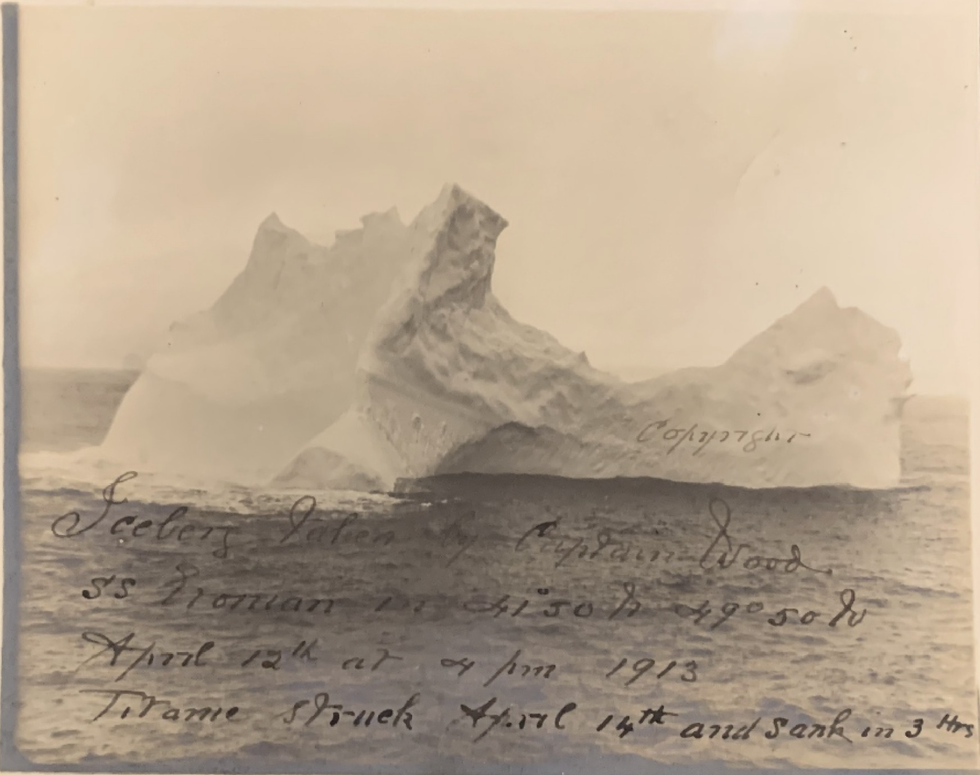
A photograph believed to show the iceberg which sunk the Titanic, will be auctioned at a sale dedicated to the ship on December 16 in New Hampshire. Measuring 9.75 x 8 inches, the photo has been given an estimated value of $10,000.The photograph of the enormous, curiously elliptical iceberg was taken by Captain Wood of the SS Etonian two days before the Titanic struck it.
It bears a caption handwritten in black ink by the captain, which reads: "Copyright. Blueberg taken by Captain W F Wood. S S Etonian on 12/4/12."
After noting the latitude and longitude of the iceberg, Wood concludes plainly: "Titanic struck 14/4/12 and sank in three hours."
It is thought that the captain took the picture because he was particularly taken with the iceberg's unusual shape.
Titanic expert Stanley Lehrer has put his weight behind the photograph, stating: "I've had opportunities to look at various photographs reporting to be the iceberg that doomed the Titanic.
"In my professional judgement this iceberg is the one that sunk the Titanic."
George Rheims, a first class passenger aboard the ship, and Jospeh Scarrot, one of the seamen on duty at the time of the collision, both made sketches of the iceberg which are similar in shape to Wood's "blueberg".
-
Kate Winslet Titanic dress to auction for $300,000 ?
- On 24/11/2012
- In Famous Wrecks
From Paul Fraser Collectibles
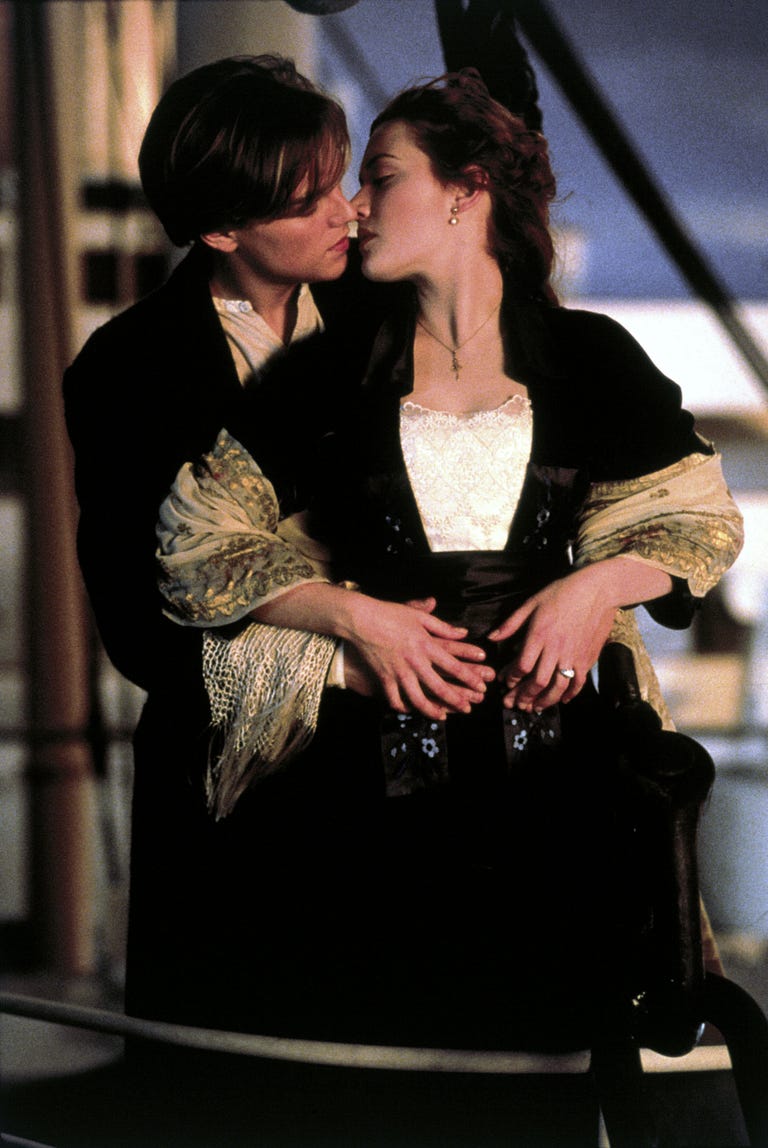
A dress Kate Winslet wore in 1997 film Titanic is coming to auction next month.
The British actress sported the red garment in her character Rose DeWitt Bukater's first meeting with Leonardo DiCaprio's Jack, in which he prevents Rose from throwing herself overboard.
The so-called "jump dress", designed by Deborah L Scott, is expected to achieve up to $300,000 when it goes under the hammer on December 16 in California.
"Director James Cameron famously insisted that all physical aspects of his production maintain the highest level of historical accuracy possible," says the auction house.
"This meticulous attention to detail wasn't spared on the film's legendary and indulgent costumes.
The auctioneer adds that the dress is "widely considered the most recognisable and sought-after of Rose's costumes."
A costume Kate Winslet wore in Holy Smoke sold for just $800 in 2006. The auction house will be hoping that the iconic nature of Titanic and the scene willbring a far better result.
-
Greek antiquities found on Mentor shipwreck
- On 22/11/2012
- In Famous Wrecks

By Christina Flora - Greek ReporterThe underwater shipwreck excavation of the wreck of the ship Mentor, that sank off the island of Kythera in 1802 while carrying goods plundered from the Parthenon by British diplomat Lord Elgin has proved to be a treasure trove of personal items from the passengers and crew.
A greater number of coins were also found, at least two ancient silver coins which were antiquities acquired by Elgin, passengers or the crew,along with two gold coins, used as currency at the time, from the late 1700’s.
Other coins were also recovered but require conservation before they can be identified. Some of these may also be ancient.
Finding three ancient coins on the wreck last year created international news, prompting a question about what other antiquities Elgin was transporting, in addition to crates of Parthenon marbles and sculptures.
There may be even more questions from this year’s finds, after conservation of currently unidentified coins is completed.
Another pistol was recovered, a fob (pocket) watch, personal seal with a cannon on it and gold chain, a pipe, ring, part of navigation instruments, bottles, musket balls, cannon balls, crockery and ceramics possibly from the galley (kitchen) area.
The Mentor was a small Brig, carrying 16 crates of Parthenon sculptures and a marble throne, en-route to Malta and then the United Kingdom.