HOT NEWS !
Stay informed on the old and most recent significant or spectacular
nautical news and shipwreck discoveries

-
Conservator tells how artifacts from Blackbeard shipwreck are handled
- On 23/07/2011
- In Conservation / Preservation
Photo Mike Spencer
By Chanda Marlowe - StarNews
The recent recovery of the 300-year-old anchor from Blackbeard’s flagship, Queen Anne’s Revenge, is piquing public interest in the QAR (Queen Anne’s Revenge) conservation project.
Thousands of fascinating artifacts are already on display at the N.C. Maritime Museum in Beaufort, and the public anxiously awaits the arrival of the anchor as well. But the journey from shipwreck to museum does not happen overnight.
Sarah Watkins-Kenney told those who attended a Third Tuesday program of the N.C. Maritime Museum at Southport what happens to recovered artifacts and why it takes so long before they arrive at a museum.
She is the chief conservator and director of Queen Anne’s Revenge Conservation Lab. The lab is operated by the N.C. Department of Cultural Resources.
The pirate’s ship sank in 1718 near Beaufort. Archeologists working to recover artifacts from the underwater site.
Artifacts must go through a 12-step process that stretches two to three years. Among the steps are: recovery, cataloging, storage, analysis, cleaning, desalination, consolidation, drying, reconstruction and documentation.
While steps like recovery from the wreckage and transfer to the museum gain a lot of attention, the behind-the-scenes steps are equally important.
One of the hardest parts is identifying the concretions – a mixture of minerals and shells encasing iron artifacts. Determining what the artifacts are can be like solving a mystery. Archaeologists use a radiography (X-ray) machine to help identify these 18th century objects. -
10 extraordinary modern shipwrecks
- On 21/07/2011
- In Wreck Diving

From Top Online Colleges
Shipwrecks aren't really considered a modern problem. Air transportation, which is obviously much more efficient, supplanted ocean liners decades ago, causing the romanticism that came with setting out on long overseas journeys to fade.
Even still, ships remain a large part of worldwide commerce and transportation, the latter of which is more common in poor countries, where unfortunate accidents are more frequent.
The following shipwrecks range from small-scale tragedies to unforgettable catastrophes, capturing headlines worldwide when they occurred.1 - USCGC White Alder (1968):
Longtime residents of New Orleans still discuss the plight of the White Alder, a former Navy YF-257-class lighter assigned to tend river aids-to-navigation and various other Coast Guard duties.
The ship met its demise in the early evening of December, when it collided with a 455-foot Taiwanese freighter in the Mississippi River near White Castle, Louisiana, killing 17 of the 20 crew members. Just three of the dead were recovered due to the thick river sediment that quickly buried the cutter. More than 40 years later, 14 crewmen remain at the bottom of the Mississippi.
2 - SS Edmund Fitzgerald (1977):
Perhaps America's most famous modern shipwreck, the Edmund Fitzgerald is still a fresh wound for the families of the 29 crew members who perished that night. When it was launched, it was the biggest ship on the Great Lakes, and its large hauls made it extremely valuable during its 17-year run.
En route to a steel mill near Detroit from Superior, Wisconsin, the freighter encountered a winter storm with hurricane-force winds that created 35-foot waves. With a bad list, broken radars and water engulfing the deck, it sank 17 miles from Whitefish Bay. No distress signals were sent out, and Captain Ernest McSorley, who planned to retire at the end of shipping season, last reported "We are holding our own."
3) Rainbow Warrior (1985):
A former UK Ministry of Agriculture, Fisheries and Food trawler, the Rainbow Warrior was operated by Greenpeace to curtail whaling, seal hunting and nuclear testing, most notably evacuating 300 Marshall Islanders from Rongelap Atoll, a former US nuclear testing area. Docked in a harbor in New Zealand, it suffered two large, crippling explosions that sent it under water — photographer Fernando Pereira was killed when he returned to the ship to collect his equipment as the second explosion occurred.
Two French secret service agents were arrested, and the nation denied involvement until a British newspaper revealed French President Francois Mitterrand authorized the plan. The scandal resulted in several high-profile resignations in the French government. -
NJ shipwrecks offer wealth of history
- On 21/07/2011
- In Wreck Diving
By Sandra K. Lee - Warren Patch - Photo Gary Szabo
The camera panned along the side of a boat until the words Alex Mac appear in bold, black letters. The vessel is lying on its side, 70 feet below the ocean surface.Filming occurred only a few weeks following the scallop boat's sinking in 2006, after being struck by a steel barge.
Besides some algae growing and the marine life, the wooden boat appeared much as it might have while on the surface.The same could not be said for the next ship, the Stolt Dagali, lying in 130 feet of water after sinking in 1964 about 18 miles from the Manasquan Inlet.
Barnacles covered the framework of the tanker and fish swam lazily amidst the structure, which was sometimes difficult to discern from the ocean life surrounding it. One of the distinguishable features was the encrusted rungs of a ladder descending into darkness.
The twisted wreckage of the R.P. Resor, a ship torpedoed by a German U-Boat in 1942, also appeared in the murky waters.Like the Stolt Dagali, its shape was sometimes difficult to distinguish from the marine life that has made the former tanker home.
All three vessels are among the hundreds, possibly thousands, of ships meeting tragic ends and now resting on the ocean floor—sanctuary for marine life and an attraction for divers. They also were part of veteran diver Gary Szabo's talk to a packed room at the Warren Township Library Tuesday night.
Szabo shared video footage of his dives to the three wreck sites and anecdotes about his 30-year diving career which has included five trips to the Andrea Doria, nicknamed the "Mt. Everest of Shipwreck Diving," and numerous wrecks in North Carolina, the South Pacific and New Jersey.
"My favorite place to dive is right here in our own backyard in New Jersey," said Szabo, a Trenton firefighter who works in the city's dive unit. "New Jersey has a very rich and active underwater world."
Szabo noted that with the currents, potential visibility issues and colder temperatures, the area might not appeal to many divers.
"There's a saying that if you could dive in New Jersey, you could dive anywhere in the world," said Szabo, adding that this season so far has offered ideal conditions.
When asked by an audience member when he's found the best visibility diving off New Jersey's coast, he quipped, "The best visibility is the day I leave my camera at home."
Because of the state's proximity to New York and major shipping lanes, the coastline has an abundance of wrecks due to weather, collisions and even acts of war. -
How to discover a shipwreck in 5 easy steps !
- On 21/07/2011
- In High Tech. Research/Salvage

By Amanda Schupak - Live Sciences
Scientists have explored less than 4 percent of the world's ocean floor. Imagine all the sunken treasures they're missing ! If listening to Celine Dion and watching yet another Pirates of the Carribean flick won't quiet the booty-hunter in you, follow these steps to find a shipwreck of your very own. (Note: You're gonna need a boat.)Step 1. Volunteer
Honestly, you probably don't know what you're doing, so it's best to first hook yourself up with professionals. Woods Hole Oceanographic Institute (WHOI), the National Oceanographic and Atmospheric Administration (NOAA), Scripps and the University of Washington are all big players in deep sea and shipwreck exploration.
Figure out who's going where and email them (repeatedly) to see if you can volunteer as a crewmember. Or throw wads of money at them — missions are always looking for funds before they can go looking for anything else.
Either way, don't expect a luxury cruise. Try for expeditions in the Caribbean or near Hawaii where there are islands (and beaches, naturally) that may offer more time on shore.
Or, stay Stateside: Sony just sponsored an expedition in Lake Huron that uncovered a sunken schooner from 1889. Indeed, there are hundreds of ships strewn along the bottom of the Great Lakes.
Step 2. Find the haystack
The ocean is a big place and a shipwreck may as well be a needle, Dave Gallo, director of special projects at Woods Hole, told Life's Little Mysteries. So first, you've got to find the haystack, the section of sea where the ship you seek sank.
If you're looking for an 18th Century Spanish galleon that went down ages before the rise of GPS, that might mean a lot of detective work, which will involve hitting the books and scouring archives to learn all you can about the vessel.
If the ship (and its cargo) is valuable today, chances are it was valuable back then, too, which means someone was keeping track of its movements in and out of ports, when it went missing and the haul it had onboard.
Step 3. Turn on the lights
It's pitch black down on the ocean floor, so there's no eyeballing it, even if you're talking about something as big as the Titanic.
You can scan large swaths of area with wide-range sonar to identify where something of interest might be. Get yourself an AUV, or automated underwater vehicle, and attach to it a sonar sensor that can send sound waves out to about half a mile on either side.
Then set course to "plow the field," or "mow the lawn," as oceanographers say, going back and forth on a precise route to efficiently cover your area of investigation.
Moving at about 2 or 3 miles per hour, you can search nearly 20 square miles of sea floor in a day. The images you get back from the sensor are really fuzzy, so you'll need a sonar operator onboard to analyze them and separate what's a likely shipwreck from what's just the craggy surfaces of some of the Earth's most rugged mountains and deepest valleys. -
Cannons clue to past
- On 19/07/2011
- In Underwater Archeology

Photo Daron Dean
By Ryan Buffa - St Augustine
Late last month, amid great fanfare, archaeologists raised two cannons from 30 feet under the ocean, just a short distance from the St. Augustine Lighthouse.
Now those archaeologists of the Lighthouse Archaeological Maritime Program are trying to uncover the cannons' secrets. After centuries hidden below the sea, the cannons will have their stories to themselves a little longer.
"These were found in a jumble," said archaeological conservator for the Lighthouse Archaeological Maritime Program Starr Cox. "It's pointing to all different directions."
Archaeologists believe the cannons sailed on a ship sometime between the Revolutionary War and the War of 1812 and sank along with a ship off the St. Augustine bar, which is located within eyesight of the St. Augustine Beach Pier.Everything else is a secret covered by cemented shells, ceramic pieces, a portion of a plate and a brick that remain embedded in the encrustation.
The cannons will go through extensive treatments over the next two years to remove the encrustation, a combination of iron corrosion product and sea sediment, that will eventually expose the marking that will show the cannons' origins, said Cox.
The next journey for the cannons begins where the story started -- with the cannons in the water. This time, however, the cannons are in fresh water in metal bath tubs covered by bed liner, the plastic tarps typically used to line ponds.
The tubs act as temporary storage units until the electrolysis process begins, said Cox. The cannons will remain in the freshwater baths for an undetermined amount of time.
Once removed from the fresh water baths, the cannons will be kept moist until it is time to begin chipping away at the cannons cement-like crust, said Cox. That should be in early August.
Next, the cannons will be placed in baths with an electric current, which forces chlorides out. -
Exploring the deep
- On 19/07/2011
- In People or Company of Interest
By Nick O'Dea - gfwadvertiser
Growing up in Newfoundland, Chad Downey of Grand Falls-Windsor admitted he was not much of a sailor. The son of a mill worker, he grew up watching television documentaries and credits that for much of his interest in the marine world.
After pursuing the Geomatics Engineering Technology program at the College of the North Atlantic, he discovered his love for marine surveying. A work term with the Coast Guard presented itself and cemented his passion for oceanic exploration.
Geomatics includes land and marine surveying, the creation and updating of maps, among other things, and can use tools such as GPS, remote sensing and photogrammetry.
"I had more interest in the marine surveying than I had with land surveying," Mr. Downey said. "I worked land surveying in Labrador for about a year, but I kept trying to get back out on the boats, it's harder to get a job out at sea than it is on land."
Although his passion remained, opportunities were scarce in marine surveying.
While Mr. Downey was laid off from a construction surveying job, he watched a program on the company Odyssey and their explorations. He decided then that he would send the company a resume.
"I was watching TV at my buddy's house, and I was watching Odyssey's show they have on Discovery Channel, 'Treasure Quest,'" Mr. Downey said. "I figured they had techs like me working there, for the surveying process."
He sent in a resume online and hoped that if the stars would align in the right way, he might receive a response.
Months had passed as Mr. Downey waited for other opportunities to come to fruition.
-
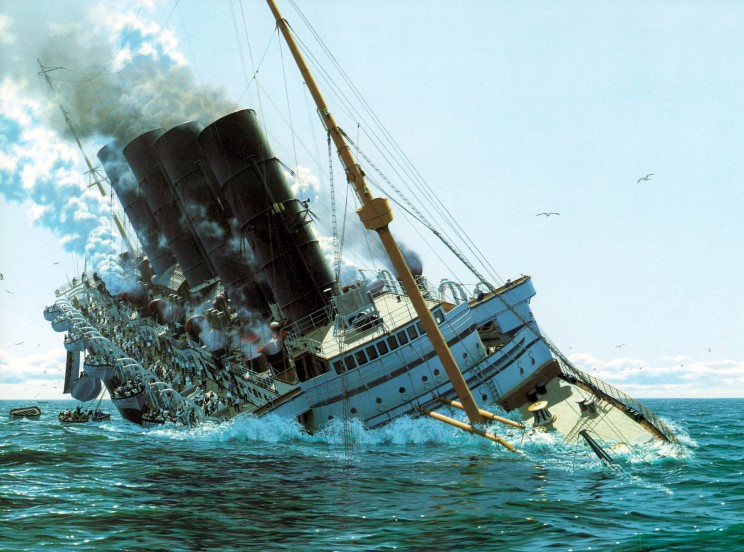
Diving for answers: what happened to 'Lusitania' ?
- On 18/07/2011
- In Famous Wrecks
From Brian O'Connell - The Irish Times
This month an 83-year-old American will travel to Co Cork to supervise perhaps the last big expedition to the wreck of the Cunard Liner torpedoed in 1915. What is he looking for, and has he a chance of finding it ?
‘In a sense, Lusitania is a much bigger story than Titanic , and the links to the local area are more concrete,” says Gregg Bemis, the American millionaire who owns Lusitania .
“Titanic was a romantic matter because it was man against nature. In the case of Lusitania you have politics, war, intrigue and this horrible disaster. So, really, what we’re talking about is man against humanity rather than man against nature.”
For more than 40 years Bemis has dreamed of discovering what exactly was in the cargo hold of the Cunard liner. Munitions ? Priceless art ? Jewels ?
This summer he hopes to find out, as he leads possibly the largest and perhaps the final expedition to the famous shipwreck, which has lain off Co Cork since it was torpedoed during the first World War, leading to the deaths, according to a best estimate, of about 1,200 of the almost 2,000 passengers and crew who are believed to have been aboard.
Bemis has dived to the wreck of the Lusitania twice before, in 1993 and 2004. Critics have questioned his motives, claiming that he is intent only on finding valuables that may have been on the ship. The art collector Hugh Lane was aboard, and rumour has it that he had several lead-cased masterpieces with him.
Bemis says the chances of finding anything of value are very slim, and points out that although he can keep anything he retrieves that relates to the ship or its previous owners, he is not allowed to recover anything that belonged to passengers.
The real value of the expedition, according to Bemis, lies in trying to answer the controversial question of whether or not Lusitania was carrying munitions as well as passengers.
As a seafaring town that sent many young men to wars, Cobh had known its share of tragedy. But little had prepared the town for Friday, May 7th, 1915, when a German U-boat sank Lusitania 18km off the Old Head of Kinsale. Many fishermen set out from Cobh (then Queenstown) to help with the rescue effort, but about 770 of the passengers died, including almost 100 children.
The sight of bodies piled high in the morgue under Cobh’s town hall must have lived long in the collective consciousness. For years afterwards letters arrived from relatives of the victims, thanking locals for trying to save them or for helping to identify bodies. -
WWII shipwrecks could threaten US coast
- On 18/07/2011
- In High Tech. Research/Salvage
By Frank D. Roylance - The Baltimore Sun
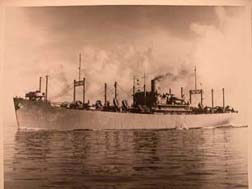
On the evening of Feb. 2, 1942, an unarmed tanker with 66,000 barrels of crude oil on board was steaming in the Atlantic, about 90 miles off Ocean City, Md. Without warning, it was struck by German torpedoes.The attack set the W.L. Steed ablaze, and sank it; only a handful of the crew of 38 survived.
As World War II unfolded, the Germans had moved part of their sub pack west to attack shipping along the coast. By the time the Nazis withdrew the subs in July to focus on convoys crossing the North Atlantic, they had sunk 397 ships in U.S. coastal waters.
That wartime legacy has become a new environmental problem, raising concern about leaks from the W.L. Steed's sunken fuel bunkers and cargo - and from many others like it.
The National Oceanic and Atmospheric Administration is taking an inventory of more than 30,000 coastal shipwrecks - some of them casualties of the 1942 Battle of the Atlantic - and identifying those that pose the most significant threat.
"We're starting to see significant corrosion. Vessels that weren't totally torpedoed didn't break apart and may have intact fuel tanks," NOAA's Lisa C. Symons said.
It's not just the ship's own fuel bunkers, either. Many, like the W.L. Steed, sank with holds filled with crude oil, fuel oil, diesel fuel and explosives. Leaks of those products "could devastate coastal communities and coastal environments," Symons said.
So far, the worst-threat list has been narrowed to 233 vessels, said Symons, damage assessment and resource protection coordinator for NOAA's National Marine Sanctuaries office in Silver Spring.
The final list will be submitted by year's end to the Coast Guard. Once priorities are established, efforts to remove the oil from the wrecks could begin, paid through the Oil Spill Liability Trust Fund, which is supported by the oil industry.
While NOAA's risk assessments are not complete, Symons did identify five sunken ships - four within 60 miles of the coast - that could make the list as environmental threats to Maryland.