HOT NEWS !
Stay informed on the old and most recent significant or spectacular
nautical news and shipwreck discoveries

-
Mystery of disappearing 3.5 ton underwater statue off Italian coast
- On 12/01/2012
- In Scams, Thefts

By Nick Squires - The Telegraph
Italian police are trying to solve the mysterious disappearance of a 3.5 ton statue of a saint which has stood on the seabed off the coast of Calabria since 2007.Authorities are baffled as to who – or what – could have removed the bronze statue of St Francis of Paola, which stands 7.2ft high and was securely embedded in concrete 95ft beneath the surface of the sea.
The hooded figure, with one arm raised in supplication, is one of several saintly statues which dot the Italian coastline and are meant to protect fishermen and scuba divers.
Police and the Coast Guard are investigating a few theories, including the possibility that the statue was mistakenly snagged by the net of a large fishing boat.
If the crew of the boat were fishing in the area illegally, that would explain why the incident has not been reported.
Police are also investigating reports from the nearby town of Paola that a large statue-like object was seen on the back of a van in the days after its disappearance on Dec 30 or 31, suggesting it may have been stolen to order.
-
Archaeologists dig down to find shipwrecks
- On 11/01/2012
- In Parks & Protected Sites

By Nikki Wilson-Smith - ABC
For shipwreck archaeologists, it's a dream come true...a surprise find in a car park in the coastal town of Bunbury.
Five metres below the surface, a team has found historic hidden treasure and experts say there's no site quite like it in the world.
Ross Anderson, who's the head marine archaeologist at the West Australian museum, is leading the excavation and the team has found the remains of three shipwrecks.
"We're just hitting solid material all through here and it's wooden so that's a pretty good sign that there is a shipwreck here," he said.
The area around Bunbury is known as the shipwreck coast and there have been rumours through the years of American whaling ships wrecked near the beach and smothered by sand.
John Cross, 66, was just 16-years -old when he worked at a sand mine at the site.
In 1961 he was on night shift when he struck wood.
"I'd hit something, it wasn't a rock and it wasn't steel it was, well in the process of working through the evening it turned out that it was wood and it was oregon wood and oregon wood is American," he said.
Fifty years later he's back working on the same site as a member of an archaeological dig to confirm his suspicions that the car park is a shipwreck graveyard.
"Best job I've been on in my life, actually I've had some tough jobs in my time you know and this is about the best I've had so I'm sort of whistling dixie you know !
Ross Anderson says it turns out the hunch about the wood was right.
"This would have gone down the side of the hull so it's a piece of deck that's fallen over on its side and there's barnacles along that piece of metal so this would have been in the intertidal zone at one stage," he said.
Mr Anderson says there is no other site quite like it in the world.
"With three of them we think in the same location, it's absolutely unique," he said.
"It's that unique combination of circumstances where you get material and wrecks and everything and then it gets sealed up by modern development and coastline changes and that's resulted in sealing this as almost a shipwreck park."
-
Fishers Island Sound wreck still maritime mystery
- On 11/01/2012
- In Wreck Diving
Photo Mark Munro
By Joe Wojtas - The Day
In the summer of 2007, Mark Munro of Griswold and a group of fellow wreck divers discovered a 70-foot intact shipwreck in Fishers Island Sound.
While its wooden timbers had rotted, they found a diesel engine, ship's wheel and two bells and personal items such as a pocket watch, pewter mirror and tea cups.
Despite five years of historical research and reaching out to local historical groups and experts, the identity of the ship is still a mystery to Munro, who believes it sank in the Hurricane of 1938.
He is now asking the public for help, thinking someone may have heard about the wreck or knows something about the ship, which is thought to have been involved in the menhaden fishery or been converted to a yacht.
"We've had a lot of leads, but none of them have panned out," he said Monday. "It's interesting because it's right in the middle of Fishers Island Sound where there's always been lot of traffic, but no one knows about it."
He said the wreck, which is in the deepest part of the sound at 75 feet, had a forward bridge with a searchlight, an open section in the middle which led to the fish hold and a rear structure that housed the crew quarters. That's where artifacts such as plates, cups and a watch were found, as well as portholes.
Munro's road to discovering the wreck began in 2005 when he began scouring a 1995 government sonar survey of Long Island Sound for possible wreck sites.
Then in 2007, using his own high-resolution side scan sonar system, he and his fellow explorers from locally based Baccala Wreck Divers found three wrecks in Fishers Island Sound and dove on them. One was a part of a barge, the second a scuttled 40-foot houseboat. Neither interested the wreck hunters.
The third target, which was covered in silt, is the wreck Munro is now trying to identify. Because it was the third and most interesting one the group explored, the divers now refer to it as "Three's a Charm."Munro has so far been unable to track the equipment and artifacts on the wreck back to a specific boat, in some cases because the manufacturers are no longer in business.
-
Nautical ghosts inhabit coast
- On 10/01/2012
- In Famous Wrecks
By Nigel Benson and Stephen Jaquiery - ODT
The greatest maritime tragedy to occur in Dunedin waters since European settlement was the sinking of the Pride of the Yarra in Otago Harbour on July 4, 1863.There was only a ribboned dirt track from Port Chalmers to Dunedin at the time and ships were unable to navigate the harbour, so small steamboats provided a ferry service from the port to Dunedin.
A large welcoming party had arrived at Port Chalmers the previous day to welcome the first rector of the new Dunedin High School (now Otago Boys' High School), Rev Thomas Hewett Campbell, and his family after their three-month voyage from London aboard Matoaka.
The Campbell family and 50 other people, many of who had also just disembarked from the long voyage on Matoaka, clambered aboard Pride of the Yarra, where they sought refuge from the cold in the cabin and hold for the trip to Dunedin.
But just after 5pm, the ferry collided with the paddle boat Favourite off Blanket Bay (Sawyers Bay).
Rev Campbell (34), his wife, Marian (27), and their five children (all aged under 5) were drowned.
The Otago Witness reported the tragedy: "The family of Mr Campbell, happy in the knowledge of their arrival at their new home, and so unhappy in their fate at the very threshold - they must have been pressed down and suffocated by the rush of cold, chilling, choking water, under circumstances of agony from the contemplation of which the mind must withdraw, overcome with utter horror," the story read.
A total of 13 people drowned shortly after 5pm that day as the 75ft steamer Pride of the Yarra sank below the waves.
An inquiry subsequently returned a verdict of manslaughter against Favourite skipper Captain Adams and his mate, while Pride of the Yarra skipper Captain Spence was censured for excessive speed. -
Divers find clue to ancient civilization
- On 08/01/2012
- In Underwater Archeology
By Randy Boswell - Vancourver Sun
The recovery of a mysterious wooden pole at the bottom of Lake Huron is fuelling excitement among U.S. and Canadian researchers that they have found more evidence of a "lost world" of North American caribou hunters from nearly 10,000 years ago.
The scientists believe these prehistoric people - who would have been among the earliest inhabitants of the continent - had a "kill site" along a ridge along the present-day U.S.-Canada border that was eventually submerged by rising waters when the glaciers melted at the end of the last Ice Age.
Now drowned under about 35 metres of water in Lake Huron, the Alpena-Amberley Ridge is named for the Michigan and Ontario towns that respectively mark the western and eastern ends of the 160-kilometre-long, 16-km-wide feature.
The theory that the ridge was an ancient hunting ground was first announced in 2009 after the discovery of lake-bottom rock features that appeared to have been arranged by human hands to herd migrating caribou into narrow corridors ideal for spear hunting.
These types of "drive lanes" are still used by some Inuit hunters in Northern Canada to funnel caribou and make hunting them easier.
Other groups of boulders mapped by the Lake Huron researchers are thought to have been "blinds" meant to conceal hunters before they sprang out to attack passing caribou.
The two-metre-long piece of wood, found amid such a rock assemblage during a summer search of Huron's floor for traces of human activity, was later dated to 8,900 years ago, the researchers revealed last month.
-
Swanland shipwreck to be examined by robot submarine
- On 07/01/2012
- In Maritime News

From BBC News -
The Marine Accident Investigation Branch is to use a robot submarine to survey the wreck of a cargo vessel which sank off the north Wales coast.Six Russian crewmen died when the Swanland sank carrying 3,000 tonnes of limestone during a storm in November. A surviving sailor said the hull broke after the vessel was struck by a "giant wave" off Lleyn.
An exclusion zone has been established 15 miles west of the peninsula whilst the survey work is carried out.
In December a BBC investigation found the ship had been at the centre of repeated safety concerns.
An analysis of safety inspection records for the Swanland revealed a high number of failings.
Members of the crew claimed the vessel was vulnerable in rough seas because of a history of unsafe loading. The ship's operator, Torbulk Limited, said it had been regularly inspected and any faults "promptly rectified".
Prince William co-piloted one of the helicopters involved in the rescue of two Russian crew members as the vessel was caught in a gale force 8 storm.
According to Vitaliy Karpenko, one of the two survivors from the all-Russian crew, the ship's hull suddenly cracked."It broke in half right across the middle. I saw it with my own eyes," he said. "We saw through the porthole that it was hopeless trying to save her.
-
Three great underwater destinations in Malta
- On 07/01/2012
- In Wreck Diving
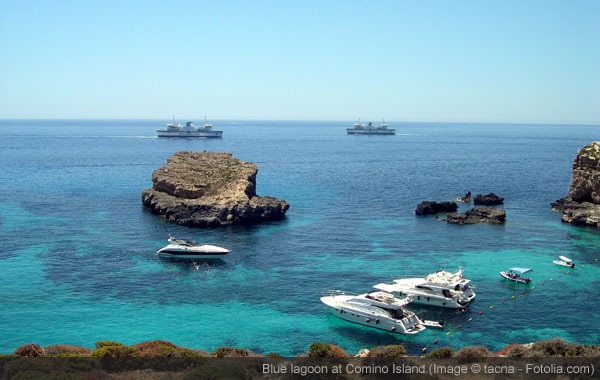
From ArgophiliaAn avid scuba diver looking for a unique diving experience this summer need not look further than Malta.
Not only does this Mediterranean paradise offer beautiful azure waters for crystal clear visibility, warm oceans and mild currents, but also boasts a large selection of shipwreck diving all easily accessible from the islands of Malta, Gozo and Comino.
Take a dive below to learn about what Malta has to offer in terms of its superb shipwreck diving.
First of all, Malta in general sports beautiful conditions for diving with it balmy weather and clear waters. What’s more, Malta peters on the border of a continental shelf and thus its shores shelve away rapidly, meaning that many diving spots are located close to the shore.
Furthermore the islands permanently have a sheltered side, making shipwreck diving possible all through your Malta or Gozo holiday no matter the direction of the wind. Although Malta can be dived throughout the year, the best time to visit is from April to October, although the oppressive summer heat from July to August must also be considered.
Here is a selection of three best shipwreck dives in Malta. Because of Malta’s significant role in World War II, acting as a midway mark between Europe and Northern Africa, the island suffered severe damage from bombings.
It is a little known fact that more bombs were dropped in Malta than in Birmingham during the war, and it is from this tragedy that shipwreck divers today can enjoy such an array of shipwrecks.
Thus there are many historical shipwreck dives around the islands of Malta, Gozo and Comino that simply cannot be missed on your shipwreck diving holiday.
First on the itinerary is the HMS Maori, the ship that helped sink the infamous German battleship Bismarck. The HMS Maori, a tribal class destroyer, hit the ocean floor in Malta’s Grand Harbour in 1942.
What’s great about the HMS Maori is that even novice shipwreck divers can enjoy its atmospheric views at a comparatively shallow depth of only 14 metres.
-
Mystery of downed WW II-era plane partially solved
- On 06/01/2012
- In Airplane Stories
By Kevin D. Thompson - Palm Beach Post
The mystery surrounding a downed World War II-era plane found at the bottom of the ocean has been partially solved.
The aircraft, upside down and mostly intact, is indeed a Curtiss SB2C Helldiver as originally suspected, said Randy Jordan, the diver who discovered the plane Tuesday while diving at a depth of about 185 feet four miles off Jupiter.
Jordan, owner of Emerald Charters, a Jupiter scuba diving company, said a cloth-like covering was found, the same kind of material that was used to cover the wings on a Curtiss Helldiver, a Navy dive bomber.
He said the shape of the propellers and tail hook were also enough clues to positively identify the plane.
"It's just more confirmation that this plane is a Curtiss Helldiver," Jordan said.
But it's still not known who was on the plane or how it crashed into the murky ocean depths.
According to the Naval History and Heritage Command in Washington, D.C., there were three crashes off the coast of Florida in Sept. 1944 in which the planes were either lost at sea or missing. The planes were engaged in training flights and the accidents weren't because of enemy action, the Command said.
In an email sent to Jordan on Thursday by Robert S. Neyland, head of the underwater archaeology branch for the Naval History and Heritage Command, Jordan was instructed not to disturb the crash site or remove marine growth or sediment from the wreck.
"Any disturbance to a sunken Navy ship or aircraft wreck requires a permit under the Sunken Military Craft Act of 2004," Neyland wrote.
Jordan, however, said he was still allowed to dive and inspect the site.
"This is not for recreational divers," he said.