HOT NEWS !
Stay informed on the old and most recent significant or spectacular
nautical news and shipwreck discoveries

-
Royal Navy divers to explore Foyle wreck
- On 24/04/2012
- In High Tech. Research/Salvage

From BBC NewsRoyal Navy divers are to be brought in to explore a mystery wreck in the River Foyle which some believe could be a war-time submarine.
Experts met in Londonderry on Tuesday as speculation grew about what the wreck could be.
Meanwhile, sonar images have been published appearing to show a submarine shaped object on the river bed.
The images were taken by Mallow Search and Rescue. The wreck was found during the search for a missing man.
John Wolf, of Mallow Search and Rescue, told RTE's Morning Ireland: "We were scanning the river bed and an image came up on the scanner and it looks like a submarine.
"We're not saying that it is a submarine, but it looks like the real thing all right."
At the end of the Second World War, German submarines surrendered in the Foyle from where they were taken out to sea and destroyed or sunk.
There is speculation that the vessel could be a German mini or midget submarine.
George Malcolmson, who works at the Royal Navy Submarine Museum in Gosport, has viewed the sonar image and said he did not believe the craft was British.
However, he said a picture of surrendered German boats could be a strong clue on what the craft is.
-
The trouble with treasure
- On 23/04/2012
- In Treasure Hunting / Recoveries
By Armen Keteyian - CBS News
A man walks into a bar...it sounds like the setup to a joke, but that's how this story begins. Amateur diver Jay Miscovich walks into a bar in Key West, Florida, is shown a treasure map and a shard of pottery by a diver friend, and then -- although he's almost broke -- buys the map, convinced there is treasure and fortune to be found deep in the Gulf waters off Florida.
Three year later, there's certainly plenty of treasure -- Miscovich says he's discovered tens of thousands of emeralds -- but so far no fortune.
Last year, we got wind of a story that seemed -- on the surface -- too good to be true. An amateur diver and part-time treasure hunter had made one of the largest discoveries of sunken treasure in history: a sea bed covered in raw emeralds off the coast of Key West, Florida.
We were able to track him down at his home in Pennsylvania. He's an unassuming real estate investor by the name of Jay Miscovich.
He poured out a laundry basket full of emeralds before our eyes and said he believed they were worth hundreds of millions of dollars and likely came from an ancient shipwreck. What's more, he said, Wall Street investors were backing him and the Smithsonian was buzzing.
We set out to get to the bottom of the story only to discover just like those pirate tales of old, there's trouble, lots of trouble with treasure.
Our search began on dry land, on Madison Avenue to be exact, at one of New York City's high-end jewelry stores.
[Armen Keteyian: Look at that!]
Jay Miscovich showed off a sample of his find.
Jay Miscovich: We've brought up over 80 pounds so far. This-- you are seeing probably 30 pounds of it here.
Greg Kwiat: That is an impressive pile.
Ed Peterson: Holy cow.
Armen Keteyian: Any question on the authenticity of these stones, at all?
Ed Peterson: No. No this is the real McCoy.
Gemologist Ed Peterson and owner Greg Kwiat could hardly believe their eyes.
Greg Kwiat: I think this piece could go to the Oscars.
Armen Keteyian: Is it possible to put a price on something like that ? -
Kihei man makes a living from finding lost treasures
- On 22/04/2012
- In Treasure Hunting / Recoveries
By Melissa Tanji - The Maui News
Dave Sheldon makes a living searching for lost rings.
The 38-year-old Kihei resident has returned more than 600 personal items to people who have lost their belongings - mostly men's wedding bands - found mainly underwater offshore of Maui.
Sheldon is the owner of Dave's Metal Detecting, an underwater and land-based metal detecting business, which goes beyond locating wedding rings.
He has been called out to look for dentures, teeth and prescription glasses that had fallen into the ocean. He also found a four-karat diamond ring that had been a 40th anniversary gift worth $60,000 to $80,000.
But his latest find came accidentally.
Last month, Sheldon was cruising around with his underwater metal detector gear at Kapalua Bay when he came across a 1958 Baldwin High School class ring.
"That is completely amazing," Sheldon said after learning how long ago the ring went missing. "It was 52, 53 years ago."
On land, it would be easy to find something in a spot where it had been lost 100 years ago, he said. But in the ocean, it's far more difficult because of currents and many other variables that change the bottom of nearshore waters all the time.
The ring was found in about 3 feet of water and around 15 to 20 feet from shore. It had the initials A.Y. inscribed on it along with the graduation date.
Sheldon called Baldwin High School officials for help and eventually got the name of the graduate from staffers who looked through old yearbooks. The ring belonged to 72-year-old Annette Yoda of Wailuku.
"It took me almost a few seconds before I realized that I had lost my ring," Yoda said of her conversation with Sheldon.
-
eBay boat sinks on first trip
- On 20/04/2012
- In Maritime News
By John Coles - The Sun
Two bungling boatmen bought a yacht on eBay - and wrecked it on their maiden voyage.
The hapless pair were trying to move their new pride and joy just half a mile, from one marine to another, when they came to grief. They set off at midnight but hit a rocky outcrop near the entrance to St. Peter Port in Guernsey and got stuck fast.
The unnamed duo - described as two Sikhs - sent out an SOS and a lifeboat was launched but couldn’t get near the rocks.
A dinghy eventually reached them at 2am - but they were forced to abandon their boat ‘Ardel’ to the waves.
The pale blue yacht, thought to have cost around £3,000, remained stranded on Goubeau Reef today and looked set for a watery grave.
Richard Poat, 52, a plumbing inspector who lives near the harbour entrance, said: “I woke up and saw the boat on the rocks about 100 metres from the harbour.
“I heard that the people on board were two Sikh gentlemen who had clearly not been aware of the reef.
-
Philippine archaeological ship leaves troubled West Philippine Sea
- On 20/04/2012
- In Maritime News
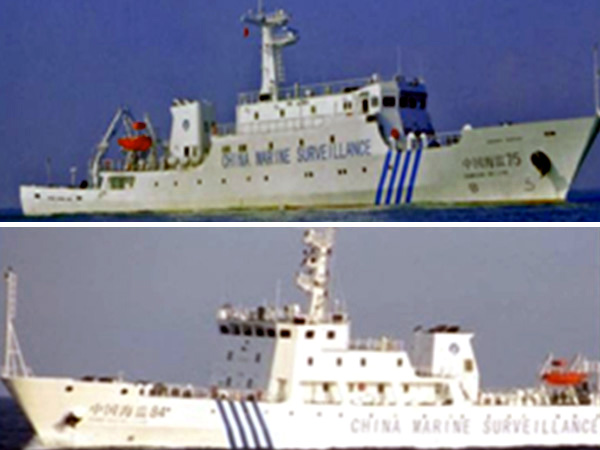
By Katherine Evangelista - Inquirer Global NationA Philippine-flagged archaeological ship has left the troubled West Philippine Sea (South China Sea) as tension rose between the Philippines and China over an uninhabited shoal, a military official said Thursday.
M/Y Sarangani, an archaeological ship salvaging an ancient Chinese shipwreck in Panatag Shoal, left the area for Manila on Wednesday night, Northern Luzon Command chief Lieutenant General Anthony Alcantara.
But Alcantara was quick to dismiss the ship’s departure was related to the continuing standoff between Philippine and Chinese ships in the Scarborough Shoal.
“I am not aware of any threat against Saranggani… We don’t have such reports,” Alcantara said.
“Naalagaan naman sila ng coast guard natin doon (They were being taken care of by our coast guard there).”The Department of Foreign Affairs on Tuesday said it filed a diplomatic protest, after M/Y Saranggani was “harassed by Chinese ships and aircraft” at Scarborough, which is about 230 kilometers (140 miles) from the Philippines’ main island of Luzon.
But the spokesman for the Chinese embassy in Manila, Zhang Hua, has insisted China owned Scarborough, and accused the Saranggani of intrusion.
“We urge the archaeological vessel leave the area immediately,” Chang said in a statement.
China claims all of the West Philippine Sea as its own on historical grounds, even waters approaching the coasts of the Philippines and other Southeast Asian countries.
The nearest Chinese land mass from Scarborough Shoal is Hainan province, 1,200 kilometres, (750 miles) to the northwest, according to Philippine naval maps given to the media.
-
BBC presents documentary on the sunken city of Pavlopetri
- On 20/04/2012
- In Miscellaneous

By Stella Tsolakidou - Greek Reporter
One of the oldest submerged archaeological town sites in the world is located underwater off the coast of southern Lakonia in Greece.
BBC Two follows the workings of a group of experts from the UK and Greece to digitally re-create and bring the sunken city to light with the help of hi-tech equipment and programs.
In 2009, the Ephorate of Underwater Antiquities of the Hellenic Ministry of Culture, the Hellenic Center for Maritime Research and the University of Nottingham under a British School of Archaeology at Athens, began a 5-year collaborative project to outline the history and development of the submerged ancient town of Pavlopetri.
Over the coming years, the Pavlopetri Underwater Archaeology Project aims to establish when the site was occupied, what it was used for and, through a systematic study of the geomorphology of the area, how the town and the Elaphonisos Strait became submerged.
Having an almost complete town plan, including streets, buildings, and tombs, Pavlopetri was discovered in 1967 by Nicholas Flemming and mapped in 1968 by a team of archaeologists from Cambridge.
It has at least 15 buildings submerged in three to four meters of water.
-
The wild world of shipwrecks
- On 20/04/2012
- In Wreck Diving

By Matt Bardo - BBC NatureThis month, the US coastguard sunk the Japanese vessel Ryou-Un Maru in the gulf of Alaska after she spent nearly a year adrift at sea. She joins nearly three million other shipwrecks on the ocean floor. But are shipwrecks good or bad for marine life ?
In 1881, the Kingston set sail from London. The captain and crew believed they were heading for Aden, but the ship never made it past the Red Sea.
On the 22 February that year, she smashed into Shag Rock near the entrance to the Gulf of Suez. The crew were rescued, but the ship sank to the ocean floor.
More than a century on, colourful coral covers the Kingston. The same sponges, tunicates and anemones that live on the adjacent reef are on the wreck.
Around 38 species of stony corals and ten soft corals adorn the ship's surface. In many ways it has become part of the sea floor.
Scientists are now studying the ill-fated Kingston, and other wrecks like her, to gauge their impact on the underwater world they have joined.
And different wrecks are throwing up different surprises. While some are literally repulsive to marine life, others are becoming home to new, unexpected communities of animals.
Yehuda Benayahu, professor of marine biology at the University of Tel Aviv has spent much of his career in the Red Sea, examining shipwrecks there.
On old boats such as the Kingston, the wooden parts decay but the steel does not, offering a good foundation for coral. An accidental shipwreck soon becomes an artificial reef, which scientists can analyse.
-
The most important British vessel sunk off the Chinese coast
- On 20/04/2012
- In Famous Wrecks
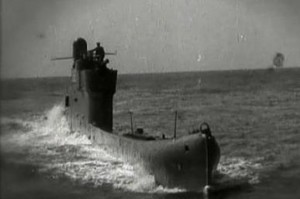
From gCaptainIn recent weeks, the 100th anniversary of the sinking of the RMS Titanic in the North Atlantic and the 3D re-release of 1997′s Oscar-winning ‘Titanic’ has galvanized attention in China, where movie goers spent $58 million over the course of a single weekend to re-experience the demise of the infamous liner.
Now a pair of filmmakers are hoping to draw attention to the nearly forgotten sinking of another British vessel, this one a submarine off the Chinese coast.
The HMS Poseidon, a British military submarine that sunk in eastern Chinese waters in June 1931, went down under totally different circumstances from the Titanic.
Yet in its day, it also shook the nautical world, spurring global change in the way men went to sea — in particular because of the dramatic undersea escape by a handful of its submariners.
A preview of “The Poseidon Project,” a documentary about the British sub named for the Greek god of the sea by brothers Arthur and Luther Jones, was shown to a small group this week in Shanghai, ironically in a room decorated with silk squids hanging from ceiling.
The film’s narrative tracks the Poseidon’s brief timeline from its launch in England to its arrival at a British naval outpost on the Weihai peninsula in Shandong Province.
The film explains how during routine surface maneuvers on June 9, 1931, the Poseidon collided with a Chinese freighter.
With a tear in its starboard side, the sub went down in just four minutes and dragged much of its crew 120 feet below the surface.
Nicely executed drawings and other artwork in the film illustrate how a small group of five submariners — including one Chinese boy — then made it to the surface alive.
Back home in England, they were welcomed as heroes, because at that point for submariners, as the film’s narrator points out, “escape plans were only theoretical.”
The survival of the five members of the Poseidon crew changed much for undersea exploration, the film says.
For instance, certain benchmarks used by scuba divers today, such as those to avoid decompression sickness (also known as the bends), were determined based on studies of survivors.