HOT NEWS !
Stay informed on the old and most recent significant or spectacular
nautical news and shipwreck discoveries

-
End of long hunt for Centaur
- On 01/03/2010
- In World War Wrecks
By Tuck Thompson - Courier Mail
Australia's top political and military officials will lead the public in a national service of remembrance today for the 332 victims and survivors of the sinking of the AHS Centaur.
Prime Minister Kevin Rudd, Premier Anna Bligh, Governor-General Quentin Bryce, Chief of Army Ken Gillespie and Chief of Navy Russell Crane are among those expected to attend the service at St John's Cathedral on Ann St in Brisbane's CBD on Tuesday, March 2, at 11am.
The wreck of the hospital ship, torpedoed by a Japanese submarine in May 1943, was found before Christmas about 50km east of Moreton Island.
The discovery and marking of the war grave has brought closure for hundreds of Centaur family members around Australia, many of whom will attend the service. Centaur survivor Martin Pash of Melbourne, 87, will be among the speakers.
Centaur Primary School pupils will read the names of 268 men and women non-combatants lost on the hospital ship.
Following a campaign by The Courier-Mail in August 2008, the Commonwealth and Queensland governments jointly agreed to a $4 million search. Family members had spent more than a decade lobbying for a search without success, as some within government feared a rift with Japan. -
BBC to make Atlantis movie
- On 01/03/2010
- In Miscellaneous
By David Bentley - Coventry Telegraph
A new British movie is to tell the story of the ancient cataclysm that's believed to be the basis for the Atlantis legend.
The BBC has announced the TV film, to be called Atlantis and directed by Primeval's Tony Mitchell, will "tell the dramatic story of the greatest natural disaster to shake the ancient world, a disaster that triggered the downfall of a civilisation and spawned a legend."
The film will be made using the same techniques as Zack Snyder's Spartan war epic 300 and will be accompanied by a documentary looking at the historical evidence.
Around 1620 BC a gigantic volcano in the Aegean Sea stirred from its 19,000-year slumber. The eruption tore apart the island of Thera, producing massive tsunamis that flooded the nearby island of Crete, the centre of Europe's first great civilisation - the Minoans.
This apocalyptic event, many experts now believe, provided the inspiration for the legend of Atlantis. Based on the work of leading scientists, archaeologists and historians, this drama immerses viewers in the exotic world of the Minoans.Starring Reece Ritchie (10,000BC, The Lovely Bones, Prince Of Persia) and Stephanie Leonidas (MirrorMask), Atlantis is the first British TV drama to use the 'virtual backlot' technique of the movie 300. It will be filmed in a studio against green-screen backgrounds to which computer-generated scenery is later added.
-
New sculptures added to Cancun's underwater museum
- On 28/02/2010
- In Museum News

From News
The Cancun and Isla Mujeres Underwater Art Museum is a step closer to becoming the world's largest underwater museum by adding three new sculptures.
The sculptures - Dream Collector, Man on Fire and The Gardener of Hope – were carefully submerged to a variety of different depths throughout the national park.
Created by British/Guyanese artist Jason de Caires Taylor, the sculptures were placed near natural reefs and marine life in order to create an artificial habitat. -
SS Mendi's stories told almost 100 years after sinking
- On 28/02/2010
- In World War Wrecks

From BBC
Many in the UK have never heard of SS Mendi, yet in South Africa's Easten Cape Province she is as famous as RMS Titanic.
In February 1917, she was lost off the south coast of the Isle of Wight with, 600 troops on board. Sinking 9 miles (14.4 km) off St Catherine's point, it is a story that is still virtually unknown in the UK.
Diver Martin Woodward was the first person to find and identify the wreck of SS Mendi in 1974. It was not until later he discovered the tragic story behind the artefacts that he brought to the surface.
Martin, owner of The Shipwreck and Maritime Museum in the Isle of Wight said: "The ship was coming up through the Channel destined for Le Havre."
As part of the British Empire, South Africa was automatically at war with Germany. Thousands of men were recruited as labourers, to dig trenches more than 5,000 miles (8,000 km) away from their homes.
The 4,000 ton Mendi was hit in fog by The Darro, almost three times the size of the troopship, and sank in 20 minutes. Martin explained: "A lot of people who were in the holds were drowned instantly." -
Malouines, histoire d'un contentieux multiséculaire
- On 27/02/2010
- In General Maritime History

Par Catherine Gouëset - L'Express
Alors que la tension monte entre l'Argentine et la Grande-Bretagne après le lancement, par Londres, d'une campagne d'exploration pétrolière au large des Malouines, retour sur les grandes dates de l'archipel, situé à moins de 500 km de la côte argentine.XVIème siècle : l'archipel des Malouines est signalé sur les cartes des explorateurs européens.
1690 : des marins britanniques accostent et nomment les deux principales îles du nom du trésorier de la marine Britannique, le vicomte Falkland. Le nom sera plus tard étendu à l'ensemble de l'archipel.
1764 : le navigateur français Louis-Antoine de Bougainville nomme l'archipel "Malouines" en référence aux marins de Saint-Malo, premiers colons de ces îles.
1765 : les Britanniques s'installent dans l'île de West Falkland, mais ils en sont délogés en 1770 par les Espagnols qui ont acheté la colonie aux Français en 1767.
1820 : l'Argentine, qui a proclamé son indépendance de l'Espagne quatre ans plus tôt, déclare sa souveraineté sur l'archipel.
1831 : le navire américain "Lexington" fait détruire Puerto Soledad après l'arraisonnement de trois navires américains pour un contentieux sur les zones de pêche. les Américains rejettent le droit de Buenos Aires de règlementer les zones de pêche autour des îles malouines. -
Faculty senate awards Harrison research grants
- On 27/02/2010
- In Miscellaneous
From David Replogle - Cavalier Daily
The University awarded Harrison Undergraduate Research Awards to 35 students this year, studying topics as diverse as investigating shipwrecks off the Carolina coast to researching edible rain gardens.
The awards provide grants to support independent study projects during the coming summer. Students receive up to $3,000 to fund their projects, with their faculty mentors awarded a separate $1,000 reward.
This year’s group of scholars first submitted detailed plans to the Faculty Senate for approval. From there, the Senate cut nearly half of the number of hopefuls, awarding 35 grants from 62 applicants. Additionally, two students were given grants underwritten by donors outside of the University.
Students were chosen based on a variety of variety of factors, said Lucy Russell, director of the Center for Undergraduate Excellence. These factors included how well the applicant defined their research questions, the proposed methodologies and whether the student appropriately prepared to conduct the research effectively, she said.
She added that the Senate receives a variety of proposals each year, which is what allows for such a wide spectrum of final projects.
“We do a great deal of advertising to different students, ensuring variety in the proposals,” said Pamela Norris, chair of the Faculty Senate’s Research and Scholarship Committee. “Applicants are funded from nearly every major and every year.”
Third-year College student Michelle Rehme, an environmental thought and practice major, is using the grant to explore agricultural economics through the lens of Charlottesville’s own Morven Farm.
“My project is studying what makes an American medium-sized farm economically viable in today’s world, looking specifically at our region in Virginia,” Rehme said.
In 1796, Thomas Jefferson bought the acreage now encompassing Morven Farm, and Rehme is answering many of the same questions that the founder of the University once did. -
USS Olympia seeks a new caretaker
- On 27/02/2010
- In Conservation / Preservation
By Edward Colimore - Philly
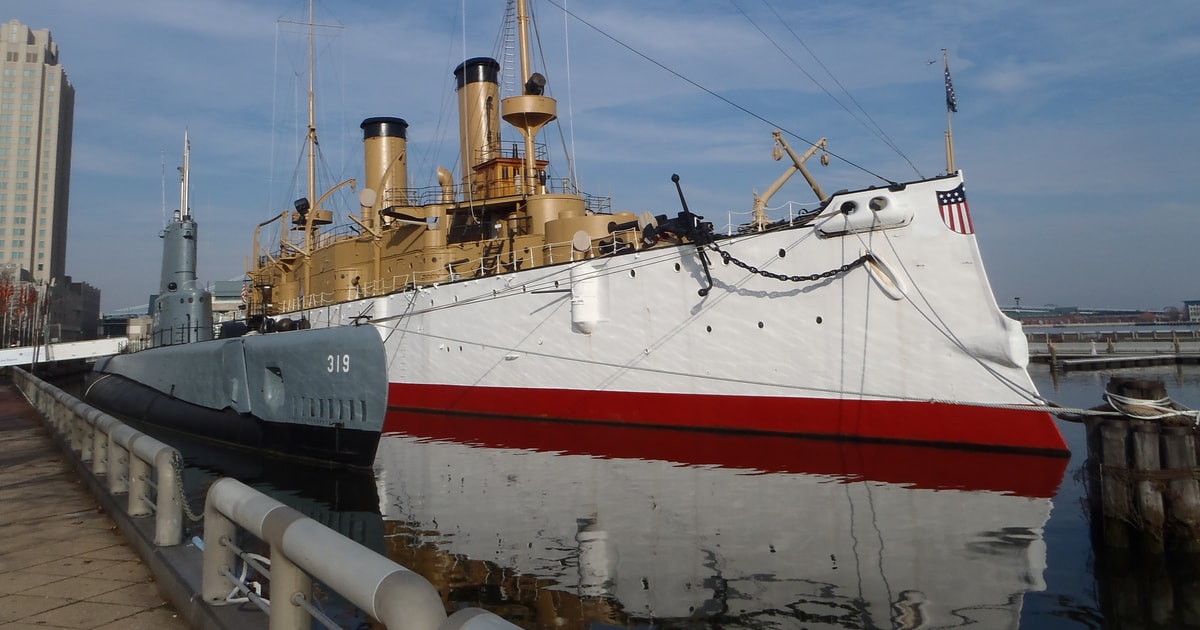
During the Spanish-American War, Navy Commodore George Dewey stood on the bridge of the ship and uttered the words that became famous: "You may fire when you are ready, Gridley."
The vessel's mighty guns fired the first shots of the Battle of Manila Bay on May 1, 1898, announcing the United States as an international power.
The USS Olympia was the Navy's state-of-the-art flagship, a source of pride for a country flexing its muscles.
More than a century later, this last surviving vessel of the Spanish-American War fleet and longtime Penn's Landing attraction is looking for a new home and benefactor with deep pockets.
Its owner, the Independence Seaport Museum, can no longer afford the upkeep and it told the Navy it "will relinquish its stewardship of this national naval treasure and its valuable artifact collections," said Peter McCausland, chairman of the museum's Board of Port Wardens.
The museum seeks an owner who can pay up to $30 million to tow, restore, interpret, and endow the bedraggled-looking vessel.
Small portions of the Olympia's half-inch steel hull along the water line have corroded to the point that only an eighth of an inch of thickness is left.
The hull must be continually monitored and is often patched, even as water leaks through parts of the deck into the interior, causing further rust.
"We don't like to see the ship go, but you don't want to sink the entire museum because of the cost of maintaining" the Olympia, said the Independence Seaport's interim president, James McLane. "The museum is very financially sound, but if you put a drag on it, that puts it at risk over the next several years."
-
Wreck finds are flown in
- On 27/02/2010
- In Museum News
From The Star
Robin Hood Airport has handled its most historic cargo, which has lain at the bottom of the sea for two centuries.
Rare artefacts from a British sailing ship that was wrecked and sunk in the Baltic in the early 19th century have been brought to the surface and are now on their way to a maritime exhibition in Whitby, from where they originally started out.The items of sailors' clothing were flown to Doncaster Sheffield Airport by Wizz Air from Poland, where they have been kept since they were recovered in 1995 by an archaeology unit at Gdansk maritime museum.
The rare hat, stockings, shoes and mittens from the wreck of the Whitby ship The General Carleton had been remarkably well preserved in the cold mud of the Baltic.The articles have been loaned from the Polish museum because of their historic links to the region and will be on view for the first time in the UK as part of the Northward Ho ! exhibition at the Captain Cook Museum in Whitby, which opens on Monday.
Jodi Stow, marketing and communications manager at Robin Hood Airport, said: "We welcome a variety of flights with specialist cargo to and from the airport but this delivery was by far the oldest we've ever had.
"We hope all the historians and nautical followers in the region will enjoy seeing such precious artefacts."