HOT NEWS !
Stay informed on the old and most recent significant or spectacular
nautical news and shipwreck discoveries

-
Do ancient shipwrecks stand a chance ?
- On 31/08/2016
- In Miscellaneous

By Evan Lubofsky - Hakai Magazine
There’s a three-way war being waged over the ancient shipwrecks that dot the ocean floor. On one side, marine archaeologists are rushing to study and preserve these historical sites.On another, treasure hunters and salvagers are staking their claims. Meanwhile, both groups are racing against the clock. “We’re seeing severe damage to wreck sites,” says marine archaeologist Mike Brennan. “It’s ongoing, and every day that we wait for protection of these sites, trawlers are scraping them apart.”
Fishing fleets are the unwitting third power in this dispute. Archaeologists and treasure hunters have different motives, but fishing trawlers are wreaking havoc, their weighted nets pulling at wrecks and disrupting these sunken treasures.
In preserving maritime history, says Brennan, time is of the essence. Brennan has seen the devastation trawlers can cause firsthand. During a recent study, he and his colleagues made two surveys of a wreck site off the coast of Turkey.
In the 11 months between cruises to visit the Ereğli E, a trading vessel that carried wine, olive oil, and other goods across the Mediterranean, a delivery truck’s worth of artifacts from the fourth century BCE—including ceramic jars and human bones—had been dragged away or dismantled by fishing gear.
In reality, Brennan had anticipated the damage. His study had been designed, in part, to document the damage trawlers can cause, and fuel the case for establishing marine protected areas around ancient wreck sites.
Brennan, like many marine archaeologists, is of the mind that humanity’s sunken past should stay beneath the waves and off the auction block.
And, he says fishing bans around wrecks will thwart excavation by treasure hunters, who often use the threat of trawl damage as an excuse to haul up and sell artifacts. Sean Kingsley, director of Wreck Watch International, takes issue with the excuse theory, saying it is disingenuous to suggest that the threat of damage through fishing is used to justify commercial exploitation.
But he also doesn’t see the viability in trying to preserve all wrecks on the ocean floor.
“Who will pay to enforce the continuous monitoring of endangered sites is hard to imagine,” he says. “And ring-fencing a wreck would need to be a permanent measure, financially and administratively.”
-
Historic Jacksonville shipwreck
- On 30/08/2016
- In Famous Wrecks

By Dan Scanlan - The Florida Times
Jacksonville’s most historic shipwreck may have been damaged by submerged telephone cables draped over or through its 152-year-old wooden bones, according to the man who led its archaeological exploration in the 1980s and ’90s off Mandarin Point.So Keith Holland is pushing the U.S. Army Corps of Engineers to get the cables moved from the National Historic Landmark site of the Union steamship Maple Leaf and the thousands of U.S. Army artifacts buried within it.
As he helps a third company reroute a planned third cable around the 1864 shipwreck, Holland said he wonders how the Maple Leaf’s federal protection apparently failed.
“The state and federal statutes of the National Historic Preservation Act appear to be worthless because somehow, unknown to me, the shipwreck site had telecommunications cables put across it,” Holland said. “Although I am gravely concerned about this transgression, I am not dispirited by it. …
Right now my major objective is to test our state and federal historic preservation statutes to see what can be done to mitigate this.”
The Maple Leaf was headed to Jacksonville early April 1, 1864, with the possessions of the 112th and 169th New York and the 13th Indiana regiments onboard when Confederate mines blew its bow off, killing four. Most of the wreck ended under 7 feet of mud, which kept the 900,000 pounds of personal and military gear inside preserved.
In 1989, Holland and St. Johns Archaeological Expeditions began excavating part of it, recovering 4,500 artifacts over the next few years, including shoes, belt buckles and a rare gum rubber rain hat.
In 1994, it was declared a National Historic Landmark, joining the Civil War ironclad USS Monitor off North Carolina as the only shipwrecks on that list. Landmark designation is given to sites that possess “exceptional value” in commemorating U.S. history and is supposed to protect them, according to the National Park Service.
Florida and the Park Service set up a 24-acre buffer zone around the actual wreck. Yet Holland found two cables were laid through that buffer zone. In his July 1 letter to the federal Advisory Council on Historic Preservation, he asked for remedial action and fines “for the negligent acts” of the state, Corps of Engineers Jacksonville and others.
The advisory council forwarded its own inquiry to the corps, which responded Aug. 19. Jacksonville corps regulatory official Tori White’s letter verified a permit was issued in 1990 so Southern Bell could lay a telephone line underwater between Mandarin and Orange Park.
The permit was approved prior to historic designation, so compliance with the preservation act wasn’t required, she wrote. But Holland said the wreck site was well-known before that designation, as was his team’s investigation, with dozens of stories in the Times-Union about it between 1985 and 1989.
Plus, the corps approved work there, he said.
-
Forgotten wartime shipwrecks
- On 25/08/2016
- In Wreck Diving

From the Mirror
Littering the sea floor like discarded toys these are the forgotten shipwrecks of the Atlantic Ocean dating back to the First World War .The liners were sunk by torpedoes and mines and now lie on the seabed, just off the Irish coast.
Among the wrecks are merchant vessels, submarines and ocean liners, with HMS Audacious being the oldest ruin. HMS Audacious sank in October 1914 after hitting a German mine.
All but one passengers survived after Titanic’s sister ship, the White Star liner Olympic, came to the rescue. Also lying on the seabed is HMS Viknor, an armed merchant cruiser which sank without sending a distress signal with all 295 Royal Navy officers on board.
Remarkably, the wreck was not found until 2006 even though it met its fate on January 13 1915 and now rests under more than 250 feet of water.
-
California shipwreck
- On 25/08/2016
- In Famous Wrecks

By Paul Rogers - Mercury News
Famed oceanographer Robert Ballard discovered the Titanic, the Bismarck, the USS Yorktown and John F. Kennedy's PT-109.On Tuesday, he added another accomplishment to his list of documenting the world's greatest shipwrecks: the first images in more than six decades of the USS Independence, an iconic World War II aircraft carrier scuttled in 1951 off the California coast, half a mile under the sea.
In a 20-hour-long expedition, Ballard's team, working with officials from the Navy and NOAA -- the National Oceanic and Atmospheric Administration -- revealed breathtaking images of the lost carrier's flight deck, a Hellcat fighter plane, anti-aircraft guns, hatches, ladders and even the letters of the ship's name still visible on the hull, all submerged 30 miles west of Half Moon Bay.
Thousands of viewers in more than 30 countries watched the discoveries live over the Internet.
"What's so wonderful about the wrecks in deeper water, like this ship, the Titanic and the Bismarck, is that they are in amazing states of preservation," Ballard said Tuesday, still at sea.
"There's very little change from when the Navy scuttled it," he said.
"The deep sea is the largest museum on Earth." Ballard, a retired Navy officer, and his organization, the Ocean Exploration Trust, based in Connecticut, plan to build a detailed 3-D digital image of the Independence from the thousands of photographs they took with two unmanned submersibles on Monday and Tuesday.
"It was really nice to read the name on the side," he joked.
"You think, 'Good, I found the right ship'."
-
Le sous-marin Vendémiaire retrouvé au large de la Hague
- On 21/08/2016
- In Famous Wrecks

A la suite du drame vécu le 8 juin 1912 dans le Raz Blanchard, à la pointe de la Hague dans la Manche, la localisation exacte du sous-marin coulé, le Vendémiaire, n'était pas connue.L'expédition de quatre plongeurs d'Omonville-la-Rogue pour retrouver l'épave vient de mettre un terme à cela : la plongée a porté ses fruits, mardi dernier.
Il s'agit bien du sous-marin coulé accidentellement par le cuirassé Saint-Louis, le 8 juin 1912, au large de la Hague, confirme Matthias Dufour, un des quatre plongeurs chasseurs d'épaves.
Ces derniers viennent de partager sur les réseaux sociaux une vidéo de leur découverte.
Une expédition pour retrouver ce sous-marin cherbourgeois devait avoir lieu l'année dernière, mais les plongeurs d'Omonville-la-Rogue ont été finalement les premiers à mettre la main dessus.
-
213-year-old shipwreck discovered in Lake Ontario
- On 18/08/2016
- In Wreck Diving

From Sputnik News
A team of three archeologist-enthusiasts from New York State discovered the wreck deep at the bottom of Lake Ontario.Adventurers Jim Kennard, Roger Pawlowski and Roland Stevens identified the vessel using high-resolution side-scan sonar in late June. It took several more weeks to confirm that the discovery was the same ship known to have sunk there in 1803.
The ship, called the Washington, was a single-masted sloop, a rare type of vessel that navigated the Great Lakes in the late 18th and early 19th centuries.
The 36-ton Washington was built by Americans on Lake Erie in 1798 to transport goods and passengers between New York, Pennsylvania and Ontario.
Some four years later the sloop was sold to Canadian merchants that portaged it to Lake Ontario using oxen.
A year later, the boat, carrying $20,000 worth of East India goods from Kingston, Ontario, en route to Niagara, Ontario was caught in a severe storm.
The ship sank, and all five aboard drowned, including three crewmembers and two merchants. Historians said that no signs of the ship were found.
Contemporary reports claimed that some pieces of the ship washed ashore near Oswego.
-
Finding the A.J. Goddard
- On 15/08/2016
- In Famous Wrecks

From CBC News
Filmmaker Jesse Davidge said he was inspired to make a documentary about the A.J. Goddard shipwreck because of a nagging feeling he always had growing up — that "there wasn't anything left to discover in the world."The story of the Gold Rush-era steamboat, found at the bottom of Lake Laberge in 2008, showed him that wasn't true.
"People who weren't in the professional world, but still were able to help discover this boat really inspired me to want to tell the story to younger people," he said.
The ship went down during a winter storm in 1901 but its exact location was unknown until some divers, including Davidge's uncle, Doug Davidge of the Yukon Transportation Museum, "stumbled on it".
"That started the whole process of researching the vessel, and also surveying the vessel on the bottom of Lake Laberge," Doug Davidge said.
"People from all across North America became interested in it as this little time capsule of artifacts and a way of life, actually."
The wreck, still at the bottom of Lake Laberge, has been designated a Yukon historic site.
Divers regularly visit it, with the requisite government permit. The new film explores the Gold Rush history of the vessel, as well as its discovery by Doug Davidge and others.
-
Ancient shipwreck in Florida waters
- On 14/08/2016
- In Shipwrecks of the "New World"
By Léa Surugue - International Business Times
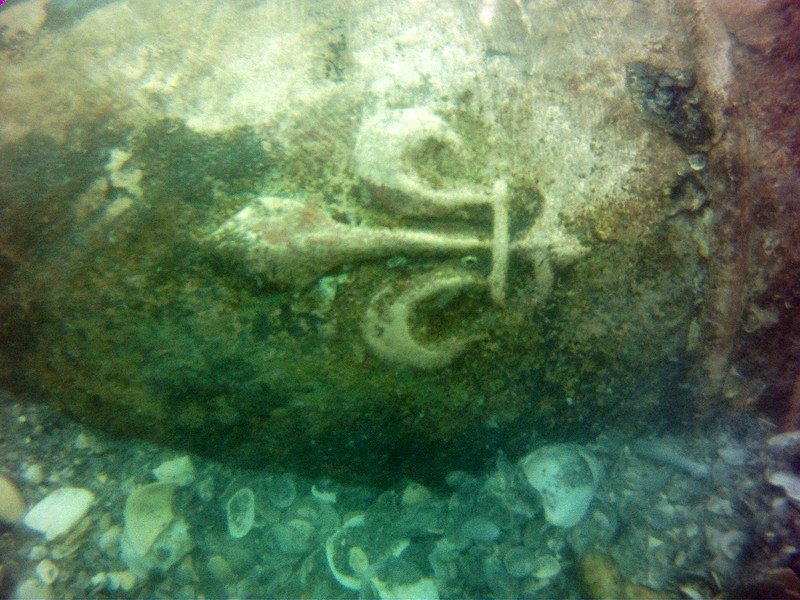
Three shipwreck debris fields dating back to the mid-16th to 17th century may have been discovered in the waters of Cape Canaveral, Florida, by marine archaeology company Global Marine Exploration Inc.Divers encountered different artefacts, which they have tied to the French colonial era in Florida, between 1562 and 1565. Cape Canaveral is a site that has long fascinated archaeologists and scientists, not least because it has for long been associated with American aeronautics and space research.
"There is a lot of interest regarding the site off the coasts of Cape Canaveral because it is situated near a Nasa base and an air force station so it is crucial to survey and explore the whole coastline near these two centres.
It is in this context that we found remains of shipwrecks, three of those debris being from the colonial period," Global Marine Exploration Inc. President & CEO Robert H Pritchett, told IBTimes UK.
The shipwreck remnants were discovered in May 2016, but have only been announced recently to avoid attracting unwanted attention while the research was in progress.
Artefacts found in the scatter fields include three highly ornate bronze cannons, an iron cannon, 12 anchors, a 39-inch grinding wheel as well as scattered ballast and munitions, and what is believed to be a marble monument with the Coat of Arms of France, dating from the early colonial period.