HOT NEWS !
Stay informed on the old and most recent significant or spectacular
nautical news and shipwreck discoveries

-
"Last shipwreck" from WWI Battle of Jutland found near Norway
- On 22/09/2016
- In World War Wrecks
By Tom Metcalfe - Cbs News
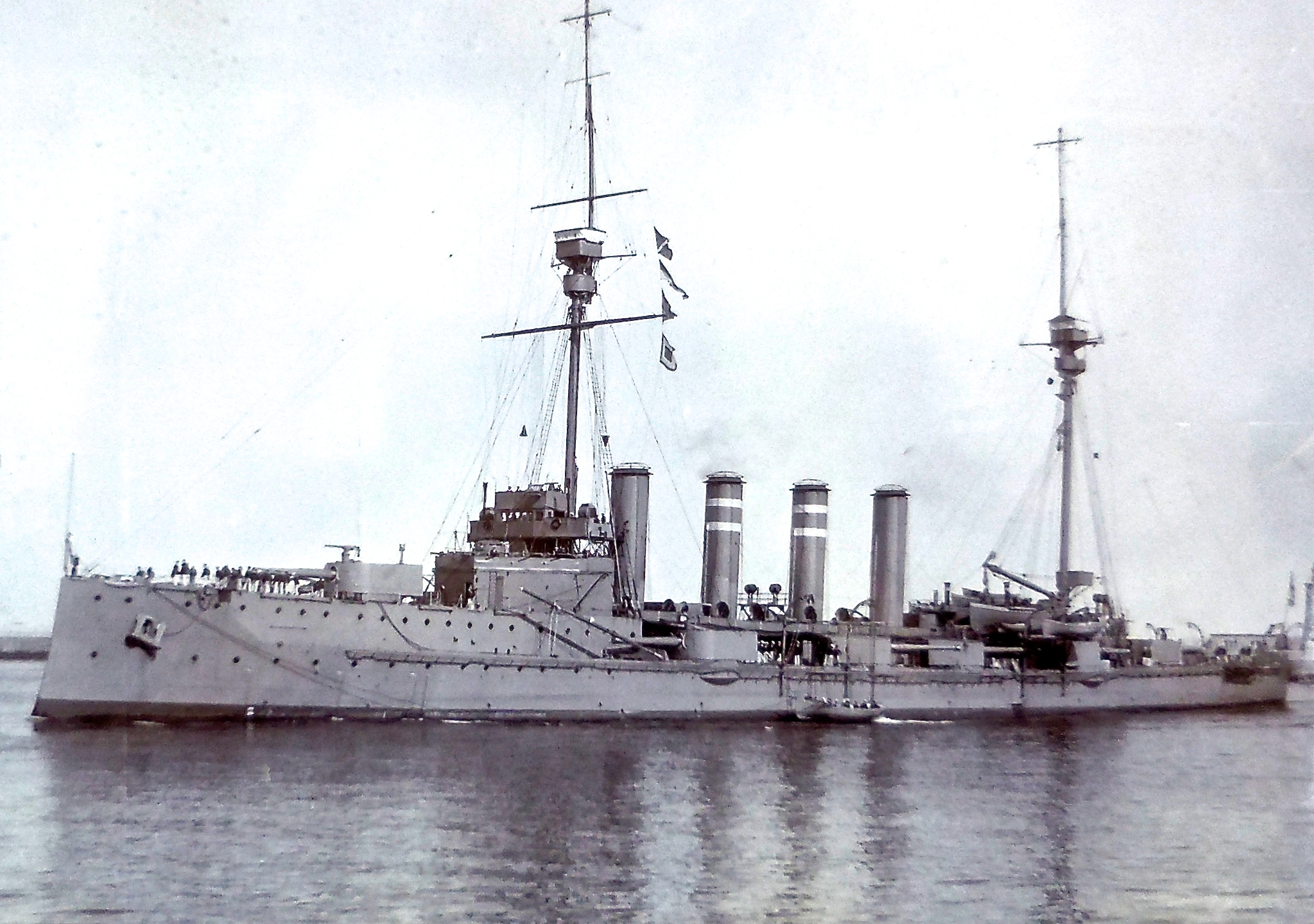
The wreck of the British warship HMS Warrior — the “last shipwreck” from the Battle of Jutland during World War I — has been discovered near Norway.The marine exploration team that found the shipwreck also recently located the wreck of a World War II-era British submarine in the same region. The HMS Warrior is the last of the Jutland wrecks to be located, out of 14 British and 11 German warships that were sunk on May 31 and June 1, 1916, as the Imperial German High Seas Fleet tried to break out from the Royal Navy blockade of the North Sea.
“It’s the only wreck left from the Battle of Jutland that we can categorically say is completely unspoiled,” said Innes McCartney, a marine archeologist at Bournemouth University in the United Kingdom.
“It’s completely upside down, and it sank down into an area of very soft seabed, right to the level of the upper deck — so everything inside it is completely sealed in,” McCartney told Live Science.
More than 250 warships took part in the Battle of Jutland, the largest naval engagement of World War I, and more than 8,500 men were killed, according to British and German wartime records.
McCartney said the HMS Warrior, an armored cruiser, was heavily damaged during the battle by gunfire from the German cruiser SMS Derfflinger, but it had attempted to make its way back to Britain.
When the ship’s engines failed, the Warrior was towed throughout the night by a British aircraft carrier, the HMS Engadine.
By morning, however, the Warrior had filled with water, and it was abandoned after its surviving crew of around 700 were taken off, McCartney said.
He added that the final resting place of the Warrior was unknown until the wreck was discovered on Aug. 25, using sonar scans and a remotely operated underwater vehicle (ROV) equipped with video cameras.
-
The mysterious Antikythera shipwreck
- On 21/09/2016
- In Underwater Archeology
By Josh Hrala - Science Alert
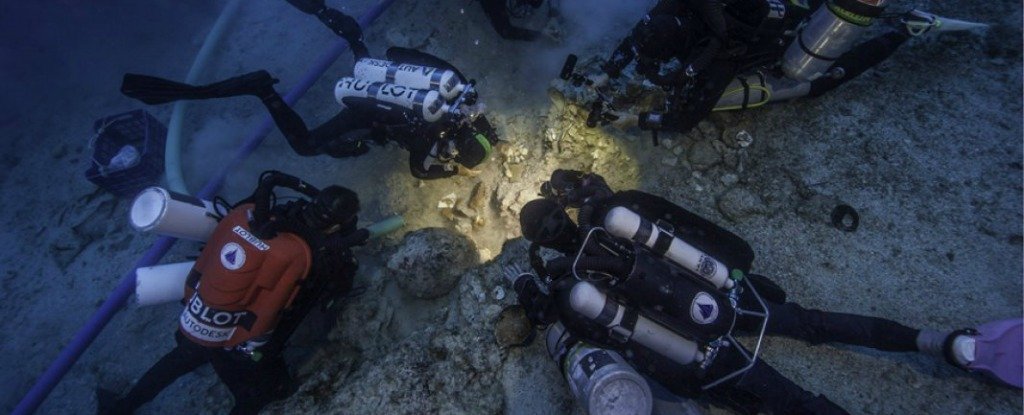
An international team of archaeologists excavating the famous Antikythera shipwreck in the Aegean Sea off the coast of Greece have found the remains of a human skeleton among the 2,100-year-old wreckage.If they can extract DNA from the bones, it'll help us understand more about the passengers on board the ship when it sank around 65 BC – and could provide vital insight into the mysterious Antikythera Mechanism it was carrying, better known as the world’s first computer.
"Archaeologists study the human past through the objects our ancestors created," said team member Brendan Foley, from the Woods Hole Oceanographic Institution (WHOI) in the US.
"With the Antikythera Shipwreck, we can now connect directly with this person who sailed and died aboard the Antikythera ship."
In case you’re unfamiliar, the Antikythera shipwreck – which was originally discovered by sponge divers in 1900 – is the largest ancient shipwreck ever found.
During the first excavation by the sponge divers, they managed to pull up a series of marble statues and thousands of other sea-battered artefacts.
Among the random assortment of things was the Antikythera Mechanism, a clockwork device that might have been used to predict astronomical events and is widely referred to as the world’s first analogue computer.
-
Finding Canada’s other shipwrecks
- On 19/09/2016
- In Underwater Archeology

By Morgan Lowrie - The Canadian Press
While Sir John Franklin’s doomed search for the Northwest Passage looms large in the Canadian consciousness, thousands of other shipwrecks lie in obscurity at the bottom of the country’s waterways.The Arctic Research Foundation recently announced the discovery of HMS Terror during the latest in a series of high-profile expeditions that also led to the discovery of Franklin’s other ship, HMS Erebus, in 2014.
But as the country celebrates the apparent end to an enduring Arctic mystery, a team in Quebec has been quietly trying to put a name to at least some of the lesser-known shipwrecks in the St. Lawrence River.
The project, which is co-ordinated by the Universite de Montreal and the Archeo-Mamu Cote-Nord archeology association, seeks to document the shipwrecks along the northern coast of the river with the help of local recreational divers.
The project’s main archeologist says the provincial government has only a fraction of the river’s shipwrecks on record.
“At the level of the (Quebec) Culture Department, there are between 80 and 100 that are documented, but I think there are more than 1,000 left to find,” Vincent Delmas said.
“There’s a lot of work still to do.” He says the St. Lawrence was once an autoroute where ships carrying goods to and from Europe succumbed to ice, storms and the many rocks and reefs lurking just below the surface.
Delmas says parts of the river’s north shore were also rich in iron, which could interfere with ship’s compasses, creating a “Bermuda Triangle”-like effect.
-
Rare ancient plate set found underwater in Antalya
- On 16/09/2016
- In Underwater Archeology

From Hurriyet daily news
One of the world’s richest plate sets from the Eastern Roman Empire has been discovered off the coast of the southern province of Antalya’s Adrasan district.“We were not hopeful of finding anything considerable,” said Selçuk University Archaeology Department academic Hakan Öniz. “Just then, we found a solid, very beautiful plate with its own colors. It made us very happy. We were amazed by the designs on it.
As we found the others, we were surprised by the motifs on each plate. There are fish and flower motifs unique to the era. The workmanship was very good. All of them were 800-900 years old.”
Among the most striking plates in the set are unique ones that are in the same design and color but in different sizes.
The ship that was carrying the plates is thought to have sunk after hitting a rock sometime in the 12th century. The Byzantine Empire underwater excavations started in 2014 in collaboration with Dokuz Eylül University, Selçuk University and the Antalya Museum.
The finds are being cleaned of salt at the Antalya Museum Directorate’s laboratory. When the work is done, the plates will be displayed at the Antalya Museum. Öniz said the plates off Adrasan were scattered over an area of 15 to 20 meters.
“The ship was loaded with plates from two different plate factories. We don’t know where these factories are. I say two different factories because there are two different techniques used on the plates. We see that the plate set existed 900 years ago, too, and that women took care of their sets,” he said.
He said they had found the plates underwater on top of each other. Most of them were broken, while some had been taken by people, he added. There are a number of other plates along the coasts of Antalya and Mersin, but many are too deep to retrieve, he said.
-
World War II shipwreck reefs
- On 15/09/2016
- In World War Wrecks

From Cosmo Magazine
In July 1942, German submarine U-576 sank the freighter SS Bluefields during the battle of Convoy KS-520 off the coast of North Carolina.The convoy fought back, though, and return fire from US Navy Armed Guard and an aerial depth charge attack sank the U-boat. The vessels lay on the sea floor for decades as fish and other marine life moved in and made them home.
More than 70 years later, in 2014, the wrecks were rediscovered and in August and September this year, the US National Oceanic and Atmospheric Administration and research partners went in for a closer look. This is what they found.
During the very first dive of the expedition, scientists located and explored the German U-576.
This was the first time since the submarine was sunk on 15 July 1942 that anyone had laid eyes on the vessel.
-
Missing 1800s shipwreck found
- On 15/09/2016
- In High Tech. Research/Salvage
By Mary Lynn Smith - Star Tribune
The Antelope, an 1800s schooner barge, rests about 300 below the surface of Lake Superior near the Apostle Islands. A trio of shipwreck hunters found the nearly intact ship earlier this month.Resting more than 300 feet below Lake Superior’s surface, two distinctive ship’s masts rose from the lake’s dark depths. A six-year search for the Antelope, an 1800s schooner barge, was over.
A dedicated trio of shipwreck hunters discovered the nearly intact ship resting in the waters near the Apostle Islands. The find is remarkable because it’s one of the only wooden schooners found at the bottom of the lake with its masts still standing, said Jerry Eliason, 63, of Scanlon, who found the Antelope, along with Ken Merryman, 67, of Fridley, and Kraig Smith, 63, of Rice Lake, Wis.
Before the ship was discovered earlier in September, it also was one of about 30 wrecks still missing in Lake Superior, he said. “They’re all pieces of history,” said Merryman, a retired computer engineer who has hunted shipwrecks for more than 40 years.
“They all hold information about the maritime history of our region. As someone who discovers this, you get to open a time capsule and see first hand what treasure is there.
And you get to solve a mystery at the same time.” Lake Superior holds onto about 400 shipwrecks, Eliason said. Most of those ships were driven into shore in a fog, a storm or blizzard and are “broken up into bits and pieces and shredded,” he said.
-
Indigenous crew member leads to HMS Terror
- On 14/09/2016
- In Famous Wrecks
![Photograph: George Back [Public domain], via Wikimedia Commons](https://upload.wikimedia.org/wikipedia/commons/4/40/William_Smyth_HMS_Terror_February_1837.jpg)
By Megan Gannon - Mentafloss
The long-sought shipwreck of the HMS Terror has reportedly been located, more than 160 years after it disappeared in the Canadian Arctic.The discovery comes two years after the identification of Terror’s sister ship, the HMS Erebus. It’s hoped that the wrecks could illuminate the desperate end of Sir John Franklin’s mission to find the Northwest Passage in the 1840s.
All 129 crew members from the polar expedition for British Royal Navy died after the ships became stranded in ice. A team from the Arctic Research Foundation aboard the research vessel Martin Bergmann said they located the sunken ship last week in King William Island’s uncharted Terror Bay, according to The Guardian, which first reported the discovery.
Over the weekend, the researchers sent a robotic vehicle underwater to explore the ship. Video footage shows that the ship has been quite well preserved in frigid waters 80 feet below the surface—rope, an exhaust pipe, a mess-hall table, glass panes, wine bottles, the bell, and even the helm are intact. Adrian Schimnowski, the foundation’s operations director, claimed there were still plates on the shelves in the food storage room.
The research team believes the ship sank gently to the seafloor. Parks Canada, the government agency that has been leading efforts to search for and explore Terror and Erebus, said that it is working with its partners to validate the details of the discovery.
But the news was already being cheered by the community of shipwreck hunters and historians. “Seeing the images of HMS Terror—her bowsprit still set, her bell, her railings, all in pristine order—feels as profound a moment as when a camera first passed over the bow of the Titanic,” Russell Potter, author of Finding Franklin: The Untold Story of a 165-Year Search, said in a statement by the Royal Canadian Geographical Society.
“We’re witnesses to a discovery, the end result of a century and a half of searches, that will profoundly alter, augment—and doubtless complicate—our understanding of the final fate of the Franklin expedition,” Potter said.
The murky fate of the Franklin expedition has long captured the imagination of historians, amateur sleuths, and authors from Mark Twain to Margaret Atwood.
-
Scuba diving pioneer gets credit due
- On 31/08/2016
- In People or Company of Interest
By Yasuji Nagai - The Asahi Shimbun
While scuba diving is enjoyed worldwide today, few enthusiasts may be aware that the origins of their hobby can be traced to a pioneering Japanese immigrant in prewar Australia.Yasukichi Murakami (1880-1944) is credited with single-handedly developing advanced models of diving gear that substantially expanded the scope of the activity before the introduction of scuba.
Hailing from Wakayama Prefecture, Murakami obtained patents on valves and apparatuses for the diving gear while introducing pearl farming to Australia.
He died after being sent to an internment camp when the war between Japan and the United States broke out. He was not forgotten, however, and in recent years, his achievement has been re-evaluated.
Murakami was born in Tanami (present-day Kushimoto) in Wakayama Prefecture. He moved to Australia in 1897 and became a storekeeper in Broome in the northwest of the country. He also became a pillar of the Japanese immigrant community.
In the 1910s, Murakami started pearl fishing, which was thriving back in those days, in partnership with an Australian businessman. Pearl farming was developed by Kokichi Mikimoto in Japan but had not yet been introduced to Australia, and so many of the immigrants were collecting natural pearls as divers.
Using an old model of a diving suit developed in 1836, many divers were harmed physically from the bends, also known as decompression sickness, which is caused by the formation of gas bubbles in the blood that occur with a sudden change of pressure during diving. In 1913, 28 divers died of the bends there.
Murakami decided to improve the swimming suit.
After a great deal of trial and error, Murakami finally invented an advanced model of diving gear by the mid-1920s.