HOT NEWS !
Stay informed on the old and most recent significant or spectacular
nautical news and shipwreck discoveries

From Beta Lep
From searching for mines planted on Allied boats during World War II to spying on Russian warships, Sydney Knowles had a colourful life at sea.
Jenny Simpson speaks to the Prestonian about his new memoir, A Diver in the Dark.
Sydney Knowles braced himself as he plunged into the choppy waters and made his descent into their pitch-black depths.
Kitted out with nothing but swimming trunks, lead-weighted plimsolls and primitive breathing equipment, Sydney was carrying out another perilious search for mines planted by enemy Italian frogmen on the hulls of Allied ships anchored in ports during World War Two.
Working in total darkness, the divers would try to cut the mines loose or call for help from their commanding officer, Lionel ‘Buster’ Crabb.
“We had no diving equipment at all,” explains Sydney, now 88.
“We just took a deep breath and tried to see what we could.”
Sydney, who grew up in New Hall Lane, Preston, had joined the Royal Navy in 1939 at the age of 18.
He served in the North Atlantic aboard HMS Zulu during the hunt for the Bismarck and later in Operation Pedestal, the naval convoy which broke the Siege of Malta in 1942.
It was on his return to Gibraltar following Pedestal that he spotted an intriguing notice, pinned to a board: ‘Volunteers required for hazardous duties ashore.’
Sydney recalls: “I wondered what could be more hazardous than the hell I had experienced on the Malta convoys – surely nothing ashore could equal that?
“I was soon to discover, however, that it was a case of out of the frying pan and into the fire.
“I was asked if I could swim, and if I would be interested in learning to become a diver.”
After an interview with Crabb and Lt Bailey, the bomb and mine disposal experts, Sydney joined the Underwater Working Party and began the dangerous task of hunting for underwater explosives.
Crabb’s expertise at rendering mines safe were second to none and earned him a George Medal, as well as the unwavering loyalty of his men, including Sydney.
A film, The Silent Enemy, was later made about their underwater exploits, which also included searching for the body of the commander-in-chief of the Polish armed forces following a plane crash off Gibraltar.
Warplane, M.I.A. For 60 Years, Comes Home to WNY

By Pete Gallivan - WGRZ.com
It was a journey that began christmas morning, 1943 in Wheatfield. A P-39 Airacobra, one of the 30,000 planes produced here in Western New York for the war effort, rolls from the hanger and takes off, headed west.
She was one of 10,000 planes, many from here in Western New York, that were sent to Russia. It was also a bit of WNY technology turned the tide against the Nazi's.
The P-39 was known as the "flying cannon". She was a force in the air. It was equipped with 2 machine guns in the wings, two more in the nose, a 37 mm cannon in the nose and a state of the art radio system.
But on a mission in 1944, this plane disappeared
Fast forward 60 years to July 2004. A fisherman on Lake Mart-Yavr in arctic Russia spotted something under the water. A British warbird recovery team was called in and what they found was absolutely astounding.
The plane was recovered intact. The pilots remains, and medals were still in the cockpit, so was the plane's logbook.
Diver to talk about 'Thousand Islands Lost Fleet'
By Jaegun Lee - Watertown Daily Times
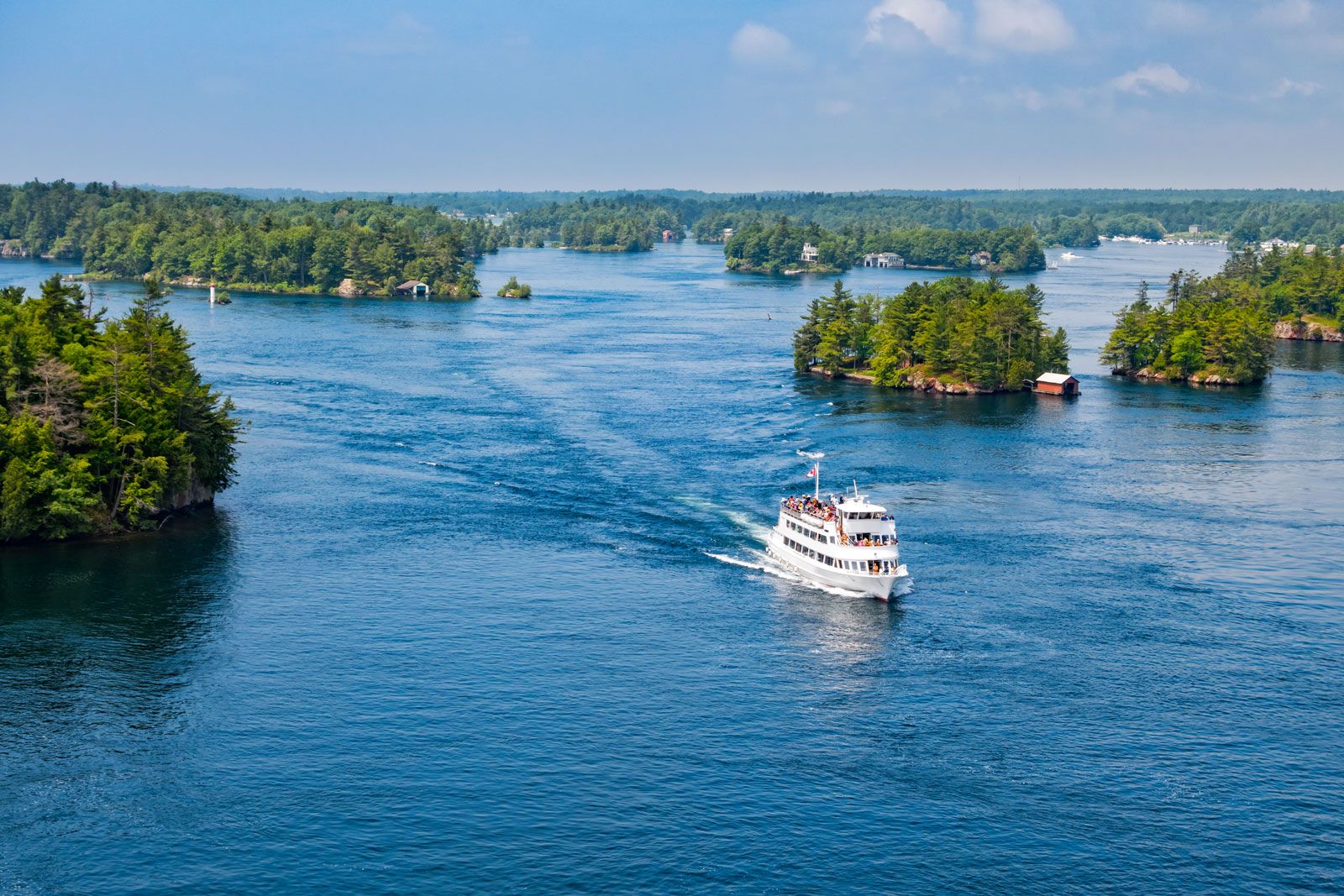
More than three dozen wrecked pleasure boats and warships from centuries past lie below the surface of the St. Lawrence River waiting for their stories to be told.
"There are fascinating artifacts on the bottom of the river and we have tons of underwater photos and archaeological photos of these boats," said Raymond I. "Skip" Couch, a veteran diver and founding member of the Clayton Diving Club.
Mr. Couch will present the findings of area divers, who have been searching the depths of the river to discover these sunken boats, from 9 a.m. to noon June 5 at the Antique Boat Museum, 750 Mary St.
Cost to attend the "Thousand Islands Lost Fleet" is $15 and includes coffee, dough nuts and admission to the boat museum. The event is sponsored by the Thousand Islands Museum.
"Around 30 boats have been found between the Rock Island Lighthouse and Deer Island — that's basically the most dangerous area in the Thousand Islands — and we believe that 50 more were wrecked and salvaged in the past," Mr. Couch said.
2,000-year-old shipwreck creates deep sea mystery
By Rossella Lorenzi - Discovery News
Although the 2,000-year-old shipwreck under the Gran Sasso mountain in central Italy may be a godsend for nuclear physicists, the “Ship of the Thousand Ingots” has been one big mystery for archaeologists.
Was the ship, which carried the largest lead shipment ever found, deliberately sunk on the orders of the captain ?
Was the vessel knocked over by a wave ?
In this audio slide show, Donatella Salvi, director of the National Archaeological Museum in Cagliari, tells Discovery News what her team found when they recovered the ship's cargo.
Hutchinson Island museum to dedicate SEAL memorial
By Joe Crankshaw - TCPalm
A larger than life-size, bronze statue depicting a fully equipped Navy SEAL, will become the center of a memorial to fallen Underwater Demolition Team men and Navy SEALs on May 28 at the National UDT-SEAL Museum on North Hutchinson Island.
“It will memorialize all who have given their lives in all wars,” said retired Navy Capt. Michael R, Howard, director of the museum. Howard is a retired SEAL. The acronym stands for Sea, Air and Land, where the highly trained special warriors fight.
The statue is by internationally known sculptor Roy Shifrin, whose works are displayed in Europe and the United States. It is the second bronze statue at the nationally recognized museum. The first, entitled “The Naked Warrior,” depicts a World War II UDT member who trained at the Naval Amphibious Training Station in Fort Pierce.
The contrast between the two statues illustrates how the specialized force has evolved. The World War II figure carries a sheaf knife, is clad in swimming trunks and flippers and carries a face mask. The statue of the modern SEAL has a breathing device, helmet, wet suit, flippers, communications gear and a firearm.
The new statue will be enclosed by a series of curved panels on which the names of all UDT and SEALs, who have died in service, will be engraved.
A brief ceremony will be conducted when the statue is installed, with a more formal activity planned for Memorial Day on May 31, said Howard.
The Hutchinson Island facility began as a museum to display treasure from the Spanish Plate Fleet of 1715, which sank during a hurricane off the Treasure Coast. It was one of two such museums, the second was the McClarty Museum in Sebastian.
After thieves stole treasure exhibits from the Sebastian Museum, the State Department of Natural Resources, which operated the two sites, shut down both of them in 1983.
Zwaanendael Museum to explore shipwreck
From The Cape Gazette
The Roosevelt Inlet Shipwreck and DeBraak, two of the more than 200 shipwrecks that have littered the floors of the Atlantic Ocean and Delaware Bay off Lewes, will be explored in the program Zwaanendael Shipwreck Archaeology which will take place from 10 a.m. to 4:30 p.m., Saturday, May 29, at the Zwaanendael Museum, 102 Kings Highway, Lewes.
In addition to historical information and a display of artifacts recovered from the two shipwrecks, Zwaanendael Shipwreck Archaeology will include a hands-on activity which will help children better understand the science of archaeology by finding, analyzing and researching, or drawing artifacts.
The program will also feature a demonstration of stipple drawing by Sharyn Murray, a Millsboro, Delaware artist and Zwaanendael Museum historical interpreter.
Stippling creates an image through the use of small dots of a single color of pigment, applied with a pen or brush. HMB DeBraak was a British naval vessel that sank in the Atlantic Ocean off Cape Henlopen in 1798.
The ship was raised, and badly damaged, during a commercial salvage operation in 1986.
The Delaware Division of Historical and Cultural Affairs (HCA) has curated the remains of the ship’s hull and its contents since they were acquired by the state of Delaware in 1992.
Read more...
Tin pots might prove sunken ship's destination
From People's Daily Online
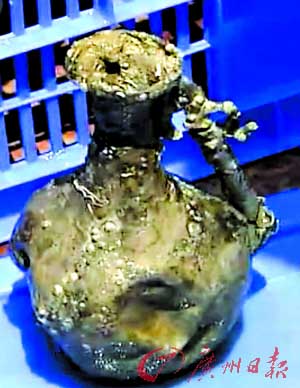
A new batch of cultural relics from the ancient ship of Nan'ao No.1 were salvaged and exhibited on May 18, including 2 tin pots, walnuts and other porcelains carrying cultural elements of Han and Buddhism.
Therefore, experts concluded that Nan'ao No.1's destination might have been Southeast Asia.
Sun Jian, the leader of the archaeology team for Nan'ao No.1, said those color glaze porcelains salvaged yesterday are more delicate than relics from the ancient ship before, and similar porcelains were found during the excavation of another ancient ship called "Wanjiao No.1" in the sea area of Fujian province.
Such porcelains, according to him, were popular in the European market as well as Japanese market, and most of them came from Pinghe oven in Fujian.
Among the cultural relics salvaged yesterday, there are two tin pots with typical Ming characteristics. Sun said the two tin pots were close to each other, and that might indicate these two things were not the personal possessions of sailors but rather goods packaged for export.
The race to preserve shipwrecks, artifacts

Credit: Underwater Heritage Program Directorate/Adhi Perwira
By Andrea Booth - The Jakarta Post
Lack of finance, technology and trained divers, the attempt to sell sunken artifacts — not to mention looters — appear to be hindering the potential to conserve Indonesia’s abundant underwater heritage, a topic under hot discussion of late.
The Underwater Heritage Program Directorate (PBA) under the Culture and Tourism Ministry’s Directorate General of History and Archaeology is keen to set up a system to overcome these challenges.
“Our objective is to preserve these culturally valuable remnants of our past,” Gunawan, chief director of the PBA said.
The directorate recently conducted five dives over 10 days to recover artifacts in the Karimunjawa region, Jepara, Central Java.
“We want the artifacts we have uncovered to stay and be looked after in Indonesia so that citizens and generations to come can learn more about the role Indonesia has played in the maritime industry from the 9th to the 19th centuries.” The PBA said in a press statement it would also help boost the tourism industry.
This initiative is not without challenges, however. Gunawan says the Maritime Affairs and Fisheries Ministry Pannas BMKT’s (the national committee of excavation and utilization of precious artifacts from sunken ships) commercializing of artifacts, including the unsuccessful auction early May of treasure reportedly worth US$80 billion, is devaluing Indonesia’s history.
Pannas BMKT’s secretary general Sudirman Saad recently told The Jakarta Post that artifacts the state wanted to preserve were held in a government warehouse in Cileungsi, West Java, with the remainder stocked in a privately owned warehouse in Pamulang, South Jakarta.
Gunawan said he was concerned that precious artifacts would not be preserved and wanted to encourage people to value them — as well as shipwrecks — more so they could learn more about their past and enhance national pride.
The United Nations Educational, Scientific and Cultural Organization (UNESCO) agreed that selling the underwater artifacts meant Indonesia would lose its valuable heritage. “Exploiting an archaeological site and dispersing its artifacts is an irreversible process. Yet the contents of the shipwreck found off the coast of the city of Cirebon have much to tell us about cultural and commercial exchanges in the region at that time,” UNESCO director general Irina Bokova said in a press statement.
While Gunawan said it would take time to build a solid system to extract and preserve the artifacts, and gain people’s interest, he believed this goal could still be reached.
“People may be worried that [we may not have the technology], especially in Indonesia, and this may be because there has never been a preservation process undertaken before,” Gunawan said. “But we have to start at some point and I’m sure we are capable.”