HOT NEWS !
Stay informed on the old and most recent significant or spectacular
nautical news and shipwreck discoveries

-
Rupert Cornwell: of shipwrecks, survival – and cannibalism
- On 13/02/2011
- In Underwater Archeology
From The Independent
You might suppose that oil of the petroleum variety was the world's first global energy industry. Not so.That distinction belongs to whale oil, which, for roughly a century after 1750, lit lamps and provided wax and lubricants for what passed then as the developed Western world. And now comes a fascinating new reminder.
Today Nantucket is a holiday playground for the gilded rich of Wall Street. Back then, though, the small island off the southern coast of Massachusetts was the equivalent of modern Houston and Saudi Arabia, home to a whaling fleet of wooden ships that ranged the seven seas, on epic voyages that might last three years or more, and end with no return at all.But no wrecks were ever found – until now.
For the first time, American marine archaeologists have discovered the remains of a Nantucket whaler, the Two Brothers, that sank 188 years ago in this very same February week of 1823.She was on her way to newly opened whaling grounds off Japan when she foundered on a hidden sandbank beyond the far western end of the Hawaiian archipelago, some 12,000 miles from her home port.
On Friday researchers from the government's National Oceanic and Atmospheric Administration (NOAA) presented their findings, and a fascinating tale it is.
The NOAA team was exploring a treacherous stretch of atoll called the French Frigate Shoals, 600 miles north-west of Honolulu, looking for other, more recent wrecks. But just before they were due to leave, they noticed an old anchor resting on the seabed 15ft below the surface, clearly visible through the crystalline water.
Naturally the wooden structure of the Two Brothers had long vanished, but what remained was sufficient to identify the vessel: the anchor from the early 19th century, lances and harpoons to catch the whales, plus ceramic fragments and three metal trypots – cauldrons in which whale blubber was rendered into the precious oil. -
Finns to revive beer from 19th century shipwreck
- On 12/02/2011
- In Conservation / Preservation

Finnish scientists are analysing a golden, cloudy beverage found in a 19th century shipwreck at the bottom of the Baltic Sea, hoping new beers can be modelled on an ancient brew.The VTT Technical Research Center of Finland said on Tuesday that through chemical analysis it aims to determine the ingredients and possibly the recipe used in brewing what it called "one of the world's oldest preserved beers."
VTT scientist Arvi Vilpola said he had "the honourable task" of being the one on the research team to sample the brew.
"It was a little sour and you could taste the saltiness of it slightly," Vilpola said.
Divers stumbled across the five beer bottles while salvaging champagne from the wreck near Finland's Aland Islands last July. The schooner is believed to be from the early 19th century.
Researchers are keen to find out what kind of yeast was used because "the role of yeast in beer brewing was not yet fully understood in the early 1800s," said VTT spokeswoman Annika Wilhelmson. -
Researchers find 1823 shipwreck of Nantucket whaling ship
- On 12/02/2011
- In Underwater Archeology
Boston Herald
A fierce sperm whale sank the first whaling ship under George Pollard’s command and inspired the classic American novel "Moby-Dick".A mere two years later, a second whaler captained by Pollard struck a coral reef during a night storm and sank in shallow water.
Marine archaeologists scouring remote atolls 600 miles northwest of Honolulu have found the wreck site of Pollard’s second vessel — the Two Brothers — which went down in 1823.
Most of the wooden Nantucket whaling ship disintegrated in Hawaii’s warm waters in the nearly two centuries since.But researchers found several harpoons, a hook used to strip whales of their blubber, and try pots or large cauldrons whalers used to turn whale blubber into oil.
Corals have grown around and on top of many of the objects, swallowing them into the reef.
"It was kind of like this ship trap of atolls," Gleason said. "It went from about 40 feet to all of the sudden they were in about 10 feet of water."
For Hawaii, the discovery is a reminder of the great upheaval the whaling industry brought to a kingdom still adjusting to life after the first European travelers arrived.
The hundreds of whaling ships that called on Hawaii’s ports starting in 1819 boosted the kingdom’s economy, but this mostly benefitted a few men who became suppliers to the vessels, said Jonathan Osorio, a professor of Hawaiian studies at the University of Hawaii-Manoa.The arrival of thousands of outsiders — some of whom claimed Hawaiian law had no jurisdiction over them because they were American or European — challenged the young monarchy.
-
S.F. construction site discovery: 2 old ships
- On 12/02/2011
- In Parks & Protected Sites
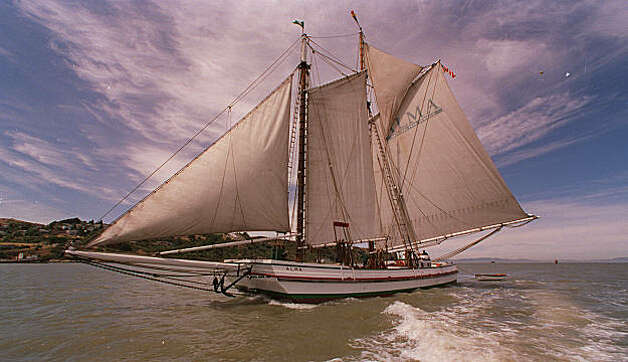
Photo Eric Luse
By Kelly Zito - San Francisco Gate
When engineers working near Candlestick Park last March drilled deep into the ground for soil samples, they pulled up chunks of wood and figured it was an old pier.
They had no idea it was a century-old ship, let alone two.
But that became clear this week when the San Francisco Public Utilities Commission uncovered what maritime experts believe are a pair of scow schooners, 90-foot-long workhorse vessels that plied the bay shallows in the late 1800s to deliver hay, salt, bricks, pork, coal, lumber and other cargo.
Buried under more than 14 feet of sand and fill dirt, the 45-foot-long hull sections came to light at the mouth of an enormous trench that will house a new overflow sewage pipe for the Visitacion Valley neighborhood.
"These were the flatbed trucks of San Francisco Bay from the late 19th and early 20th century," said Jim Delgado, director of maritime heritage at the National Oceanic and Atmospheric Administration in Washington, D.C.
"They're largely forgotten now, but these scow schooners moved the goods that built the city and the Bay Area economy." -
Titanic makes Winnipeg debut
- On 12/02/2011
- In Famous Wrecks
From Global News
It was the most infamous maritime disaster in history.
The luxury liner Titanic sank 99 years ago with more than 1,500 people were lost in the icy waters of the north Atlantic.
But artifacts from the shipwreck are about to go on display in Winnipeg for the first time.
"The ship handles beautifully, it is designed for performance and above all safety," said Lowell Lytle, playing the part Capt. Edward J. Smith.
He has even gone to the bottom of the ocean to recover artifacts.
Out of the 190 artifacts on display, including pots, men's socks and even a replica first class suite, nine have never been seen before.
"As you go to the first class cabin you'll hear symphonic music, as you go downstairs to the machine area, you're hearing the roar of the motor," said Kevin Donnelly, vice President and General Manager of MTS Centre.
There is even a local connection as 30 people from Manitoba or immigrating here were aboard the ship. Seven survived.
The Manitoba Museum has their belongings.
"There were some very wealthy people living in Winnipeg in 1912 and they were part of the jet set of the times group of people," said Curator Sharon Reilly.
When you come aboard the Titanic in Winnipeg, you'll get a boarding card with the name of a passenger and their class. You can see where they slept and at the end you'll find out if you survived or not. -
St Paul’s shipwreck in a 15th-century Codex
- On 11/02/2011
- In Ancien Maritime History

By Joe Zammit Ciantar - The Malta Independent
Among the manuscripts treasured by the Biblioteca Nazionale Universitaria of Turin, there is a codex dating from the early 15th century, entitled De insulis et earum proprietatibus (‘Of islands and their properties’) – possibly complimenting Giovanni Boccaccio’s De montibus et silvis, de fontibus et lacubus et fluminibus ac etiam de stagnis et paludibus nec non et de maribus seu diversis maris nominibus.
It was written by Florentine Domenico Silvestri. I came across and consulted this MS in December 1995.
The De insulis and other codices had escaped the fire which destroyed other manuscripts and the church of Santo Spirito in the second half of the 15th century. It had another very narrow escape when the Biblioteca in Turin caught fire on the night between Monday 25 and Tuesday 26 January 1904.
In this manuscript – a sort of an encyclopedia with information about islands – reference is made to both of the islands of Malta and Gozo. Although the indication may not be precise, Silvestri cites an island where, he writes, the shipwreck of St Paul took place.
In the days of the Florentine writer, it was known as Mitellino. This does not seem to match with the author’s opinion: ‘quod mihi non bene congruit’.Most of the facts given under this name are related to the passage taken from the Acts of the Apostles, where Luke narrates St Paul’s shipwreck on an island, the welcome he was given by the inhabitants, the bonfire the people lit to warm themselves, the viper that went up the Apostle’s hand and the healing of Publius’ father (Silvestri states ‘brother’).
This could have been taken from one of the ‘Vulgata Latina’ – Latin Vulgate – copies of the Bible of the times. Silvestri wrote when printing was not yet ‘invented’, and the small number of copies of Latin translations available and perhaps within reach of the few who could read were chained to benches.Silvestri summarised this biblical event in his own words.
-
Underwater exploring is banned in Brazil
- On 11/02/2011
- In Treasure Hunting / Recoveries
By Marlise Simons - The New York Time
A dispute between the Brazilian Navy and an American marine archeologist has led Brazil to bar the diver from entering the country and to place a ban on all underwater exploration.
The dispute involves Robert Marx, a Florida author and treasure hunter, who asserts that the Brazilian Navy dumped a thick layer of silt on the remains of a Roman vessel that he discovered inside Rio de Janeiro's bay.
The reason he gave for the Navy's action was that proof of a Roman presence would require Brazil to rewrite its recorded history, which has the Portuguese navigator Pedro Alvares Cabral discovering the country in 1500.
The Brazilian Navy has denied that it covered up the site and has in turn charged Mr. Marx with "contraband" of objects recovered from other wrecks in this country.Because of this, Navy officials said, the Government had issued an order "to prohibit him from entering Brazil."
To substantiate these charges, the Brazilian officials showed a catalogue of an auction held in Amsterdam in 1983 in which, they said, gold coins, instruments and artifacts removed from shipwrecks in Brazil were offered for sale on behalf of Mr. Marx and his associates. The officials said many of these objects had not been reported on the divers' inventory, contrary to an agreement with Mr. Marx.
'Don't Bother Me'
Several attempts to give Mr. Marx the opportunity to respond to these charges were unsuccessful. One phone call ended abruptly when Mr Marx said, "Don't bother me," and then hung up.
All other permits for underwater exploration and digging, a prolific field in Brazil, have been canceled as a result of the Marx controversy and none will be issued until Congress passes new legislation, Navy officials said. Although the decision was taken a year ago, it was not publicized and only became known as a result of new inquiries into the Marx case.
The ban has affected a number of projects in Brazil's harbors and along its 4,600-mile coastline. Mainly foreign diving teams have discovered a panoply of gold and silver objects, but most of the sites, though known, remain unexplored.
In Guanabara Bay of Rio de Janeiro, more than 100 English, French and Portuguese shipwrecks lie unexplored like the pages of an unread, underwater history book.
But few spots seem to have aroused as much interest and intrigue here as the remains of a ship that struck a reef some 15 miles inside Rio de Janeiro's bay. -
Antique egg cups linked to the Titanic go under the hammer
- On 10/02/2011
- In Auction News

From Paul Fraser Collectibles
Collectors of unique memorabilia from the White Star Line should look to Cuttlestones next month.Staffordshire (UK) auction house Cuttlestones' ongoing success is seeing the firm attract lots from across the country. The firm's next Fine Art Sale, set to take place on Friday 4th March, is no exception - and one lot in particular has travelled a considerable distance to be sold at the auction house.
A set of four rare egg cups branded for the famed cruise line 'The White Star Line', which counted the ill-fated Titanic among its fleet, has been consigned by vendors from Southampton.
The reason they chose Cuttlestones rather than a more local auction house is down to Cuttlestones' previous success with a range of White Star Line items, including a set of six cups that fetched just under £1,000 ($1,600) in the March 2010 Fine Art Sale.
The egg cups are a far rarer - and potentially more valuable - proposition. One of the egg cups carries a date stamp for 1912, the year the Titanic sank, and another is stamped for 1908.
As with the cups, this lot is expected to draw interest from a range of collectors including White Star Line and Titanic specialists in addition to those with a general interest in items from the 'golden age' of cruising.