HOT NEWS !
Stay informed on the old and most recent significant or spectacular
nautical news and shipwreck discoveries

-
A yacht participating in Sail Morotai sinks in Flores
- On 09/08/2012
- In Maritime News
By Yemris Fointuna - The Jakarta Post
A yacht participating in the 2012 Sail Morotai rally, carrying five people, sunk in the waters off Flores in East Nusa Tenggara (NTT) early on Thursday.
As off Thursday noon, the search and rescue team, the NTT Water Police and local fishermen had found one survivor.
However, Comr. Bayu Herlambang from the NTT Water Police said that the survivor, who is reportedly a foreigner, was not available for questioning. “He is still deeply shocked by the incident,” he said.
Bayu said that all documents explaining the origin of the yacht and the identities of its passengers were lost.
The sunken yacht departed from Kupang and headed to Flores on Monday together with dozens of yachts participating in the sailing rally.
However, the boat allegedly separated with other vessels it decided to dock for a while at Kalabahi, Alor regency in NTT.
Bayu said that high tidal waves could be the main cause of the incident. “The tidal waves in the waters of Flores can be up to two-meters high,” he said.
A total of 84 yachts carrying 450 people on board are participating in the Morotai sailing rally.
They are scheduled to visit 12 spots during their stop at Kupang and various areas in NTT and Maluku.
The participants come from various countries, including Australia, Germany, the United Kingdom and the United States.
The international sailing rally was first launched 12 years ago.
-
Oldest submarine dive
- On 09/08/2012
- In Wreck Diving
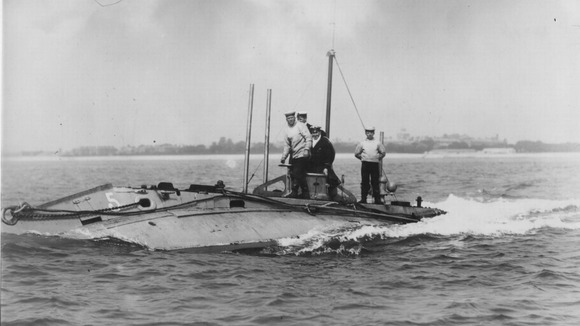
From ITV NewsYesterday, the Nautical Archaeology Society and the Tunbridge Wells Sub Aqua Club have been marking the anniversary of the loss of the Holland 5 submarine - the Royal Navy's oldest submarine wreck - with a dive 100 years to the day after its loss.
Hundreds of years of maritime activity, two World Wars and numerous seafaring accidents have seen the seas and shores around the south coast become steeped in legend and undiscovered pockets of history.
One piece of naval history that remained undiscovered until 1995 was the Holland 5 submarine.
Lying, upright in 30 metres of water, the Holland 5 was one of the Royal Navy's first submarines accepted for service, alongside the Holland 1 now on display at the Royal Navy Submarine Museum in Gosport.
The Holland 5 was commissioned on the January 19 1903.
However, the Holland series of submarines rapidly became obsolete and on the August 8 1912 she was being towed to Sheerness for decommissioning and sank in her current position off the coast of Eastbourne, six miles southeast of the Royal Sovereign Lighthouse.
There was no loss of life when the Holland 5 sank, just a loss of the most intact example of the Holland series of submarines.
The cause of the sinking was believed to be as a result of flooding through a torpedo hatch and she lay undiscovered for almost a century.
-
Pirate ship discovery could spark treasure hunt
- On 09/08/2012
- In Parks & Protected Sites
From NZ Herald
A historic pirate ship containing a legendary bounty of sunken treasure is thought to have been discovered by divers in Tonga.
The wreck of the Port-au-Prince, a 200-year-old English ship of war, is believed to have been found off the coast of Foa Island, in the Ha'apai Island group.
It sailed into Pacific water in search of whales in 1806 after straying from its main mission of ambushing and capturing treasure from the ships of British enemies.
Upon finding the Port-au-Prince in Tongan waters, chief F?nau Uluk?lala and his people seized the ship and massacred most of the crew.
Local legend says Uluk?lala then scuttled the vessel with nearly all its bounty still on board.
Sandra Fifita, a tourism marketing officer in the Tongan Government, says the discovery of the wreck may spark a fervent treasure hunt.
"If it proves to be the Port-au-Prince then we may have treasure hunters and Tongan locals clambering to find the remains of years of successful pirate raids against the enemies of the British.
"Legend tells that the Chief salvaged the iron, which was of great value in Tonga at the time, and then sunk the ship and all her bounty.
It is believed that a considerable amount of copper, silver and gold is resting with the wreck, along with a number of silver candlesticks, incense pans, crucifixes and chalices."
The arrival and eventual demise of the Port-au-Prince also resulted in one of the most valuable documents of pre-Christian life in the Pacific Islands.
-
Shipwreck mystery solved
- On 09/08/2012
- In Parks & Protected Sites
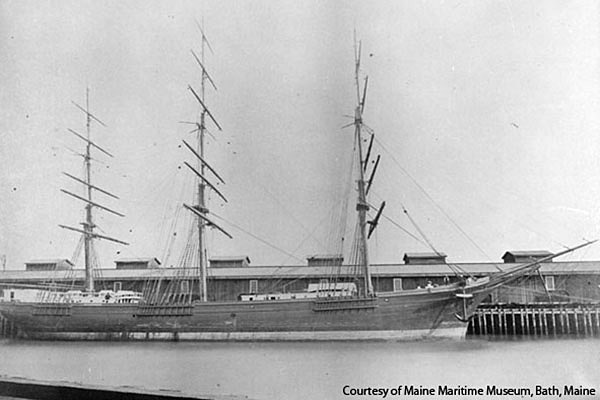
From University of DelawareUniversity of Delaware researchers have discovered that a shipwreck near the coast of Cape Henlopen is a 215-footlong sailing vessel destroyed by a hurricane more than a century ago.
Scientific surveys and historical records indicate that the wreck is the W.R. Grace, a three-masted ship that ran aground during a hurricane on Sept. 12, 1889.
“It was not something we expected to be as old as it was,” said Arthur Trembanis, associate professor of oceanography and geological sciences in the College of Earth, Ocean, and Environment.
Trembanis' research group came upon the shipwreck two years ago while training undergraduates to use remotely operated vehicles (ROVs) and other ocean surveying equipment along the coast of Cape Henlopen State Park near Lewes, Del.
They were surprised to find that the wreck was not included in a public federal database of known shipwrecks and other potential navigation hazards.
Delaware’s coast has been the site of hundreds of shipwrecks over nearly four centuries, making identification a challenge – particularly with older wooden ships disintegrating over time.
State archaeologists initially suspected that this unknown wreck was made of iron or steel since it was readily picked up on sonar, possibly a military or freight vessel dating to World War I or later.
-
A Roman shipwrecks in the ancient port of Antibes
- On 08/08/2012
- In Underwater Archeology

Photo Rémi Bénali
From Past Horizons
A team of archaeologists from Inrap have uncovered a Roman shipwreck in southern France, in what was once part of the bustling ancient port of Antibes.Antibes was known as Antipolis, a Greek colony originally founded by the Phoenicians of Massalia.
The date of its origin is uncertain, but situated on the coast of Provence, Antipolis occupied a privileged position on the sea routes linking Marseilles to the Italian coast and contained a natural harbour – Anse Saint-Roch – which protected shipping from prevailing winds.
The archaeologists have been exploring the ancient harbour basin that had progressively silted up in antiquity.
The basin contains a wealth of objects and information from the third century BC to the sixth century AD. Tens of thousands of objects have already been excavated from the bay of Saint-Roch, including goods from the Mediterranean basin, illustrating the vitality of the ancient port and trade in this part of the world.
Excavated sediments were below sea level.
These conditions favour the preservation of organic materials and helped to uncover objects that would be missing from dry land excavations, such as cork stoppers for amphorae, shoe soles, leather and wooden components.
In the final area explored by the archaeologists, the wreck of a Roman ship was discovered.
Preserved for more than 15 m long, the boat is lying on its side in shallow water (less than 1.60 m below antique sea level).
In cooperation with the Camille Jullian Centre, Inrap has commissioned a specialist in naval archaeology to carry out the analysis and interpretation of this important find.
-
Sea gives up a portrait of ancient Rome
- On 08/08/2012
- In Underwater Archeology

By Martin Daly - The AgeFor 2000 years the ancient and decomposing hulk lay buried in deep, muddy waters, off the Italian coast.
Everybody knew it was down there because for more than 80 years local fishermen had been collecting bits of Roman artefacts and pots in their nets.
Finds of this nature are not unusual in Italian waters, which are littered with treasures going back thousands of years.But these artefacts told a different story, and it was good enough to attract the interest of the archaeological community and a police commander who heads an expert diving squad in the city of Genoa.
Lieutenant-Colonel Francesco Schilardi, the commanding officer of the police team that found the wreck, has been referred to as the ''Top Gun'' of the oceans because of the secrets he and his team unravel by locating and recovering wrecks and long-lost treasures.
This time the team, including state archaeologists and historians, were so sure that the ocean, close to the town of Varazze, Liguria, was hiding something special that they went to a little more expense to find out what was down there.They used a submarine, a robot and sophisticated mapping and tracking equipment, along with the results of extensive historical studies of the area.
-
Unusual fundraiser for Leukemia and Lymphoma Society
- On 08/08/2012
- In Miscellaneous

By Katie Burrell - Indy StarWhen a group of scuba divers went looking for a way to raise money for the Leukemia and Lymphoma Society, they decided on a novel idea: playing darts underwater for prizes.
Hosted by Diver's Supply Indy and Aqua Pro HD, the underwater darts tournament will be Aug. 18 at Warren Central High School on the Far Eastside of Indianapolis.
In the event, a team of two scuba divers will throw four Toypedo "darts" through square targets made from PVC pipe.
Like playing a game of darts on land, the center bull's-eye is worth the greatest number of points. If the divers manage to bounce the Toypedos off the surface of the pool, points are doubled.
The winning team will win a prize.
"Like a race, people sign up and care how well they do, but the real goal is to raise money for LLS," tournament organizer Preston Hobbie said.
According to Hobbie, an instructor at Diver's Supply Indy, his club had always looked for ways to give back to the community but never found the right opportunity.
It wasn't until 2008, when his sister was diagnosed with lymphoma, that he realized he had found something worth raising money for.
Then, in 2009, one of his students was diagnosed with leukemia.
Hobbie, an Indianapolis resident, found a model for the tournament from another diving group in Cincinnati.
It successfully raised money for breast cancer, and he felt he had enough passion to spearhead the event.
-
Diving team to document 90-year-old wreckage
- On 08/08/2012
- In Wreck Diving

From CBC NewsDivers and archaeologists begin their work Monday documenting the wreckage of a historical British ship that ran aground in a corner of southern Labrador nine decades ago.
The remains of HMS Raleigh will be mapped, photographed and recorded during the mission.
Wednesday marks 90 years since the battle cruiser ran into a reef off the coast of southern Labrador, on the Strait of Belle Isle that separates the mainland from Newfoundland.
The episode is considered one of the biggest blunders in British naval history.
At the time, HMS Raleigh was the pride of the Britain's North Atlantic squadron. It was 180 metres in length, heavily armed and had a crew of 700. The ship was a symbol of British sea power.
"The Raleigh is an amazing historical wreck, and it's in an obscure place and hardly anybody knows it exists," said Chris Harvey-Clark, who is leading the volunteer dive team.
The ship's three-year reign at sea ended during a fishing side-trip on Aug. 8, 1922, when the boat blundered onto a reef close to the Labrador coast.
Most of the men were saved, but the ship was a total loss.
"It really was a terribly embarrassing thing for the British, said Harvey-Clark. "It sat there, less than a kilometre from the biggest lighthouse on the coast."