Mexico has denied a U.S. sea salvage company's request to explore and recover artifacts from a sunken 17th-century Spanish galleon in the Gulf, the government said Monday.
The ship in question, the galleon Our Lady of Juncal, was part of a fleet hit by a powerful storm in 1631 in "one of the greatest tragedies that has ever occurred in Mexican waters," according to Mexico's National Institute of Anthropology and History.
The proposal by Odyssey Marine Exploration Inc. of Tampa, Florida, "is not intended to conduct research and does not have the approval of archaeologists or an academic institution of recognized prestige," the Institute said.
It added that "treasure hunters have always had their eyes on" the wreck site.
Alexandre Monteiro, an underwater archaeologist and researcher at Nova University in Lisbon, has identified 8,620 shipwrecks scattered along the coasts of mainland Portugal, the Azores, and Madeira. His findings are based on a detailed database of shipwrecks dating back to the 1500s, compiled from historical records.
Monteiro’s research documents around 7,500 wrecks along the mainland coast, 1,000 near the Azores, and 120 in the waters around Madeira. Among these, he estimates that about 250 may hold significant treasures.
One example is the Nossa Senhora do Rosário, a Spanish shipwreck from 1589 located off the coast of Troia. Monteiro explained that his investigation uncovered detailed information about the ship, including its cargo of 22 tonnes of gold and silver and even the name of the captain’s mother.
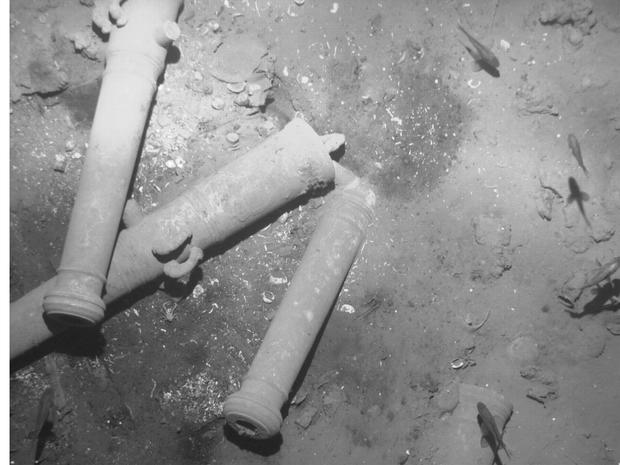
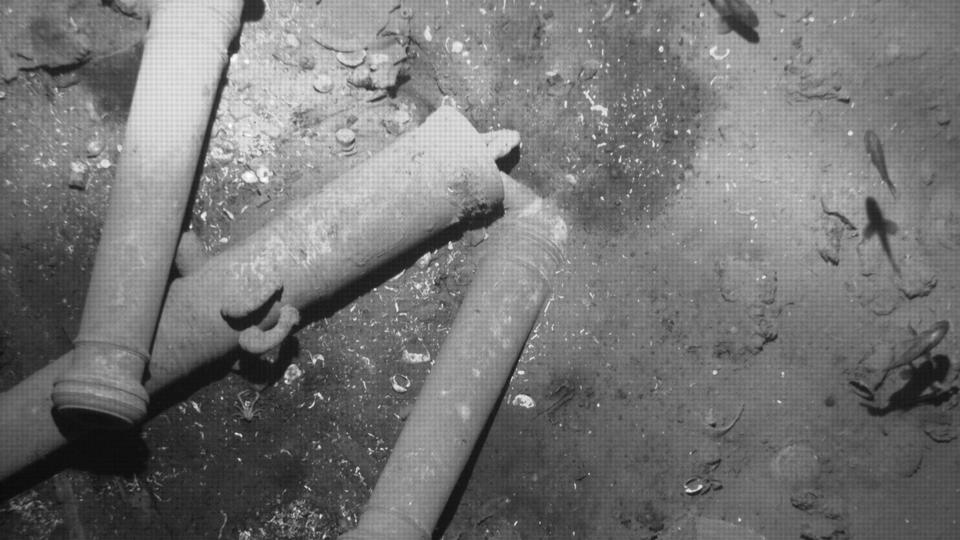
New video shows gold coins and other treasure scattered around a long-lost shipwreck off the coast of Colombia — as well as two other historical shipwrecks nearby, officials said Monday.
Maritime experts consider the wreck of the San Jose to be the "holy grail" of Spanish colonial shipwrecks. President Ivan Duque and naval officials said on Monday that a remotely operated vehicle reached 900 meters below the surface of the ocean, showing new images of the wreckage.
New video shows gold coins and other treasure scattered around a long-lost shipwreck off the coast of Colombia — as well as two other historical shipwrecks nearby, officials said Monday. Maritime experts consider the wreck of the San Jose to be the "holy grail" of Spanish colonial shipwrecks.
President Ivan Duque and naval officials said on Monday that a remotely operated vehicle reached 900 meters below the surface of the ocean, showing new images of the wreckage.
The news agency reported the remotely operated vehicle also discovered two other shipwrecks in the area, including a schooner thought to be from about two centuries ago.
"We now have two other discoveries in the same area, that show other options for archaeological exploration," navy commander Admiral Gabriel Perez said, according to Reuters.
Colombia was a colony of Spain when the San Jose was sunk in 1708, and gold from across South America, especially modern-day Peru and Bolivia, was stored in the fort of its coastal city, Cartagena, before being shipped back to Europe.
The Colombian government considers it a "national treasure" and wants it to be displayed in a future museum to be built in Cartagena.
Treasure from a 300-year-old Spanish shipwreck will not be used as a form of payment for the recovery of the boat, Colombia's government has said.
"Since we took office we have been concentrating on a solution to avoid the hand-over of part of the sunken patrimony of the San Jose galleon as a payment in kind for the originator of the public-private partnership," Vice President and Foreign Minister Marta Lucia Ramirez said on Monday in a statement, referring to the Swiss company Maritime Archaeology Consultants, which was contracted to carry out the recovery.
The San Jose galleon, thought by historians to be carrying gold, silver and emeralds that would be worth billions of dollars today, sank in 1708 near Colombia's Caribbean port of Cartagena. Its wreckage was located in 2015.
The galleon and its recovery have been the subject of decades of litigation.
The remains of the shipwreck are part of the country's archaeological heritage and cannot be handed over, the statement added, meaning Maritime Archaeology Consultants cannot execute a recovery contract and receive part of the treasure as payment.
An email to the company seeking comment was not immediately returned. Colombia will put together a new contract for the galleon's recovery, the statement said.
El 5 de octubre de 1804, a 30 millas náuticas del cabo de Santa María de Portugal, en actuales aguas internacionales, la Marina Real británica hundió a cañonazos la fragata Nuestra Señora de las Mercedes.
El inesperado ataque se llevó a cabo violando el Tratado de Paz de Amiens —suscrito entre Francia, España y Reino Unido— de 1802. Murieron 275 tripulantes, mientras un enorme cargamento de oro, plata y cobre se hundía en el mar a unos 1.130 metros de profundidad.
En 2007, la compañía cazatesoros Odyssey Marine Exploration expolió 600.000 monedas de la carga, aunque España terminó recuperándolas en los tribunales estadounidenses. Sin embargo, como revelan las actas del congreso internacional Archaeology: Just Add Water, celebrado en Varsovia en 2019, ahora hechas públicas, los expoliadores solo se centraron en las monedas y abandonaron todo lo demás.
Dejaron intacto el segundo tesoro de la Mercedes. Centenares de sus piezas ya han vuelto a España, están siendo restauradas y se expondrán en noviembre. Nunca se había hecho una excavación a tal profundidad.
En 2014 el Museo Nacional de Arqueología Subacuática, ARQUA, (Cartagena), dependiente del Ministerio de Cultura, inició un proyecto para que España excavase científicamente el pecio. Se trataba de un reto nunca acometido por ningún país.
Los dos o tres casos anteriores en los que se había bajado por debajo de los 500 metros se habían limitado a filmar y fotografiar. El plan del museo planteaba que era perfectamente posible hacerlo si se aunaban esfuerzos.
Se invitó al el Instituto Español de Oceanografía (IEO) y se cursó también invitación a la Armada como institución observadora. Aceptó.
En verano de 2015, zarpó de Cartagena la primera expedición conjunta a bordo del buque oceanográfico Ángeles Alvariño, del IEO. Al llegar a la vertical del pecio, la primera inmersión del ROV (siglas en inglés de vehículo operado remotamente, un complejo equipo submarino teledirigido), localizó exactamente el corazón de la nave.
Pero las pantallas de los ordenadores señalaban que los restos estaban muy dispersos debido a la explosión de 1804 y a las técnicas destructivas de Odissey. Se tomaron miles de fotografías y vídeos. La campaña se repitió en las de los veranos de 2016 y 2017.
A esta última se sumó el Centro de Investigaciones Científicas (CSIC), que aportó el buque Sarmiento de Gamboa. Los minisubmarinos detectaron esta vez “un tesoro más importante: miles de objetos enterrados bajo el fondo marino que muestran, en parte, cómo era la vida a principios del siglo XIX: de cañones de bronce a vajillas de oro y plata”. “Su valor científico y museístico”, como señala el informe del director del ARQUA y del proyecto, Iván Negueruela, “es incuestionable”.
El estudio recién publicado por la Universidad de Varsovia titulado The Mercedes 2015–2017 Project: Exploration and Excavation of the Wreck Nuestra Señora de las Mercedes (1.138 m depth) (Proyecto Mercedes 2015-2017.
Exploración del pecio de Nuestra Señora de las Mercedes (1.138 metros de profundidad) señala que el objetivo de las tres campañas fue definir “la extensión del yacimiento, documentar las condiciones en que quedó este tras el saqueo, realizar un mapa arqueológico de los materiales que permanecen bajo el lecho marino y la extracción de algunos de los materiales detectados”.
In 1941, the SS Gairsoppa, a British cargo ship, was sunk by a German submarine. Only one member of the crew survived, with dozens perishing in the attack.
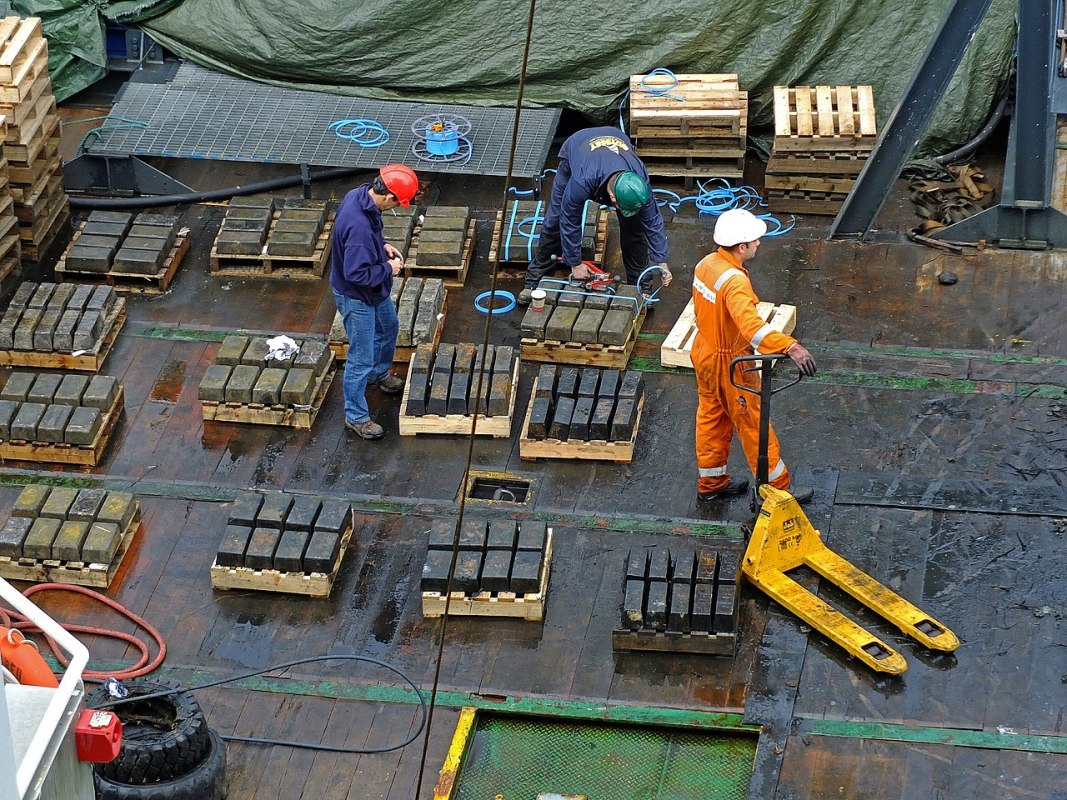
What was left of the vessel remained below the waters of the Atlantic off the coast of Ireland for decades. In 2013, Odyssey Marine discovered the remains of the ship — including a massive haul of silver that was on board when the Germans attacked.
That trove of silver wasn’t the only valuable thing found in the shipwreck, however. A new report from Allyson Waller at The New York Times focuses on another significant discovery made in the wreckage: a number of letters — more than 700 in total — that offer an intimate and personal glimpse into life during wartime.
As you might guess, letters that have been in an underwater space for 70-odd years aren’t in the best condition. The Times article focuses on the work conservators are doing to reconstruct the letters, so that we can learn more about who wrote and received them and properly honor those whose lives were lost.