

Related posts
Prep begins before masts cut from explosive wreck

By Craig Buchan - BBC
Preparations are under way for the removal of masts from an explosives-filled World War Two ship in the Thames Estuary. Vessels have been seen near the SS Richard Montgomery wreck site, which has been visible from Kent and Essex since the US military vessel sank in 1944.
The Department for Transport previously confirmed work would start in September to remove the masts in case they fell on to and detonated 1,400 tonnes of explosives that remain within the ship.
The salvage project, first announced in 2020, is expected to cost £9.5m.
Robin Nixon, who can see the masts from his home on the Isle of Sheppey, has begun livestreaming preparatory works online.
He said he had "got hold of a good telescope for this but it wasn't powerful enough", so had used "AI image enhancement" to zoom in closer.
"I wanted to watch the works myself and, because I'm a hobbyist, everybody else gets a chance to watch it as well," he told the BBC.
In Auction News
Gold watch from the Titanic sold for $2.3 million !

By Emily Mae Czachor - CBS News
A pocket watch that once belonged to one of the Titanic's most renowned passengers has sold at an auction for $2.3 million — a record price for memorabilia related to the historic shipwreck, according to the auction house.
The 18-carat gold watch was gifted to its original owner, Isidor Straus, by his wife, Ida Straus, for his 43rd birthday,said Henry Aldridge and Son, the auction house that sold it on Saturday. It was recovered from his body after the Titanic sunk in the North Atlantic in April 1912.
Isidor Straus was an American businessman and politician who owned the Macy's department store in New York City. He and his wife were first-class passengers on the Titanic during its maiden voyage from England to New York, and the couple are remembered for their final act of selflessness while on board.
Witnesses who survived the Titanic wreck said afterward that the Strauses were offered two seats on a lifeboat once the ship had struck an iceberg, according to the U.K. government's National Archives.
But Isidor Straus refused his seat, instead insisting that it should have been offered to younger men, and Ida Straus followed him, reportedly saying, "Where you go, I go."
According to those archives, Isidor and Ida Straus were last seen standing arm in arm on the deck of the Titanic, before a wave crashed overhead and washed them out to sea.
The Strauses were the ancestors of Wendy Rush, wife of OceanGate founder Stockton Rush, who died in the infamous Titan submersible explosion in 2023 en route to the Titanic wreck site.
In Wreck Diving
Shipwreck mystery solved after nearly 140 years
By Chris Ellis - BBC
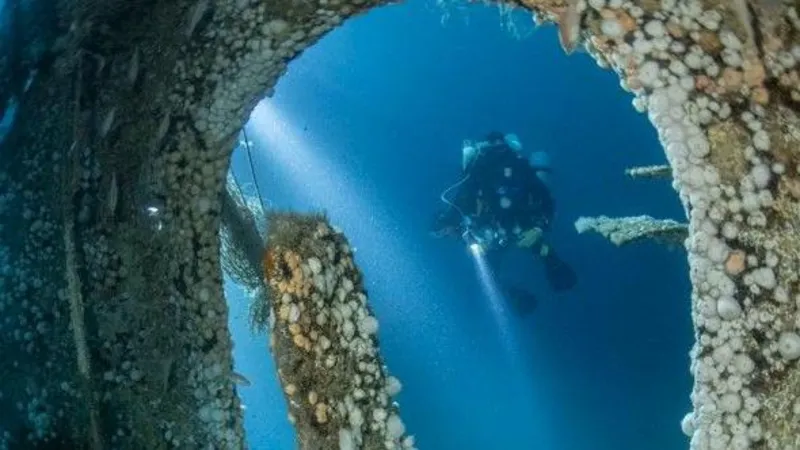
The mystery of a maritime disaster has been solved after experts found a vessel that sank almost 140 years ago. Diver and explorer Dom Robinson identified the SS Nantes, off Plymouth, after examining the wreck site and finding crockery.
Dr Harry Bennett, an expert in maritime history, said the dive team had found "the underwater archaeological equivalent of a needle in a haystack". Mr Robinson said solving the mystery ensured those who died were not forgotten.
In November 1888, the SS Nantes, which was operated by the Cunard Steamship Company, collided with a German sailing vessel, the Theodor Ruger, said Dr Bennett. The crew spent "several hours" trying to save their ship, the honorary associate professor in history at the University of Plymouth said.
"They used mattresses to plug the gap which had opened up in the hull of the SS Nantes," he said. "[The ship sank] with the loss of a substantial number of the crew. There were some 23-odd fatalities. There were three survivors.
" Bodies from the wreckage washed ashore at Talland Bay and Looe, in Cornwall, and "locals were confronted by this picture of horror, pieces of ship together with bodies," he said.
Afterwards the "wreck was essentially lost, obviously you're dealing in a period with no satellite navigation," said Dr Bennett. He added while the crew tried to save the ship it "drifted for several hours, before it finally made its way to the bottom, sadly, with many of its crewmen on board".
He said the wreck was lost until a local dive team identified it in 2024. Mr Robinson, who has been diving for about 35 years, said he heard about the unidentified wreck from the UK Hydrographic Office.
In Museum News
Public to see Arran shipwreck pottery for first time
From BBC
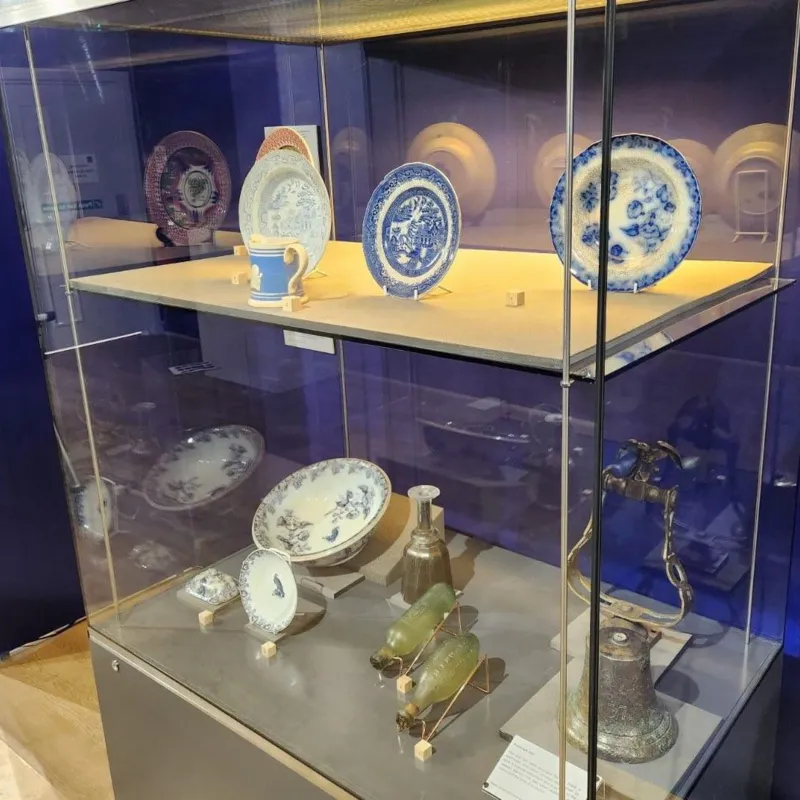
Pieces of rare 19th Century pottery - which were recovered from a shipwreck off the coast of Arran - are to go on display for the first time. The ceramics were discovered by diver Graeme Bruce, 65, from Oban in the wreck of the SS Eagle, a mile from Lamlash Bay, last July.
The ship - an early steamboat - was heading to Ireland when it sank in 1859 after colliding with another vessel. Eleven people died. Several artefacts made by the Glasgow-based Bell's Pottery will appear in the Scottish Maritime Museum's Summer exhibition which opens in Irvine on Saturday.
Graeme, a retired engineer, and the team of seven other divers, were 53 metres beneath the surface when they spotted the treasure trove of rare pottery. Most of the ship had rusted away but the cargo was lying well preserved in the mud. In the 19th century, Glasgow was a major centre for the production of ceramics and rivalled the Staffordshire potteries.
Bell's Pottery is recognised as arguably the most internationally significant producer of ceramic wares in Scotland at the time. The haul on the SS Eagle is an unprecedented example of an almost intact cargo of 19th century Glaswegian ceramics.
The SS Eagle's ceramics cargo was destined for trade and exhibition in Londonderry. Exhibits include seven plates and a bowl, a teapot lid and two bottles which still hold 'sparkling water' in addition to a decanter and bell. Eva Bukowska, exhibitions and events officer at the Scottish Maritime Museum, said: "We are really excited to host the first showing of these fascinating ceramics recovered from SS Eagle.
"The vessel also has a significance for the museum as it was built by Alexander Denny, who was the brother of William Denny, whose test tank is now home to our second collection in Dumbarton."
Dutch shipwreck discovered off Australian coast
By Kameryn Griesser - CNN
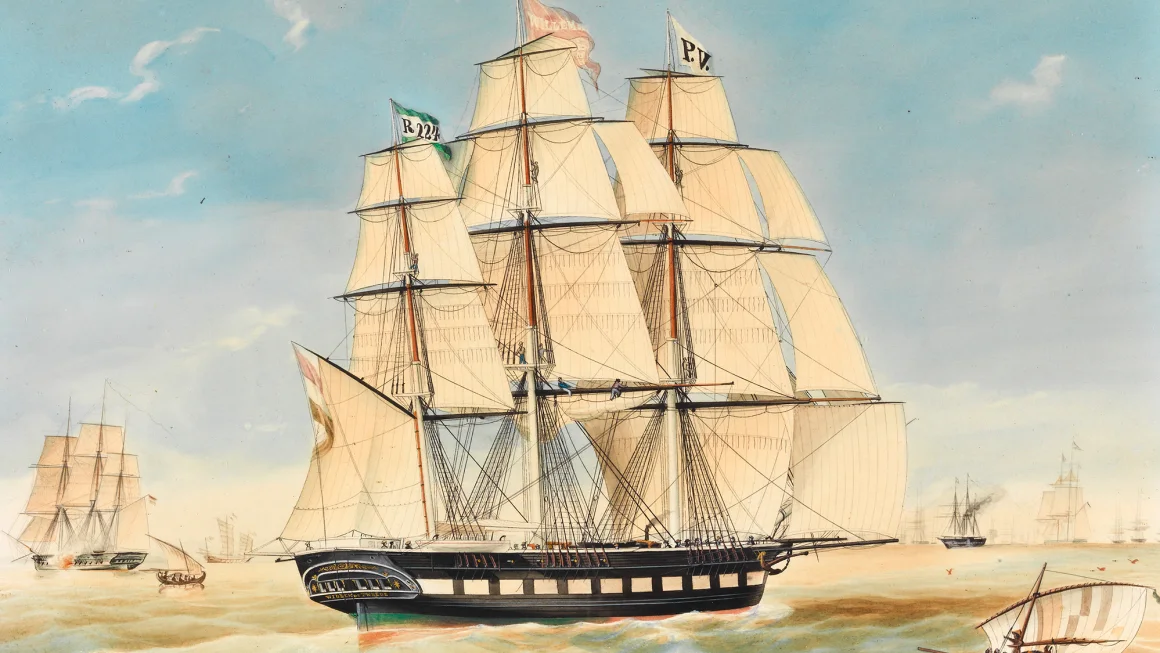
Beneath the rough waters of South Australia’s coast, marine archaeologists say they have discovered the lost Dutch merchant vessel Koning Willem de Tweede, which sank nearly 170 years ago.
The wreck captures a tragic moment in maritime history during the 19th century Australian gold rushes. The 800-ton sailing ship was beginning its journey back to the Netherlands in June 1857 when a severe storm capsized the vessel near the port town of Robe, according to a news release by the Australian National Maritime Museum.
Two-thirds of the crew drowned. Just days before, 400 Chinese migrants headed for gold mines in Victoria disembarked from the ship. The crew transported the laborers as a “side hustle” for extra money, according to James Hunter, the museum’s acting manager of maritime archaeology. The practice was a common but questionably legal voyage at the time, he said.
While the captain lived to tell the tale and litigate his losses, the bodies of his crew members remain lost in the sand dunes of Long Beach.
However, on March 10, after three years of searching for the site of the wreck, a team of divers supported by the Dutch Ministry of Foreign Affairs and the Netherlands’ Cultural Heritage Agency spotted what they say is the sunken vessel.
“There’s always a little bit of luck in what we do,” said Hunter, who was the first diver to see the ship underwater. “The sand had just uncovered just a little bit of that shipwreck so that we could see it and actually put our hand on it and say ‘we’ve finally got it.’”
Add a comment