HOT NEWS !
Stay informed on the old and most recent significant or spectacular
nautical news and shipwreck discoveries

A look back at shared maritime history
By Alan Hustak
A replica of a 19th-century Hudson River canal class schooner is open to the public at the Old Port this weekend.
Unlike many of the graceful tall ships that often sail into the harbour, the Louis McClure is a stubby little blue-collar working boat.
It resembles boats that used to carry heavy cargo between Montreal and New York City down the Richelieu River, through Lake Champlain and along the Hudson River canal system.
"Think of them as a tractor-trailers with sails," said the Louis McClure's first mate, Erick Tichonuk. "Before the railways, they travelled the historic corridor between Trois Rivières, Montreal and New York City."
The boat arrived in Montreal from Quebec City on Thursday to raise awareness about Quebec and New England's shared maritime history.
Full article...
Ancient wooden boat entombed beside Egypt's Great Pyramid

From PR-Inside
Archaeologists and scholars will excavate hundreds of fragments of an ancient Egyptian wooden boat entombed in an underground chamber next to Giza's Great Pyramid and try to reassemble the craft, Egyptologists announced Saturday.
The 4,500-year-old vessel is the sister ship of a similar boat removed in pieces from another pit in 1954 and painstakingly reconstructed.
Experts believe the boats were meant to ferry the pharaoh who built the Great Pyramid in the afterlife.
Starting Saturday, tourists were allowed to view images of the inside of the second boat pit from a camera inserted through the a hole in the chamber's limestone ceiling.
By McKibben Jackinsky
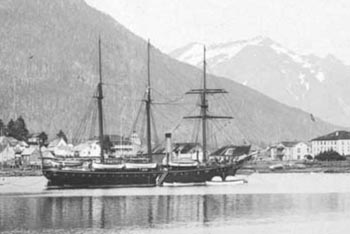
"You are helping write history today," shipwreck historian and dive team leader Steve Lloyd of Anchorage told a gathering of more than 130 people aboard the USCGC Hickory Monday afternoon.
The significance of the moment was not lost on representatives from the Pratt Museum, archaeologists, historians, researchers, teachers, writers, Coast Guardsmen and others surrounding a collection of items spread across the Hickory's deck.
Before them were pieces from the Torrent, a privately owned 141-foot, 641-ton ship, that sank after its oak hull crashed against the jagged rocks of Bird Reef the morning of July 15, 1868.
Just off Dangerous Cape, Bird Reef is in southern Cook Inlet, near Port Graham.
From Blueflipper
With the opening of dive sites of once forbidden areas to divers, Greece is becoming a haven for looters.
When it was first proposed, it seemed like a good idea: open up the Greek seas to divers and create a paradise for tourists underwater.
Those who backed the law never thought of it as a windfall for looters, nor did it occur to them that it might put the acquisition policies of museums under further scrutiny.
But the Greek parliament's unprecedented step last month to allow divers access to the once forbidden coastline has raised fears that archaeological riches preserved in an untouched world will be taken by ruthless thieves.
"There are treasures in our seas," says Dimitris Athanasoulis, president of the Archaeologists' Association. "This will open the floodgates to smugglers.
It'll serve to encourage them at a time when evidence shows the trafficking of antiquities is on the rise."
Peter the Great's ship discovered in Baltic sea
By Ali Nassor
Archaeologists have discovered the wreck of a Russian battleship designed by Peter the Great in Amsterdam and which played a key role in a 1719 victory over Sweden in a war on the Baltic Sea.
A team including professional archeologists, divers, a film-producer and a cameraman located the 54-gun “Portsmouth” battleship at a 12-meter depth in the waters off Kotlin Island near Kronshtadt last week during final stages of a three-month mission as part of the “Secrets of the Sunken Ships” project.
The team was back on dry land on Tuesday.
We are currently lobbying for an immediate raising of the wrecks to serve both as a museum and as objects for research,” said Andrei Lukoshkov, head of the research team, adding that the discovery is unique because the ship, which was designed by Peter the Great, disappeared with another ship, the “London,” on the way back to the port of Kronshtadt.
Read more...

By Matt Jackson
The wreck of the first British-made submarine is in Dire straits at the bottom of the Solent, according to a new report.
English Heritage says the A1, built in 1903 and sunk twice with the loss of 11 submariners by 1911, is in 'significant decline'.
Divers have been blamed for speeding up the natural decay of the historic vessel by visiting the site and taking items away with them.
The English Heritage 'At Risk Register' also lists Gosport Railway Station and nine other sites in the area as badly needing help to prevent them falling into disrepair.
The Vickers-built A1 lies two miles south of Chichester harbour and is in such a poor condition naval experts fear for her future.
George Malcolmson, archivist at the Royal Navy Submarine Museum in Gosport, said: 'It stands to reason that if the wreck is lying under the sea it will rust, but there have been other problems with her.
Hungarian treasure hunters seek help in recovery of Danube shipwreck
By All Hungary News
Archaeologists searching the Danube for important shipwrecks have found what they believe may be the vessel which carried Queen Mary of Hungary (Mary of Habsburg) to Vienna after the disastrous Battle of Mohács against the Ottoman Turks in 1526.
According to stop.hu, the 15-meter-long wreck, which is buried in gravel and mud in the Danube "bend" north of Budapest, may contain gold and jewelry, and the team which located it is currently looking for sponsors to excavate the site.
Attila J. Tóth, associate of the National Office of Cultural Heritage, said that a team of 30 divers started scouring the Danube Bend for historical relics buried under the mud a few months ago.
Initial funding of $10,000 (€6,600) was provided by the American Hungaria Nostra Foundation, which allowed for the purchase of boats and a sonar device.
To excavate the wreck, the team estimates it needs a further Ft 5 million (€21,000).
While sponsors could benefit from an association with the enterprise, they should not expect any treasure, as any relics found would belong to the Hungarian state.
By Tim Chitwood
Columbus' National Civil War Naval Museum slowly is recapturing the USS Water Witch, the Union warship Confederate commandos seized on June 3, 1864, in Georgia's Ossabow Sound.
The museum is building a replica from the waterline up. And when the ship's up and running in place, paddlewheels will spin, smoke will drift from its stack and sails will blow in the wind.
Built in 1851, the Water Witch had both sails and steam -- masts about 90 feet tall, a 5-foot-wide smokestack rising 40 feet from a deck that at its widest spanned 24 feet between twin paddlewheels.
Each side paddlewheel was 6 feet wide and in a wheelbox 25 feet tall. The ship was 160 feet long.
It's now taking shape again outside the 1002 Victory Drive museum. The masts and smokestack are up; the hull is framed out and filling in; the paddlewheels await installation.