HOT NEWS !
Stay informed on the old and most recent significant or spectacular
nautical news and shipwreck discoveries

Zoo's shipwreck replica offers glimpse into explorers' past
By Tom Galusha
In 1779, English sailors attempted to hold a Hawaiian chief hostage until a stolen boat was returned.
Fearing for their king, Hawaiians crowded the beach everywhere, the men carrying weapons and wearing war mats. To avoid bloodshed, the captain of the Resolution gave up the "enterprise."
But sailors fired on canoes attempting to leave the bay, apparently without the captain's orders. Learning that a chief had been killed, enraged Hawaiians menaced the captain, who fired his pistol.
The first barrel, loaded with small shot, could not penetrate the Hawaiian's mat armor; the other barrel, loaded with ball, killed a Hawaiian.
The incensed natives attacked. At the water's edge the captain called out for the men to cease firing.
Stabbed in the back, he fell with his face in the water. This was the tragic end of Capt. James Cook, who made the European discovery of Hawaii, on his third voyage.
Interest galore as shipwreck whisky sells for £2,200
From The Press and Journal
A bottle of whisky recovered from the wreck of a cargo ship which inspired the film Whisky Galore ! sold at auction yesterday for £2,200 to a teenager fascinated by its remarkable story.
The bottle of Ballantine Scotch whisky was expected to fetch about £1,500 but strong competition from bidders pushed its price up.
The bottle was one of around 240,000 which sank with the SS Politician after she ran aground off Eriskay in 1941.
The sinking inspired the novel Whisky Galore ! and the 1949 Ealing comedy of the same name, ensuring the tale of how the islanders raided a shipwreck for her cargo of whisky entered into legend.
Shipwreck jolted Alaska salmon industry
By Wesley Loy
A century ago this year, an iron-hulled, three-masted sailing ship departed the Southeast Alaska fishing town of Wrangell laden with 5,260 cases of salmon. Star of Bengal: 111 people died when tugs failed as ship was leaving Wrangell
Doubtless no one aboard the ship, which carried 21 crewmen plus 117 mostly Asian cannery workers heading home after the fishing season, imagined their voyage to San Francisco would turn into the worst tragedy ever seen in the grand history of the Alaska salmon industry.
The bark Star of Bengal belonged to the Alaska Packers' Association, the state's dominant canned salmon producer at the time.
Two steam-powered tugs, the Hattie Gage and the smaller Kayak, began towing the ship out of Wrangell toward the open sea about 8:20 a.m. on Sept. 19, 1908. The barometer readings indicated fine weather.
Climate change could ruin Florida's $5.5 billion reef economy
From Los Angeles News
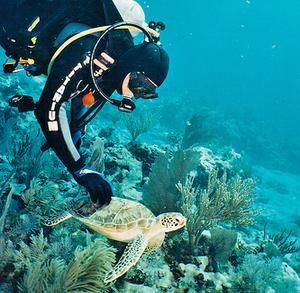
A new analysis of economic activity generated by Florida's coral reefs finds that some 70,000 jobs and more than $5.5 billion in business in the state could disappear if climate change destroys the reefs.
"A business-as-usual approach to climate change could mean a lot less business for Florida," said Jerry Karnas, Florida project director at Environmental Defense Fund, which commissioned the report, "Corals and Climate Change: Florida's Natural Treasures at Risk."
Florida encompasses the only shallow water coral reefs in the continental United States. Like coral reefs worldwide, Florida's reefs are besieged by environmental problems.
For instance, a federal government study released in November confirms significant ocean acidification across much of the Caribbean and Gulf of Mexico. As oceans absorb the greenhouse gas carbon dioxide from the atmosphere, they become more acidic, reducing the ability of corals to produce their calcium carbonate skeletons.
This affects individual corals and the ability of the reef to maintain a positive balance between reef building and reef erosion.
Offbeat investments on rise amid stock concerns
From Wesh
With the stock market struggling, some people have found new ways to invest their money.
Daniel Sedwick is a rare coins and artifacts dealer in Winter Park. He said business is good, despite the recession. He specializes in artifacts and shipwreck coins.
Sedwick said that the sinking economy is making some people turn to more offbeat investment options because specialty items tend to hold their value.
"It’s dangerous to think of it as an investment, but the fact is, it’ll never be worth zero," Sedwick said. "It’s not like stock -- where you invest in it and one day you wake up to find the markets crashed and you have nothing."
Financial planner Jason Chepenik said he has heard of people investing in rare artifacts, but he does not recommend it. He said people must continue to think long-term with their investments.
Babylon receives praise in US media
From Hurriyet Daily News
More than 20,000 people have visited the ’Beyond Babylon’ exhibition at the New York Metropolitan Art Museum since it opened two weeks ago. The exhibition has received positive reactions in art circles in the country.
An exhibition, "Beyond Babylon: Art, Trade and Diplomacy in the Second Millennium B.C.," on display at New York Metropolitan Art Museum, featuring the artifacts found in 1982 at the Uluburun site off the coast of Kaş, alongside artifacts from museums from the Near East and Turkey, has had 20,000 visitors in two weeks.
The exhibition, sponsored by the Turkish-American Business Council, or TAIK, opened Nov. 18 with contributions from the Doğan, Doğuş, Koç and Sabancı groups.
At a press conference held in Turkey before the opening of the exhibition, TAIK Chairman Haluk Dinçer said, "For our Council, there could be no more appropriate cultural and artistic activity than the Beyond Babylon exhibition because this priceless cultural legacy is directly related to trade and diplomacy in parallel with Turkey's own ongoing reforms at the moment."
We all live in a solar submarine

By Keith Barry
If playing with electricity underwater doesn't seem crazy enough, a Swiss company is suggesting an even more mind-boggling combination: the world's first solar submarine. We wonder if they've designed windows that open.
Energy giant BKW-FMB is looking for investors ready to pony up almost $9 million to start work on Project Goldfisch, which consists of a floating Goldport "power island" of photovoltaic panels that will channel electricity to the submersibles running below.
Since the price tag on your average nuclear-powered Virginia-class sub starts at around $2.5 billion, we suspect BKW will spend its investment on a newer copy of Photoshop. The laughable renderings the company provided were obviously worked out on an Amiga.
As for the sub itself, someone at BKW has an incredible sense of humor and a penchant for late 70's Bond films or the company is anticipating a rise in the number of villains needing awesome hideouts. Either way, we're ready to jump in the submersible Lotus Esprit and pop a Carly Simon cassette in the tape deck.
The company says the sub would draw power from a floating solar array of five generators, each with 430-square feet of panels. A GPS tracking system would tell the sub where to surface when it needs to recharge, which makes us wonder — would a dead Goldfisch float belly-up ? Once charged, BKW says, the sub could dive to depths approaching 1,000 feet and reach a top speed of 5 knots (not quite 6 mph).
Keyport museum's deep-sea vessel in shipshape form

By Ed Friedrich
The Trieste II was anchored in a parking lot, not in metal-eating saltwater.
Yet salty air off Dogfish Bay and red duct tape were ravaging the deep submergence vessel. A fixture at the Naval Undersea Museum since the facility opened in 1991, the Trieste II was rusting away.
A Port Orchard company, with $80,000 from the Navy, is reclaiming the historic vessel. A two-month renovation will wrap up in a couple weeks.
“It’s gone places they don’t build equipment to go anymore,” said Pat Spicer, project leader for Q.E.D. Systems. “It’s as interesting as it gets, but it’s a huge, huge challenge.”
Museum visitors aren’t likely to give the Trieste a second glance. It looks like a giant propane tank with little orange propellers, but its feats are impressive.
Certified to operate 20,000 feet under the sea, it discovered and photographed debris from the submarine USS Thresher, which sank in the Atlantic Ocean with all hands on board on April 10, 1963.