HOT NEWS !
Stay informed on the old and most recent significant or spectacular
nautical news and shipwreck discoveries

-
Shipwreck gold linked to Ga.
- On 19/06/2009
- In Treasure Hunting / Recoveries
By Alan Sayre - Associated Press
A steamship that sank off the Louisiana coast during an 1846 storm has produced a trove of rare gold coins, including some produced at a mostly forgotten U.S. mint in the Georgia mountain town of Dahlonega, coin experts say.
Last year, four Louisiana residents salvaged hundreds of gold coins from the wreckage of the SS New York in the Gulf of Mexico, said David Bowers, co-chairman of Stack's Rare Coins in New York.
"Some of these are in uncirculated or mint condition," Bowers said, predicting the best could bring up to $100,000 each at auction.
Of particular interest are gold pieces known as quarter eagles and half eagles, which carried face values of $2.50 and $5, respectively.Those coins were struck at mints in New Orleans, Charlotte and Dahlonega. The Charlotte and Dahlonega mints operated from 1838, when the first significant U.S. gold deposits were found in those areas, until the start of the Civil War in 1861, said Douglas Mudd, curator of the American Numismatic Association's Money Museum in Denver.
The Dahlonega mint produced 1.38 million gold coins, while another 1.2 million were minted in Charlotte.Most disappeared when the federal government confiscated gold coins held by individuals, banks and the U.S. Treasury in 1933 and melted them into gold bars as the country abandoned the gold standard.
"Relatively speaking, they are rare," Mudd said of the Charlotte- and Dahlonega-minted coins. "The mints were set up to take advantage of the resources there."
-
Roman shipwreck find
- On 18/06/2009
- In Underwater Archeology
From AFP
A shipwreck believed to date back to Roman times was found at the bottom of Montenegro's Boka Kotorska bay, officials said on Tuesday.
"We believe we have found the wreckage of a ship that could have been used to transport goods," Montenegro's regional Cultural Heritage Preservation Institute said in a statement.
Officials refused to reveal the location of the shipwreck until the area was fully secured. The wreckage was found by the crew of the US explorer ship Hercules.Since May, the crew and the ship have been assisting Montenegrin archaeologists to map and discover underwater findings.
The Romans were present in the waters off what is now Montenegro from the year 9 AD till the 5th and 6th centuries AD, before Slavic people inhabited the area.
-
Daring divers come up with anchor from 1964 shipwreck
- On 18/06/2009
- In Wreck Diving
By Kirk Moore - APP
For nearly 45 years recreational divers explored the sunken stern section of the Norwegian tanker Stolt Dagali, lost in a collision in 1964, but only divers Steve and Maureen Langevin of Laurence Harbor knew about the anchor tucked under the starboard side of the wreck.
On Sunday the husband and wife and their team recovered the 5,000-pound piece with help from a Belmar scallop boat, and brought it back to Shark River Inlet.This morning the anchor should be on its way via flatbed trailer to the Maureen Langevin said.
"It's a big coup for them to have retrieved it," said museum founder Deborah Whitcraft. "If it weren't for the efforts of these divers to bring artifacts back for display, the non-diving public would never see it."
The Stolt Dagali was a 582-foot tanker specialized for carrying its cargo of vegetable oil and industrial solvents when it collided at 2 a.m. on Thanksgiving Day morning with Shalom, a nearly new Israeli luxury liner carrying more than 1,000 passengers and crew.The impact sheared off the aft third of the tanker, killing 18 crew members.
-
Divers go looking for lost Russian Imperial gold in lake Baikal
- On 17/06/2009
- In Treasure Hunting / Recoveries

From Mos News
A deep diving expedition is looking for the legendary gold of the Russian Empire that the counter-revolutionist leader Kolchak allegedly submerged in lake Baikal in the early 20th century.
The operation involving several Mir deep submergence vessels began on Monday, Interfax reports, and continues on Tuesday in spite of heavy rain and wind.
Admiral Kolchak, the leader of the anti-Bolshevik army in Siberia, resisted the Red Army during the civil war that began after the Communist revolution of 1917.
In August 1918 Kolchak's army got possession of half of the Russian Empire's gold reserve, or some 700 million gold rubles.The gold was shipped further to the west on a train, but much of it disappeared on the way. According to some historians, large portions of the treasure were hidden in the taiga.
One of the versions alleges that the gold sank in lake Baikal after a train crash, and this is the version being followed up by the divers.
Lake Baikal is one of the world's largest pure water lakes, with a coastline longer than 2,000 km, and a maximum depth of 1,637 m. -
What lies beneath
- On 15/06/2009
- In Wreck Diving
By Brett Johnson - Ventura County Star
Peel away the sea’s curtains, peer deep into its inky depths with modern technology’s might, and the past emerges in bits and pieces, though shifting sands and fickle currents that can just as easily push it into dark and tricky abysses.
It’s there though, both real and potentially, and right off our coast, tantalizingly close and yet hidden so far in the murk — the now-stilled vices of gold, death, war, sex, Hollywood, Prohibition rumrunners, opium smuggling and guns.
It teases to the days of roaming Spanish galleons, to when ships were kings of commerce and suppliers of news. It ranges from primitive Chumash canoes called tomols used thousands of years ago all the way to a modern airline tragedy.
Some 700 shipwrecks and plane crashes have occurred in the Santa Barbara Channel off our coast from Point Mugu to Point Sal, said Robert Schwemmer, West Coast regional maritime heritage coordinator for the National Oceanic and Atmospheric Administration.About 300 of those happened in and around the Channel Islands.
Read more... -
Pembrokeshire shipwreck chart
- On 13/06/2009
- In People or Company of Interest
From Milford Mercury
Over the centuries the Pembrokeshire coast has been the graveyard of countless shipwrecks, either in fierce storms or the as a result of bad navigation.
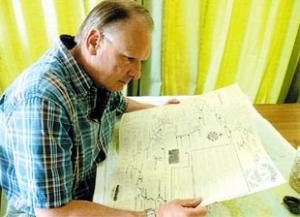
For the last 40 years Jim Hedley Phillips, of Derwen Fawr, Swansea, has been researching Pembrokeshire shipwrecks and has recently put together an updated Pembrokeshire Shipwreck chart, the most comprehensive chart for this area ever produced.
Jim, a well-known shipwreck researcher and diver has more than 2,400 dives under his belt.Off the Pembrokeshire and Gower coast he has found more than 40 undiscovered shipwrecks. Within his first year of diving Jim discovered two sunken vessels off Pembrokeshire.
His shipwreck chart shows more than 200 wrecks with vessel names, dates and even cargo, some of them not published before.
One of Jim’s most popular stories is about a dive to the SS Langton Grange wreck.It yielded 76 bottles of red wine which Jim drank freely before discovering they were worth around £1,500 each.
-
Titanic TRIVIA
- On 11/06/2009
- In Museum News

By Bill Ward - Star Tribune.com
A new exhibit at the Science Museum is the latest indication that interest in the Titanic is unsinkable.Perhaps nothing exemplifies the power of Hollywood more than this country's continuing fascination with the Titanic. Thanks to James Cameron, Leo DiCaprio and Kate Winslet, no other catastrophe in history has such an avid following.
The latest indication: This weekend, the Science Museum of Minnesota brings us "Titanic: The Artifact Exhibition," the second major Titanic showcase in a decade in St. Paul.
For many, it seems, there's no such thing as being "Titantic-ed out." So with the help of Laurie Coulter and Hugh Brewster's book "882 1/2 Amazing Answers to Your Questions About the Titanic" (named for the ship's length) and the Science Museum, we tried to unearth some facts that even the most ardent students of the shipwreck saga might not know.
More to read... -
Baltic Sea divers find wreck of Soviet submarine
- On 10/06/2009
- In World War Wrecks
By Karl Ritter - Associated Press
After a decade-long search, a team of Baltic Sea divers has discovered the wreckage of a Soviet submarine that sank with dozens of sailors aboard during World War II, one of the divers said Tuesday.
They found the S-2 submarine near the Aland Islands between Sweden and Finland in February but only announced it Tuesday because they wanted to confirm the identity of the vessel, team member Marten Zetterstrom said.
He said all 50 crew members died when the vessel exploded in 1940, probably after hitting a mine. He declined to give the exact location.
"I think it's been 10 years since people started searching. I've been part of it for four-five years," Zetterstrom said.
Markus Lindholm, an Aland-based expert who studied pictures of the wreck, said the claim appeared to be true.
"According to all available sources no other submarine has sunk in those waters," said Lindholm, curator of maritime archaeology at Finland's National Board of Antiquities.
The submarine was last spotted at surface level by a lighthouse keeper on the Market island, west of the Aland archipelago, Lindholm said. He said the keeper's notes of the incident have been preserved and describe how the vessel headed north before diving and entering a Finnish minefield, after which an explosion was heard.
Lindholm said pictures showed the front of the submarine was missing, apparently torn off by an explosion.
"The mine must have hit the submarine hull near the torpedo tubes and then the whole thing blew up," he said.
Zetterstrom said the divers had informed Swedish and Russian authorities about the discovery.
Swedish Defense Ministry spokesman Mikael Ostlund said the ministry had not had a chance to confirm the claim.
Anatoly Kargapolov, a spokesman at the Russian Embassy in Stockholm, confirmed that the embassy had been informed about the submarine but added that there had not been "any official reaction from Moscow."