HOT NEWS !
Stay informed on the old and most recent significant or spectacular
nautical news and shipwreck discoveries

By Prega Govender - Times Live
A treasure trove has been lying untouched 7m underwater along the Cape coastline for the past nine years.
Priceless artefacts, including Chinese and Japanese porcelain, textiles and earthenware from the wrecks of two ships that sank more than three centuries ago, are scattered on the ocean floor about 500m south of the entrance to the Milnerton lagoon.
Now, three treasure hunters - Graham Raynor, Michael Barchard and Christopher Byrnes - in their early 60s are desperately waiting to be granted shipwreck permits by the South African Heritage Resources Agency to continue excavating the wreck of the Oosterland as well as its sister ship.
If granted, this would be among the first batch of permits issued since the heritage agency controversially banned historic wreck salvaging in 2001.
CSS Appomattox, steamer torched in 1862
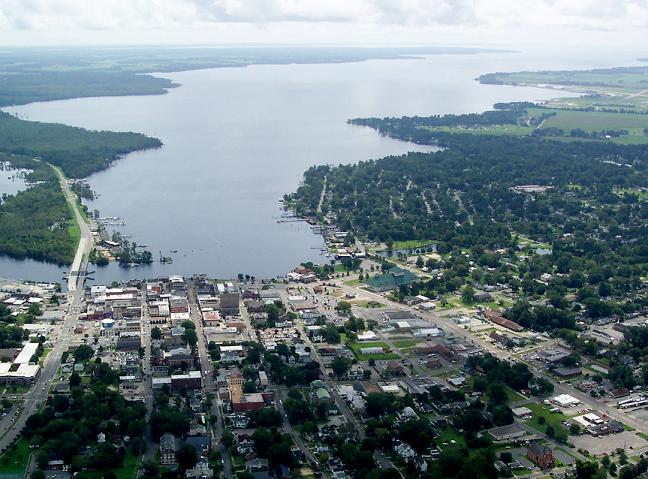 From Carolina Neswire
The CSS Appomattox went down in flames in 1862 as her Confederate crew set her ablaze while fleeing Union forces.
A team of volunteer divers has located the Civil War shipwreck and its identity has been confirmed by the Underwater Archaeology Branch, N.C. Office of Archives and History in the North Carolina Department of Cultural Resources.
A silver-plated spoon inscribed with “J Skerritt” discovered by the divers was critical to establishing the identity of the wreck.
The volunteer divers knew that the Appomattox crew was on loan from the Confederate ironclad Virginia. Upon searching the Virginia’s crew list, reference was found to sailor James Skerritt.
The divers turned the research over to the state’s underwater archaeologists along with the spoon.
“We were searching for about 10 years,” recalls Philip Madre, who led the team that located the wreck in the . “In August 2007, we found the boat and the James Skerritt spoon.” Madre had heard of the shipwreck when growing up in the area.
His team included his son, Jason Madre, Jason Forbes and Eddie Congleton. They had worked on seven other boats earlier only to learn from Underwater Archaeology Branch experts that none of them was the Appomattox.
“When we found this one with the screw propeller and shaft, we felt this one could be it,” Madre said.
Discoverer of Titanic to speak at Bloom U
By Melissa Farenish - The Daily Item
Oceanographer Dr. Robert Ballard never grew up. The 67-year-old, best known for his discovery of the R.M.S. Titanic shipwreck in 1985, has declared himself to be “still a kid.”
In a recent telephone interview, an enthusiastic Ballard described his 50-year career exploring the sea. “I’m most known for the Titanic and the Bismarck shipwrecks but that’s a small part of my career,” Ballard said.
Ballard, now a professor of oceanography at the University of Rhode Island, veered the conversation away from his shipwreck discoveries.
Instead, he highlighted his discoveries of ocean hydrothermal vents on the ocean floor, and life forms on the deep, sun-deprived ocean floors.
Part of the allure of being a scientist is deconstructing every theory he ever learned in school.
Rum runners and torpedo bombers at Channel Islands National Park

By Kurt Repanshek - National Parks Traveler
Who would have figured that Channel Islands National Park has ties to rum runners ? Or that a World War II torpedo bomber lies beneath the waves at the park that is set off the California coast ?
In December if you're in the vicinity of Santa Barbara, California, you'll be able to learn more about these and other historic shipwrecks and submerged aircraft that rest on the seabed around the Channel Islands during a lecture series titled "From Shore to Sea."
The presentation, set for December 8 and December 9, will be delivered by Channel Islands' sanctuary and park cultural resource experts Robert Schwemmer and Kelly Minas.
They will discuss two recently explored wrecks off Anacapa Island—a mysterious shipwreck of a possible prohibition era rum runner and a sunken World War II era torpedo bomber.
These are among over two dozen wrecks studied around the Channel Islands that document over 150 years of evolving maritime enterprises.
There are an estimated 150 or more shipwrecks thought to exist around the islands as well as submerged prehistoric sites dating back more than 10,000 years, according to park researchers.
Auction house removes USS Arizona artifacts that had been up for bid
By Christie Wilson - Honolulu Advertiser
A partial silver-plated serving set salvaged from the USS Arizona just months after the Dec. 7, 1941, attack on Pearl Harbor is being withdrawn from auction, according to the Ohio auction house that was planning the sell the artifacts.
A spokeswoman for Cowan's Auctions Inc. said today the company "has no intention of selling the silver" at its Dec. 9 auction and is waiting for official notification from the Navy's Judge Advocate General Corps that the artifacts cannot be sold.
Cowan's estimated the potential value of the lot comprising 24 pieces at up to $20,000.
The company received them on consignment from a heir of Navy diver Carl Webster Keenum, who collected the pieces sometime between May 1942 and May 1943 while salvaging ammunition, weaponry and personal items from the devastated U.S. fleet at Pearl Harbor. Keenum died in 1964.
Read more...
Treasure hunter denies search off Dominican coast is halted
From Dominican Today
The famed treasure salvage expert Burt Webber Jr refutes reports that his current project within Dominican territorial waters has encountered friction with the Government in his ongoing operation in the Silver Banks protected area, as Dominican Today published recently.
The treasure hunter also specifies that his current venture seeks to recover artifacts on the sunken Spanish galleon "Solo Dios Gloria" and not the French "Scipion" as the article states.
Webber, who contacted DT just days after the article "Doubts surface as treasure hunter hits it big off Dominican Republic” was published, notes that he’s been conducting salvage operations in the country for 32 years, during which he has “had no problem with any Dominican governmental agency.”
In that regard, the Culture Ministry’s Sub-aquatic Patrimony Office director Wilfredo Feliz on Tuesday confirmed Webber’s assertion that the salvage work continues, and that the agreement to search for the artifacts is in effect.
“There’s a contract between the Dominican Government and Webber’s venture which is in effect, he has the concession for his operations to go about his work.”
Divers warned to treat to war grave with respect
From Kent News
Divers are being warned to treat a wrecked ship where 75 crewmen died with utmost respect, especially as it is an official war grave.
What’s left of HMS Ghurka lays on the sea bed off Dungeness. It sank on February 8, 1917, after hitting a mine laid by a German U-boat.
But it has been subjected to repeated dives, with items being taken and sold to secondhand stores and souvenir shops as nick-nacks.
One magazine has even gone so far as listing it at number 76 in its Top 100 Best Wreck Dives.
Divernet refused to talk to Kent on Sunday, but it did say on its website: “Divers should remember that the heavy loss of life makes this a war grave.”
And holiday-diver.com also warns divers to stay out of the wreck, saying: “Divers will no longer be allowed to penetrate” the Ghurka.
In fact last year the Ministry of Defense finally agreed with campaigners like Christopher Conn, of Folkestone.
Caesar rises: several millennia's artefacts from the bed of the Rhone

By Eloi Rouyer - AFP
In a dark space in a new exhibition at Arles museum in southern France, underwater sounds play over looped video footage of scientists on underwater digs along the Rhone riverbed.
An intrepid team of archaeologists have been diving for 20 years, struggling with poor visibility, strong currents and flipper-nibbling bullhead catfish to bring up the 500 or so objects now being displayed.
In 2007, just when these Indiana Joneses of the water were ready to hang up their wet suits, they bumped into intriguing column fragments, friezes and chunks of mausoleums.
And then they brought up the most extraordinary buried treasure of all: a bust of Julius Caesar.
The find, dated 46 BC, is all the more remarkable for likely being made during the emperor's lifetime and provides the centrepiece for the exhibition organised by Luc Long, head of the French state department for archaeological, subaquatic and deepsea research.
The "unifying theme" in "Caesar, the Rhone for Memory", running to September 2010, is "to maintain the feeling of going on a journey with the archaeologist, following every stage of their work from the site of the digs right up to the restoration and exhibition of the artifacts", says its designer Pierre Berthier.
The collection shows ancient Arles was not only a port and place of passage, but "decorated" and "monumental" says Long, "an ostentatious facade aiming to display Rome's wealth and power".
The most stunning finds are together in the last room of the exhibition that Long calls "the saint of saints".
Alongside Caesar is the 1.8-metre (six-food) marble statue of the god Neptune dating from the beginning of the third century AD, and a bronze satyr with its hands tied behind its back.
"We made new and very beautiful discoveries in 2009," Long said, "which leaves one thinking that we have not come to the end of the reserves that this great natural museum -- the Rhone river -- still holds".
More to read...