HOT NEWS !
Stay informed on the old and most recent significant or spectacular
nautical news and shipwreck discoveries

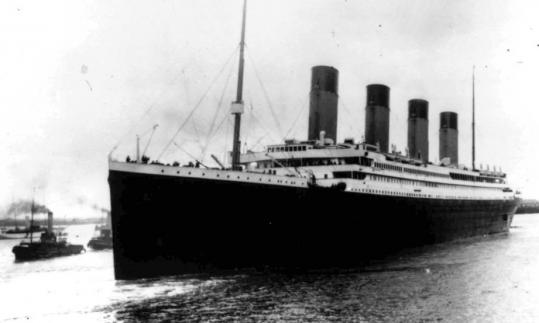
Retracing the Titanic for posterity
By Peter Schworm - Boston.com
A team of top scientists, launching what is billed as the most ambitious and advanced survey of the Titanic, sets out next week to map in photographic detail the entire wreck site, and reconstruct in electronic form the ruins scattered on the seabed.
By melding photographs, high-definition video and computer imaging, scientists — including experts at the Woods Hole Oceanographic Institute — plan to create a three-dimensional computer model that will allow scientists and members of the public to “swim’’ through the wreckage online, as though they were at the site more than 2 miles below the ocean surface.
“We can raise the ship virtually,’’ said James Delgado, the expedition’s principal investigator and president of the Institute of Nautical Archaeology. “The data you can capture is incredible.’’
Scientific research on this scale, Delgado and others said, has never been attempted at these depths, where the pressure is more than 400 times that on earth’s surface, and the temperature never moves far from 39 degrees. There is no sunlight and little life.
Since the wreckage was discovered in 1985, expeditions have focused on recovering relics from the world-famous shipwreck and capturing footage of its sundered bow and stern.
The upcoming 20-day voyage, scheduled to set forth from Newfoundland Sunday, is far more ambitious, a groundbreaking attempt to probe nearly every aspect of the site, from the giant ship’s iconic bow to the colonies of microbes eating away at its iron hull. The mission will also catalog the countless artifacts strewn across the ocean floor.
Using the latest sonar and computer-imaging technologies, researchers will be able to record the site with new detail, clarity, and accuracy. They hope the pioneering effort will provide a blueprint for future deep-water exploration.
“We’ve never had the ability to map with such precision,’’ said David Gallo, a leader of the expedition from the Woods Hole Oceanographic Institution who estimates that as much as 40 percent of the vast site has never been surveyed. “We’re going to treat it like an archeological dig, and that’s never been done before at these depths.’’
Revolutionary find near Yorktown
By Amanda Kerr - The Virginia Gazette
Two years ago a sonar company in Gloucester was testing equipment in the York River when the crew hit the jackpot: an uncharted shipwreck on the river bottom.
“That was quite a surprise,” said David Hazzard, an archaeologist with the Virginia Department of Historic Resources.
The area where the ship was found is well-documented. There have previously been nine documented shipwrecks in the York River associated with the Revolutionary War and the Siege at Yorktown. Seven ships are on the Yorktown side and two are on the Gloucester side.
The latest find is on the Yorktown side, near the fishing pier at the Archer Cottage.
“The proximity to the other shipwrecks suggests this is a Revolutionary War shipwreck and was one of the ships scuttled by Lord Cornwallis as a defensive maneuver against the French fleet,” he said.
Next week two consultants for the Virginia Department of Historic Resources hope to find out for sure when they do a multi-day survey of the ship. The survey is being funded through the Department of Historic Resources Threatened Sites Program.
Among the consultants is John Broadwater, who took part in the 1980s survey and excavation of the Betsy, the scuttled ship that became famous for a cofferdam in the 1980s.
Dropping anchor to engineer a Titanic re-creation
.jpg)
From The Star
It's the world's most famous shipwreck, lying on the sea floor two and a half miles below the surface of the storm-tossed Atlantic Ocean.
But a team of Sheffield engineers have been bringing memories of the Titanic back to life - by creating an exact replica of the mighty ship's anchor.
The project at Sheffield Forgemasters was commissioned by Channel 4 for a new five part series to be shown this autumn, titled We Built Titanic.
Weighing approximately 16 tonnes, the anchor is the result of more than six months of meticulous planning, casting, forging and machining at the company's Brightside Lane base.
Researchers for the series discovered that Forgemasters was the only company in the UK capable of manufacturing the heavy components required for the anchor.
The finished product will be hammer tested - a tradition Edwardian method which uses a 10lb sledge hammer to test its durability - before being transported for display in Netherton, Dudley, where the original anchor was manufactured in the early 20th century.
Roger Richardson, director of the foundry at Forgemasters International Ltd, said: "The anchor has been a very rewarding project to work on.
"The Titanic was the most famous ship in modern history, its story captivates people all over the world and to be involved in recreating part of that story is a once in a lifetime opportunity.
"At Forgemasters we still use some of the traditional techniques and processes that would have been used to make the original anchor, but we combine these with some of the most state-of-the-art technology and equipment in the world."
UNESCO exhibition on global underwater cultural heritage to be held in Bangkok
From India Education Diary
The first ever UNESCO exhibition on global underwater cultural heritage to be held in the Asia-Pacific region will be staged in central Bangkok this month.
The showcase, titled "Saving Our Underwater Cultural Heritage," will be officially opened at 1.30 p.m. on 16 August 2010 at Siam Ocean World Bangkok, on the B1-B2 floors of Siam Paragon shopping centre.
Visitors will journey through stunning underwater heritage scenes from around the world displayed in large format photographs; view a lifesize-scale replica of a Thai shipwreck; explore a showcase of discoveries recovered from the seabed; and enjoy special demonstrations of underwater archaeologists in action in the aquarium tank.
Various interactive play zones will give children the opportunity to experience life as a junior archaeologist.
UNESCO is seeking cooperation from the general public to help fight the trade in underwater cultural heritage and protect our marine environment for generations to come.
Illegal treasure hunting is the biggest threat to our global marine heritage. Over three million shipwrecks and other underwater sites are at risk from treasure hunters who loot the sites to sell artefacts on the black market.
Director of UNESCO Bangkok, Dr Gwang-Jo Kim, said "UNESCO calls upon countries to cooperate to protect the underwater cultural heritage in order for us to pass it on to the next generations to come."
Thai Minister of Culture, HE Nipit Intrasombat, has been invited to co-preside over the launch, along with the Director of UNESCO Bangkok, Dr Gwang Jo-Kim.
Senior officials from Thai Fine Arts Department, along with representatives of the diplomatic corps, museums and professional dive associations have been invited to the opening ceremony.
The exhibition is expected to attract over 150,000 local and foreign visitors during its run until 31 October 2010.
The event is a partnership between UNESCO Bangkok, the Thai Fine Arts Department, and Siam Ocean World Bangkok.
Siam Ocean World Bangkok Deputy General Manager, Mr Ross Werner, said "Siam Ocean World is very pleased to have the opportunity to be the co-sponsor of the exhibition 'Saving Our Underwater Cultural Heritage'.
This is a good occasion for children and the public to understand and learn the importance of the marine environmental conservation along with enjoying Siam Ocean World various types of aquatic animals."
The exhibition is part of a regional programme which established the first training centre in underwater cultural heritage in Asia Pacific in Thailand's Chanthaburi province. The project is supported by the Government of Norway.
In order to strengthen the protection of underwater cultural heritage, UNESCO in 2001 established an international treaty, the Convention on the Protection of the Underwater Cultural Heritage.
"There are many sunken wrecks scattered in Thai waters. I'm hoping that this exhibit in Thailand will engage many Thai people to help in protecting our precious underwater cultural heritage," said Mr Erbprem Vatcharangkul, Director of the Underwater Archaeology Division of the Fine Arts Department.
Canadian scuba sleuths locate missing WWII sub
By Randy Boswell - Postmedia News
The discovery of a sunken U.S. submarine from the Second World War by a Canadian father-son dive team in the Philippines has finally given closure to hundreds of relatives of the 78 men who died in the 1944 sinking.
The USS Flier was lost after it struck a mine in the Balabac Strait entrance to the South China Sea on Aug. 13, 1944 — 66 years to the day before a memorial service for the lost seamen was held Friday at a Michigan naval museum.
Among those attending the ceremony were the discoverers of the wreck, Mike and Warren Fletcher — the shipwreck mystery hunters from Port Ryerse, Ont., and stars of the History Television documentary program Dive Detectives.
The sub's destruction set in motion one of the most dramatic survival stories of the war, as a handful of sailors who escaped the initial terror swam and floated 18 hours to reach land — an uninhabited island with no fresh water.
Only eight of the 14 submariners who survived the sinking made it to that shore. Those men were then forced to raft to other islands in search of food, water and help to reach U.S. forces.
After being hidden and smuggled through Japanese-held territory by Filipinos sympathetic to the Allied cause, the eight American sailors were finally delivered safely into U.S. hands and were able to return home.
In 2008, the last of the sub's survivors — Michigan businessman Alvin Jacobson — died with his long-held dream of discovering the wreck of the USS Flier unfulfilled.
But last year, his son Steve gathered his father's research on the Flier's whereabouts and joined in a search for the sub organized by the Fletchers and Toronto-based YAP Films.
At a depth of about 110 metres off the coast of the Philippines, the dive team captured images of what they believed was the sunken USS Flier.
"It was a pretty emotional experience," Steve Jacobson said at the time. "It is tremendous closure and I wish that my dad could have experienced this."
In February, the U.S. navy's Hawaii-based Pacific submarine command confirmed the discovery.
Ancient shipwrecks found off central Italy's coast

From Voice of America
A team of marine archeologists using sonar scanners has discovered new underwater treasures in the Italian seas.
Trading vessels dating from the first century BC to the 5th through 7th centuries AD were found in the waters of the Pontine Islands. Their cargoes were found to be intact.
Italian culture authorities and the Aurora Trust, a U.S. foundation which promotes underwater exploration in the Mediterranean, discovered four shipwrecks resting on the seabed.
The discovery was made in a beautiful stretch of sea off the tiny rock of Zannone, part of the Pontine Islands in central Italy.
After the discovery, the team of marine archaeologists used sonar scanners for the exploration and filmed the targets lying on the seabed.
The remains of the ships, up to 18 meters long, were found and documented at a depth of between 100-150 meters.
Annalisa Zarattini is an underwater archaeologist with Italy's culture ministry. She says the deeper a wreck is found, the higher the chance that it is better preserved.
These, she adds, are in such good condition after so many centuries because they have not been disturbed by fishermen or illegal archaeology hunters.
Zarattini says Italy's seas are an incredible museum which help uncover history.
Traveling with her on a finance police boat, which helps the ministry patrol the waters, she described this latest find.
"We identified four Roman wrecks, four ships that probably sunk during a storm at different time periods," said Zarattini.
Odyssey Marine lends underwater treasure hunting skills to help plane crash site
From Robert Trigaux - Tampa Bay.com
We've gotten used to Tampa undersea treasure hunting pro Odyssey Marine Exploration announcing new deep water finds of sunken ships and the potential for new riches to be salvaged.
So we were a bit surprised to read Odyssey's ongoing involvement in helping the government of Lebanon document the underwater crash site of Ethiopian Airlines Flight 409.
Flight 409 was a scheduled international flight from Beirut, Lebanon, to Addis Ababa, Ethiopia that crashed into the Mediterranean Sea shortly after take-off on Jan. 25, 2010, killing all 90 people on board.
Here's a New York Times account of the crash at the time. Odyssey says its Ocean Alert search vessel was nearby at the time, using the Beirut port for fuel and supplies while the company negotiated an agreement with Lebanon to partner in a deep-ocean project.
When Flight 409 crashed, Lebanese authorities asked Odyssey to assist in the search and recovery efforts. Before the plane wreckage was discovered, Odyssey's task was to help document the site. Odyssey says it has been paid $1.4 million for the work completed so far by the Lebanese government.
"We presently have a signed agreement with the insurance company to create a photomosaic of the entire area of wreckage and debris which we are commencing in August 2010," the company says.
Nice to see Odyssey can lend its underwater talents to such mercy missions. I'm sure this will not be the last time the company will be called on to assist in submerged tasks other than treasure hunting.
Norfolk judge grants salvage award for Titanic artifacts
By Tim McGlone - The Virginian-Pilot
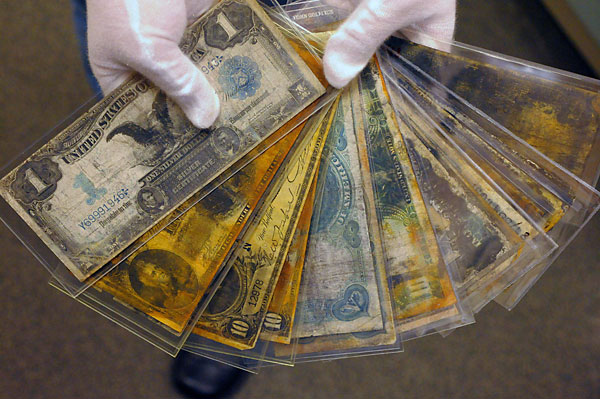
A federal judge has granted a salvage award to the company that maintains thousands of Titanic artifacts, but it remains unclear how the company will collect the estimated $110 million value of the pieces.
U.S. District Judge Rebecca Beach Smith late Thursday issued an opinion granting RMS Titanic Inc. an award equal to 100 percent of the fair market value of the artifacts.
But she said she will take up to another year to decide "the manner in which to pay the award," according to a court filing.
RMS Titanic Inc. and its parent, Premier Exhibitions Inc., has been battling in court for years to get title to about 5,500 Titanic artifacts that were lifted from the North Atlantic during company-run salvage operations over the past 20 years.
The federal court here, in the 1990s, awarded the company salvor-in-possession status, meaning the company had exclusive rights to salvage Titanic artifacts. But the court has maintained a tight control over what the company could do with the objects, including strictly prohibiting selling them.
The Titanic sank in the North Atlantic in 1912 on its maiden voyage. The company plans an expedition to the wreck site next week. Company-hired scientists will assess the deteriorating condition of the shipwreck.
The fate of the Titanic artifacts has been the subject of a federal court case here for more than 15 years. Smith heard six days of testimony last fall to help her determine the value of the artifacts.
Premier officials expected the ruling to come in two parts. The judge could have made the extreme decision to award the company nothing, or a percentage of what appraisers pegged as the artifacts' value.