We've gotten used to Tampa undersea treasure hunting pro Odyssey Marine Exploration announcing new deep water finds of sunken ships and the potential for new riches to be salvaged.
So we were a bit surprised to read Odyssey's ongoing involvement in helping the government of Lebanon document the underwater crash site of Ethiopian Airlines Flight 409.
Flight 409 was a scheduled international flight from Beirut, Lebanon, to Addis Ababa, Ethiopia that crashed into the Mediterranean Sea shortly after take-off on Jan. 25, 2010, killing all 90 people on board.
Here's a New York Times account of the crash at the time. Odyssey says its Ocean Alert search vessel was nearby at the time, using the Beirut port for fuel and supplies while the company negotiated an agreement with Lebanon to partner in a deep-ocean project.
When Flight 409 crashed, Lebanese authorities asked Odyssey to assist in the search and recovery efforts. Before the plane wreckage was discovered, Odyssey's task was to help document the site. Odyssey says it has been paid $1.4 million for the work completed so far by the Lebanese government.
"We presently have a signed agreement with the insurance company to create a photomosaic of the entire area of wreckage and debris which we are commencing in August 2010," the company says.
Nice to see Odyssey can lend its underwater talents to such mercy missions. I'm sure this will not be the last time the company will be called on to assist in submerged tasks other than treasure hunting.
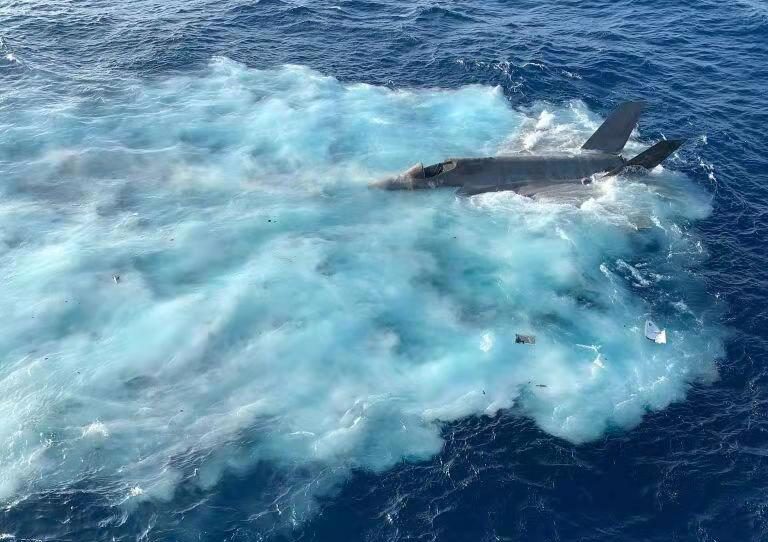
The United States Navy has recovered a state-of-the-art F-35C Lightning that fell into the South China Sea after a landing mishap in January.
The aircraft was pulled from a water depth of 12,400-feet by the commercial salvage vessel DSCV Picasso. The F-35C Lightning II, which Lockheed “the most lethal, survivable and connected fighter jet in the world” crashed while conducting routine flight operations from the carrier USS Carl Vinson in January.
The recovery of the F-35C follows a similar operation in which the United Kingdom, Italy, and the United States mounted a salvage operation last year for a U.K. F-35B that crashed into the Mediterranean following take-off from the Royal Navy carrier HMS Queen Elizabeth.
The wreckage was recovered from a depth of approximately 12,400-feet by a team civilian contractors and the US Navy’s Supervisor of Salvage and Diving aboard Ultra Deep Diving Solution’s diving support construction vessel (DSCV) Picasso.
The Picasso is a 396′ (120.8m) ship built in 2018 and sailing under the flag of Bahamas. The US Navy did not mention why it used a Singapore owned ship crewed with foreign nationals rather than a US Navy or US Flagged commercial ship like it did when the navy recovered the Vessel Data Recorder black box from the El Faro in 2016.
The use of a foreign vessel was likely due to the need to recover the plane quickly and the fact that the US Navy sold off the majority of it’s own salvage ships.
Currently the Navy’s Military sealift command only operates two safeguard class salvage ships – USNS Grasp and USNS Salvor – and only one Powhatan Class ocean tugs – USNS Apache, which are over 40 years old, are looking worse for wear and do not have the modern capabilities of a ship like the Picasso.
El 5 de octubre de 1804, a 30 millas náuticas del cabo de Santa María de Portugal, en actuales aguas internacionales, la Marina Real británica hundió a cañonazos la fragata Nuestra Señora de las Mercedes.
El inesperado ataque se llevó a cabo violando el Tratado de Paz de Amiens —suscrito entre Francia, España y Reino Unido— de 1802. Murieron 275 tripulantes, mientras un enorme cargamento de oro, plata y cobre se hundía en el mar a unos 1.130 metros de profundidad.
En 2007, la compañía cazatesoros Odyssey Marine Exploration expolió 600.000 monedas de la carga, aunque España terminó recuperándolas en los tribunales estadounidenses. Sin embargo, como revelan las actas del congreso internacional Archaeology: Just Add Water, celebrado en Varsovia en 2019, ahora hechas públicas, los expoliadores solo se centraron en las monedas y abandonaron todo lo demás.
Dejaron intacto el segundo tesoro de la Mercedes. Centenares de sus piezas ya han vuelto a España, están siendo restauradas y se expondrán en noviembre. Nunca se había hecho una excavación a tal profundidad.
En 2014 el Museo Nacional de Arqueología Subacuática, ARQUA, (Cartagena), dependiente del Ministerio de Cultura, inició un proyecto para que España excavase científicamente el pecio. Se trataba de un reto nunca acometido por ningún país.
Los dos o tres casos anteriores en los que se había bajado por debajo de los 500 metros se habían limitado a filmar y fotografiar. El plan del museo planteaba que era perfectamente posible hacerlo si se aunaban esfuerzos.
Se invitó al el Instituto Español de Oceanografía (IEO) y se cursó también invitación a la Armada como institución observadora. Aceptó.
En verano de 2015, zarpó de Cartagena la primera expedición conjunta a bordo del buque oceanográfico Ángeles Alvariño, del IEO. Al llegar a la vertical del pecio, la primera inmersión del ROV (siglas en inglés de vehículo operado remotamente, un complejo equipo submarino teledirigido), localizó exactamente el corazón de la nave.
Pero las pantallas de los ordenadores señalaban que los restos estaban muy dispersos debido a la explosión de 1804 y a las técnicas destructivas de Odissey. Se tomaron miles de fotografías y vídeos. La campaña se repitió en las de los veranos de 2016 y 2017.
A esta última se sumó el Centro de Investigaciones Científicas (CSIC), que aportó el buque Sarmiento de Gamboa. Los minisubmarinos detectaron esta vez “un tesoro más importante: miles de objetos enterrados bajo el fondo marino que muestran, en parte, cómo era la vida a principios del siglo XIX: de cañones de bronce a vajillas de oro y plata”. “Su valor científico y museístico”, como señala el informe del director del ARQUA y del proyecto, Iván Negueruela, “es incuestionable”.
El estudio recién publicado por la Universidad de Varsovia titulado The Mercedes 2015–2017 Project: Exploration and Excavation of the Wreck Nuestra Señora de las Mercedes (1.138 m depth) (Proyecto Mercedes 2015-2017.
Exploración del pecio de Nuestra Señora de las Mercedes (1.138 metros de profundidad) señala que el objetivo de las tres campañas fue definir “la extensión del yacimiento, documentar las condiciones en que quedó este tras el saqueo, realizar un mapa arqueológico de los materiales que permanecen bajo el lecho marino y la extracción de algunos de los materiales detectados”.
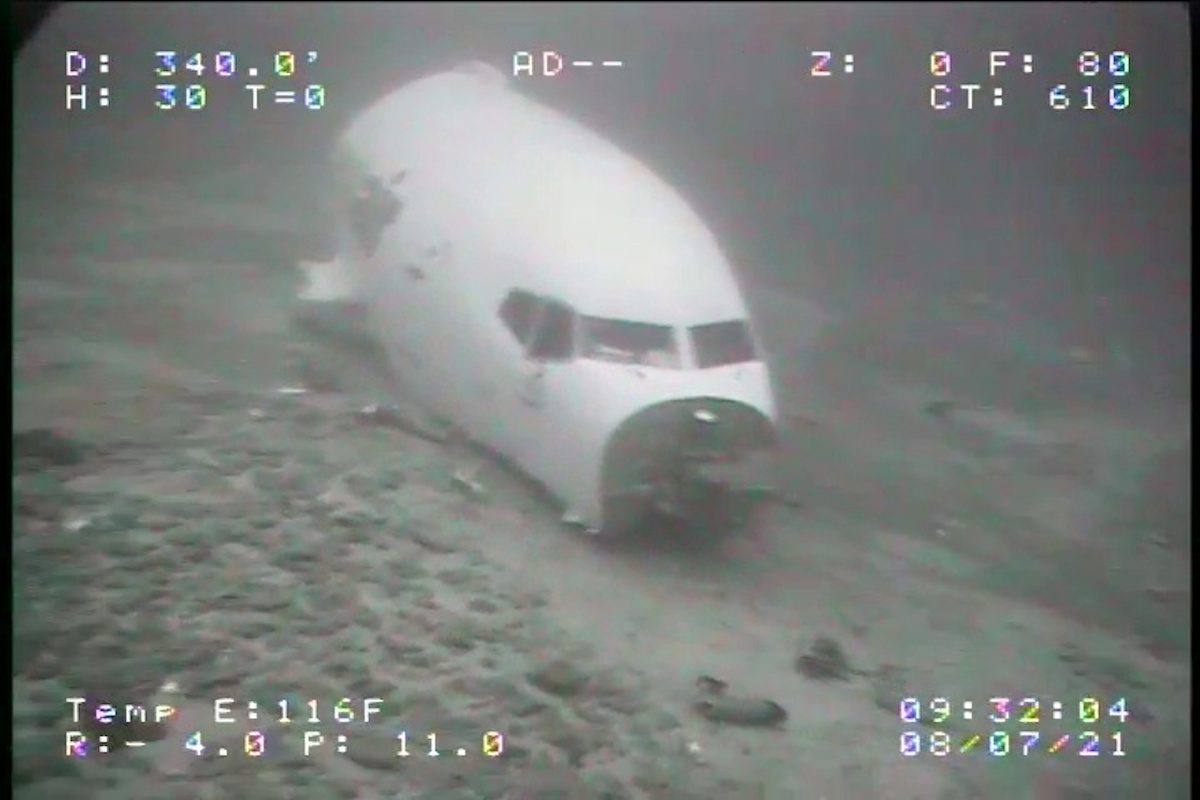
National Transportation Safety Board (NTSB) investigators have found the Boeing 737-200 cargo plane that made an emergency water landing in the Pacific Ocean near Hawaii early this month.
Sea Engineering provided ROV and Side Scan Sonar support for the survey of the debris of flight 810 approximately 2 miles offshore from the island of Oahu.
Sea Engineering used the 43-ft Workboat, ‘Huki Pono’ for Remotely Operated Vehicle (ROV) operations in combination with a Chinook ROV, outfitted with GoPros, a high-definition video recording system, ultra-short-base wavelength transponder, and Hypack Navigation and DGPS to monitor and record the ROV position on the seafloor.
Transair Flight 810 was found about 2 miles South Southeast of Daniel K. Inouye International Airport. The aft fuselage including both wings and tail along with both engines, and forward fuselage — were located at depths between 360 and 420 feet, the NTSB said in a statement.
The plane components were initially located with a Side Scan Sonar and then the ROV was deployed. The NTSB said the wreckage is too deep to deploy divers for recovery of the flight data and cockpit voice recorders. On Monday the investigative team is developing plans to recover the aircraft.
In 1941, the SS Gairsoppa, a British cargo ship, was sunk by a German submarine. Only one member of the crew survived, with dozens perishing in the attack.
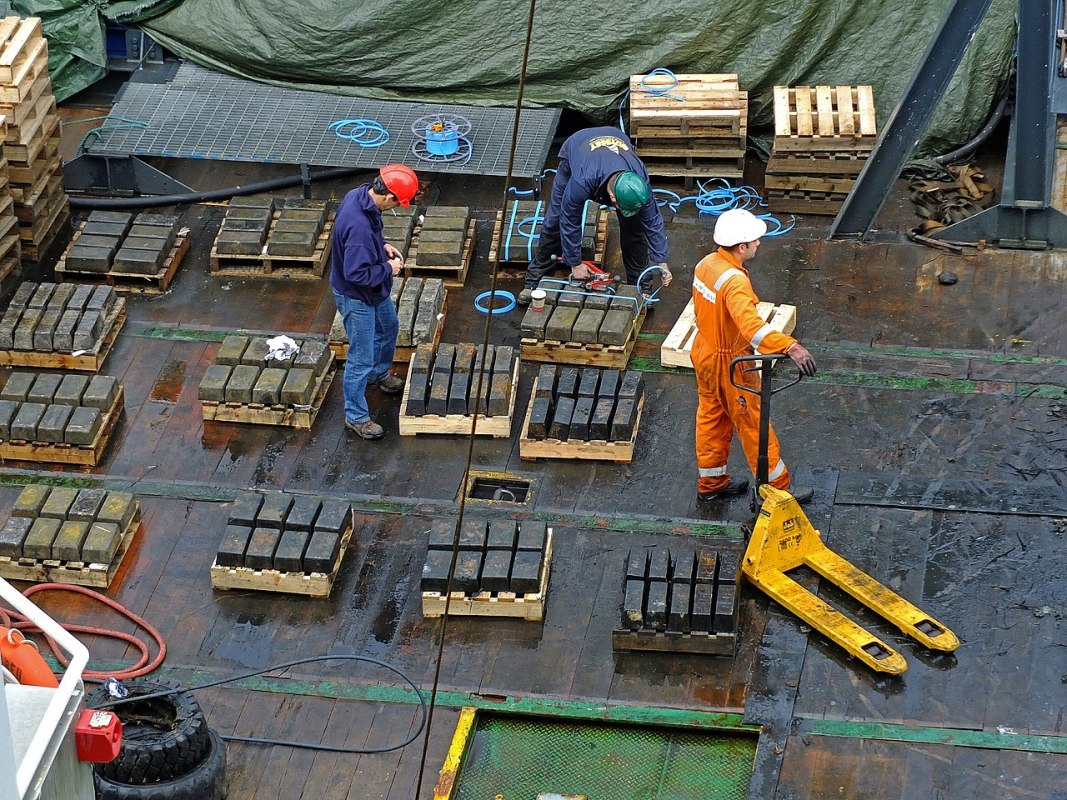
What was left of the vessel remained below the waters of the Atlantic off the coast of Ireland for decades. In 2013, Odyssey Marine discovered the remains of the ship — including a massive haul of silver that was on board when the Germans attacked.
That trove of silver wasn’t the only valuable thing found in the shipwreck, however. A new report from Allyson Waller at The New York Times focuses on another significant discovery made in the wreckage: a number of letters — more than 700 in total — that offer an intimate and personal glimpse into life during wartime.
As you might guess, letters that have been in an underwater space for 70-odd years aren’t in the best condition. The Times article focuses on the work conservators are doing to reconstruct the letters, so that we can learn more about who wrote and received them and properly honor those whose lives were lost.
Controversy continues to swirl around the discovery in the murky depths of the Mediterranean of a 17th century Ottoman shipwreck in the Lebanese EEZ and the subsequent confiscation of its salvaged cargo by customs officials in Limassol.
News of the recovery of the artifacts and their confiscation at the end of 2015 recently resurfaced in the wake of a press release issued by Enigma Recoveries, the London-based company that funded the underwater exploration of the site.
Enigma hailed the discovery as a “once in a generation find that tells the story of the beginning of the globalised world”.
The company claims the legal problems it has encountered in Cyprus were the result of a simple administrative mistake. The department of antiquities, which currently has custody of the 588 artifacts confiscated in Limassol port, has a decidedly different take.
It accuses the company of carrying out illicit underwater excavations. Furthermore, the department claims that the people responsible for the underseas operation are no more than professional treasure hunters, motivated solely by their pursuit of a profitable pay-off.