HOT NEWS !
Stay informed on the old and most recent significant or spectacular
nautical news and shipwreck discoveries

Storied Arctic wrecks still missing after summer search
By Randy Boswell - Postmedia News
Canadian government scientists hoping for a second major Arctic shipwreck discovery this summer came up empty after a six-day search for the Terror and Erebus, the lost vessels of the 19th-century Franklin Expedition.
Parks Canada archeologist Ryan Harris, who led July's successful search for the wreck of the HMS Investigator — one of many British ships sent to look for the Terror and Erebus in the 1850s — said Monday a 150-square-kilometre sweep of the Queen Maud Gulf seabed near Nunavut's O'Reilly Island yielded no sign of the ill-fated vessels.
Last month's discovery of the Investigator, found at the bottom of Mercy Bay off Northwest Territories' Banks Island, had fuelled hoped that the Terror or Erebus — long viewed as Holy Grails of global marine archeology — might finally be found as well.
But Harris and Marc-Andre Bernier, Parks Canada's director of underwater archeology, said this summer's search — along with a previous probe in 2008 — has at least narrowed the hunt for the ships to a 150-sq.-km area on the northeast side of O'Reilly Island, located between mainland Nunavut and King William Island.
A third season of searching is expected to take place in 2011.
"I'm always disappointed if we don't find something," Harris said during a conference call with reporters.
But asked if he believes the Franklin ships will eventually be found, he said: "I'm fairly confident they will be."
The federal officials emphasized that although no wrecks were found this summer, the probe has provided important new information to help various government agencies map the Arctic Ocean sea floor in an area where little survey work had been done in the past.
"We learned a lot about the underwater topography of this area," Harris said.
He and Bernier also said that it was always expected to take three research seasons to scan the entire target area and that the team remains on schedule to complete the mission — and possibly discover one of the ships — next year.
"We are confident that neither of the wrecks lies in the area scanned to date," Harris said.
The search area was identified based on conflicting contemporary reports about where the Franklin ships went down.
Read more...
Could a sunken WWII tanker leak oil ?

By Pete Hardie - Santa Barbara Independent
Researchers hope to use sonar images of the SS Montebello to determine if the sunken vessel could leak oil.
The Montebello Assessment Task Force sent a robotic submersible down to the wreck — which lies seven miles off California’s coast, near Cambria — last week.
The vessel’s tanks are presumed to still contain the three million gallons of Santa Maria crude oil that were loaded before its departure in December 1941.
The SS Montebello lies at a depth of approximately 900 feet. It sunk after being torpedoed by an Imperial Japanese submarine.
Kim Fulton-Bennett of the Monterey Bay Aquarium Research Institute (MBARI) said, “When the ship was sunk by the Japanese submarine, you might have expected the oil to leak out, as the whole bow of the ship fell off.”
However, according to Fulton-Bennett, neither the rescued sailors nor their rescuers reported any signs of oil leakage.
The second question, as Fulton-Bennett put it, regards the state of the oil if it does in fact remain in the ship’s tanks. It may be that the oil solidified over time and doesn’t threaten to leak out, but it is difficult to accurately predict whether this is the case.
The Montebello Assessment Task force was commissioned in 2008 by California Assemblymember Sam Blakeslee after he read an article on the sunken ship. The Task Force will work to identify all environmental issues resulting from the wreckage.
It includes representatives from MBARI, the Office of Spill Prevention and Response, the U.S. Coast Guard, and Caltrans.
The MBARI’s robotic submersible — commissioned by the Task Force to investigate the wreckage — embarked on a three-day mission and gathered data using three different types of sonar.
This allowed researchers to build a full 3-D picture of the shipwreck’s external condition and layout, and of the sea floor’s rock densities.
Droycon Bioconcepts diving to study the Titanic
By Doyle Fox - Leader Post
Lori Johnston and Sean Frisky won't be looking for the fictional necklace named "The Heart of the Ocean" when they dive down in a midget submersible vehicle to see the legendary British ocean liner Titanic in September.
No, Johnston and Frisky will be representing Regina-based Droycon Bioconcepts and studying the bacteria and other contributing factors to the degradation of the Titanic.
"Most of the wrecks I've studied, including the Titanic, are designated graveyards," said Johnston, a microbiologist by trade. "We are not there as treasure hunters — everything we do is noninvasive."
Johnston has visited shipwrecks all over the world, including the Titanic's sister ship HMHS Britannic as well as the German battleship Bismarck. However, she first made the four-kilometre dive to see the world famous shipwreck.
"On my first dive, we came in contact with the bow and my first thought was 'this is a massive ship and beautiful'," Johnston said. "It wasn't harsh looking, it had a very soft feel."
Johnston, a University of Regina graduate, has made five dives to study the Titanic with renowned local scientist Roy Cullimore. Together, Johnston and Cullimore studied the bacteria that is eating away the iron on the Titanic.
"The degradation rate is basically the recycling process of nature — you can try to manage it, but it would be very difficult," Johnston said. "It's more interesting to see nature take its course."
In 2002, Johnston placed steel platforms built by IPSCO in the degradation "hot-spots" of the Titanic in hopes of discovering the rate at which the ocean liner is degrading.
Frisky, president of Regina's Ground Effects Environmental Services, said he and Johnston will measure, compare and analyze the "rusticles" left on both the Titanic and on the steel platforms.
"Rusticles are up to six metres long and they look like icicles on the side of the ship," said Frisky, who is readying for his first dive to Titanic.
"If there looks like there is enough (rusticles) to give us significant data, we will bring them up," Johnston said.
Johnston is also excited at the prospect of determining how much electricity can be generated from the rusticles and bacteria on the Titanic.
She believes the bacteria can generate over one watt of electricity and can potentially be the key to harnessing a greener source of power.
Aside the from the scientific aspect of the excursion, Johnston still marvels at the human element of the Titanic.
Work under way to restore Muskogee's USS Batfish

By Lacie Lowry - The News On 6
A massive restoration project is under way in Muskogee on a true war hero.
The USS Batfish is a World War II submarine that's highly decorated with military honors, but her condition has highly deteriorated over the years.
A group of Active Duty and Reserve Chief Petty Officers of the United States Navy spent Saturday painting the USS Batfish black, restoring the submarine to her glory days of World War II.
"It amazes me how many people don't realize we have a sub in Oklahoma. To see a sub to begin with is a treasure, to see a World War II sub is an even bigger treasure," said Rick Dennis, Muskogee War Memorial Park Manager.
The officers working are from across Oklahoma and northern Texas. They have volunteered their time as part of their naval training.
"We're trying to give back to the community what the Navy has given us. It's been one of the best parts of our lives and it's given us great things," said MMC Casey Bills, United States Navy.
The project not only restores the sub, but preserves our history, too.
"She was commissioned in 1943. That makes her well over 60-years-old and she has seen some action and it tells a story," said Dennis.
And what a story she has. The USS Batfish was a sub killer. In February of 1945, she sank three Japanese subs in only 76 hours, a naval record that still stands today.

By Marilyn Ong - The Star
Sunken treasures ! The very words conjure up dazzling visions of romance and adventure on the high seas. Professor Augustine Vinh speaks on the perils of collecting sunken treasures.
Internationally acclaimed sunken treasure hunter and collector Professor Augustine Vinh does not at all comply with one’s image of a treasure hunter — deeply-tanned and with rock solid physique.
“I don’t dive nor scour the sea beds, picking up centuries-old porcelain and pottery,” smiles the scholarly-looking Vietnamese-American, who lectures on business management at National University of Vietnam. “I am more of an advisor and, occasionally, I provide funding for expeditions. At 60, I really should not be deep-sea diving!”
Born in Haton outside Hanoi, Prof Vinh got his first degree in foreign affairs and went on to do his MBA at Georgetown University in Washington DC. His interest was piqued in 1976 when he was doing his Masters in Foreign Service in Philadelphia.
“I went to a flea market looking for a Chinese porcelain flower vase. I was a student and could not afford the one I liked, which cost US$10. So I pointed to an old, dirty vase which I could clean and make good as new. To my horror, it was more expensive at US$50!
“I was so naive I assumed all old stuff had less value than new ones. The new vase was so pretty and shiny but the dirty one cost more! I was shocked but learned my first lesson — antiques had value!”
The fascinated young man stood enthralled and decided there and then to invest in antiques and make money.
“But I was still naive and thought it would be easy to buy and sell such antiques,” he says.
And so began a love affair that continues unabated to this day. “I worked hard and spent all my salary on antiques, buying Chinese vases, bowls and plates in America. I was more interested in quantity and built a nice collection which was my pride and joy.”
Treasure hunter plans to salvage mercury from wreck
By Edward D. Murphy - Kennebec Journal
Treasure hunter Greg Brooks, who led a trouble-plagued relief mission to Haiti last winter, has set his sights on a salvage job with both business and humanitarian components.
Brooks, who is from Gorham, wants to put his sea salvage skills to work removing an estimated 16,000 pounds of valuable mercury from a 66-year-old shipwreck off the coast of Maine.
He contends the mission would defuse a ticking environmental time bomb, though scientists have concluded the wreck is best left undisturbed.
The federal government prohibits any activity near the ship, but Brooks is hoping he can get the ban lifted. If he does, he would gain access not only to the mercury, but also to other cargo, including what he says is copper-platinum wire worth $200 million.
The wreck is the Empire Knight, a British freighter that struck an underwater ledge, split in two and sunk in a blizzard near Boon Island, off the coast of York, in February 1944. In 1990, the Coast Guard learned the ship carried 221 flasks of toxic mercury.
Divers subsequently recovered 1,230 pounds of the mercury and 2,200 pounds of contaminated debris, but determined that another 16,000 pounds of mercury had escaped from the casks and was in a cargo hold near the stern of the ship.
Officials eventually decided it would be better to leave the mercury alone, concluding that in time, sediment will cover the ship, burying it and its toxic cargo.
Attempting to remove the mercury, officials said, could result in the mercury escaping into the sea and contaminating the food chain.
In the late 1990s, as salvage companies tried to stake claims to the wreck, federal officials created an environmental safety zone around it, prohibiting diving, salvage and other activities.
Brooks thinks it's time to lift the limits and allow him to remove the mercury, via a high-pressure vacuum and filter system. That could also clear the way for him to salvage what he believes is copper-platinum wire that was included in the wartime cargo and could be what he terms "semi-valuable" -- to the tune of $200 million or so.
Officials have said they believe the wire is copper only and pegged its value at about $1 million in the mid-1990s, although prices for the metal have risen since then.
Brooks said his research suggests the more valuable wire is aboard and added that he also believes there's a "secret cargo" of coins in the wreck.
Those coins, he said, could be worth $10 million to $15 million for the metal content alone, and more than that if there are coins that are valuable to collectors -- which is likely, given the age of the wreck.
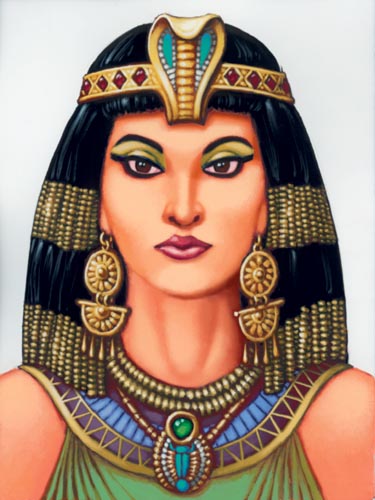
By Sandip Hor - Today Online
When in Egypt, many travellers overlook Alexandria on the Mediterranean coast in favour of the traditional tourist path along the Nile, covering Cairo, Luxor and Aswan.
However the historical significance of the city inspired me to explore its seafront spread, where in 332BC Macedonian conqueror Alexander the Great established the capital of the Graeco-Roman Empire. In its halcyon days, Alexandria rivalled Rome in art, culture and commerce.
It boasted a lighthouse which was one of the Seven Wonders of the Ancient World and had a colossal library where the Old Testament was translated from Hebrew to Greek.
I knew not much of that period remains, as devastating floods and earthquakes had destroyed most of the ancient city. I visited Alexandria instead to look for some of the enduring connections with its cherished past.
At first sight, the landscape and atmosphere of the city appeared more Mediterranean than Middle Eastern.
It stems from a renaissance the city underwent in the 19th century under the rule of Pasha Muhammad Ali, who is regarded as the founder of modern Egypt because of the dramatic military, economic, and cultural reforms he instituted.
However, with Cairo booming after the country was declared a Republic in 1953, Alexandria again declined in stature and whatever stands today is only a hint of its past brilliance. Yet, it is still captivating enough to make someone fall in love with it.
The necklace-like seaside promenade called Corniche is the tourist epicentre as several of the city's attractions - monuments, mosques, museums, hotels and restaurants - are situated along its 32km waterfront.
At one end of Corniche lies the Sultan Quatbay Fort. It was built in the 15th century at the site of the city's fabled Pharos Lighthouse, which had been destroyed by a massive earthquake a century earlier. It was said that blocks of stone from the lighthouse were used in the construction of the fort.
Gazing at the turquoise water of the Mediterranean from the fort's bastion, I imagined that I was standing at the balcony of the third century lighthouse watching workers navigating ships through the notorious stretches of the sea.
At the other end of the Corniche stands the Bibliotheca Alexandrina, the city's iconic new library. It sits on the same site as Alexandria's 3rd century BC library, the greatest of its time. According to Bibliotheca's director, the modern version captures the original institution's spirit of openness and scholarship promoted by Alexander's successors.
Still, a large part of Alexandria lies in the bay or buried under the streets, waiting to be discovered, which explains archaeologists' fascination with the city.
Ancient Chinese coins found in Kenya
From People's Daily Online
The underwater archaeological team from the National Museum of China will visit Kenya in Africa in November to search for the legendary "sunken ships of Zheng He's fleet."
A few days ago, the land-based archaeological team that has already arrived in Kenya sent a piece of news back that they found some Chinese cultural relics, including "Yongle Tongbao," which are ancient Chinese coins used in the Ming Dynasty, in a local village.
The China-Kenyan Lamu Islands Archaeological Project, launched by the National Museum of China, the School of Archaeology and Museology of the Peking University and the Kenya National Museum, was officially launched in July 2010.
The project's main purpose is to confirm the authenticity of some local villagers' claims that they are "descendants of the ancient Chinese people" and to salvage the ships in Zheng He's fleet, which were sunk 600 years ago.
The aboveground archaeological team led by Qin Dashu, an archaeological professor from the Peking University, arrived at Kenya at the end of July and has began to search for Chinese cultural relics left in Kenya.
After searching for nearly one month, the archaeological team has found many relics, including the "Yongle Tongbao" of the Ming Dynasty.
The land-based archeology project chose a historic site near the Mambrui Village, Malindi, Kenya as the excavation site.
The most convincing evidence archeologists have found are the "Yongle Tongbao" Ming Dynasty coins and the Long Quan Kiln porcelain provided only to the royal family in the early Ming Dynasty.
Qin said that he has studied the place where the porcelain used in the imperial palace was made and the characteristics of the porcelain found in the early Ming Dynasty.
Now they have found this kind of porcelain in Kenya, he believes that it may be related to Zheng He because as an official delegate, Zheng may have brought some imperial porcelain there as rewards or presents.