HOT NEWS !
Stay informed on the old and most recent significant or spectacular
nautical news and shipwreck discoveries

-
Booty-laden sunken vessel found in Mentawai waters
- On 17/12/2010
- In Treasure Hunting / Recoveries
By Irwan Firdays - The Jakarta Globe
A sunken ship that may be several centuries old and contain gray and green ceramics has been found off the Mentawai Islands, officials said on Thursday.
Fishermen who found the vessel believe the Oct. 26 tsunami, which killed more than 500 people there, lifted the 7-meter long ship from the sea floor and pushed it closer to shore, said Yosmeri, West Sumatra’s maritime and fisheries agency chief.
For centuries, wooden ships laden with ceramic pots, golden necklaces and valuable spices navigated Indonesian waters, a key trade route linking Asia with Europe and the Middle East.Hundreds are said to litter the seabed off West Sumatra.
The pots, jugs and bowls found last week still need to be tested to determine their origin and age, Yosmeri said.
But he added that they were similar to 14th-century artifacts found inside sunken Chinese vessels.
Local fisherman say they found the wooden ship after spotting its mast 6 kilometers from the beach off Pagai Island, hardest hit by the October tsunami.
They dove into the water and emerged with several well-preserved jugs and pots found in the hull, which they said was laden with more treasures.
Pictures of the artifacts have been sent to Jakarta and teams will be sent to the area soon to carry out a more extensive search, according to Yosmeri. -
Real Pirates don't walk the plank
- On 16/12/2010
- In Museum News
From Culturmap
Pirates, it seems, have developed a bit of a bad reputation over the centuries, and while they weren’t cuddly puppies in between plundering excursions, life on the ocean was a democratic and team-oriented affair.
Pirates were hardworking risk takers who roamed the seas hunting for treasure, and some of that loot is just one part of the Houston Museum of Natural Science's Real Pirates exhibit running through Feb. 6.
Based on the life of sailor-turned-pirate Sam Bellamy and his ship the Whydah, the exhibit goes behind the eye patch for an authentic look at pirate life.
When you hear pirate, perhaps Johnny Depp’s Captain Jack Sparrow comes to mind.While his eccentric character made an indelible impression on the big screen, in reality many assumptions made about pirates over the years don’t necessarily hold water. David Temple, in-house museum curator for the Real Pirates exhibit, addresses some of the myths surrounding pirates, starting with their most noticeable accessory, the eye patch.
Many assume pirates wore eye patches to cover their battle scars, but in reality, eye patches were the sign of a great navigator.
“The pirates would look into the sun to calculate their position and as a result many of them burned their eyes. Pirates with eye patches were old salts who had more experience than others on the ship,” Temple says.Sailors also lost eyes due to the dangerous nature of ship life, like flying wood or falling gear.
Another misconception about pirates is the often-heard “walk the plank” threat. Pirates who roamed the seas in the 18th century made very little use of this glamorized method of punishment.In fact, when push came to shove, that’s just what pirates did. They shoved or threw an offending sailor overboard. No plank required. Modern-day pirate tales primarily have J.M. Barrie’s stage production of Peter Pan to thank for the “walk the plank” mythology.
Pirates earned their reputations as rowdy looters, with no skills and even worse attitudes, and while Blackbeard’s legend didn’t do anything to dispel those thoughts, pirates were mostly sailors who just wanted a better life.
“Many chose to go pirate because life on the ships were really like modern-day labor unions,” Temple explains. “They were all paid fairly, they were fed and, if you were a pirate, it generally meant you had a skill.”The decision to “go on the account” was made mostly by unmarried men who were carpenters, surgeons and entertainers or others who had an appreciable skill.
Once aboard the ship, life could be violent but also progressive in the democratic way men were treated by the captain and each other. Voting played a crucial role in everything from electing a captain and the ship’s destination to where to dock or if the ship should go to battle.
-
Russian and Jordan dive to find Sodom and Gomorrah
- On 16/12/2010
- In Miscellaneous
By Stephen - Arch News
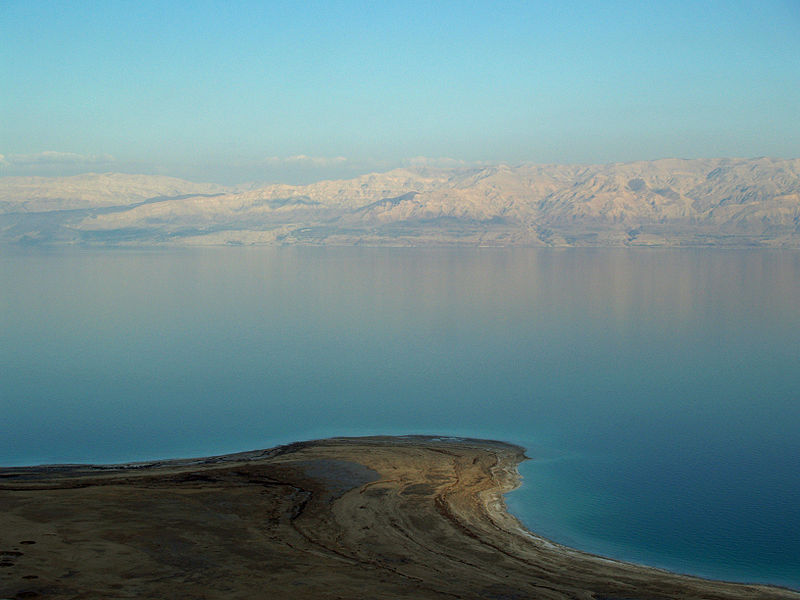
Russia and Jordan have signed an agreement to search the bottom of the Dead Sea for the remains of the Biblical cities of Sodom and Gomorrah, Arabic news media reported over the weekend.
According to the report, a Russian company has agreed to conduct the search in cooperation with Jordanian authorities, picking up all costs – in exchange for exclusive rights to film a documentary of the search.The report quoted one of the Jordanian heads of the project, Zia Madani, as saying that the search would begin in late December.
The Russian company that was chosen as a partner for the search has special underwater exploration equipment that can stand up to the extreme salinity of the Dead Sea, the reports said.
Biblical archaeologists have several theories as to where the Sodom and its associated cities were located. According to the Torah, God overturned Sodom, Gomorrah, and three other cities because of their degeneration, sin and iniquity, turning a once fertile plain into a stark wasteland. Abraham, who prayed for the cities, was unable to prevent God from mandating their destruction.
Archaeologists and geologists have suggested that a major earthquake or meteor storm might have been the means by which it occurred. Research has centered on the area around the Dead Sea, and the modern city of Sodom, and nearby Mount Sodom, which is made almost completely of rock salt, is considered the most likely site of the ancient cities.
However, some archaeological evidence has emerged that indicates that the site could be on the east bank of the Dead Sea, with two sites in Jordan - Bab edh-Dhra, and Numeira, both considered viable candidates.The Jordanian-Russian search will center on Bab edh-Dhra, which also has several Christian monuments.
According to Madani, further evidence that the cities remains are located on the Jordanian side of the Dead Sea came after recent NASA photographs of the area indicated that the bottom of the sea is littered with debris and objects not found in other bodies of water.
According to the Jordanian, Israel recently sent a submarine down into the Dead Sea in an attempt to explore the bottom of the sea, but discovered that the objects in the NASA photos were on the Jordanian side of the sea.Jordan prevented the Israelis from searching over the border, and now Jordan is seeking to discover what it believes are the remains of the cities by itself.
-
Buried treasure in Baltic has vintage taste
- On 16/12/2010
- In Treasure Hunting / Recoveries
 Photo Alex Dawson
By John Tagliabue - The New York Times
When Christian Ekstrom, a local diver, finally got to explore a sunken two-masted schooner he had known about for years, he found bottles, lots of bottles, so he brought one to the surface.“I said, ‘Let’s taste some sea water,’ ” he said with a laugh, over coffee recently. “So I tasted it straight from the bottle. It was then that I noticed, ‘This is not sea water.’ ”
Mr. Ekstrom, 31, a compact man with a shock of blond hair, brought the bottle to experts in this town of 11,000 on Aland Island, which lies midway between Finland and Sweden, then to others in Sweden and finally in France.
Though the bottle had no label, burned into the cork were markings that made clear it was a bottle of Juglar, a premium French Champagne that ceased to be sold under that name after 1830, when it was renamed Jacquesson, for another of the winery’s owners.It remains one of the smaller but finer producers of French Champagnes.
“You could still see the bubbles, and see how clear it was,” Mr. Ekstrom said.
The 75-foot wreck, in 160 feet of water, contained other cargo as well: crates filled with grapes, long withered; carpets; coffee beans; spices including white and black pepper and coriander, and four bottles of beer.
Not including the bottle Mr. Ekstrom swigged from, the divers soon discovered a cargo that numbered 172 bottles of Champagne.
Four were broken, but 168 others were intact, and in early August they were hoisted to dry land and stored in Mariehamn. The Baltic Sea floor proved an ideal wine cellar, with 40 degree temperatures, total darkness and enough pressure to keep the corks in.
Getting help in recognizing the find was not easy. “It was quite tricky to get someone to listen,” Mr. Ekstrom said. When he contacted Veuve Clicquot, one of the largest French Champagne houses, in search of expertise, a voice on the phone said, “It’s a fantastic story, but I have to ask you, ‘Where is Aland ?’ ”
Gradually, word got out to the Champagne world, and this November experts from abroad, including from Jacquesson and Veuve Clicquot, were invited to Aland (pronounced AH-lahnd) to replace the crumbling corks in 10 bottles and for a tasting.In the meantime, the Champagne had become the property of the local government, which lays legal claim to anything found in undersea wrecks that is more than 100 years old.
The first three bottles recorked were Juglar, but on the bottom of the fourth cork were the star and anchor of Veuve Clicquot. The star represents a comet that crossed the skies of Champagne in 1811 and supposedly caused fabulous vintages. “I thought, ‘Madame Clicquot is watching us,’ ” Mr. Ekstrom said.
At another recorking, further bottles of Veuve Clicquot appeared. François Hautekeur, a Veuve Clicquot winemaker who attended, pointed to the name Werle branded into the bottom of the cork, referring to Édouard Werle, the man who in 1830 assumed much of the business from the Widow Clicquot, actually Barbe Nicole Clicquot, née Ponsardin, who inherited the company from her husband in 1805 and ran it until her death. “So it is later than 1831,” Mr. Hautekeur said.
Jean-Hervé Chiquet, whose family now owns and operates Jacquesson, the winery that absorbed Juglar, said that the shape of the bottles and the use of the name Juglar indicated the Champagne was from the late 1820s, and may have been stored for some time before it was shipped. -
Major BBC documentary on ancient underwater city
- On 16/12/2010
- In Miscellaneous

From Press Zoom
This ground breaking project will feature the research of underwater archaeologist Dr Jon Henderson from The University of Nottingham. The programme will use state-of-the-art computer graphics to show what pre-historic Pavlopetri — a submerged city lying off the coast of Greece — would have looked like and how its people lived.
The excavation of an ancient underwater city — dating back to 3500 BC — is to be the subject of a major new BBC Two television documentary.
This ground breaking project will feature the research of underwater archaeologist Dr Jon Henderson from The University of Nottingham. The programme will use state-of-the-art computer graphics to show what pre-historic Pavlopetri — a submerged city lying off the coast of Greece — would have looked like and how its people lived.
Dr Henderson said: “This documentary will follow us every step of the way as we carry out the first ever underwater excavations at this important site. And who knows what we will find ? Given the good preservation of remains underwater we could recover organic items dating from the Greek Bronze Age which would be spectacular.
Lying just metres off the coast in southern Laconia, Pavlopetri was discovered 40 years ago by oceanographer Dr Nic Flemming. In 1968, equipped with just snorkels and flippers, his team carried out the very first survey of the site. It remained untouched until last year when Dr Henderson, working in collaboration with the Ephorate of Underwater Antiquities of the Hellenic Ministry of Culture and Tourism and the Hellenic Centre for Marine Research, was given permission to examine the site.
The dating of the architectural features and artefacts suggest the submerged city was inhabited for over two millennia from at least 3500 BC up until around 1100 BC. Throughout this period the settlement was likely to have had a population of between 500 and 2,000 people.
Dr Henderson and his team, together with Dr Flemming who has returned to Pavlopetri, are using some of the very latest computer technology to record the streets, the foundations of buildings, tombs and courtyards of the ancient city.
BBC television’s Factual Department plans to bring the city back to life through the latest CGI technology. The programme is due for transmission in 2012.
Dr Henderson said: “We have been very keen to use the latest survey technologies on this site to create an accurate three-dimensional record of the architectural remains on the seabed. Having the BBC onboard has allowed us to create amazing photo-realistic, computer-generated reconstructions of the site based on the actual survey data we have collected in the field.” -
New insights into items from the Mary Rose
- On 16/12/2010
- In Museum News

By Stephen - ArchNews
Two major areas will provide new insights into items from Henry VIII’s Tudor warship by facing them against the interior of the ship itself at thenew £16.3 million Mary Rose Museum.
Speaking in a video update on the progress of the Portsmouth Historic Dockyard development, which is expected to be completed in 2012, Exhibition Co-Ordinator Nick Butterley revealed a series of tiny models being laid into cases in a separate storage area at the naval attraction.
The first area, on the ground floor, will be one of six galleries showing items by type and themes. The Context Gallery, on the two upper levels, will then position exhibits in the areas of the ship where they would originally have been found.
Craftsmen have had to rework some of the artefacts because of damage or decay, including saws and scalpels used in battle and by medics onboard the ship.
“We’re trying to make sure everything captures the eye and works together as a story,” said Butterley.
“It’ll be a real experience, not just the traditional one of looking at the showcases and reading the labels. You’ll feel like you’re immersed in the ship itself.” -
Nelayan Mentawai temukan bangkai kapal kuno pascatsunami
- On 15/12/2010
- In Treasure Hunting / Recoveries
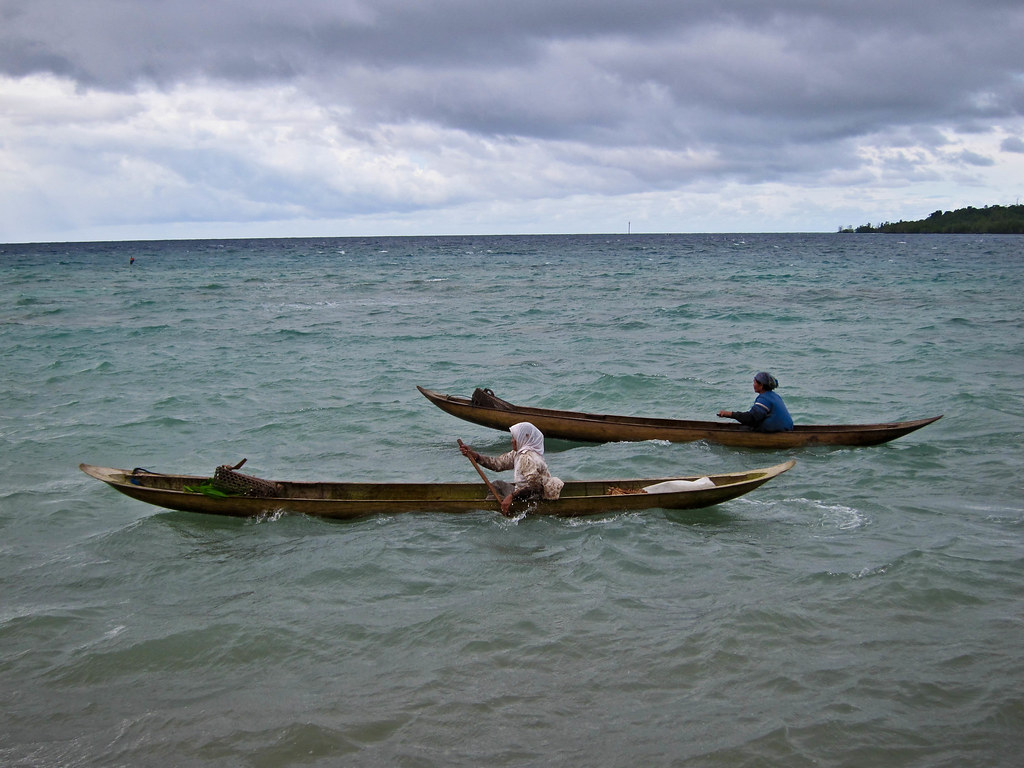
Nelayan di Pulau Pagai Selatan, Kabupaten Kepulauan Mentawai, Sumatera Barat menemukan bangkai kapal kuno bermuatan barang-barang antik diduga peninggalan abad ke-14 yang terseret ke perairan pantai oleh gelombang tsunami pada 26 Oktober 2010.
Kapal itu ditemukan nelayan yang tengah menyelam mencari ikan hias di perairan laut pesisir Pulau Sandiang, Kecamatan Pagai Selatan, mentawai, kata Kepala Dinas Kelautan dan Perikanan (DKP) Sumbar, Ir Yosmeri kepada ANTARA di Padang, Selasa.
Bangkai kapal dengan panjang 20 meter dan memiliki satu tiang utama yang masih utuh itu ditemukan nelayan pada kedalaman 18 meter di bawah permukaan laut, tambahnya.
Menurut dia, dalam kapal ditemukan sejumlah barang antik berupa keramik dan kendi-kendi kuno peninggalan Dinasti Sun China abad ke-12 sampai ke-14.
Yosmeri mengatakan, diduga bangkai kapal itu sebelumnya tenggelam di dasar laut Samudra Hindia yang kemudian terseret gelombang tsunami ke perairan laut Pulau Pagai Selatan dan terdampar di bawah laut sekitar Pulau Sandiang.
Mendapat laporan temuan bangkai kapal itu, DKP Sumbar telah memerintahkan DKP Kepulauan Mentawai melakukan pengamanan di sekitar laut tempat kapal itu ditemukan untuk menghindari aksi pencurian dari pihak-pihak lain, tambahnya.
Lokasi harus diamankan, karena sesuai ketentuan hukum, keberadaan kapal dan muatannya yang tenggelam di perairan laut Indonesia berada dalam penguasaan negara melalui Departemen Kelautan dan Perikanan RI, tegasnya.
Ia menyebutkan, pihak DKP Sumbar juga sudah melaporkan ke Dirjen KP3K Departemen Kelautan dan Perikanan RI dan diharapkan pusat segera menurunkan tim ke lokasi.
Kita harapan tim Dirjen KP3K segera segera mengangkat bangkai kapal dan isinya, sesuai kewenangan pemerintah pusat terhadap keberadaan barang muatan kapal tenggelam, tambahnya.
Yosmeri mengatakan, sesuai ketentuan barang muatan kapal tenggelam dikuasai negara dan bisa dilelang yang hasilnya masuk ke kas negara. -
France seizes Lava treasure coins
- On 15/12/2010
- In Illegal Recoveries

By Richard Giedroyc - Numismater
France recently seized an unannounced number of third century A.D. Roman gold coins as well as an ancient gold plate allegedly with a pedigree linking the material to the Lava Treasure, according to an Oct. 27 announcement.
The Lava Treasure, consisting primarily of ancient Roman gold coins, received its name because the find was discovered accidentally by fishermen diving in the Gulf of Lava. The gulf is off the west coast of Corsica in the Mediterranean Sea. Corsica belongs to France.The Lava Treasure was first encountered about 25 years ago when three Corsicans diving for sea urchins spotted gold in the shallow waters there. The rest of the story can likely be nicely summarized by the official French national police statement released Oct. 27 in which it says, “This submerged treasure, identified as a maritime cultural asset, belongs to the state.”
It is the words “cultural asset,” which could also be reworded as “cultural patrimony,” that is the key, especially when it involves coins rather than fine art or other objects.As Ancient Coin Collectors Guild spokesman Wayne G. Sayles commented in the October 2010 issue of The Celator magazine, “[coins are] utilitarian objects that were created in the millions and are not in any way of significant cultural value to any state.”
Had this find been discovered off the coast of Great Britain, as an example, the find could have been declared as treasure trove and the finders could have at least received a reward for their efforts. Being that the find was on French territory there was to be no imbursement, and likely not even a “thank you.”
As the police statement reads, the find “belongs to the state.”
Cyprus, France, Italy, Spain, Turkey, and a host of other countries have restrictive laws governing finds of this nature in which the find is automatically claimed by a government as that government’s cultural patrimony.The finders have no rights to the find and for practical purposes might as well have reburied the find where it was discovered.
Read more...