HOT NEWS !
Stay informed on the old and most recent significant or spectacular
nautical news and shipwreck discoveries

-
Archaeologists go deep to uncover history
- On 02/02/2012
- In Underwater Archeology
From Marine Link
Many universities are adding or expanding their underwater archaeology programs in an effort to give students a broader educational experience and a better understanding of our maritime history.
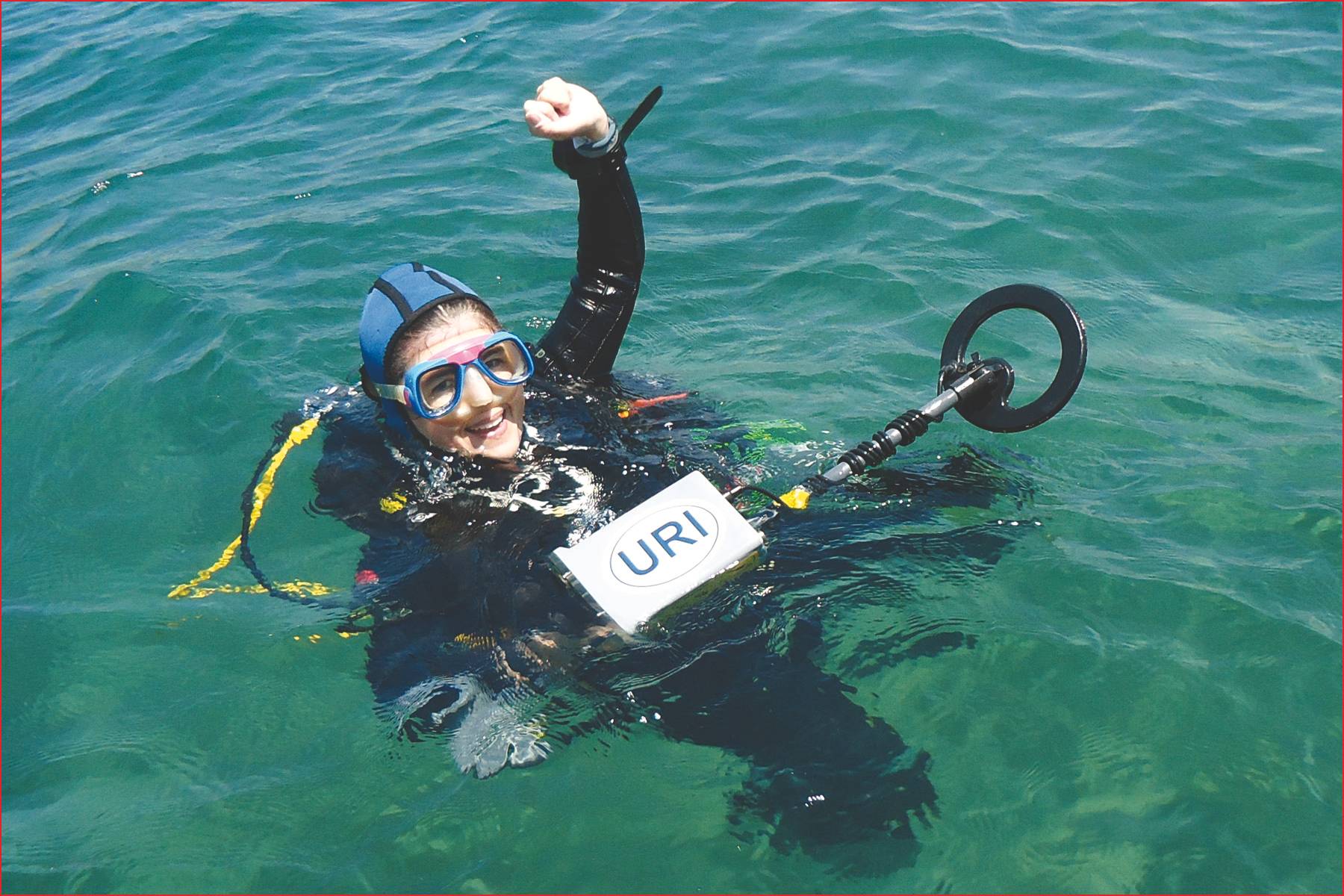
The field of underwater archaeology is expanding rapidly as the equipment required for marine exploration becomes more affordable, and more scientists and researchers learn to scuba dive. Indiana University (IU) Bloomington has one of the oldest academic diving programs in the country.
Professor Charles Beeker is the director of the school’s Office of Underwater Science and Educational Resources (USER) and also a member of the Marine Protected Areas Federal Advisory Committee, part of NOAA.
He has directed numerous shipwreck projects in the US and Caribbean and is a pioneer in preserving wreck sites as underwater museums.
In addition to his extensive knowledge and experience in the history behind these submerged time capsules, he is also an accomplished diver.
The current focus of Indiana’s archaeology program is the wreck of the Quedagh Merchant.
The ship was reportedly captained by the pirate William Kidd as he raced to New York in ill-fated attempt to clear his name.
The ship went down in 1669 off the coast of the Dominican Republic and the wreckage now lies in 10 feet of warm, clear Caribbean water, with cannons and anchors scattered about in plain view.
According to Beeker it is a unique example of 17th century ship construction.
The location makes it ideal for in-depth archaeological study and the perfect place for students to put into practice the methods and techniques learned in the classroom.
“How you put a name on a shipwreck is through scientific research, analysis of wood samples, determining composition of the ballast stones and the type of ship construction.” says the professor.
-
One man's passion for our sunken past resurfaces
- On 02/02/2012
- In People or Company of Interest
By Peter Collins - The Standard
Peter Ronald’s fossicking among old shipwrecks as a teenager uncovered relics from an era when sea tragedies were common.
He and his mates started with snorkels and then made their own scuba diving gear to explore the depths off south-west Victoria and recover maritime history treasures.
However, instead of snaring the relics for private collections or selling the metal, he wanted them saved for public interest.
In subsequent years he lobbied for new government legislation to protect the wrecks which for years had been looted.
Now his collection is safely stored at Warrnambool’s Flagstaff Hill Maritime Village where he was the first employee when it opened more than 30 years ago and later became manager.
The last of his maritime wreck relics was donated to the village last year before he moved from Warrnambool to Tasmania.
About 30 treasures from his collection will be shown in a tribute exhibition which opens next Tuesday evening.
A highlight is a diamond ring recovered from the Schomberg wreck off Peterborough. It sat hidden inside an encrusted goblet until discovered during a cleaning process.
When former premier Sir Rupert Hamer was told during a visit to Warrnambool it wasn’t on display for fear of a surge in looting of wrecks, his government soon afterwards introduced protective legislation. -
£12b sunken loot could be found by new technology
- On 01/02/2012
- In Treasure Hunting / Recoveries

From Deadline News
A hoard of treasure worth at least £12bn could be buried in the sands of a Scottish firth, a world-renowned marine expert claimed today.
Historians have argued for centuries about the fate of the fleet of Roundhead general Monck, whose troops sacked Monarchist Dundee in 1651 and are thought to have filled several ships with booty.
No trace has ever been found of the fleet, which was hit by a storm, but marine archaeologist Neil Cunningham Dobson believes the vessels may have been quickly covered by the shifting sands of the Tay.
Mr Dobson, who works for a US marine exploration firm and has previously helped find wrecks from both world wars, said new equipment and technology could finally revealed the location of the lost fleet.
Historic Scotland agree it remains “possible” that Monck’s fleet lies on the bed of the Tay and said its discovery would be of “historical and archaeological significance”.
The loot stolen from Dundee is believed to have included around 200,000 gold coins, estimated to be worth £12.5bn at today’s prices. Many of Scotland’s wealthiest families stashed their wealth in the city, wrongly believing it was safe from the Roundheads.Mr Dobson, 55, principal marine archaeologist with Florida-based Odyssey Marine Exploration, said:
“If historical records are investigated and proved to indicate that a fleet of ships floundering leaving the River Tay bound for London, then evidence of their remains and valuable cargoes could be laying under thousands of tonnes of sand somewhere along the south shore of the River Tay from Broughty Ferry out past the Abertay Sands to the east and southeast. -
Civil War wreck to get anniversary attention
- On 01/02/2012
- In Underwater Archeology
By Ben Steelman - Star News Online
A coalition of local historians and archaeologists is banding together to celebrate the heritage of a Civil War blockade runner.
Under pursuit by Union warships, the 520-ton steamer Modern Greece ran aground off Fort Fisher on June 27, 1862, and was sunk to evade capture – 150 years ago this summer.
For decades, the wreck was thought to have been totally destroyed. In the spring of 1962, however, a storm uncovered the wreck in 25 feet of water, just 300 yards offshore.
Beginning that summer 50 years ago, divers from the U.S. Navy and what was then the state Department of Archives and History spent two years exploring the Modern Greece, recovering a treasure trove of military artifacts.
"That was basically how the Underwater Archaeology Branch got started," said Mark Wilde-Ramsing, assistant state archaeologist and director of the branch, a division of the state Department of Cultural Resources based at Fort Fisher.
The British-owned Modern Greece had been bound for Wilmington with a cargo of Whitworth cannon, Enfield rifle-muskets, bayonets, bullets, hand tools, cutlery, medicine and other items meant for Confederate forces.
Much of that cargo was salvaged in the weeks after the 210-foot-long vessel sank, but much remained. Twentieth-century divers recovered thousands of wood, metal and glass artifacts.
The trove provided a wealth of laboratory samples on how to treat and preserve items that had been submerged for a century, Wilde-Ramsing said. -
La justicia de EEUU tumba el intento de Odyssey de no devolver el botín a España
- On 01/02/2012
- In Illegal Recoveries
Antonio Rubio - El Mundo
La Justicia de EEUU ha vuelto a dar la razón a España en el litigio que mantiene con Odyssey por la posesión del multimillonario tesoro hallado en 2007 y ha denegado a la empresa estadounidense su pretensión de suspender la ejecución de la última sentencia, que la obligaba a devolver el tesoro a España.
El pasado noviembre, un tribunal de Atlanta (EEUU) desestimó el penúltimo recurso de la empresa, cerrándole la vía judicial ordinaria tras otras dos sentencias emitidas por sendos jueces de Florida y ordenando a Odyssey que devolviera a España el tesoro submarino más valioso de todos los tiempos, procedente de la fragata española 'Nuestra Señora de las Mercedes', hundida en combate por la Armada británica frente a las costas del Algarve portugués el 5 de octubre de 1804.
La empresa reclamó entonces al tribunal que suspendieta temporalmente la ejecución de la sentencia, con el argumento de que estaba preparando el que debe ser su último cartucho, un recurso al Tribunal Supremo. Dos meses después, el tribunal de Atlanta ha respondido a la petición de forma negativa.
Al contrario, devolverá el caso al el juzgado original de Tampa (Florida) para que ejecute la sentencia; esto es, para que se devuelva el tesoro a España. Según fuentes del Ministerio de Exteriores, la resolución tardará unos 10 días en llegar al juez de Tampa, que entonces decidirá qué hacer.
El tesoro, constituido por 594.000 monedas de oro y plata cuyo valor se estima en 395 millones de euros, fue rescatado por la empresa en mayo de 2007.
No avisó de su hallazgo al Gobierno español, a pesar de que en los meses precedentes había mantenido conversaciones con el Ministerio de Asuntos Exteriores, y trasladó en secreto todas las monedas a EEUU, inciando el litigio que ahora está a punto de concluir.
Ello provocó una reacción inmediata tanto de Exteriores como del Ministerio de Cultura, que en los últimos cuatro años y medio no han escatimado esfuerzos por recuperar lo que se considera un expolio en toda regla del patrimonio histórico nacional. -
RMS Titanic collectibles action marks Centenary of doomed ship's launch
- On 01/02/2012
- In Auction News

From Paul Fraser CollectiblesOne hundred years have passed since the doomed launch of RMS Titanic.
To mark the occasion, a UK auctioneer is offering collectors a chance to own exceptionally rare memorabilia artefacts and collectors' pieces in a sealed bid auction.
Among the commemorative items for sale are a number of silver plated cutlery pieces.
Each has been reproduced and hand-finished to the standards enjoyed by passengers in RMS Titanic's first class accommodation.
These items are very limited and will auction in a presentation wooden canteen with a signed certificate of authenticity and a reserve price of £12,000.
Why are they so expensive ? Well, the answer is as novel as it is unexpected...
The auctioneer is teaming up with Deep Ocean Expeditions to submerge the silver plated cutlery pieces 2.5 miles beneath the ocean, to Titanic's final resting place.
The pieces will then be brought back up to the surface and delivered to the winning bidder.
It will be interesting to see if collectors are drawn to this unusual idea. Also for sale in the auction is a copy of the Daily Sketch tabloid newspaper first published on 16 April 1912.
The issue recounts the sinking of RMS Titanic on her maiden voyage.
These collectibles will undoubtedly prove of interest to some. But, if you're on the lookout for some high-end Titanic collectibles, Paul Fraser Collectibles recommends that you search for genuine items from RMS Titanic herself.
The greater the story attached to the collectible, the better. Past RMS Titanic memorabilia sales have included the auctioning of the keys from Titanic's Crow's Nest - the very keys which could have helped save the ship from disaster. -
Treasure hunters prepare to recover $3 billion in platinum
- On 31/01/2012
- In Treasure Hunting / Recoveries
By Karen Anderson - WBZ TV
Here on the Sea Hunter docked at Pier 1 in East Boston, the crew is getting ready to get their shipwrecked treasure. After three years working on this project, they are ready to recover the $3 billion in platinum.
MV Sea Hunter Captain Gary Esper says, “We’re just about ready to pull it up. It’s fantastic, can’t wait for it. Been a couple years, we’re ready.”
Kevin LaChance, the MV Sea Hunter Deck Boss, says, “We’ll bring ‘em up to show once and for all, we’re on the money.”
The British vessel, the Port Nicholson, was carrying a $53 million dollar payment in platinum from the former Soviet Union to the U.S., when it was torpedoed by German U-Boat in 1942. It sank, and the location was kept secret until recently.
The Sea Hunter crew located the wreck three years ago, about 50 miles off the coast of Provincetown 700 feet below sea level in 2008.
Their equipment hasn’t been strong enough to battle the powerful current and grueling conditions.
They will head back out, heavily armed, with stronger equipment, as soon as they get a weather window of good conditions.
They have federal rights to the ship now, and say so far no one has claimed the treasure. When it’s salvaged, a judge will decide where it goes. The crew says the US was paid by insurance already.
This team has found a few wrecks in Haiti, but never anything this large. This could be the richest shipwreck in history.
-
New pirate museum in Galveston will get you hooked
- On 31/01/2012
- In Museum News
By Demond Fernandez - ABC Local
If you've ever been interested in the history of pirates, Galveston locals say a new museum, Pirates Legends of the Gulf Coast, is the new treasure to check out. It's only been open for three days.A singing skeleton is first to greet you at Galveston's newest family attraction, and once inside, you'll quickly find more than just your ordinary museum in historic downtown Galveston.
"This is a very child-friendly attraction, and it's also a learning experience for children of all ages," said Joyce McLean, managing member of the museum.
This detailed and interactive exhibit is uniquely designed to totally immerse visitors into the world and legacy of pirates from the 1700s in the Caribbean to Galveston and the Gulf coast.
"Well, we have pirates on board the ship who really kind of act like as a tour guide but not a tour guide. They are there to answer questions, but they are always in character," McLean said.
You enter the museum through what appears to be the stern of a pirate ship crashing through a treasure map. Once you pass through the lower deck, you'll see artifacts and special effects.
There are reconstructed buildings from New Orleans on one side, and on the other, there's a replica of Galveston pirate Jean Lafitte's home, Maison Rouge. Leanor Pickel designed the pirate exhibit.