HOT NEWS !
Stay informed on the old and most recent significant or spectacular
nautical news and shipwreck discoveries

-
Does Alaska shipwreck hold millions in gold-rush riches ?
- On 07/06/2012
- In Treasure Hunting / Recoveries

By Ben Anderson - Alaska DispatchThe Alaska Office of History and Archaeology estimates there could be as many as 3,000 shipwrecks lining the state’s 44,000 miles of coastline.
Now, the multi-million-dollar mystery behind one of those wrecks may finally be answered, when a Seattle-based company attempts to salvage the remains of the SS Islander, which sank in 1901 while carrying Klondike gold rushers – and, reportedly, lots of their gold -- from Skagway to the city of Victoria in British Columbia.
A federal judge in April declared that Ocean Mar, Inc. and its president, 62-year-old Theodore Jaynes, could move ahead with plans to survey and possibly salvage the more-than-century-old shipwreck.
The decision ended more than a decade of legal wrangling over the salvage rights to the ship, and could finally answer the question of just how much -- if any -- gold remains on the sea floor where the SS Islander sunk in Southeast Alaska.
But there’s more to this story about how a luxury ferry -- built in Scotland and considered “unsinkable” by some -- found its way to Alaska, and then to the seabed off of Alaska’s Admiralty Island.
Along with the ship, about 40 people met their fate on an August night at the beginning of the 20th century.
A 1992 report by the Community Development Department of the Borough of Juneau recounts in detail the life and sinking of the SS Islander.
Built in 1888 in Glasgow at a cost of about $200,000, the 240-foot-long vessel was a model of late 19th-century luxury, built specifically for northern waters.
Like the more famous Titanic, many presumed the ship to be “unsinkable,” constructed with airtight compartments that could flood individually without the entire ship sinking.
The Islander operated during the peak of the Klondike Gold Rush in the late 1890s, plying the waters of Southeast Alaska as the region saw a huge influx of hopeful prospectors seeking their fortunes.
The treacherous waters of the Alaska Panhandle, combined with the heightened shipping traffic, claimed more than a few vessels.
-
Tighter security as 3rd excavation of ship begin
- On 07/06/2012
- In Underwater Archeology
From Shangai Daily
Chinese archaeologists yesterday began a third round of excavation work on the Nan'ao-1, an ancient merchant vessel that sank about 500 years ago off the coast of Guangdong Province.
Security staff will watch over work on the wreck, which has fallen victim to illegal smuggling in the past.
Archeologists sent by national and provincial cultural relics departments have already carried out underwater excavation of the ship twice since 2009, recovering more than 20,000 antique pieces, including porcelain and bronze coins.
A spokesman for the Guangdong provincial bureau of cultural relics said archeologists will salvage all porcelain items from the ship during the third round, which is expected to last for three months.
The team plans to install a giant iron mantle over the wreck to protect the relic, which was buried in silt 27 meters under water when it was found by fishermen in May 2007. -
New secrets from 'Bay of the Pirates' warship that sunk 2,300 years ago
- On 07/06/2012
- In Ancien Maritime History
By Michael Bernstein - American Chemical Society
A new study puts some finishing touches on the 2,300-year history of the beak-like weapon that an ancient warship used to ram enemy ships in the First Punic War, the conflict between ancient Rome and Carthage.The report, in ACS' journal Analytical Chemistry, also identifies a major threat that conservators must address in preserving this archaeological treasure for future generations.
Patrick Frank and colleagues explain that the ram, called a rostrum, was found in 2008 under 22 feet of water, 150 feet offshore from Acqualadrone (which means "Bay of the Pirates") in northeastern Sicily.The Acqualadrone rostrum is bronze, with a wooden core that was preserved because of burial beneath the seafloor.
Carbon-14 dating suggests that the warship sank around 260 B.C. after being damaged in the battle of Mylae during the opening stages of the First Punic War, which may have been among the largest wars of its time.
Earlier research localized the metals in the bronze to mines in Spain or Cyprus.
The authors, from the SLAC National Accelerator Laboratory at Stanford University and the University of Palermo, set out in the new research to learn more about the origin and condition of the rostrum wood.
-
Captain Morgan’s search for the real Morgan's brand treasure
- On 07/06/2012
- In Underwater Archeology

By Teddy Wayne - Business WeekNext month, a team of marine archaeologists sponsored by Captain Morgan, the rum maker owned by London-based beverage conglomerate Diageo (DEO), will begin its first thorough excavation of a shipwreck located near the Lajas Reef off the coast of Panama.
They believe that the wrecked hull and its accompanying cargo belong to a fleet commanded in 1671 by the ruthless British buccaneer Admiral Henry Morgan—yes, the rum’s eponymous captain.
Longstanding brands often use their origin stories in ad campaigns as a way of building a greater sense of history and authenticity.
Products focusing on craftsmanship and premium quality tend to rely on this strategy—examples include Guinness’s proud reminders of its 253-year lineage, Bushmills’s “Since Way Back” ads, or Chevrolet’s (GM) Americana-soaked “Welcome to Bridgeville” campaign.
Even fast-food chain Wendy’s (WEN), a youthful enterprise by comparison, has gotten into the retro game, having featured its namesake Melinda Lou “Wendy” Morse, the founder’s daughter, in commercials since 2010.
More recently it launched a reboot of its famous “Where’s the Beef ?” commercials from the 1980s. Now Captain Morgan is digging deep into its past.
In May 2011, the company launched a marketing campaign focusing on the real Henry Morgan, a 17th century pirate who ranks among the most notorious of all time.
According to Tom Herbst, brand director for Captain Morgan USA, the goal was “to increase the authenticity and masculinity of the brand.”
-
Treasure hunter searches for fabled gold Madonna statue
- On 07/06/2012
- In Treasure Hunting / Recoveries
By Alexia Campbell - Sun Sentinel
West Palm Beach treasure hunter Bob Bouchlas has spent decades searching for a piece of sunken treasure: a gold Madonna and Child statue listed aboard a Spanish galleon that sank in the 1656 near the Bahamas.The statue was never found among the later recovered loot of gold, silver and jewels.
Bouchlas, 80, says the elusive statue may be buried off the coast of Palm Beach County, and is seeking the rights to salvage the wreckage of a what he believes is the San Miguel Arcangel.
The Spanish ship went down near what is now Palm Beach County around the same time as the legendary Nuestra Señora de las Maravillas galleon, which sank near the Bahamas with a cargo of gold and gems partly salvaged in the 70s and 80s.
On Friday, Bouchlas filed a claim in federal court in West Palm Beach seeking the exclusive rights to explore an area off the coast of Juno Beach under federal admiralty laws. His claim is the latest in a dispute among treasure hunters who want the right to look off the coast of Palm Beach County for untold riches.
"I'm not after the silver and gold, I want the Madonna," said Bouchlas, who said he is also an ordained priest in a little-known Ukrainian National Orthodox Christian church. He said the 3-foot statue should go to the Vatican.
The exact location of the elusive San Miguel shipwreck has sparked debate among South Florida treasure hunters who have dedicated their lives to explore the area's underwater loot. Jupiter Capt. Dominic Addario believes the thousands of gold and silver coins and other artifacts he's excavated off the coast of Jupiter belong to the San Miguel.
A federal court judge in 1987 awarded him the rights to salvage artifacts from the site near Jupiter, which include coins that date back to 1658 and 1659.
During his 25 years digging through the site, Addario has never found the ship, so it's unclear from which wreck they came.
-
Found after 70 years, the wreck of U-1206
- On 06/06/2012
- In World War Wrecks

From War History OnlineA team of divers is celebrating following a search lasting 12 years, after finding the wreck of a U-boat scuttled by its crew off the Scottish coast.
Just weeks before the Second World War ended in 1945, the submarine with 40 German sailors on board was apparently forced to surface after filling with chlorine gas following a toilet malfunction.
U-1206 was then spotted and attacked by Allied aircraft in the North Sea, forcing the captain to order it to be sunk and the crew to abandon ship.
Two days ago, with conditions deemed perfect for a dangerous deep-sea dive, a four-man team explored a spot 12 miles off Cruden Bay, Aberdeenshire, and, at a depth of 86 metres, became the first people in 67 years to see the wreck.
Jim Burke, who led the expedition, said: “The feeling on seeing it was one of elation and excitement.
“We found ourselves looking at a unique piece of Second World War history. The buzz was amazing. This was a significant bit of history.
“We have spent so much time and energy looking for her. It was great that we could finally see this boat that we had spent so much time researching.”
The IT engineer added: “Most dives we do involve discovering a wreck and then finding out her story. “This was the first one where we have known all of her story beforehand, but finding her remained elusive until now.”
According to historians, the fault with the toilet – or “heads” – was caused by a crewman opening the wrong valve to flush it. This caused the contents of the toilet to flood the submarine’s batteries underneath, producing poisonous chlorine gas.
The problem derived from the toilet’s complicated high-pressure valve system, developed so U-boats could dive deeper to evade Allied attack.
Mr Burke said the German U-boat archive had shown the incident happened during repairs to the diesel engines after they stopped recharging the batteries.
It recorded Captain Karl Schlitt as stating: “I was in the engine room, when, at the front of the boat, there was a water leak. What I have learned is a mechanic had tried to repair the forward WC’s outboard vent.
-
Treasure hunter’s bankruptcy filing a surprise to investors
- On 06/06/2012
- In Treasure Hunting / Recoveries
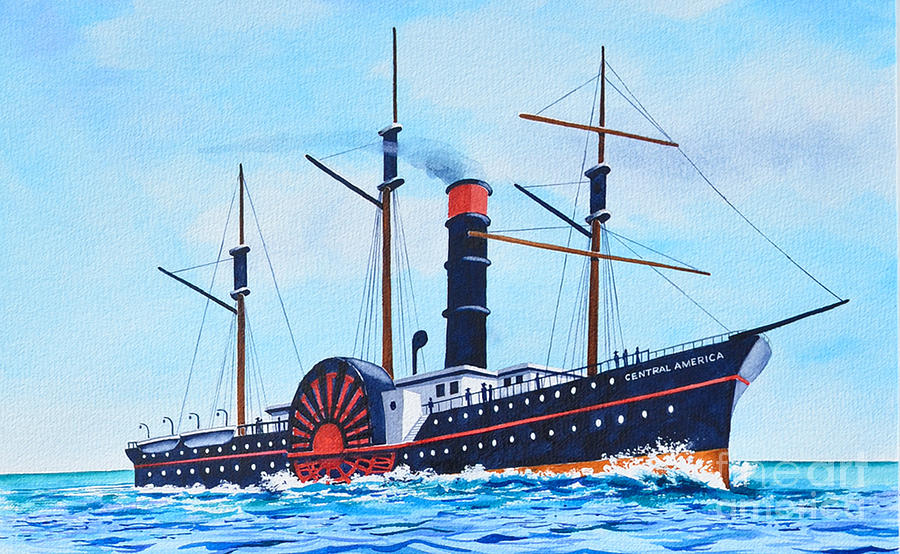
By Kathy Lynn Gray - The Columbus DispatchInvestors hoping for returns on millions they gave to treasure hunter Tommy Thompson decades ago got a jolt recently when they learned that Thompson’s company had filed for bankruptcy in late March.
But the worry was short-lived. By early May, Thompson’s company, Recovery Limited Partnership, had dismissed the bankruptcy filing in “the interests of all creditors,” court bankruptcy documents show.
Investors — many of them from central Ohio — have not received a penny of the estimated $400 million in gold that Thompson and his crew pulled out of the SS Central America shipwreck in 1988.
The steamer sank in 1857 off the Carolina coast with 21 tons of gold in its hold. Thompson’s crew was able to retrieve only some of the loot. Thompson sold at least some of the recovered gold to California Gold Group in 2000 for $52 million, but none of the money went to investors.
In 2005, investors Donald C. Fanta and The Dispatch Printing Co., owner of The Dispatch, sued Thompson and his companies to obtain an accounting of the companies’ finances.
Legal maneuvers have delayed the case for years, and it has bounced from Franklin County Common Pleas Court to U.S. District Court in Columbus and back.
In 2008, the investors filed a motion to have a receiver take over the companies, Recovery Limited and Columbus Exploration LLC.
-
Ship's exotic cargo may be pirates' haul
- On 06/06/2012
- In Underwater Archeology
By Lorna Siggins - Irish Times
A leading marine archaeologist has described as “absolutely incredible” some of the initial exotic findings on a shipwreck recently discovered off the west Cork coast.
South sea coconuts and Iberian pottery have so far been recovered by Julianna O’Donoghue and her underwater archaeology team from the wreck, which may have been a pirate ship dating from the late 16th or 17th century.
The uncharted vessel was located last month during archaeological monitoring of dredging for the Schull waste water treatment plant.
The monitoring is requested by the National Monuments Service underwater archaeology unit as a condition of planning and foreshore licensing.
This precaution has already led to the location of other previously unrecorded craft, such as the Gormanston logboat in Co Meath, and wrecks in Duncannon, Co Waterford, on the river Boyne in Co Louth, and Inishbofin off the Galway coast.
An exclusion zone was placed around the site in Schull and dredging work was suspended while Ms O’Donoghue assessed the wreck, with the co-operation of Cork County Council.