HOT NEWS !
Stay informed on the old and most recent significant or spectacular
nautical news and shipwreck discoveries

-
Cirebon sultanate deplores planned auction of artifacts
- On 05/05/2010
- In Auction News
By Nana Rukmana - The Jakarta Post
The Cirebon Kasepuhan Sultanate has opposed the government’s plan to auction off thousands of historical artifacts recovered from a 1,000-year-old shipwreck in waters off Cirebon, West Java. The artifacts are thought to originate from China and the Middle East.
The sultanate’s authorities said the artifacts were part of the nation’s history and heritage and therefore too valuable to be sold off to overseas buyers.
“We urge the government to act wisely and cancel the auction. It would be better if the artifacts remained in Indonesia and became part of the country’s collection of invaluable assets,” said Cirebon Kasepuhan Crown Prince Pangeran Raja Adipati Arief Natadiningrat on Tuesday.
The auction will be held May 5 under the coordination of the National Committee of Excavation and Utilization of Precious Artifacts from Sunken Ships.
The collection includes around 271,000 items dating from the 10th century, including pottery, jewelry, gemstones and crystal ware.
The loot was recovered from a sunken ship in the Java Sea from 2004 to 2005, some 70 miles off the northern coast of Cirebon. The auction’s value is estimated at Rp 1 trillion (about US$100 million).
Pangeran Arief said the items were part of the country’s history and should be submitted for research rather than auctioned off. -
Little Interest in Indonesian Treasure
- On 05/05/2010
- In Auction News

From AFP
An auction of a 10th-century treasure trove worth an estimated 80 million dollars was in doubt Tuesday after Indonesian officials said no potential buyers had paid the hefty deposit required to bid.
The gems, crystal ware, gold and porcelain salvaged from an unidentified wreck off Cirebon, West Java, in 2004 is due to be sold in one lot by the Indonesian government in Jakarta on Wednesday.
Expressions of interest have come from collectors around Asia but none has paid the 16-million-dollar deposit, or 20 percent of the minimum sale price of 80 million dollars, by Monday’s deadline, officials said.
“There are 20 interested participants, including some from overseas. Those from abroad come from Singapore, Beijing, Hongkong, Malaysia and Japan,” Maritime Affairs Ministry official Sudirman Saad said.
“So far none of the interested parties has put down the security deposit but we will still hold the auction tomorrow ... If there are no buyers we’ll propose a second auction.”
Some 271,000 pieces are on sale including rubies, pearls, gold jewellery, Fatimid rock-crystal, Iranian glassware and exquisite Chinese imperial porcelain dating back to around 976 AD.
The Indonesian state will take 50 percent of the proceeds and the remainder will be shared among the salvagers, including Belgian treasure hunter Luc Heymans’ Cosmix Underwater Research Ltd.
Saad said the deposit requirement, the minimum bid or the lack of notice to potential buyers could be reasons that no parties had confirmed their participation. -
Ancient ship may have been used to smuggle arms
- On 03/05/2010
- In Eastern World Treasures
From China Daily Mail
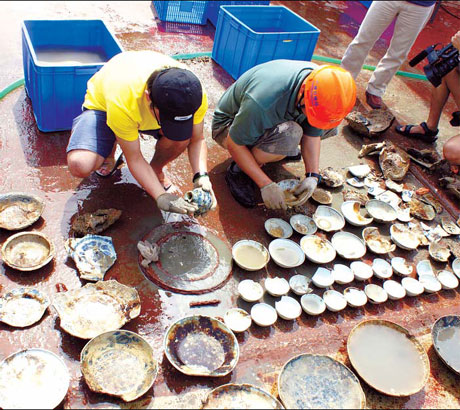
The sunken ancient merchant ship Nan'ao No 1, which is being salvaged off Shantou in South China's Guangdong Province, may have been involved in arms smuggling before it sunk.
Piles of copper plates, some of them 60 cm in diameter, and copper coins were found on the vessel. There was a prohibition on exporting copper during the period of the ship's operation in the late Ming Dynasty (AD 1368-1644), Guangzhou Daily reported on Sunday.
"Even if they were not smuggled, they were carried secretly. The ban on the exportation of copper was actually exerted as early as the Song Dynasty (AD 960-1279) and became stricter under the Ming Dynasty Emperor Wan Li," Sun Jian, director of the salvage team from the National Underwater Cultural Heritage Protection Center, was quoted as saying.
Archaeologists have yet to determine whether the copper plates are finished products or raw material, because they became joined together after spending hundreds of years under water, Sun said. Whichever the case may be, it was highly profitable to export copper at the time, he said.
In the Ming Dynasty, the standard currency system was silver, which could be exchanged for a large amount of copper.
Copper guns and canons were also discovered on the sunken ship. This was not uncommon on ocean-faring merchant vessels at the time, Sun said. Nearly 1,000 relics have been found on Nan'ao No 1 since salvage work resumed last month after a six-month suspension due to unfavorable weather conditions. -
Treasure hunter says charges politically motivated
- On 03/05/2010
- In Treasure Hunting / Recoveries

From Jakarta Globe
A veteran British treasure hunter has broken his silence over allegations that he illegally removed Chinese Ming porcelain from a wreck off Blanakan, West Java.
The 70-year old, who was reportedly born in Britain but grew up in Australia, told The Times of London that the investigation was politically motivated.
“There’s no foundation to it,” he told The Times in Jakarta. “The people behind this are companies opposed to my companies. They have a crack at me all the time.My job takes me to places where you take risks but one thing I don’t do is screw with the law here. I don’t want to go to an Indonesian jail.”
Hatcher’s salvage missions in Indonesia began in 1980 with the discovery of the wreck of the De Geldermalsen in East Bintan, Riau Islands, from which he recovered Chinese porcelain that was auctioned for $20 million.
In 1999, Hatcher raised 365,000 porcelain items from the wreck of the Chinese junk Tek Sing, which ran aground off southern Sumatra in 1822, constituting the biggest find of its type ever.
Since 2008 Hatcher has been seen in Blanakan with operator PT Comexindo Usaha Mandiri, which was only permitted to survey the area from 2009. -
Scholarly Squad Debunks Biblical "Discoveries"
- On 03/05/2010
- In Miscellaneous
From AOL News
When Robert Cargill got word this week that a group of Chinese evangelicals had uncovered Noah's Ark atop a Turkish mountain, the archaeologist's reaction was a familiar one.
"I thought, here we go again -- another fake 'ark-eologist,' " says Cargill, an adjunct assistant professor of Near Eastern languages and cultures at UCLA.
His skepticism may prove well founded: A former member of the joint team from Noah's Ark Ministries International and Media Evangelism Ltd. that announced the find has circulated an e-mail suggesting that the discovery might have been staged. And if that's the case, it would be just the latest in a series of hoaxes surrounding the much-searched-for vessel.
Indeed, it was word of two previous ark expeditions that helped prompt the American Schools of Oriental Research, the leading professional organization of American Middle Eastern archaeologists, to take action.
Fed up with the exposure these types of stories were getting in the media, the group last year launched a committee tasked with taking aim at archaeological frauds.
"We really just decided that it was time to take back our field," says Eric Cline, a George Washington University archaeologist. He and Cargill co-chair the committee, whose membership also includes the Archaeological Institute of America and the Society of Biblical Literature. -
For Sale: Ancient Treasures Dug From Indonesia's Seas
- On 03/05/2010
- In Auction News
By Stephen Coates - Jakarta Globe
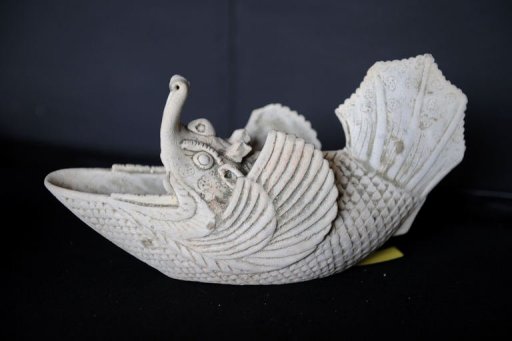
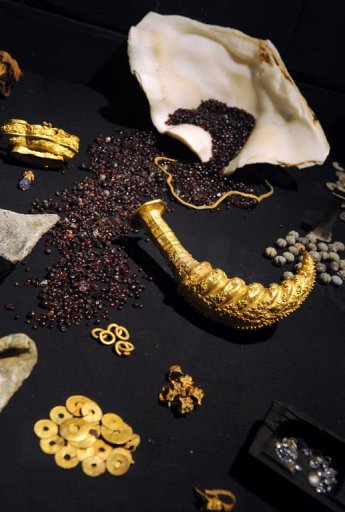
An ancient treasure trove salvaged from a 1,000-year-old shipwreck found by Indonesian fishermen is set to fetch at least $80 million when it goes under the hammer in Jakarta on Wednesday.
Belgian treasure hunter Luc Heymans said the haul was one of the biggest found in Asia and was comparable to the most valuable shipwreck ever found anywhere, that of the Atocha, a Spanish vessel that sank off the US state of Florida in 1622.
It includes 271,000 pieces such as rubies, pearls, gold jewelry, Fatimid rock-crystal, Iranian glassware and Chinese imperial porcelain dating to the end of the first millennium, around 976 AD.
“At the time there was a lot of trade going on between Arabia and India and coming down to Java and Sumatra,” said Heymans, who led the salvage and subsequent battles with Indonesian officials to recover the treasure.
Descending for the first time to the wreck site north of Cirebon, West Java, in 2004, the veteran diver said he couldn’t believe what appeared out of the gloom.
“The site was 40 meters by 40 meters and it was just a mountain of porcelain. You couldn’t see any wood [from the ship],” he said.
And not just any porcelain. The pieces include the largest known vase from the Liao dynasty (907-1125) and famous Yue Mise wares from the Five Dynasties (907-960), with the green coloring exclusive to the emperor.
About 11,000 pearls, 4,000 rubies, 400 dark red sapphires and more than 2,200 garnets were also pulled from the depths. It took 22,000 dives to bring it all up, but Heymans said the salvage work, from February 2004 to October 2005, was the easy part.
“All the major problems began after we got the stuff on shore,” he said.
The police arrested two divers even though Heymans’ company, Cosmix Underwater Research, and his local partner, PT Paradigma Putra Sejathera, had painstakingly arranged survey and excavation licences.
The divers spent a month behind bars before the mix-up was resolved. There were also run-ins with the Navy, efforts by rivals to move in on the wreck, a year of litigation and two years of waiting while Indonesia drafted new regulations to govern such work. -
Evidence shows merchants flouted imperial trade ban
- On 02/05/2010
- In Eastern World Treasures
From China Daily
Archaeologists working on the wreck of a 400-year-old merchant vessel off south China have found evidence that Chinese merchants probably flouted bans on foreign trade at the time.
The salvage team has recovered more than 800 pieces of antique porcelain and copper coins from the ancient ship off the coast of Guangdong province, said the provincial cultural relics bureau Sunday.
Archaeologists believe the ship, which sank in the Sandianjin waters off Nan'ao county, Shantou city, may have been carrying 10,000 pieces of blue-and-white porcelain, mostly made during Emperor Wanli's reign (1573-1620) of the Ming Dynasty (1368-1644).Some big porcelain bowls found in the vessel, dubbed "Nan'ao-1, " were probably made for foreign trade as they were not commonly used in Chinese daily life at that time, they believe. The find is particularly interesting as the administration of Wanli had imposed a ban on sea trade.
Guangdong was a major center for the sea trade in ancient China. Sheet copper and coins found during the salvage operation indicated the ship might have been smuggling copper too, as the export of copper was also banned at the time, said Sun Jian, head of the salvage team.
The Ming Dynasty restricted private sea trade to deter piracy, which had imposed huge hardships on legitimate sea traders, and ensure maritime security along Chinese coastal areas. -
BVI: Shipwrecks, corals, easy diving
- On 01/05/2010
- In Wreck Diving
From Global Adventures, LLC
The first divers may have come by boat to the British Virgin Islands (BVI), since chain of more than 60 sparsely inhabited islands and rocks is a haven for sailing enthusiasts.Calm waters along with steady breezes culminate to make some of the best sailing conditions in the Caribbean.
What has attracted boating enthusiast for centuries is now drawing scuba divers from around the world to the main islands of Tortola, Virgin Gorda, Anegada and Jost Van Dyke. Intact reefs, a healthy marine life, and some interesting shipwrecks can easily keep divers busy for a week.
The RMS Rhone, a royal mail steam packet ship that transported cargo between England, South America, and the Caribbean, is the flagship dive in the BVI.The 310 feet (94 meter) long vessel was one of two ships deemed unsinkable by the British Royal Navy. Passengers liked to travel on the RMS Rhone due to her speed and 253 lavishly appointed first class cabins. A late season hurricane did sink the ship on October 19, 1867.
Today, the bow section of the ship rests in eighty feet of water. Due to her mast sticking out of the water, and her shallow depth, the HMS Rhone was deemed a hazard by the Royal Navy in the 1950s and her stern section was blown apart.While the wooden decks have rotten away, divers can still explore the well preserved stern section. The hull is encrusted with corals, sponges, and sea fans, jew fish and barracudas are a frequent site.
The wreck was also the stage for the movie “The Deep”. Director Peter Yates shot the movie, which was based on the novel by Peter Benchley, here in 1977.
Another wreck is the 268 feet (82 meter) Chikuzen. The former refrigerator vessel went down in 1981 off Tortola’s east end and lies in 75 feet (23 meter) of water.Barracuda, octopus, jew fish, drum fish, and schools of yellow tail frequent the wreck that can be usually seen from the surface.
While the dive site can be accessed by boat only, the excellent visibility and the abundance of marine life make the Chikuzen a favorite for underwater photographers.
Alice in Wonderland is a coral wall at South Bay off Ginger Island. It is named for its huge mushroom and gallant brain corals.Easy dive conditions with no currents and great visibility make the wall, which starts in 15 feet (5 meters) and ends on the sandy bottom in 90 feet (27 meter), a favorite among beginner divers and photographers.