HOT NEWS !
Stay informed on the old and most recent significant or spectacular
nautical news and shipwreck discoveries

-
Court sinks plan to raise old schooner off Dunkirk shore
- On 07/09/2013
- In Parks & Protected Sites

By Phil Fairbanks - Buffalo NewsWhatever its name, legacy or place in history, the 19th century schooner has a final resting spot – on the bottom of Lake Erie about 20 miles off the Dunkirk shoreline.
A nine-year legal battle over who owns the shipwreck – some believe it’s the War of 1812 battleship Caledonia – and whether it should be raised and restored or treated as a burial site and left right where it is appears to be over.
And the winners are the historic preservationists who argued that the two-masted ship belongs to the state and is best left as an archaeological site in the lake.
“It’s frustrating," said Richard Kullberg, owner of the company that located the shipwreck. “It’s an accident site, not a grave site.”
Kullberg fought nine years for ownership of the wooden schooner and the right to raise it and turn it into a tourist attraction on Buffalo’s waterfront.
He lost every step of the way, and this week’s decision by the 2nd Circuit Court of Appeals upholding two lower court rulings may be his last legal option.
The appeals court ruled that the schooner was abandoned and therefore belongs to the state.
The state has argued from Day One that the ethics and wisdom of disturbing a burial site require that the ship, which it doesn’t believe is the Caledonia, remain where it is.
-
Gold Spanish shipwreck treasure found
- On 05/09/2013
- In Treasure Hunting / Recoveries
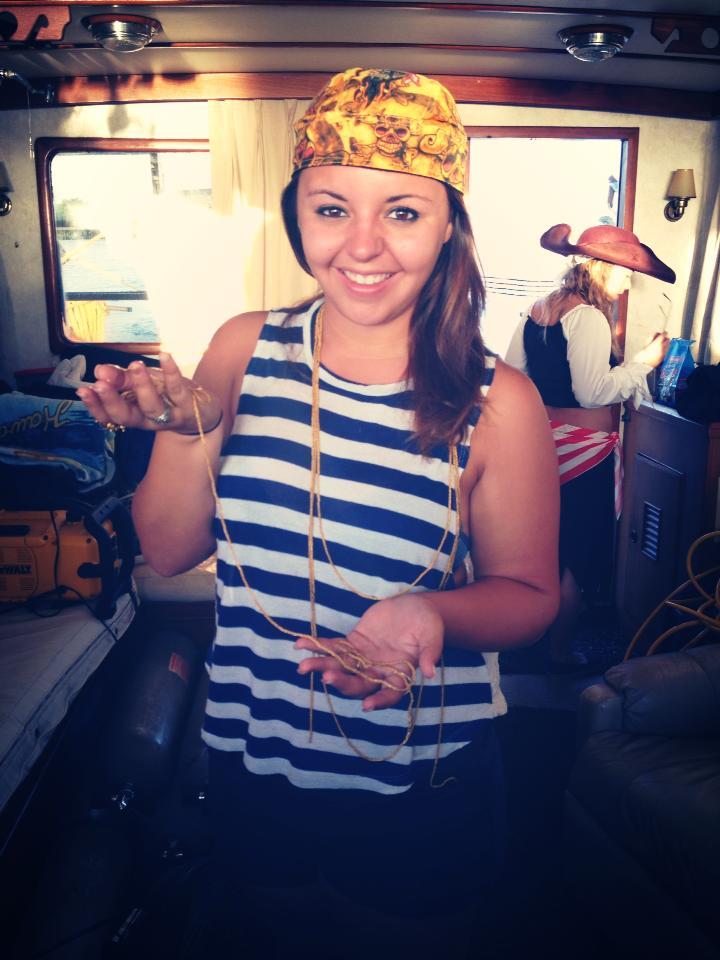
By Meredith Bennett-Smith - The Huffington PostA Florida family with decades of experience in searching for treasure recently hit it big, discovering a treasure trove of Spanish coins and chains worth more than $300,000.
The impressive haul was recovered Sept. 1 by Rick Schmitt's Booty Salvage treasure-hunting company about 150 yards off the coast of Fort Pierce, Fla., according to the Orlando Sentinel.
Schmitt's family, together with friend Dale Zeak, pulled up between 60 and 70 feet of 18th-century gold chains, several gold coins from Peru and a ring initially valued between $300,000 and $350,000, according to local station WPTV.
"It was a lot of emotion," treasure hunter Eric Schmitt told WPTV.
"At first was excitement followed by a lot of, almost crying. It's amazing."
Brent Brisben is the co-founder of 1715 Fleet – Queens Jewels LLC, the company that owns the rights to the area where Booty Salvage found the treasure.
"To be the first person to touch an artifact in 300 years, is indescribable," Brisben told the Sentinel.
"They were there 150 years before the Civil War. It's truly remarkable to be able to bring that back."
The treasure is believed to have been lost after a Spanish fleet was shipwrecked in a storm on July 30, 1715, according to the Sentinel. Hundreds of people were killed in the storm that gave the area the nickname "Treasure Coast." -
University archaeologists excavate Monterrey shipwreck
- On 30/08/2013
- In Underwater Archeology
By Juliette Moak - University Star
A team of marine archaeologists partnered with Texas State conducted the deepest archaeological shipwreck excavation in North America this summer, discovering two sunken ships in the process.
A team of researchers from Texas State’s Meadows Center for Water and the Environment and other entities spent five days from July 18 through 25 mapping and documenting the underwater wreckage, according to a press release disseminated by the university.
Using the Ocean Exploration Trust’s vessel Nautilus, the team explored a shipwreck at the record-breaking depth of 4,363 feet below the surface. When the team investigated the surrounding area, they discovered two more ships within a five-mile radius of the Monterrey wreck, according to the press release.
“We went to the Monterrey shipwreck with questions and came home with even more,” said Fredrick Hanselmann, chief underwater archaeologist at the Meadows Center for Water and the Environment.
“We found two more shipwrecks that carried a variety of similar artifacts to the first, but there were some stark differences as well.”
Hanselmann said the second shipwreck did not have copper sheathing around its hull like the other two. Its cargo appeared to include tanned hides with blocks of tallow, which, he said, would have made a profit if copper were found.
The third shipwreck was the largest of the sites, however, the content of its cargo was not evident, Hanselmann said.
“Neither of the two new shipwrecks had any armament (armour) either, whereas the first had a large swivel gun, carronades and two different sections loaded with muskets,” Hanselmann said.
Hanselmann said since they were only granted a federal antiquities permit allowing them to remove artifacts from the first shipwreck, they had to leave the other two untouched until a later date. He said they were able to conduct extensive mapping and documented the additional areas through photographs and video.
“The information we gained will allow us to analyze the two new wrecks and pinpoint goals for the next trip to the site,” Hanselmann said.
The vessels are thought to be from the early 1800s, possibly privateer ships, Hanselmann said. It is not believed there were any survivors from the wrecks.
Among the more than 60 artifacts recovered from the first vessel were pottery from Mexico, china from Britain, a musket from Canada, eyeglasses, liquor bottles, clothing and a toothbrush, Hanselmann said.
-
Researchers retrieve shipwreck’s treasures
- On 29/08/2013
- In Underwater Archeology
By Cheryl Burke - Carolina Coast OnlineState underwater archaeologists have been pulling up treasures from the Queen Anne’s Revenge shipwreck in Beaufort Inlet, including two small cannons and cannonballs.
Divers began their fall dive season Aug. 5 and will continue excavation of the site through Oct. 31, according to Billy Ray Morris, QAR project director and deputy state archaeologist.
“We’re pulling up objects nearly every day,” Mr. Morris said Tuesday. “We’re working the main artifacts pile in the mid-ship area.”
While many of the items brought up so far have been ballast stones, which have smaller artifacts embedded in them, archaeologists retrieved two small cannons Aug. 16. The cannons, along with other artifacts, have been transported to the conservation lab in Greenville.
Mr. Morris said the small cannons shot 2-pound balls and were about 4-foot long.
Artifacts found in the ballast stones brought up from the site include cannonballs, lead shot and sounding weights, which were weights dropped to the ocean floor to discover the depth of the water.
Mr. Morris said he’s hoping to bring up three larger cannons later in the fall once a state vessel large enough to hoist them is available.
Archaeologists had hoped to bring up eight cannons in May and June during the spring dive season, but high winds and waves prevented them from reaching their goal.
They did manage in June to bring up two cannons that are six-pounders (shot 6-pound cannonballs).
Those two make 15 cannons retrieved from the site since its discovery in November 1996. Twenty-seven cannons have been discovered at the wreck so far.
Mr. Morris said the weather has cooperated for the fall dive season and he hopes it continues.
-
NJ shipwreck identified as steamer that sank in 1860
- On 28/08/2013
- In Parks & Protected Sites
From Delaware OnlineThe hulking wreck has been a regular destination for divers but a riddle to historians: What ship came to rest in 85 feet of water 10 miles off Absecon Inlet along New Jersey's coastline ?
Now, federal officials have an answer.
The National Oceanic and Atmospheric Administration announced today that it has confirmed that the ship is the Robert J. Walker, an iron-hulled steamer doing mapping work for the U.S. Coast Survey that sank 153 years ago after a violent collision with a 250-ton schooner.
Twenty sailors aboard the Walker died, making it the worst accident in the history of the U.S. Coast Survey or its successor, the National Oceanic and Atmospheric Administration.
The wreck was discovered by fishermen in the 1970s but its identity was a mystery until June when a NOAA ship conducting surveys for navigation safety in the aftermath of Superstorm Sandy made a positive identification. Retired NOAA Capt. Albert Theberge and Joyce Steinmetz, a Ph.D. candidate in maritime archaeology at East Carolina University, provided impetus for the project.
"It's estimated there are 3 million shipwrecks in the waters of the world," said James Delgado, director of maritime heritage for NOAA's office of national marine sanctuaries. "You can't go out and look for every one, but sometimes the situation arises when you have an opportunity to do that. This was a perfect convergence of opportunity."
-
Titanic musical pig toy sings its song
- On 23/08/2013
- In Famous Wrecks

From Paul Fraser Collectibles
The National Maritime Museum has used X-ray scans to reveal more about a musical toy pig that was saved from the 1912 sinking of the Titanic.The toy belonged to Edith Rosenbaum (1879-1975), a successful player in the fashion world, who was travelling first class on the historic voyage.
Initially reluctant to abandon the ship, Rosenbaum's (who later changed her name to Russell) life was saved by a sailor who grabbed the toy from under her arms and threw it into a lifeboat, knowing that she would follow.
Rosenbaum spent the next seven hours aboard Lifeboat 11 entertaining children with the pig's music, until they were picked up by the passenger liner Carpathia.
The pig - now in the possession of the National Maritime Museum - was recently taken, along with an 18-carat gold pocket watch, to Nikon Metrology in Hertfordshire, UK, in order to learn more about its construction.
-
Rudder from 400-year-old English Channel shipwreck raised
- On 21/08/2013
- In Underwater Archeology

Archaeologists in Britain say an elaborately carved rudder from a ship resting on the bottom of the English Channel for more than 400 years has been raised.
The 28-foot-long, 3 1/2-ton rudder, bearing the carving of a man's face, is part of the so-called Swash Channel Wreck, believed to have been a Dutch trading ship that sank in the early 17th century, The Guardian reported.
Archaeologists from Bournemouth University have been working to excavate and piece together the history of the wreck, about which little is known.
"This is the first time this rudder has been seen above the surface in more than 400 years," marine archaeologist Dave Parham said.
Other artifacts raised from the wreck near Poole harbor in Dorset include cannons, leather shoes and wooden barrels.
"We've only recovered around 4 percent of the wreck and the rudder is the single largest object that we've raised," Parham said.
The rudder will undergo two years of conservation work before going on display in Poole Museum.
-
Vietnamese fishermen find another old shipwreck
- On 21/08/2013
- In Underwater Archeology
From Thanh Nien News
Fishermen in the central province of Quang Ngai have found another old sunken boat near the shore, the third old shipwreck spotted in the waters recently and only 100 meters from the second one found last September.
Though it was near midnight on Thursday, around 30 fishing boats had rushed over for a treasure hunt upon hearing of the discovery, which happened around 100 meters off Chau Thuan Bien Village of Binh Son District, and around 1.5 meters under water.
They were jostling around above the boat’s location, around 100 meters to the west of one that was salvaged last July, when more than 4,000 intact antiques were recovered and some were believed to come from the 13th century.
Boats also dredged the sea bed around the area in hopes it would stir up some antiques. Many people used axes and crowbars to take the antiques quickly, only to break many pottery plates and bowls.
Nguyen Van Thinh, a more gentle hunter, said: “There are many antiques in the boat, but people fought so much for them, smashing them… What a waste !” Thinh said the boat is buried under sand, but part of its has been revealed by dredging and the wooden body looks new.
Police and other security forces were deployed and cleared the chaos on Friday morning. Doan Ngoc Khoi, deputy director of Quang Ngai Museum, estimated the antiques had come from the 16th or 17th century.
“Their patterns are very sophisticated, and totally different from those on the 13th-century relics found on the other boat.”
Officials have ordered full-time security at the site and asked experts to quickly work on a excavation plan, together with Ho Chi Minh City-based salvage company Doan Anh Duong that helped with the other boat last month.
The previous shipwreck site was looted for days, and an attempt to recover the relics last October failed as the locals protested and threw rocks at police officers and turned police trucks upside down, arguing that finders should be keepers.