HOT NEWS !
Stay informed on the old and most recent significant or spectacular
nautical news and shipwreck discoveries

-
Michael Peltier: State, salvers at odds over water treasures
- On 01/07/2008
- In People or Company of Interest
By Michael Peltier
Private treasure hunters are squaring off with state historic officials over a new proposed set of rules to govern the salvaging of sunken ships and the financial and historic troves they bear.
At a workshop held last week at the state museum and archives, salvers, academic archaeologists and rule makers expressed dramatically different concerns over a proposed set of rules that would place tougher restrictions on the recovery of artifacts from historic shipwrecks.
Backers of the proposed changes say they would enhance the protection of cultural artifacts in state waters, bringing Florida into compliance with other states and foreign countries that have drastically limited or eliminated the private excavation of historic underwater sites.
“It is wrong and it has always been wrong,” said William Lees, an archaeologist at the University of West Florida, echoing scores of other researchers who sent letters and e-mails.
Read more... -
Wreck search is narrowed down
- On 01/07/2008
- In Expeditions

By Alan Brook
American scientists searching for the wreck of an 18th century warship say they have found four possible sites.
The team from the Ocean Technology Foundation in Connecticut are being helped in their search for the Bonhomme Richard which sank somewhere off Flamborough head in 1779, by the US Navy who are using a unique 150ft long nuclear powered submarine to scour the sea bed.
It is their third expedition to find the remains of the vessel captained by John Paul Jones who is credited as being the father of the American Navy.
Melissa Ryan, project manager for the team who have been on board the sub's mother ship at a location several miles off Flamborough Head for almost two weeks, said: "Much like our last survey in 2006, we have discovered four shipwrecks which we think could potentially be the Bonhomme Richard. -
Lake Erie shipwreck turns lake into research lab
- On 29/06/2008
- In Underwater Archeology
By Erica Blake
Loaded with passengers and a cargo of liquor and wine, the Anthony Wayne had not traveled far on its voyage from the docks of Toledo to a port in Buffalo, when an inexplicable explosion occurred - one that sent it to the depths of Lake Erie.
Now, more than 150 years later and two years after it was first discovered deep beneath the Lake Erie waves, underwater archaeologists are studying the sidewheel steamboat in its final resting place.Believed to be the oldest steamboat shipwreck in the lake, the Anthony Wayne is broken up and buried in the lake's muck.
It's cold down there - hovering at about 50 degrees - and the murky water makes visibility tough.
Despite the less-than-ideal research environment, archaeologists are working to preserve Great Lakes history by measuring and recording every detail of the vessel to re-create how it was built. -
Rewrite of treasure hunting rules could sink business
- On 28/06/2008
- In Treasure Hunting / Recoveries
By Michael Peltier
State historic officials want to institute the first major rewrite in 30 years. Private treasure hunters say a proposed set of state rules could sink their business.
State historic officials want to institute the first major rewrite of the treasure salvaging rules in 30 years — and their plan includes provisions that would require a certified archaeologist on site at all times and ban searching on wreck sites that could include human remains.
Treasure hunters, also called salvers, balked at the proposals at a meeting Thursday and said without private searchers the flow of artifacts to museums will drastically decrease.
Backers of the proposed changes say they would enhance the protection of cultural artifacts in state waters and bring the state into compliance with other states and foreign countries that have drastically limited or eliminated private excavation of historic underwater sites.
Read more... -
Divers find gold chalice off Key West
- On 27/06/2008
- In Treasure Hunting / Recoveries
From The Herald Tribune
Experts have started to examine a gold chalice that shipwreck salvagers recovered while searching for the wreckage of a Spanish galleon off the Florida Keys.
The ornate two-handled chalice stands on a gold base and is adorned with etched scrollwork on the upper portion.Blue Water Ventures diver Michael DeMar found the object beneath about a foot of sand in 18 feet of water approximately 30 miles west of Key West.
DeMar said he first thought the chalice was just a beer can.
The late Key West treasure hunter Mel Fisher began the search for artifacts from the Santa Margarita, which sank in 1622, more than a quarter-century ago. -
Lizard shipwreck to be studied
- On 22/06/2008
- In Underwater Archeology
By Stephen Ivall
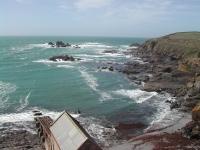
Cornwall's historic environment service and Penzance-based maritime archaeologist Kevin Camidge have been commissioned by English Heritage to carry out a marine environmental assessment of the Royal Anne Galley, a protected wreck lying in about five meters of seawater off the Lizard Point.
It follows a historical study of the wreck undertaken by HES in 2005.
Charles Johns, senior archaeologist from HES said: "This project is particularly important because it is the first environmental assessment of a protected wreck to be commissioned and will enable the council's Historical Environment Service to be a key player' in developing methodologies for assessing and managing protected wreck sites."
Under the 2002 National Heritage Act, English Heritage assumed responsibility for maritime archaeology in English coastal waters including 45 protected wreck sites; 10 of which lie off the coast Cornwall and the Isles of Scilly.
Read more... -
Shipwreck yields world's oldest salad dressing
- On 21/06/2008
- In Underwater Archeology
By Jennifer Viegas
Olive oil infused with fragrant herbs has been identified in an ancient Greek ceramic transport jar known as an amphora, along with another container of what could be the world's oldest retsina-type wine, according to a recent Journal of Archaeological Science paper.
It is the first time DNA has been extracted from shipwrecked artifacts -- the two large jars were recovered from a 2,400-year-old wrecked vessel off the Greek island of Chios.If the second jar indeed contained a retsina-like wine, which is preserved and flavored with a tree resin known as mastic, then the find would push back the known origins of mastic cultivation by 200 years.
"This (study) opens new possibilities for archaeologists -- now perhaps we can figure out what was carried in almost every 'empty' jar we find in land excavations or shipwrecks," researcher Brendan Foley of the Woods Hole Oceanographic Institution told Discovery News. -
Website following archaeologists to the bottom of the lake
- On 19/06/2008
- In Ancien Maritime History
From Johns Hopkins University
Follow along online as Johns Hopkins University Egyptologist Betsy Bryan and her team of graduate students, artists, conservators and photographers expand their investigation of Mut Temple this summer, turning their attention to the temple's Sacred Lake.Bryan and her crew are once again in Luxor, Egypt, sharing their work via "Hopkins in Egypt Today," their popular digital diary offering a virtual window into day-to-day life on an archaeological dig.
In collaboration with the American Research Center in Egypt, which also supports Johns Hopkins' work inside the temple proper, Bryan will excavate on the northeast arm of the lake after ARCE's engineers have drained the lake.Excavation will proceed from the region of an ancient stone dock in a swath around 20 meters in breadth down into the basin of the drained lake.
Any materials found in the lake bed will be conserved and desalinated near the bank of the lake before being transferred to a protected environment.The primary goal of this brief dig is to develop procedures for more extensive excavation of the lake next year. The lake will be refilled with less saline water after the work is completed in July and will be drained again next winter when the dig resumes.
The team will consist of former Johns Hopkins graduate student Violaine Chauvet, now a lecturer in Egyptology at University of Liverpool in England; photographers Jay Van Rensselaer and Will Kirk; Hiroko Kariya, stone conservator; Will Schenck and Keli Alberts, artists; Lotfi Hassan, conservator; and three Johns Hopkins graduate students, Ashley Fiutko, Shaina Norvell-Cold, and Meredith Fraser, all of whom are finishing their first-year studies.
Read more...