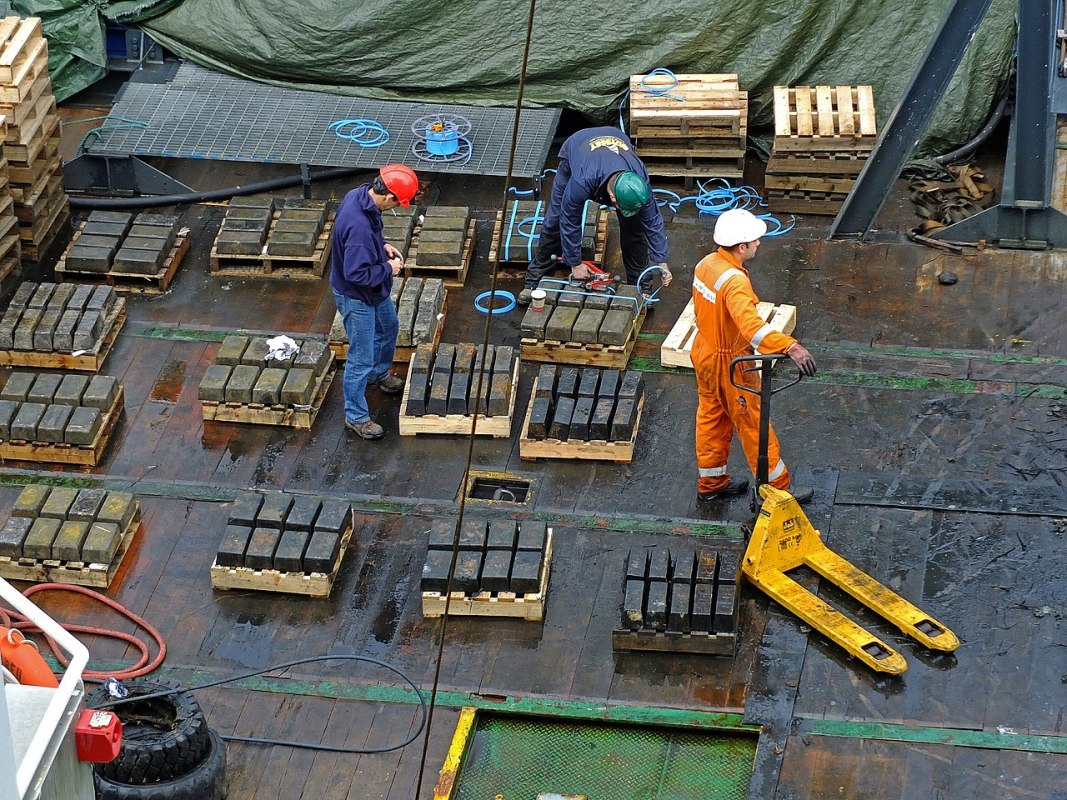
Odyssey Marine Exploration, Inc. (OMEX) is engaged in the archaeologically-sensitive exploration and recovery of deep water shipwrecks that contain treasure throughout the world.
Odyssey’s May 2007 recovery of the estimated $500M Black Swan treasure and subsequent legal dispute with Spain has made headlines worldwide.
Odyssey utilizes innovative methods and state-of-the-art sonar technology to conduct extensive deep ocean search and recovery operations on high value shipwreck targets.
Sea exploration has dramatically changed due to state-of-the-art technologies that enable the search, discovery and recovery of shipwrecks that were previously beyond reach.
Odyssey is transforming activities long associated with "pirates and treasure hunters", into a serious and legitimate commercial industry founded on strong business practices, a commitment to the environment and high archaeological standards.
There are well over 1,000 high-value shipwreck targets ($50 million - $2+ billion).
El 5 de octubre de 1804, a 30 millas náuticas del cabo de Santa María de Portugal, en actuales aguas internacionales, la Marina Real británica hundió a cañonazos la fragata Nuestra Señora de las Mercedes.
El inesperado ataque se llevó a cabo violando el Tratado de Paz de Amiens —suscrito entre Francia, España y Reino Unido— de 1802. Murieron 275 tripulantes, mientras un enorme cargamento de oro, plata y cobre se hundía en el mar a unos 1.130 metros de profundidad.
En 2007, la compañía cazatesoros Odyssey Marine Exploration expolió 600.000 monedas de la carga, aunque España terminó recuperándolas en los tribunales estadounidenses. Sin embargo, como revelan las actas del congreso internacional Archaeology: Just Add Water, celebrado en Varsovia en 2019, ahora hechas públicas, los expoliadores solo se centraron en las monedas y abandonaron todo lo demás.
Dejaron intacto el segundo tesoro de la Mercedes. Centenares de sus piezas ya han vuelto a España, están siendo restauradas y se expondrán en noviembre. Nunca se había hecho una excavación a tal profundidad.
En 2014 el Museo Nacional de Arqueología Subacuática, ARQUA, (Cartagena), dependiente del Ministerio de Cultura, inició un proyecto para que España excavase científicamente el pecio. Se trataba de un reto nunca acometido por ningún país.
Los dos o tres casos anteriores en los que se había bajado por debajo de los 500 metros se habían limitado a filmar y fotografiar. El plan del museo planteaba que era perfectamente posible hacerlo si se aunaban esfuerzos.
Se invitó al el Instituto Español de Oceanografía (IEO) y se cursó también invitación a la Armada como institución observadora. Aceptó.
En verano de 2015, zarpó de Cartagena la primera expedición conjunta a bordo del buque oceanográfico Ángeles Alvariño, del IEO. Al llegar a la vertical del pecio, la primera inmersión del ROV (siglas en inglés de vehículo operado remotamente, un complejo equipo submarino teledirigido), localizó exactamente el corazón de la nave.
Pero las pantallas de los ordenadores señalaban que los restos estaban muy dispersos debido a la explosión de 1804 y a las técnicas destructivas de Odissey. Se tomaron miles de fotografías y vídeos. La campaña se repitió en las de los veranos de 2016 y 2017.
A esta última se sumó el Centro de Investigaciones Científicas (CSIC), que aportó el buque Sarmiento de Gamboa. Los minisubmarinos detectaron esta vez “un tesoro más importante: miles de objetos enterrados bajo el fondo marino que muestran, en parte, cómo era la vida a principios del siglo XIX: de cañones de bronce a vajillas de oro y plata”. “Su valor científico y museístico”, como señala el informe del director del ARQUA y del proyecto, Iván Negueruela, “es incuestionable”.
El estudio recién publicado por la Universidad de Varsovia titulado The Mercedes 2015–2017 Project: Exploration and Excavation of the Wreck Nuestra Señora de las Mercedes (1.138 m depth) (Proyecto Mercedes 2015-2017.
Exploración del pecio de Nuestra Señora de las Mercedes (1.138 metros de profundidad) señala que el objetivo de las tres campañas fue definir “la extensión del yacimiento, documentar las condiciones en que quedó este tras el saqueo, realizar un mapa arqueológico de los materiales que permanecen bajo el lecho marino y la extracción de algunos de los materiales detectados”.
In 1941, the SS Gairsoppa, a British cargo ship, was sunk by a German submarine. Only one member of the crew survived, with dozens perishing in the attack.
What was left of the vessel remained below the waters of the Atlantic off the coast of Ireland for decades. In 2013, Odyssey Marine discovered the remains of the ship — including a massive haul of silver that was on board when the Germans attacked.
That trove of silver wasn’t the only valuable thing found in the shipwreck, however. A new report from Allyson Waller at The New York Times focuses on another significant discovery made in the wreckage: a number of letters — more than 700 in total — that offer an intimate and personal glimpse into life during wartime.
As you might guess, letters that have been in an underwater space for 70-odd years aren’t in the best condition. The Times article focuses on the work conservators are doing to reconstruct the letters, so that we can learn more about who wrote and received them and properly honor those whose lives were lost.
Controversy continues to swirl around the discovery in the murky depths of the Mediterranean of a 17th century Ottoman shipwreck in the Lebanese EEZ and the subsequent confiscation of its salvaged cargo by customs officials in Limassol.
News of the recovery of the artifacts and their confiscation at the end of 2015 recently resurfaced in the wake of a press release issued by Enigma Recoveries, the London-based company that funded the underwater exploration of the site.
Enigma hailed the discovery as a “once in a generation find that tells the story of the beginning of the globalised world”.
The company claims the legal problems it has encountered in Cyprus were the result of a simple administrative mistake. The department of antiquities, which currently has custody of the 588 artifacts confiscated in Limassol port, has a decidedly different take.
It accuses the company of carrying out illicit underwater excavations. Furthermore, the department claims that the people responsible for the underseas operation are no more than professional treasure hunters, motivated solely by their pursuit of a profitable pay-off.
Tampa-based Odyssey Marine Exploration Inc.’s revenue shrunk to nearly nothing in the year’s third quarter.
The deep-sea exploration company reported just $11,854 in revenue, down from $2.9 million the same quarter last year. The company’s previous multi-million-dollar revenue came from a contract with Magellan Offshore Services, for which Odyssey conducted shipwreck expedition services.
The company recorded a net loss of $2.3 million for the third quarter, amounting to 27 cents per share. In the same quarter last year, the company reported a loss of $2.1 million, or 28 cents per share.
Just last quarter, Odyssey brought in $587,000 in revenue from marine surveys and recovery services for Magellan.
The services stem from a 2015 agreement Odyssey entered with Magellan when it sold $21 million in assets from its shipwreck business. That sale was used to wipe out Odyssey’s $11.7 million in debt.
"I’ve stated for the past nine months that although we intended to focus corporate capital on the mineral exploration side of the business, we do not intend to abandon our shipwreck roots," Odyssey CEO Mark Gordon said in a release at the time.
Per the deal, Magellan owns Odyssey’s proprietary shipwreck database and rights to shipwreck projects. Odyssey was the sole provider of shipwreck search and recovery expeditions for Magellan. It also gets just over 21 percent of proceeds from any shipwreck projects.
Two cannons, one each from the 16th and 17th centuries, have been recovered from the ocean floor by a Spanish team working off Faro, ending a campaign in which the Spanish government managed to prevent a US company from claiming the contents of Nuestra Señora de las Mercedes.
Several pieces of the frigate, sunk in 1804 by the English navy, have been recovered with the use of a Remotely Operated Vehicle from the Spanish Institute of Oceanography. The two cannon were recovered from the wreck lying 1,000 metres below the surface.
The archaeologist, Pedro Barros, of the Directorate General of Cultural Heritage underlined the importance of the recovery of the cannons which will "help us understand life on board at that time and the circumstances of the sinking of the frigate."
The Nuestra Señora de las Mercedes (Our Lady of Mercy) was a Spanish Navy frigate sunk by the British off the south coast of Portugal on 5 October 1804, during the battle of Cape Santa Maria. At the time of the naval action, Spain and England were at peace with each other. The frigate was part of a small flotilla sailing from Montevideo to Cadiz, transporting silver and gold from Peru and vicuna, cinnamon and quinoa.
This flotilla was intercepted by a British Navy task force, commanded by Graham Moore aboard HMS Indefatigable, and ordered to change course and proceed to a British port for inspection.
The Spanish commanding officer, Brigadier José de Bustamante y Guerra (1759-1825) objected that the two nations were at peace, declared that they would not comply with the order, and ordered battle quarters, despite being outgunned and outnumbered.
A single shot from HMS Amphion, commanded by Samuel Sutton, hit the ship's magazine causing an explosion that sank the ship. 250 crewmen were lost, and 51 survivors were rescued from the sea
The United States company, Odyssey Marine Explorations, discovered the wreck and recovered almost 500,000 silver and gold coins in 2007, transporting them to the US. The value was estimated at 500 million US Dollars
A court case followed after Spain claimed the vessel carried its flag. Peru had claimed the treasure originally had been plundered by the Spanish but the court decided that the Spanish government was the rightful successor of interest because at the time of the wreck, Peru was considered a Spanish colony and not a separate legal entity, therefore it had no legal standing to be entitled to the proceeds of the lawsuit.
Next, a U.S. federal court and a panel from the US Court of Appeals upheld the Spanish claim to the contents of the ship and Spain took control of the treasure in February 2012.