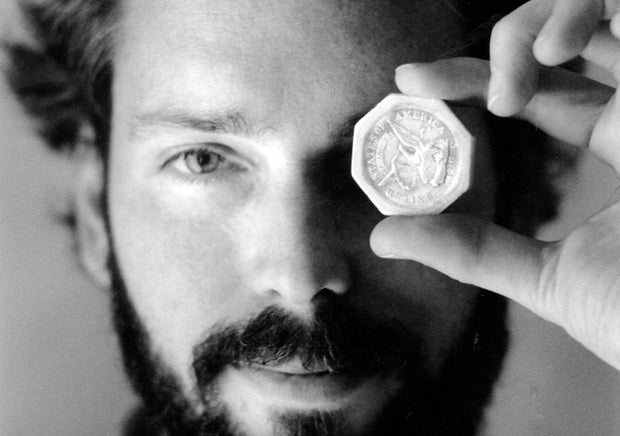
Two con-artist treasurer hunters who duped 130 investors out of $630,000 by promising to salvage gold from shipwrecks on the bottom of the ocean have been sentenced to jail.
Lawrence James Phillips, 37, and Christopher Paul Woolgrave, pleaded guilty earlier this month to one count each of operating an unregistered managed investment scheme and faced sentencing today.
Brisbane's District Court heard the pair had sought money from private investors to salvage treasure from shipwrecks sitting at the bottom of the ocean in South-East Asia.
A total of 130 Australian investors coughed up $US590,490 ($AU629,071) between January 2002 and May 2003.
Phillips and Woolgrave produced an information memorandum that was circulated amongst potential participants of the scheme.
A hedge fund executive has been unmasked as one of the world's leading deep-sea shipwreck hunters after a Bloomberg Businessweek investigation uncovered his decades-long hunt for sunken treasure worth billions.
Anthony Clake, a 43-year-old executive at Marshall Wace in London, has not been going to the bottom of the ocean himself, however. He's been investing in and directing high-tech operations to find lost treasures on the ocean floor.
Marshall Wace is one of the world's biggest hedge funds, managing assets worth about $62 billion.
According to Bloomberg, Clake has quietly spearheaded treasure hunts using advanced underwater technology including million-dollar marine robots that can descend to depths of 6,000 meters, and a sonar system that creates 3D maps of the seabed.
The technology has allowed wealthy individuals like Clake to fund exploration of the seabeds.
Clake's successes include the SS Coloradan, an American steamer sunk by a German U-boat off the coast of South Africa. Found by his contractors in 2016, the wreck contained drums of gold precipitate.
Another ship found at at depth of 4,500 meters off the coast of west Africa contained 50 tons of silver coins. The discovery was kept secret, the coins melted down and sold, and everyone involved had to sign an NDA, Bloomberg reported.
It isn't clear how much money Clake has made from the salvaged treasure. But often the most lucrative wrecks draw competing claims, legal battles, and seizures.
Underwater treasure hunters exploring the remains of a sunken Swedish steamer in the Baltic Sea have discovered a motherload of cognac and liqueur bottles stowed on the ship — but are unsure if they’re still drinkable.
Divers and unmanned vehicles from Ocean X team — who were the first to discover the steamer ‘Kyros’ in 1999 — and iXplorer have salvaged more than 600 bottles of De Haartman & Co. cognac and 300 bottles of Benedictine liqueur.
The bottles were supposed to be delivered from France to St. Petersburg, Russia via Sweden in December 1916, the team posted on their Its trip came to a quick halt when it was stopped by German submarine ‘UC58’. The submarine sank the steamer as the Germans considered parts of the cargo as contraband. The Kyros crew however, were transferred to a nearby ship and were safely returned to Sweden.
The Benedictine company — now owned by Bacardi — was just 50 years old when the bottles disappeared with the shipwreck. After 100 years of lying underwater, the team has yet to determine whether the alcohol is still suitable to drink.
“We don’t know yet if its drinkable. We get a fraction of smell from the Benedictine bottles and it smells sweet and from herbs,” Peter Lindberg, a spokesperson for Ocean X, told CNN. “We can’t get any sense of smell from the cognac bottles, but that might just be in order since it should not smell through a cork.”
Bill Day has spent 35 years and millions of dollars trying to find one of the world’s most famous shipwrecks – the gold-laden General Grant.
The ship struck the Auckland Islands in 1866 and has attracted pirates, treasure hunters and adventurers ever since. Next week, Day leaves from Bluff on his fifth, and final, expedition to discover the wreck. Mike White meets the man who might finally solve the riddle of the General Grant’s gold.
It was a rare and welcome thing – a calm day in the Auckland Islands, a place notorious for being the storm-slashed graveyard of ships and sailors.
It was January 1986 and Bill Day had just slithered back on board an inflatable boat after a fruitless dive trying to find the most famous of these wrecks, the General Grant. He perched on the boat’s edge, admiring the cove they were in, a waterfall tumbling off one edge, a neat archway piercing a peninsula.
“Isn’t it a pity wrecks don’t go down in places like this,” he lamented to the boatman.
Minutes later, fellow diver Willie Bullock broke the surface clutching a lead weight old ships used to measure the water’s depth. “There’s a bit of s..t down there,” Bullock spluttered.
Day couldn’t believe his ears or luck – an unknown wreck in a beautiful location, which fitted the description of where the General Grant sank with a fortune in gold. He flicked on his mask and fins, and rolled back into the water.
As the bubbles cleared in front of his mask and he dived towards the seabed, Day was already thinking that maybe they’d finally solved the mystery of the General Grant that had confounded and eluded so many, for so many years.
The General Grant had set sail from Melbourne in May 1866, bound for England with 83 crew and passengers on board. It was a 180’ square-rigged sailing ship, built in Maine two years before, and carrying a cargo including wool and skins. But it also carried 2576 ounces (73kg) of gold, probably in bars and sovereigns.
And on top of that, many of the passengers were miners returning home with small fortunes in gold, scraped and scrabbled from the unforgiving earth of Victoria’s goldfields. On the evening of May 13, 10 days after setting sail, the General Grant’s captain was alarmed to hear a cry from the masthead that land had been sighted dead ahead, and altered course.
A former deep-sea treasure hunter is preparing to mark his sixth year in jail for refusing to disclose the whereabouts of 500 missing coins made from gold found in an historic shipwreck. Research scientist Tommy Thompson has been held in contempt of court since Dec. 15, 2015, for that refusal.
He is also incurring a daily fine of $1,000. Thompson's case dates to his discovery of the S.S. Central America, known as the Ship of Gold, in 1988. The gold rush-era ship sank in a hurricane off South Carolina in 1857 with thousands of pounds of gold aboard, contributing to an economic panic.
Despite an investors lawsuit and a federal court order, Thompson, 69, still won't cooperate with authorities trying to find those coins, according to court records, federal prosecutors and the judge who found Thompson in contempt.
Thompson says he's already said everything he knows about the coins. Thompson pleaded guilty in April 2015 for his failure to appear for a 2012 hearing and was sentenced to two years in prison and a $250,000 fine.
But Thompson's criminal sentence has been delayed until the issue of the gold coins is resolved. After a federal judge ordered Thompson in 2012 to appear in court to disclose the coins' whereabouts, Thompson fled to Florida where he lived with his longtime female companion at a hotel where he was living near Boca Raton.
U.S. marshals tracked him down and arrested him in early 2015. Federal law generally limits jail time for contempt of court to 18 months. But a federal appeals court in 2019 rejected Thompson's argument that that law applies to him, saying his refusal violates conditions of a plea agreement.
El 5 de octubre de 1804, a 30 millas náuticas del cabo de Santa María de Portugal, en actuales aguas internacionales, la Marina Real británica hundió a cañonazos la fragata Nuestra Señora de las Mercedes.
El inesperado ataque se llevó a cabo violando el Tratado de Paz de Amiens —suscrito entre Francia, España y Reino Unido— de 1802. Murieron 275 tripulantes, mientras un enorme cargamento de oro, plata y cobre se hundía en el mar a unos 1.130 metros de profundidad.
En 2007, la compañía cazatesoros Odyssey Marine Exploration expolió 600.000 monedas de la carga, aunque España terminó recuperándolas en los tribunales estadounidenses. Sin embargo, como revelan las actas del congreso internacional Archaeology: Just Add Water, celebrado en Varsovia en 2019, ahora hechas públicas, los expoliadores solo se centraron en las monedas y abandonaron todo lo demás.
Dejaron intacto el segundo tesoro de la Mercedes. Centenares de sus piezas ya han vuelto a España, están siendo restauradas y se expondrán en noviembre. Nunca se había hecho una excavación a tal profundidad.
En 2014 el Museo Nacional de Arqueología Subacuática, ARQUA, (Cartagena), dependiente del Ministerio de Cultura, inició un proyecto para que España excavase científicamente el pecio. Se trataba de un reto nunca acometido por ningún país.
Los dos o tres casos anteriores en los que se había bajado por debajo de los 500 metros se habían limitado a filmar y fotografiar. El plan del museo planteaba que era perfectamente posible hacerlo si se aunaban esfuerzos.
Se invitó al el Instituto Español de Oceanografía (IEO) y se cursó también invitación a la Armada como institución observadora. Aceptó.
En verano de 2015, zarpó de Cartagena la primera expedición conjunta a bordo del buque oceanográfico Ángeles Alvariño, del IEO. Al llegar a la vertical del pecio, la primera inmersión del ROV (siglas en inglés de vehículo operado remotamente, un complejo equipo submarino teledirigido), localizó exactamente el corazón de la nave.
Pero las pantallas de los ordenadores señalaban que los restos estaban muy dispersos debido a la explosión de 1804 y a las técnicas destructivas de Odissey. Se tomaron miles de fotografías y vídeos. La campaña se repitió en las de los veranos de 2016 y 2017.
A esta última se sumó el Centro de Investigaciones Científicas (CSIC), que aportó el buque Sarmiento de Gamboa. Los minisubmarinos detectaron esta vez “un tesoro más importante: miles de objetos enterrados bajo el fondo marino que muestran, en parte, cómo era la vida a principios del siglo XIX: de cañones de bronce a vajillas de oro y plata”. “Su valor científico y museístico”, como señala el informe del director del ARQUA y del proyecto, Iván Negueruela, “es incuestionable”.
El estudio recién publicado por la Universidad de Varsovia titulado The Mercedes 2015–2017 Project: Exploration and Excavation of the Wreck Nuestra Señora de las Mercedes (1.138 m depth) (Proyecto Mercedes 2015-2017.
Exploración del pecio de Nuestra Señora de las Mercedes (1.138 metros de profundidad) señala que el objetivo de las tres campañas fue definir “la extensión del yacimiento, documentar las condiciones en que quedó este tras el saqueo, realizar un mapa arqueológico de los materiales que permanecen bajo el lecho marino y la extracción de algunos de los materiales detectados”.