HOT NEWS !
Stay informed on the old and most recent significant or spectacular
nautical news and shipwreck discoveries

Revisiting the Earl of Warwick’s ship

By Dr Edward Harris - The Royal Gazette Online
In the first decade of the settlement of Bermuda, 400 years ago in July 1612, communication with England, from whence the settlers came, was through the infrequent ships chartered or owned by the shareholders of the Bermuda Company.
Sometimes, as in the case of the Garland in 1619, vessels were waylaid by storms or generally blown off course and could take months to reach the island.
The ships brought the necessities of life of the day that could not be obtained in Bermuda, as well as items, such as gunpowder and guns, for the defence of the island, in particular to hold it against a Spanish attack.
Not only was life precarious at sea, but given the position of the island in the track of hurricanes, ships were often endangered, along with their cargoes, as they sat at anchor, usually in Castle Harbour.
Such was the situation in late 1619, when the Garland limped in after being overdue for some weeks, as she had left Britain eight weeks before the Warwick, which brought the new governor Nathaniel Butler and had arrived on October 20, 1619.
The Garland had been within sight of Bermuda three weeks previous, in late October, ‘but she had once again been put off by bad weather, and was forced to the southward, where they lay beating against the wind for so long that their water supply was almost gone, and a great many of her passengers and seamen sick or dead’.
Thus from the middle of November, 1619, the Garland and the Warwick rode at anchor in Castle Harbour, awaiting loading of cargo, mainly tobacco.
Governor Butler, meantime, was about his official duties and in early December, “he made a journey right through the main island and the tribes, to hold a general assize in Captain Tucker’s grand house at the Overplus”.
The Assize took two days, whereupon he returned to St. George’s, only to be met with a late hurricane, which caused the Garland to cut down her mainmast, ‘but the Warwick, which was moored not far from the Garland, slipped all her anchors and was driven onto the rocks, and was completely wrecked’.
Governor Butler managed to raise some guns from the shipwreck for the forts and in the late spring went back to the site, with little military success: ‘Some floating barrels of beer were taken out of the hold, but only after a lot of trouble; some of these were in much better condition than was expected, even though they had lain under water for almost six months.’
More guns were taken out of the wreck of the Warwick over the years, so that by 2012, there were none apparent on the site of the 1619 sinking.
Except for such removals, the Warwick slowly rotted away, until all that was left, under a pile of ballast, was a section of the starboard side of the vessel, preserved when the wreck rolled onto its right side.
Museum’s Treasure! exhibit offers valuable lessons

By Lannis Waters
By Willie Howard - Palm Beach Post
Visitors to the South Florida Science Museum can explore the quest for gold and other valuables in the days of pirates and modern times through the exhibit Treasure !, which runs through Jan. 6.
While learning about treasure in the days of Spanish galleons and pirates, kids of any age can take turns trying to “fire” a cannon through a port hole to protect their vessel by sinking a passing pirate ship.
Those who miss are instructed to “swab the deck, you scallywag.”
Moving forward in time, visitors can learn about the history of the metal detector or about Geocaching — the use of hand-held GPS devices to find hidden caches, a hobby created in 2000 by Dave Ulmer near Portland, Ore.
Treasure! is not only about the quest for precious metals and other valuables.
It’s about the methods used to find them.
Because scuba gear is used by divers to recover treasure from sunken Spanish galleons, the history of the Aqua Lung, invented in 1943 by Jacques Cousteau and Emile Gagnan, is featured in the exhibit.
A more modern underwater exploration tool, the remotely operated vehicle, or ROV, is available for visitors to steer in an aquarium.
One mysterious display describes the so-called Money Pit at Oak Island, Nova Scotia, where underground caverns discovered in the 1800s supposedly contain man-made objects.
The island in Mahone Bay is rumored to be a place where Captain William Kidd or possibly Edward Teach (Blackbeard) buried treasure.
Sandy reveals shipwreck remains at Surf City
Shifts in the sand at Surf City from Hurricane Sandy led to a unique discovery.
Wreckage from the William H. Sumner, a three masted schooner that was built in 1891 was uncovered once again in the sand.
Every time there is a strong storm, people from the area say the wreckage becomes visible. And while, you can see portions of the ship's wood, some say the mystery related to what really happened when the ship crashed is still buried.
In 1919, the William H. Sumner was traveling from the West Indies to New York carrying lumber, phosphate rock and mahogany. However, something went wrong.
People that saw the ship pass by Wrightsville Beach noticed it was acting unusual.
"It was 1919, and people saw schooners pass all the time.
They know what one is supposed to look like, [this one] was too close to shore and the sails weren't right," said Nathan Henry, an assistant state archeologist who works at the Fort Fisher .
Sure enough, the ship crashed at the Topsail Inlet. After salvaging some parts, the Coast Guard blew it up because it was a navigational hazard. The around 10 ft piece of wood, which originally was the ship's inner shell, wound up on Surf City's beach.
While the wood is exposed, some say what happened back in 1919 is still a mystery. According to Henry, the Captain of the ship was shot after the ship wrecked.
Originally the First Mate was charged with murder, but he later appealed it and won. Ever since, the death has been ruled a suicide. However, the details remain fuzzy.
Japanese shipwreck secrets to be unlocked
From Nine News
The Arafura Sea off the Northern Territory coast can be a treacherous stretch of water during a storm.
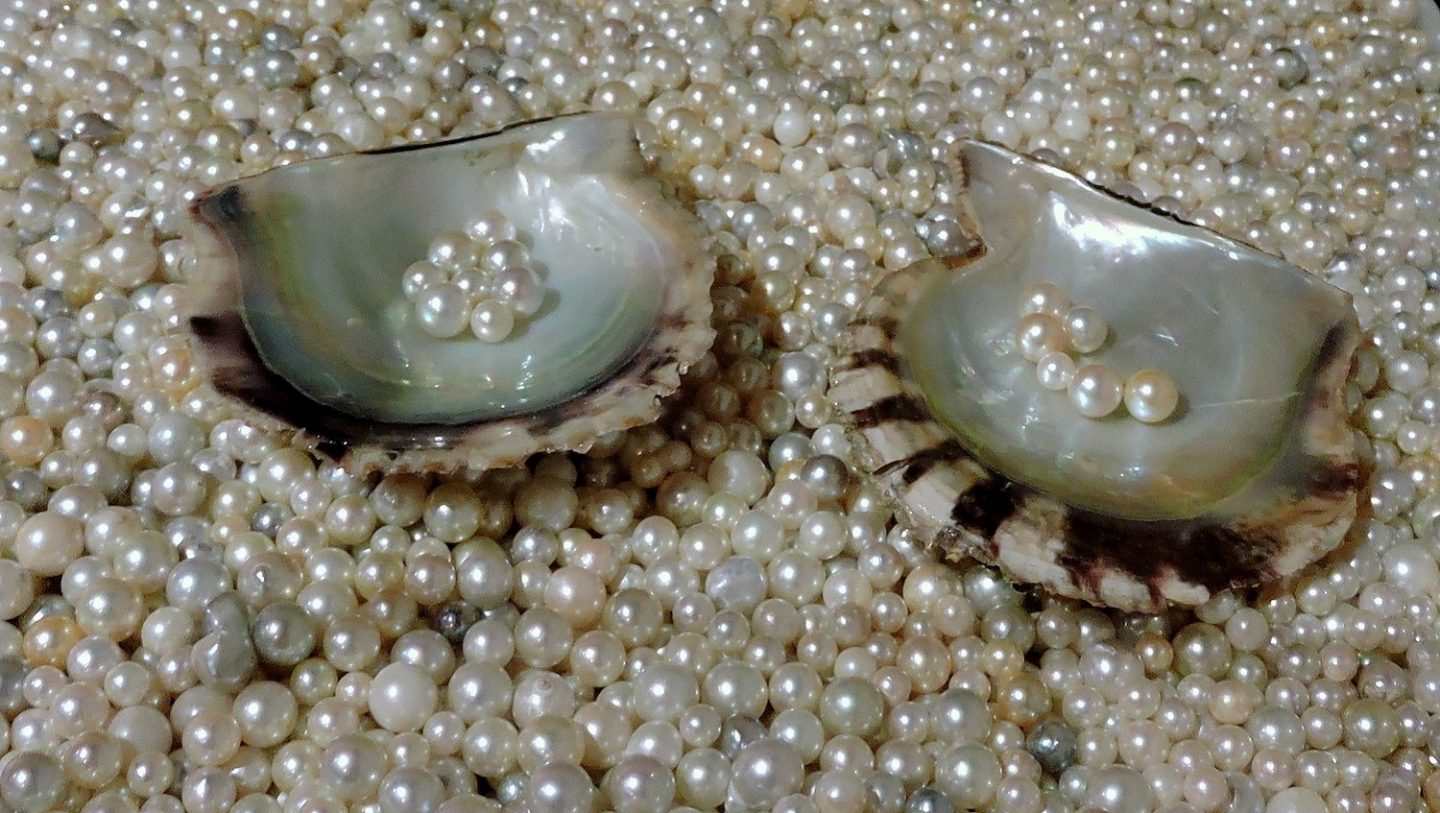
So it was in 1937 when Japanese pearling mother ship the Sanyo Maru went down in Boucaut Bay, with 20 people aboard and about 200 tonnes of mother of pearl, worth about 70,000 pounds at the time.
"It was an absolute fortune," maritime archaeologist David Steinberg said on Friday.
Mr Steinberg, from the NT's Department of Lands, Planning and the Environment will next week lead a team of six divers who will investigate the wreck.
It is thought the Sanyo Maru went down because it was carrying too much cargo during the rough weather.
Two people died when it sunk and another perished during a salvage operation a few months later, Mr Steinberg said.
Two of the bodies have since been recovered, but it is possible one remains at the site.
As a sign of respect, the diving team will perform a traditional ceremony where they take a sip of saki and then pour the rest of the bottle over the wreck.
"We are just going to treat this site with respect, as if it is a grave site," Mr Steinberg said.
It is likely that the salvage team in the 1930s only took part of the huge reserves of mother of pearl on board.
But before treasure hunters with visions of finding large numbers of pearls on the site pack their bags, Mr Steinberg cautioned that the Sanyo Maru is protected by law as a significant shipwreck.
Russian ship carrying 700 tons of gold ore missing

A vessel with a nine-person crew and 700 tons of gold ore onboard has gone missing in stormy seas off Russia's Pacific Coast.
The ship sent a distress call on Sunday as it was sailing from the coastal town of Neran to Feklistov Island in the Sea of Okhotsk.
The vessel, hired by mining company Polymetal, was carrying 700 tons of gold ore from one deposit to another where it was to be processed. Gold ore is the material from which gold is extracted and contains only a small percentage of the precious metal.
Polymetal's spokesman on Monday would not estimate the value of the cargo.
The company said it has shipped ore via that route before, and there was nothing unusual in shipping it by the sea.
Hurricane Sandy – Monday Evening Update
From Bloomberg
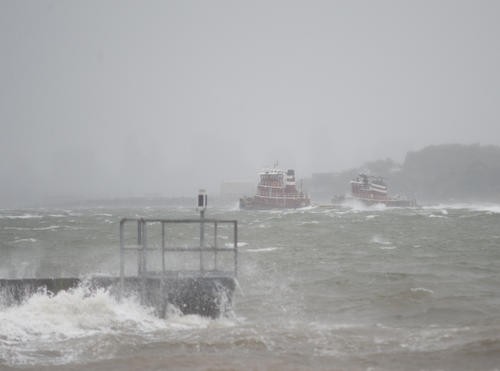
As midnight approaches America’s east coast Hurricane Sandy continues to lash the shoreline with wind, rain and snow.
The system came ashore near Atlantic City, New Jersey, at 8 p.m. New York time, and by 9 p.m. the National Hurricane Center said it was receiving reports of hurricane-force wind gusts over Long Island and the New York metropolitan areas.
Sandy is no longer a hurricane because it’s drawing energy from temperature differences and not the ocean, making the transition to a superstorm that may push a wall of water ashore in the Northeast.
As of 9 p.m. Eastern time, Sandy was 15 miles (24 kilometers) northwest of Atlantic City, moving west-northwest at 21 miles per hour with top sustained winds of 80 mph.
It’s forecast to turn north by tomorrow and cross through Pennsylvania to reach New York on Oct. 31, the center said.
Rains are soaking the mid-Atlantic states, 3 feet (0.9 meters) of snow may fall in the Appalachians and a record- breaking storm surge may wash over Manhattan’s Battery Park.
Tall Ship Bounty abandoned, sinks in heavy seas off Hatteras

From gCaptain
Update 3: The Coast Guard has reported that the body of a woman, identified as Ms. Claudene Christian, has been recovered.
A crew aboard an MH-60 Jayhawk helicopter from Coast Guard Air Station Elizabeth City, N.C., located Christian who was unresponsive, hoisted her into the helicopter and took her to Albemarle Hospital in Elizabeth City.
The search for the captain, Robin Walbridge, continues approximately 90 miles southeast of Hatteras, N.C., Monday.
Update 2: As of approximately 0845, the USCG reports the Bounty has sunk.
Update 1: Rescuers at the United States Coast Guard swung into action this morning after receiving word that the crew of the 180-foot, three-masted tall ship, Bounty, abandoned ship approximately 90 miles southeast of Hatteras, North Carolina.
The 16-person crew donned cold water survival suits and lifejackets before launching in two 25-person lifeboats. US Coast Guard watchstanders dispatched a pair of MH-60 Jayhawk helicopters from Coast Guard Air Station Elizabeth City, N.C., to rescue the crew.
The first Jayhawk crew arrived on scene at approximately 6:30 a.m. and hoisted five people into the aircraft, and a second helicopter arrived and rescued nine people.
The 14 people are being flown to Air Station Elizabeth City where they will be met by awaiting emergency medical services personnel.
The C-130 Hercules aircraft remains on scene and is searching for the two missing crewmembers and a third Jayhawk crew is en route to assist search and rescue efforts.
Two men find 19th-century shipwreck in lake near Oswego
From Democrat & Chronicle
More than 500 feet below the surface of The Shannona team of determined shipwreck hunters found the final resting place of a coal schooner that left Oswego 138 years ago only to sink 20 miles out to sea.
The Shannon was discovered by former Greece resident Daniel Scoville and friend Chris Koberstein while looking for another wreck off the shores of Oswego.
This is not Scoville’s first find. He and his fellow wreck hunters, including Jim Kennard of Perinton, have found more than 20 ships in Lake Ontario and elsewhere over the past decade, but this summer’s find, he said, is pretty sweet.
“For me the hobby started as a diving hobby and then it became about ‘how deep can we go ?’ ” he said. “Then we decided that it would be cool to see ships no divers have seen before.”
The Shannon was last seen the night of June 20, 1874. A few hours after setting sail to deliver coal to a client in
Ganaoque, Canada, water came gushing through a hole in the hull.
According to newspaper accounts, the captain ordered the crew to cut down the jib in hopes the Shannon would run over it and blanket the leak to slow the flow of the water.
But the last-ditch effort did not work and with the pumps unable to keep up, the crew jumped safely to a small boat just in time to see the vessel sink.
“They only had one oar, but they paddled all the way back to Oswego,” said Scoville.
Scoville and Kobertein searched the waters of Lake Ontario near Oswego for nearly three weeks in June and July using a side-scan sonar to identify potential targets on the lake bottom.