HOT NEWS !
Stay informed on the old and most recent significant or spectacular
nautical news and shipwreck discoveries

-
Treasure hunters
- On 18/04/2009
- In Treasure Hunting / Recoveries
By John Richardson
A Portland-based shipwreck hunter says he is about to recover the world's richest sunken treasure – a secret World War II cargo of platinum and diamonds that's worth $3 billion to $5 billion.
Greg Brooks and his partners have filed a claim to the wreck in U.S. District Court in Portland. He said he and a crew of eight plan to begin the salvage in a few weeks.
The ship is identified in the court filings as the Port Nicholson, a British merchant steamer that was torpedoed by a German U-boat off Cape Cod in 1942.It was believed to be carrying automobile parts and military supplies when it sank. The only items seen or recovered so far have been some auto parts, which were presented in court to secure salvage rights.
Brooks, however, said his research team has uncovered federal documents, logbooks and witness accounts that indicate the ship was loaded with precious cargo headed for New York and other ports.
"It was a top-secret mission and they were transporting these valuable cargos during World War II," Brooks said. "We've got a lot of information that led us to say, 'Let's go get this.'"
A total of 71 tons of platinum ingots were loaded into the ship's cargo hold, Brooks says, as a payment from the Soviet Union to the United States for military supplies. -
N.C. man's search for history lies in finding the La Galga
- On 16/04/2009
- In Treasure Hunting / Recoveries
By Diane Tennant
John Amrhein wants to hunt on Assateague Island for a Spanish ship lost in 1750, but government stands in his way, both here and abroad.
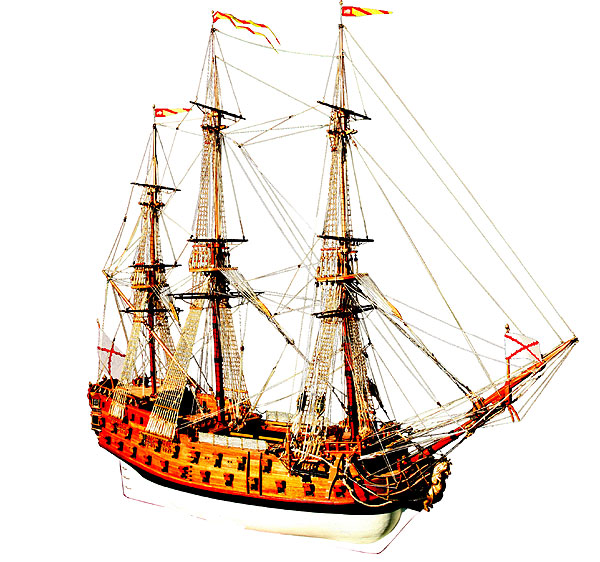
It's a complicated matter, wrapped up in a lawsuit that awarded Spain ownership of two wrecks - Juno and La Galga - off the island's coast.But Amrhein believes La Galga is actually buried on the island and that he should be granted a permit to explore a marsh on the national wildlife refuge.
Amrhein has been pursuing the cause since the early 1980s, and he's not about to give up now. He recently presented a scale model of La Galga to the refuge visitor center, and he took a small group that included U.S. Rep. Glenn Nye, D-Norfolk, to visit the marsh.
"I think we're going to make progress this year," Amrhein said afterward. "I'm not a bad guy. We're just trying to get to the truth."
The Kill Devil Hills resident said that an archaeological firm working with him applied more than a year ago for a federal permit to explore the marsh but has heard nothing. -
Chilean "treasure boat" to be rescued
- On 14/04/2009
- In Maritime News
By Chris Noyce
The recovery of a Chilean fishing boat that sank in the Straits of Magellan in January with an alleged cargo of US$22 million (9.5 tons) in gold and silver begins this month following accusations that the boat’s demise may be part of a fraudulent insurance claim.
The rescue will be carried out by four rescue teams from Dutch heavy lifting and transport experts Mammoet, the same company that rescued the remains of the Russian nuclear submarine “Kursk” from the bottom of frozen Barents Sea in 2001. The rescue teams will dive 75 meters under the sea to examine the boat and verify its contents. The operation will most likely be taken next week.
On Jan. 16 the Polar Mist, a Chilean fishing boat, sunk while traversing the Straits of Magellan, a sea route located south of mainland Chile and just north of Isla Grande de Tierra del Fuego in southern Argentina and Chile. The Straits are renowned for their inhospitable climate and tricky navigability.
The eight-member crew radioed for help before putting on life jackets and jumping into the icy water, abandoning the still floating boat. In a risky operation, an Argentine rescue helicopter brought the crew to safety. Two days later a Chilean tugboat tried to bring the abandoned boat to dry land, but the Polar Mist unexpectedly sank some 40 kilometers from the Argentine coast.
The Polar Mist’s destination was Punta Arenas (Region XII), from which the cargo, some 8,370 kilos of unrefined gold and 930 kilos of silver, would be transported by plane to Switzerland for refining.
Read more... -
Members of Saginaw Underwater Explorers
- On 13/04/2009
- In Miscellaneous
By Sue White
Saginaw Underwater Explorers celebrates 50 years. Bruce A. Beckert remembers where he was when astronauts Buzz Aldrin and Neil Armstrong took their first steps on the moon in 1969.
"We were diving at a shipwreck on Isle Royale, and we stopped to watch it on a television at the lodge up there," said Beckert, 79, of Saginaw. "Then we just continued our dive."It's like another world itself diving up there; after the clear water and shipwrecks around Isle Royale, you almost don't want to go anywhere else."
And though he admits he hasn't "gotten wet" in 20 years, he's one of many who will help the Saginaw Underwater Explorers celebrate its 50th anniversary this year.A charter member, Beckert started taking lessons in the pool at the old YMCA at Michigan and Ames when the club formed in 1959 and in the years since, he's held just about every office in the longest-running diving club in Michigan.
-
Shipwreck holds 200,000 gold coins
- On 12/04/2009
- In Treasure Hunting / Recoveries

By David L. Ganz
Odyssey Marine, the southern Florida shipwreck experts that have found more coin treasures than any other salver, has discovered the wreck of HMS Victory, it was announced Feb 2.
HMS Victory sank in the English Channel on Oct. 4, 1744, taking 1,150 sailors and four tons of Portuguese gold to the bottom of Davy Jones' locker.
About 200,000 gold coins are believed to be part of the treasure, whose sinking caused a major embarrassment to King George II in 1744, and whose recovery in 2009 could well become a cause celebre in international legal circles.
The wreckage of the HMS Victory, found below about 330 feet of water, may carry an even bigger jackpot than the $500 million in sunken treasure discovered two years ago off the coast of Spain.
Research indicates the HMS Victory was carrying 4 tons of gold coins when it sank in storm, said Greg Stemm, co-founder of Odyssey Marine Exploration, ahead of a Feb. 2 news conference in London.
So far, two brass cannons have been recovered from the wreck, Stemm said. The Florida-based company said it is negotiating with the British government over collaborating on the project. -
Local diver on quest for Atlantis
- On 11/04/2009
- In Miscellaneous
By Sherri Ellington
Lamar County's own treasure hunter Kelly Garrett is at it again – and this time he's going for a treasure of mythological proportions. The Edgar Cayce Foundation is paying expenses for the diving team Garrett works with to inspect a find its experts think may just be the ruins of the lost continent of Atlantis.
Garrett said the crew of the Aquaquest, a 70 foot steel hull research and salvage vessel, found the object in question about a year ago while seeking sand for beach restoration off the coast of Bimini."I don't know what it is. We certainly didn't find any temples," said Garrett. "I don't believe in Atlantis."
He points to an upside down map in a book he was reading on the subject before heading out for the three week cruise as just one reason for his skepticism. Garrett thinks the rectangular object, found under 90 feet of water, could be a sunken barge.
"We found one of those once, nearly swallowed by sand," he said. "We tried to salvage it but there was nothing on it but a couple of lobsters." -
Artifacts From Titanic's Rescue Ship: the Carpathia
- On 10/04/2009
- In Auction News
From Science Museum of Minnesota
Carpathia, one of the most famous ships in the Cunard line, was 58 miles from Titanic when its crew received the distress call.In response, Carpathia raced through the icy waters of the North Atlantic to help. It arrived on the scene after Titanic had foundered, but the crew managed to rescue the 705 survivors of the disaster and carry them to their New York destination.
After the historic rescue, Carpathia returned to transatlantic service and was sunk by a German torpedo during World War I. Her wreckage was discovered in September 1999, approximately 185 miles off the southwestern coast of England.
The world premiere Carpathia artifacts will be displayed in a brand new Rescue Gallery within the Titanic exhibition. Dramatically retelling the story of Carpathia's heroic crew, this specially designed gallery will contain nearly half of all artifacts that were recovered from the ship's wreck site.
In addition, the gallery will highlight many elements of Titanic's rescue, including historic photographs, wireless telegraph messages, and the stories that led to Carpathia's moniker "The Ship of Widows."
Highlights of the Carpathia Rescue Gallery include:
- A flask, one of only five personal items found during the recovery efforts. Made of sterling silver and glass, this flask was recovered with a protective leather covering. The leather did not survive the conservation process, but its loss revealed an engraved stag's head and wine glass on the metal surface.
- A porthole, which weighs over 50 pounds and has its original glass and wood still intact. Visitors will also see two clamps/locks that would have kept the porthole closed during rough weather.
- A telegraph top which, because of its size and position, proved to be the most difficult item to recover from Carpathia's wreckage.
- A tiny cosmetics jar from the United Kingdom's Boots Pharmacy. Measuring at just 3 inches tall, this jar was recovered with its contents -- a yellow cream -- still intact. Floor tiles, glassware, china, and more. -
Mystery surrounds sinking of treasure ship off Argentina
- On 09/04/2009
- In Treasure Hunting / Recoveries
From the Canadian Press
The storm set in suddenly, darkening the midmorning sky. Winds reached 100 kilometres an hour. Waves towered over the refitted fishing trawler, with swells as high as eight metres.
The eight people aboard the Polar Mist radioed for help, then donned survival wet suits and flung themselves into the frigid waters. In a daring operation, rescuers dangling from a helicopter harnessed the survivors and pulled them to safety.
Two days later, a Chilean tugboat caught up with the abandoned trawler. But as it was being tugged to dry land, the Polar Mist unexpectedly sank 40 kilometres off the Argentine coast, near the mouth of the Straits of Magellan, on Jan. 18.
The owners of its cargo say nearly $22 million US in unrefined gold and silver went down with it, and they're asking insurer Lloyd's of London to foot the bill for the costly recovery operation.
But Argentine news media and maritime experts are asking whether the precious metals were aboard at all.They ask why the crew members ditched the craft when it would have been safer to stay aboard, why they left the engine on full so the ship was left spinning in circles, and why a trawler built in 1979 was being used to transport gold and silver in the first place.